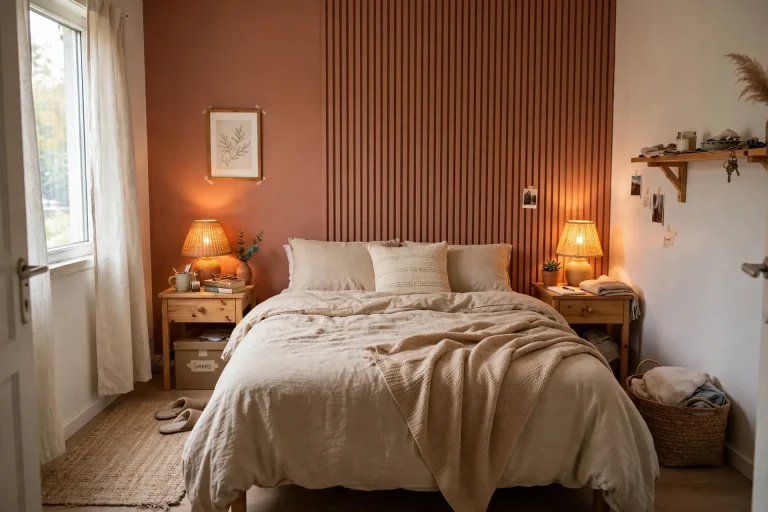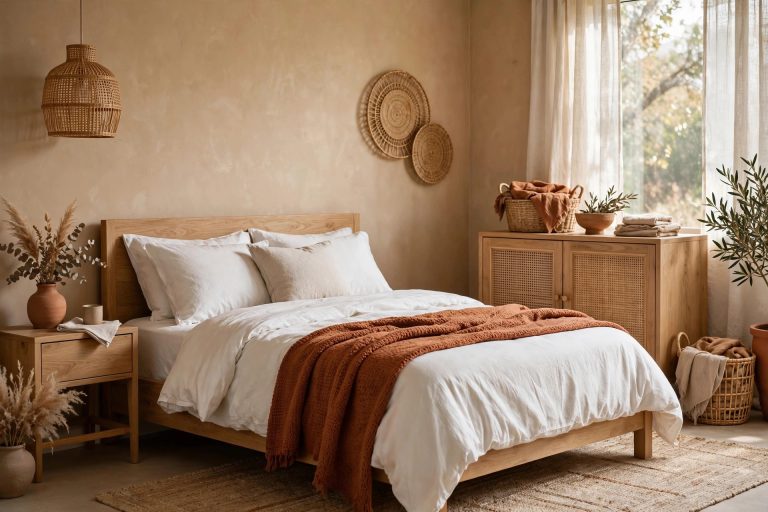
Bedroom Furniture and Lighting: The Decision Guide
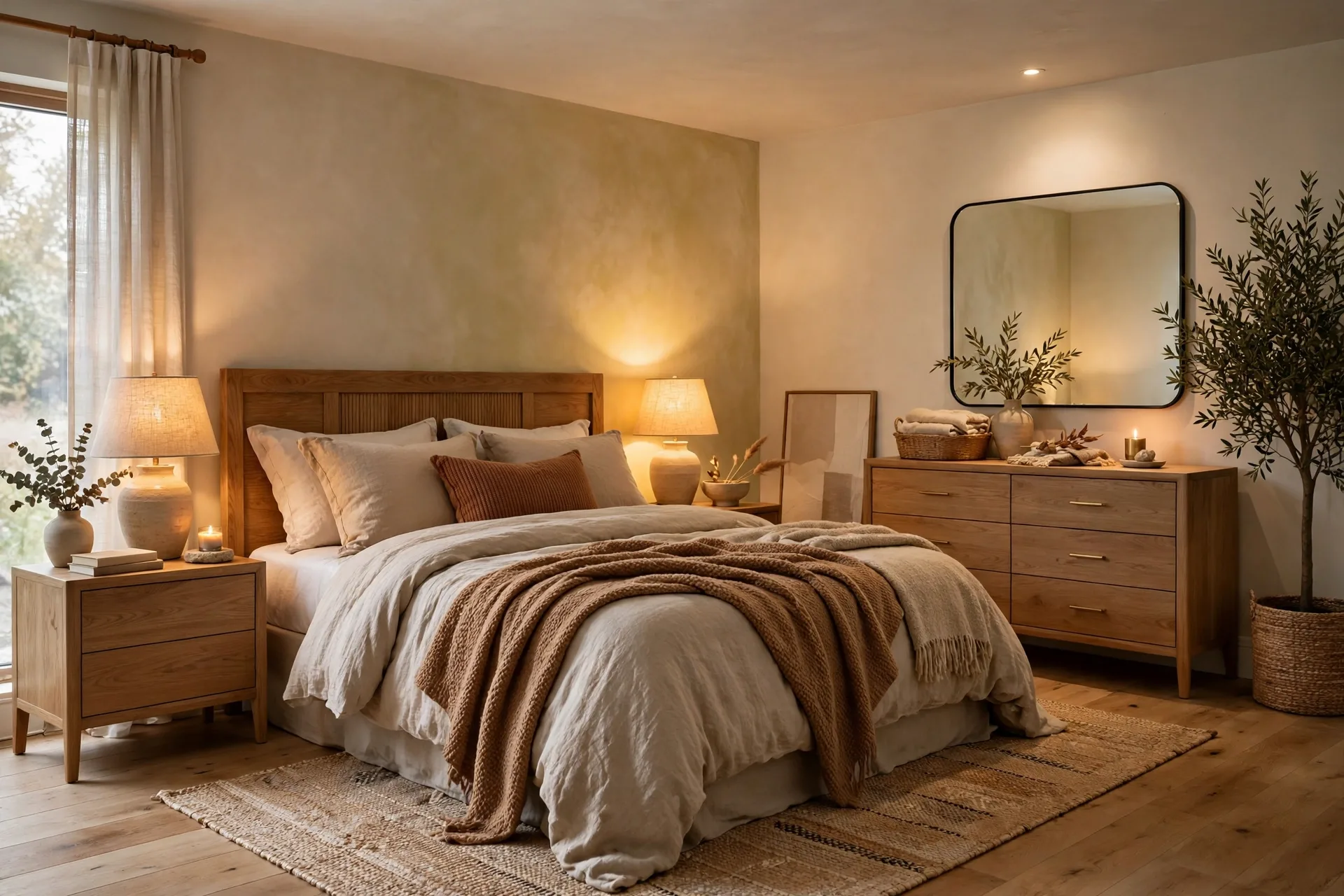
Bedroom furniture decisions feel small until you live with them. The wrong dresser blocks a door swing. A lamp that looks right on a shelf throws light in the wrong place at night. A mirror hung too high reflects the ceiling instead of your face. This guide treats bedroom furniture and lighting as decisions, not a shopping list: what each piece must do, what you can skip, and how the lighting layers work together. It sits inside our wider bedroom decor ideas, which covers the overall direction if you are still choosing the room’s overall direction before you commit to furniture.
The Bed: The First Decision
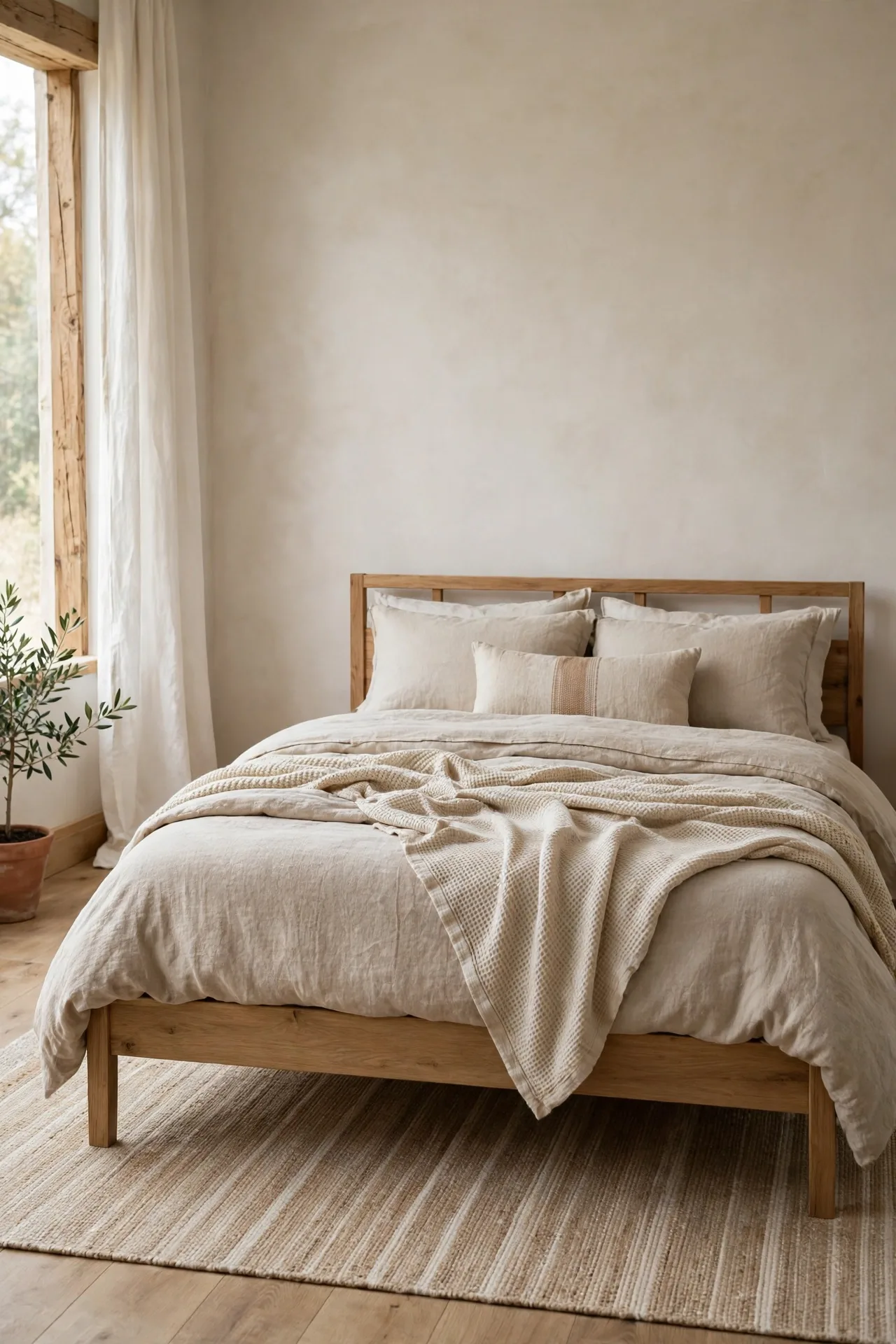
Every other furniture call follows the bed, because it takes the most floor and sets the room’s center. Choose the bed first, then measure what remains. A frame that leaves no room for a nightstand on at least one side will annoy you every day, while a bed that fits with clear walkways on both sides makes everything else easy.
Must-have: a frame that fits the room with walking space, and a headboard that supports sitting up to read. Nice-to-have: storage inside the frame, which helps in smaller rooms but adds weight and cost to every move. If you want under-bed storage to serve the whole home, these apartment storage ideas for small spaces show how to zone it without creating clutter. Skip: an oversized frame that forces the rest of the room into corners. The bedding comfort side, warmth and softness rather than furniture calls, is covered in our cozy bedroom ideas, which pairs well with this page once the frame is chosen.
The Nightstand: Small Piece, Big Job
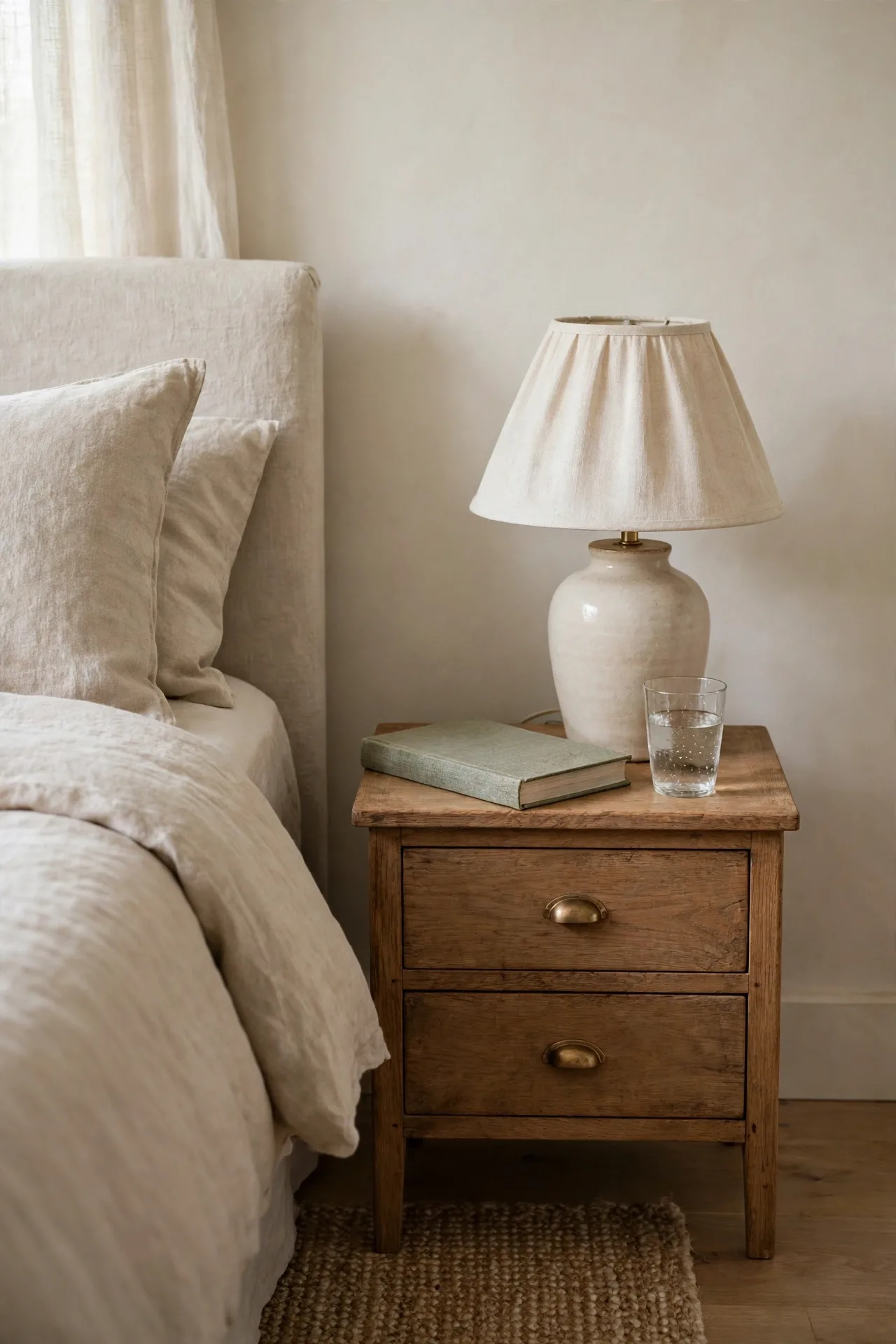
A nightstand earns its floor space by holding four things: a lamp, a phone, a book, and a glass of water. If it cannot hold those without stacking, it is the wrong size or the wrong shape. One drawer or a lower shelf keeps the surface clear, which matters more than matching the bed exactly.
Must-have: a surface at roughly mattress height, so reaching for the lamp in the dark is natural. Nice-to-have: a drawer for chargers and small clutter. Skip: a second nightstand in a room where it blocks a door or a closet, because symmetry is not worth a daily squeeze. In a tight room, the small bedroom ideas shows how the same pieces shrink without losing their jobs, including wall-mounted shelves that replace a nightstand entirely.
Dresser or Chest: The Workhorse
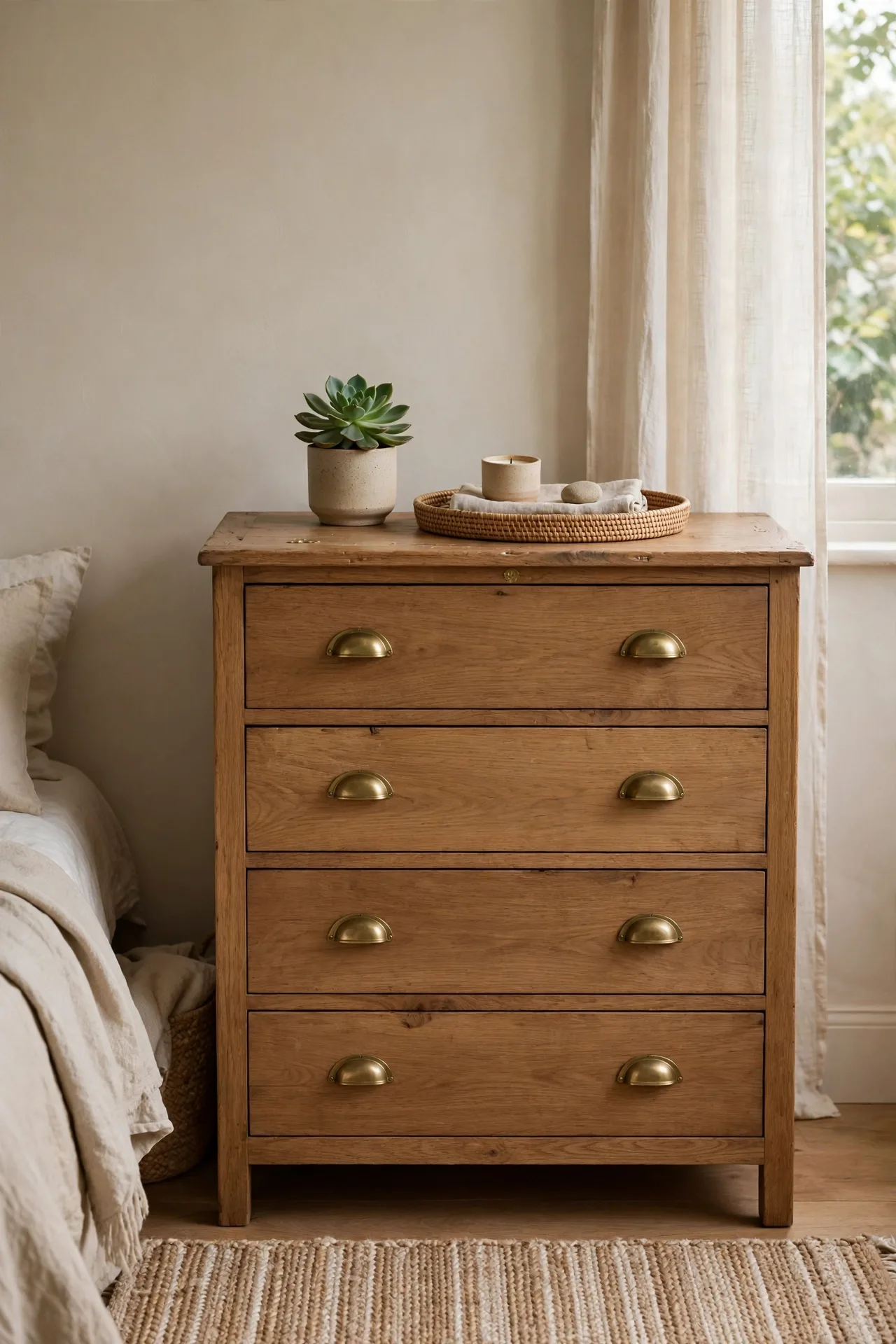
A dresser is the room’s workhorse, and its width decides where it can live. Measure the wall, then subtract the space a drawer needs to open fully. A dresser that looks perfect against a wall but cannot open its bottom drawer past a bed frame is a daily frustration.
Must-have: drawers that open fully where the dresser stands, with enough depth for folded clothes. Nice-to-have: a taller chest when floor width is short, trading width for height. Skip: a second storage piece before you know whether the dresser alone handles your clothes, because an extra unit often just collects clutter. Place it where you dress in the morning, near the closet or the mirror, not where it becomes the first thing you bump into at night.
Bedroom Mirrors: Placement Before Size
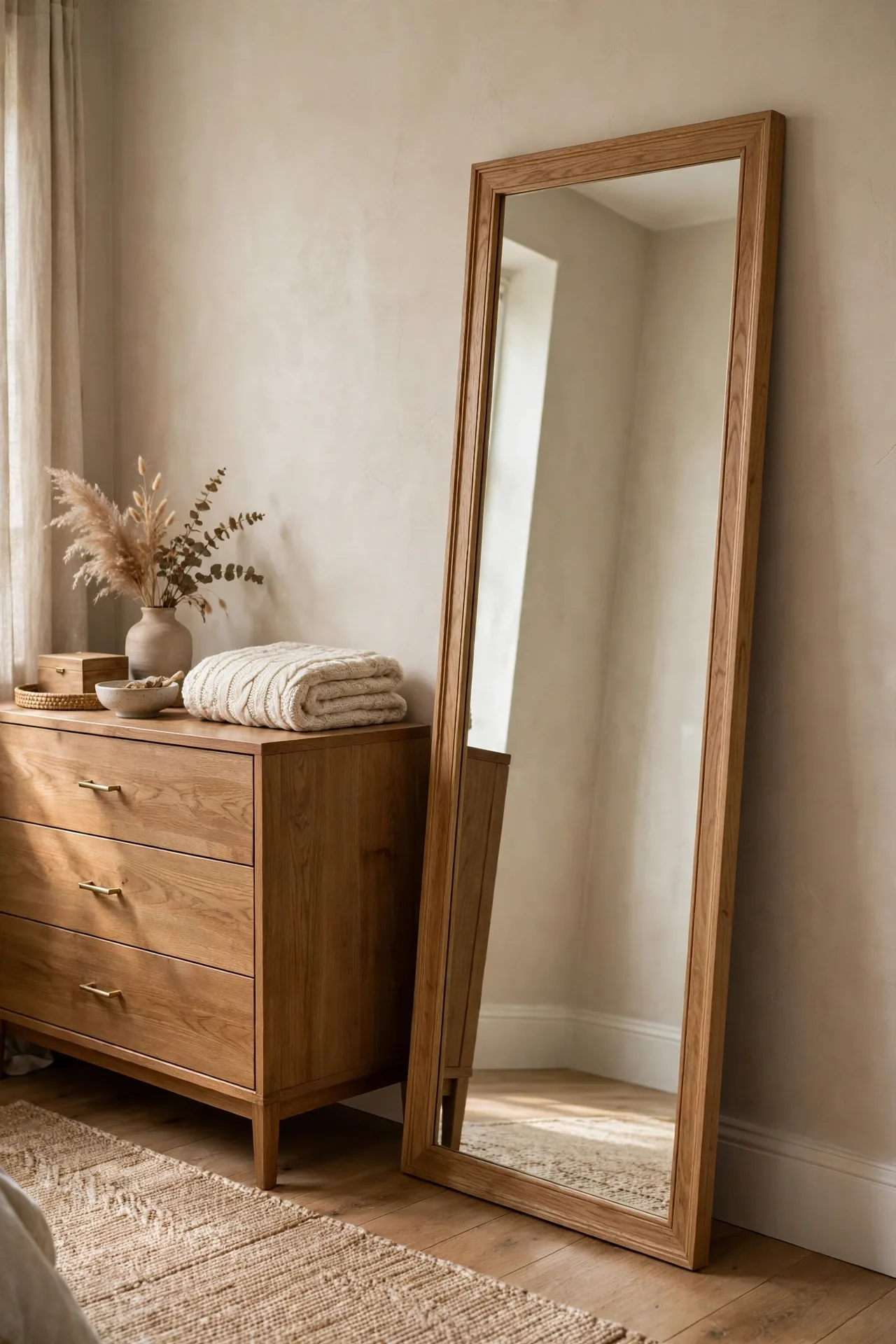
Mirror shopping usually starts with size and style, but placement matters more. A mirror’s job changes with where it hangs: above a dresser it serves getting ready, above a nightstand it adds depth, and full length by the door it gives the last check before leaving.
Must-have: one mirror positioned for getting ready, at a height where you see your face and upper body without bending. Nice-to-have: a full-length mirror, leaned or hung, if the wall space allows. Skip: a mirror facing the bed directly if morning light from a window bounces into your eyes from it. If the clean look of a mirror and an empty wall appeals to you, the minimalist bedroom ideas shows how far that restraint goes across the whole room.
Wardrobe and Storage: The Honest Note
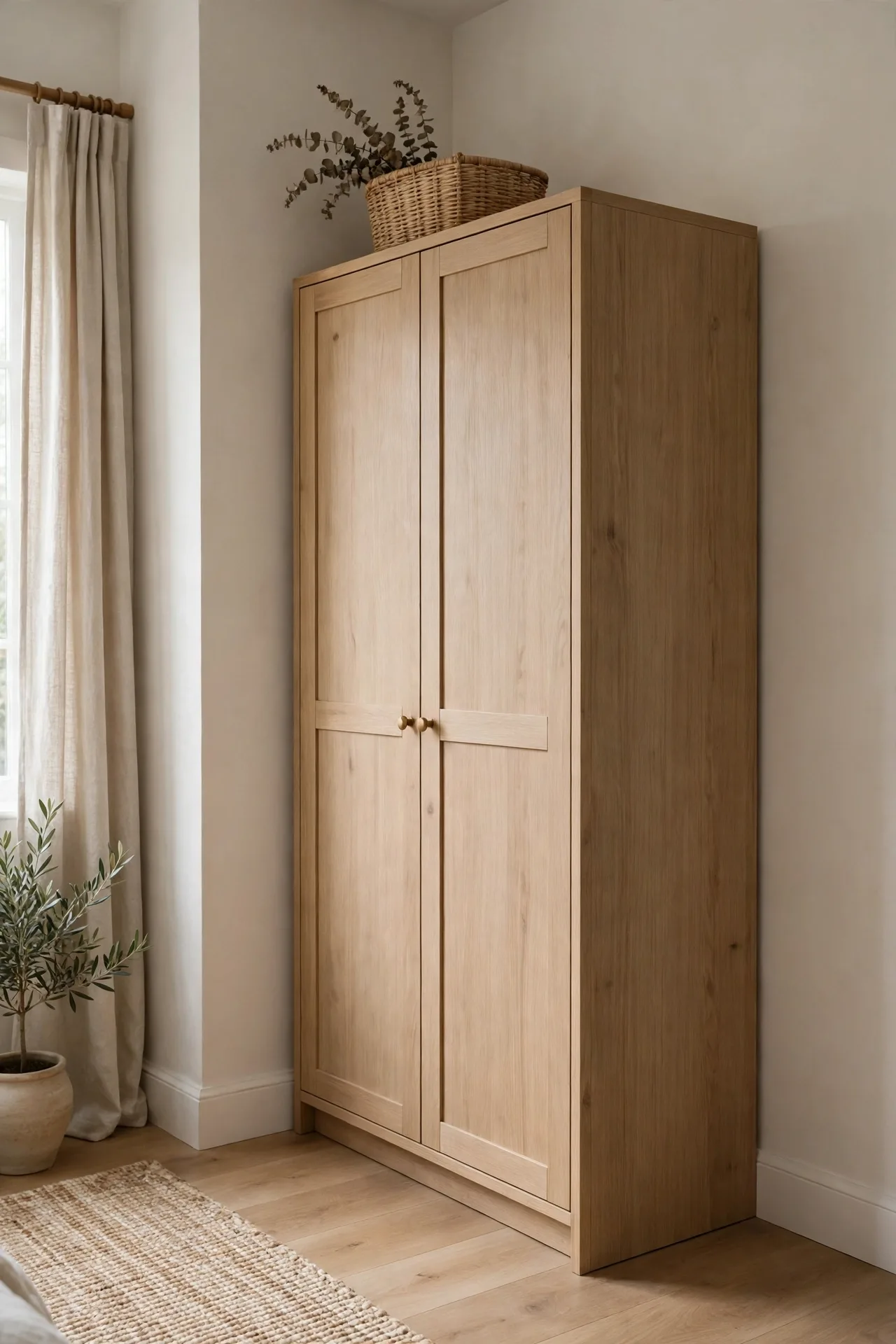
Not every bedroom needs a freestanding wardrobe. If the room has a built-in closet that holds your clothes, a wardrobe adds doors you open twice a day and floor you lose permanently. If the closet is small or missing, a wardrobe becomes the room’s most important piece, and it deserves the best wall in the room. Before you commit to the extra furniture, try organizing a small closet first; a zoned layout with a second hanging level often holds everything without the new piece.
Must-have: storage that holds everything you own without overflow onto chairs and floors. Nice-to-have: a wardrobe with interior shelves you can rearrange as seasons change. Skip: open clothing racks as a permanent solution in a bedroom you sleep in, because visible clutter reads as mess even when it is organized. This guide stays on the decision, which pieces and where, while the detailed storage systems live in the small-bedroom guides.
Ambient Light: The Base Layer
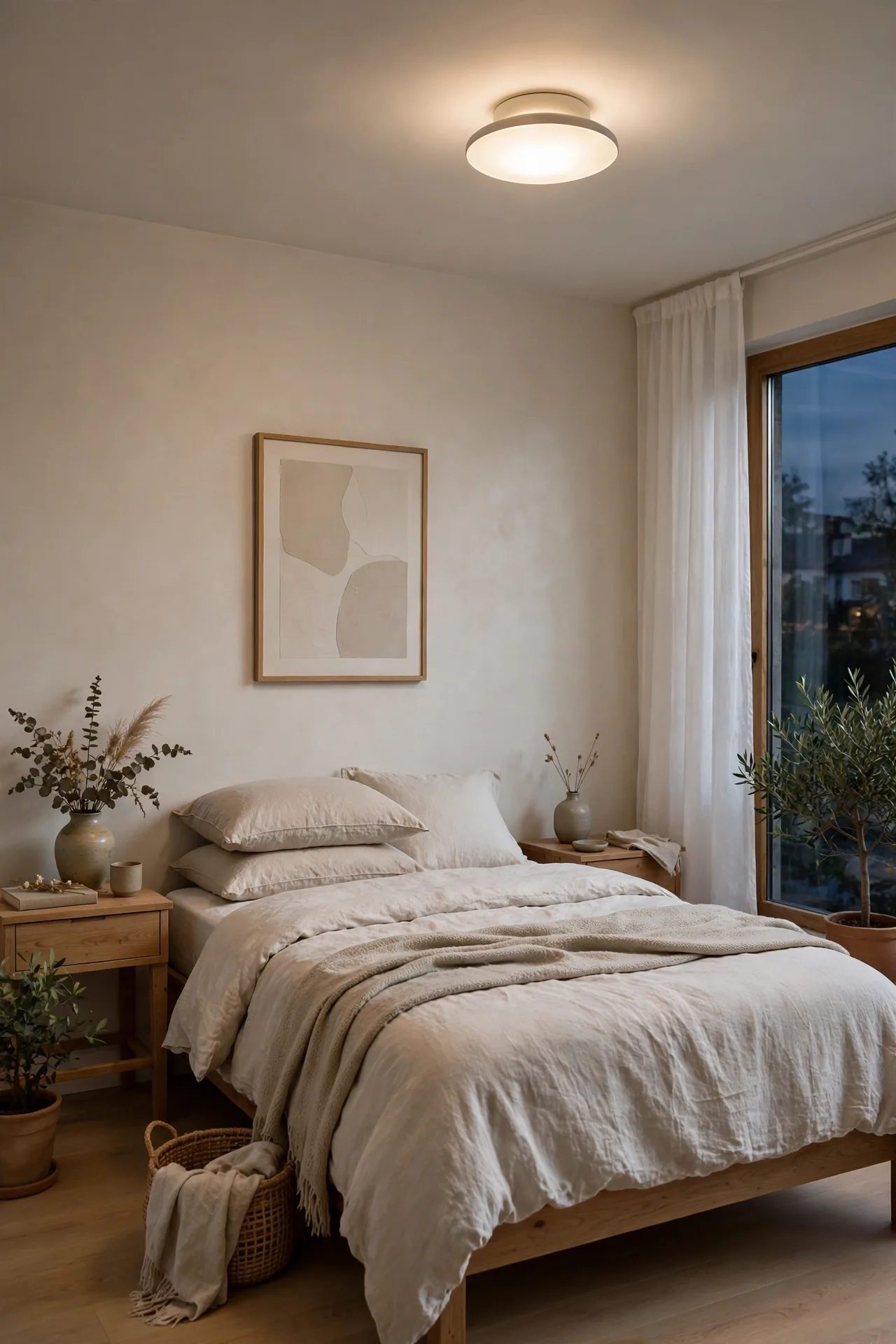
Lighting works in three layers, and ambient light is the base. It is the general light that lets you walk in, find things, and see the room as a whole. One ceiling fixture usually carries this job, and its brightness should let you navigate comfortably without turning the room into a bright box.
Place the ambient source centrally so no corner stays dark, and choose a warm color temperature that matches the lamps you will add later. A room where the ceiling light and the bedside lamps fight each other in color feels unsettled even when both are on. If the ceiling fixture is harsh, a dimmer or a lower-output bulb fixes the base layer before you spend anything on new lamps.
Task Light: Bedside and Mirror
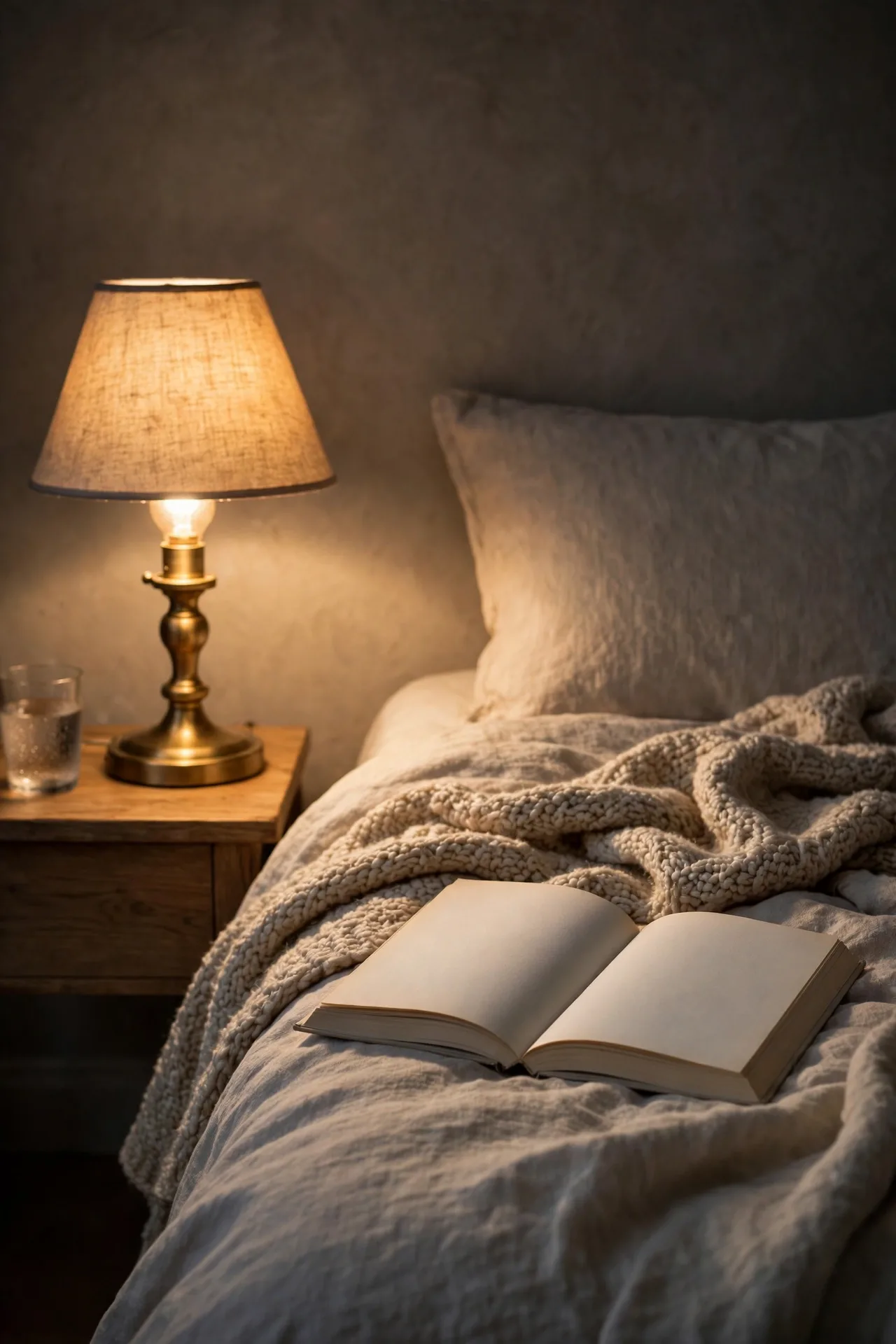
Task light is light with a job, and it follows two placement rules. At the bedside, the lamp shade should sit near shoulder height when you sit up in bed, so light falls on the page and not into your eyes or your partner’s. At the mirror, light should come from both sides at face height where possible, because a single overhead source throws shadows under the eyes and chin.
Must-have: a bedside lamp you can switch on and off from the bed, and mirror light that lets you see your face clearly. Nice-to-have: a separate reading light that aims only at your side of the bed. Skip: a bright overhead light as the only getting-ready light, because it flatters no one and shadows everyone. Pair the bedside lamp with the nightstand height from earlier in this guide, since the two pieces work as one unit.
Accent Light: The Warm Evening Layer
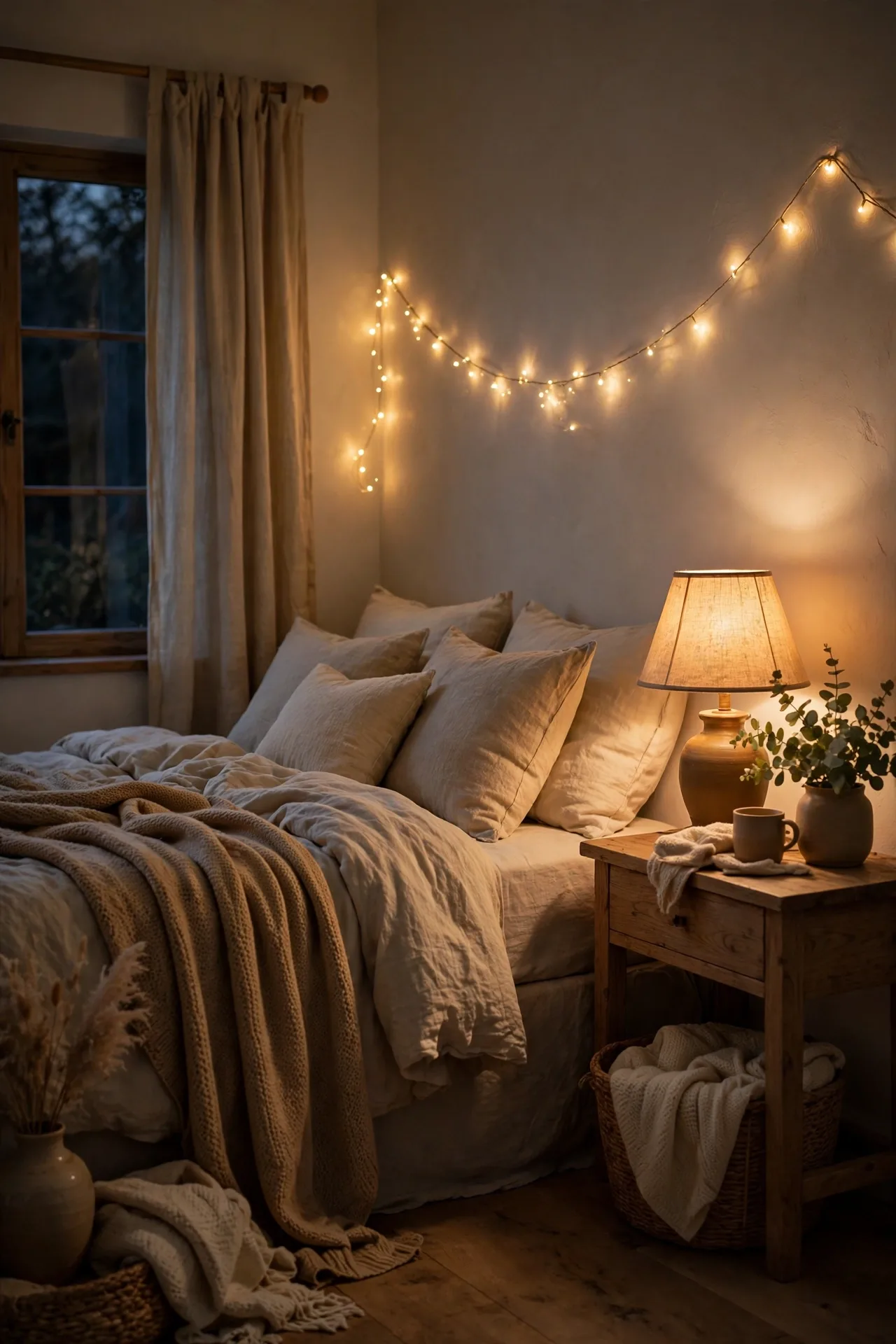
Accent light is the layer most rooms skip, and it is the one that changes how the room feels at night. It is low, warm, and dim: a small lamp on the dresser, a light strip behind the headboard, or a candle-height glow on a shelf. Its job is atmosphere, not work, so it should never be the brightest light in the room.
Put accent light on a dimmer where you can, and keep it warmer than the other layers so the evening wind-down reads clearly. Switch the room to accent-only in the last hour before sleep, with task lights off, and the bedroom starts to signal rest on its own. The dim, warm evening side is explored further in our moody bedroom ideas, where darkness is treated as a design choice rather than a missing light.
Matching vs. Mismatched: The Set Decision
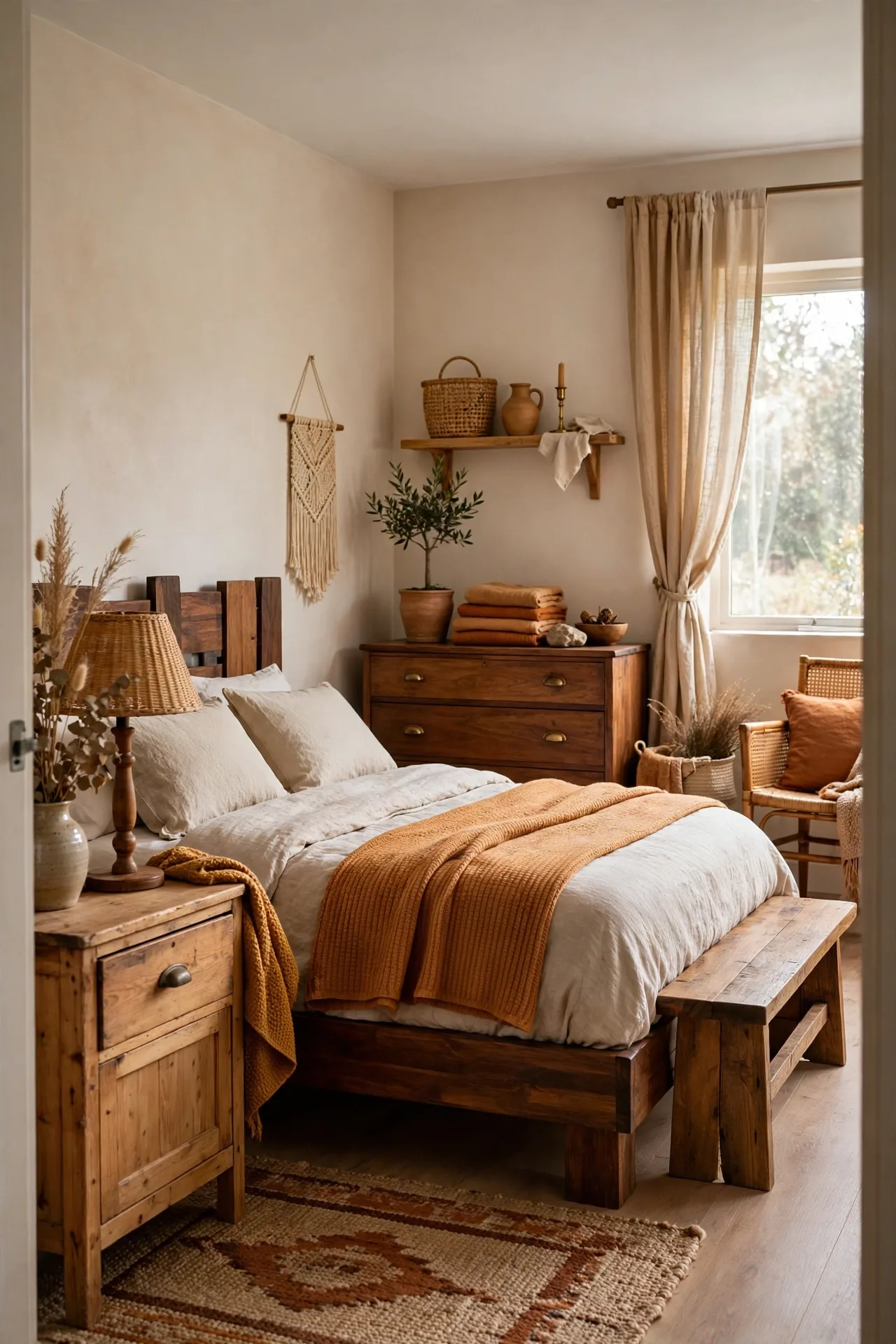
A matching set is the safe choice, and that is both its appeal and its limit. Everything coordinates instantly, but the room can read like a showroom floor, with no piece standing out. Mismatched pieces take more thought, but they let the bed, the dresser, and the nightstand each earn their place.
The middle path works best for most rooms: match two pieces, usually the bed and the nightstand, and let the dresser or mirror differ in finish or style. Keep one thread running through the mismatched pieces, the same wood warmth, the same metal, or the same level of simplicity, so the room reads as chosen rather than collected by accident.
Finishes and Colors That Work Together
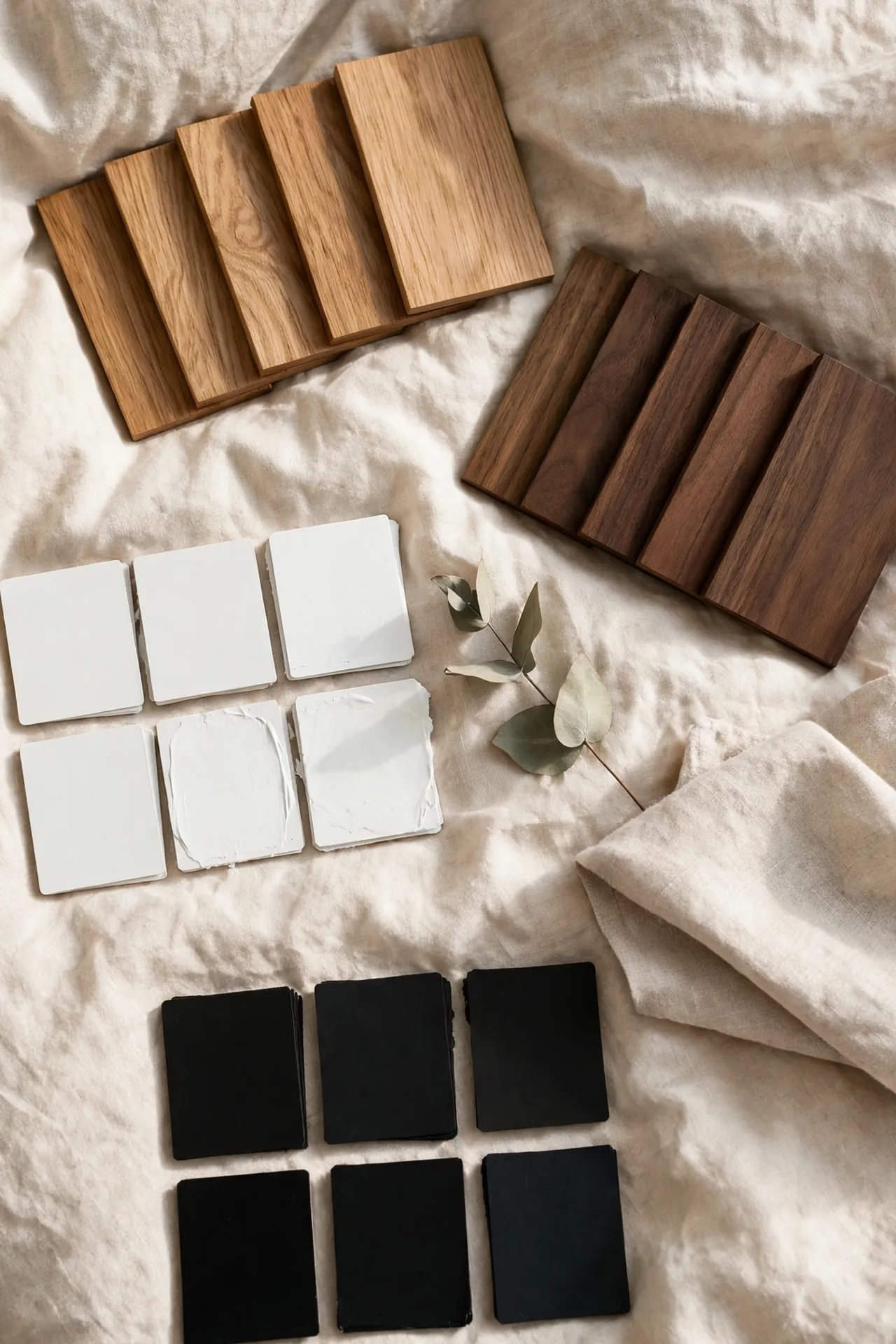
Finishes coordinate by temperature and contrast, not by exact matching. Warm oak, walnut, and brass sit comfortably together. White and black act as neutral anchors that let a wood piece stand out. Two very different wood tones in one small room usually fight, while one dominant wood plus one accent finish reads calm.
Pick the dominant finish first, usually the bed frame, then choose the dresser and nightstand to support it. If a piece you already own clashes, a new lamp or a mirror in a bridging finish often fixes the room faster than replacing the furniture. Keep the wall color in the same temperature family as the dominant wood, warm walls with warm woods, cooler walls with white or black pieces, and the room will hold together without a single matching set.
Dresser Tops and the Wall Above
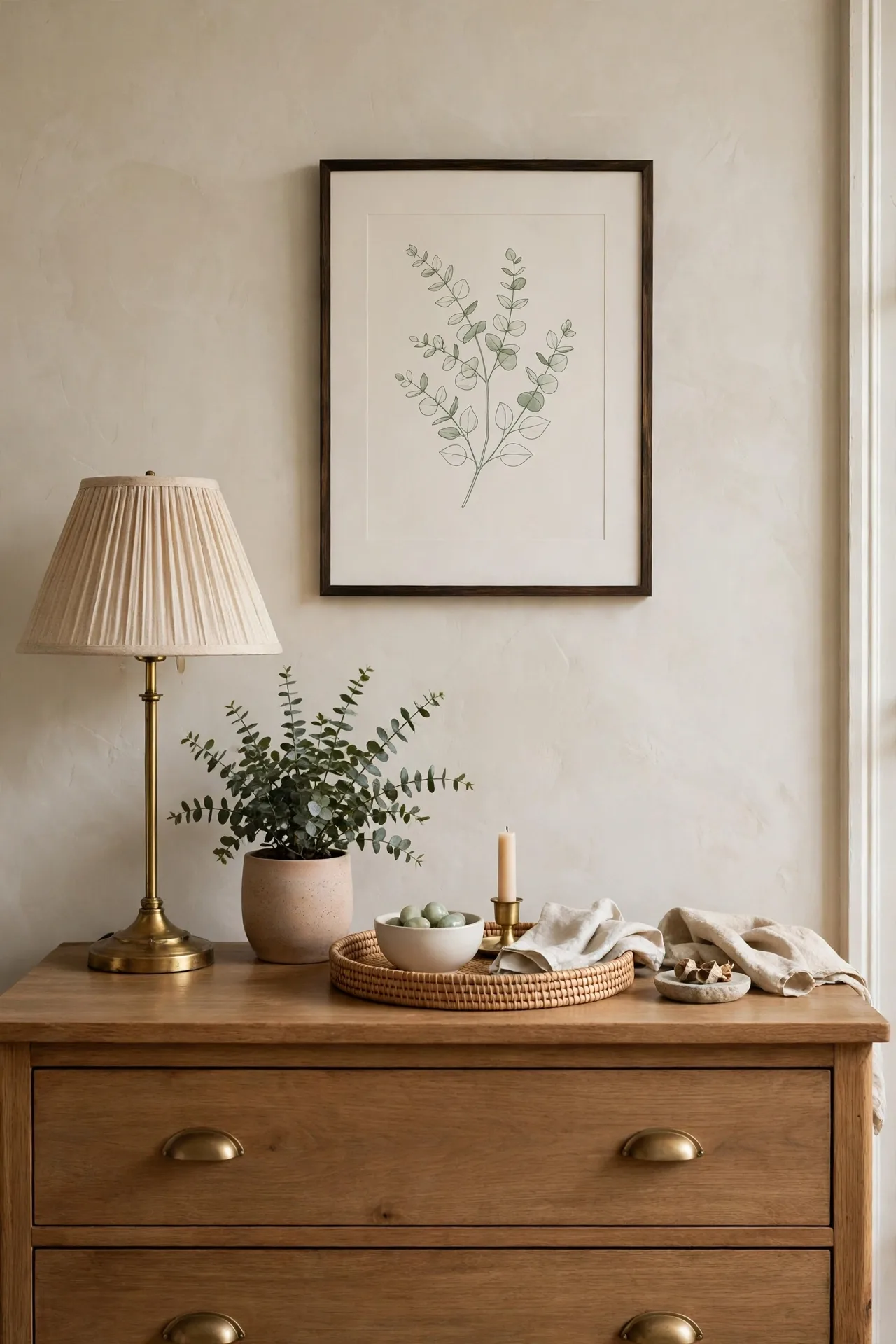
A dresser top works best with three things: a lamp for the task light, one living element like a plant, and one flat surface like a tray for small items. More than that, and the top becomes a shelf for everything without a home. The wall above follows the same rule: one mirror or one framed piece, hung at eye level, beats a cluster that competes with the lamp.
Leave one stretch of the dresser top empty on purpose. That empty space is what makes the styled part look styled instead of crowded, and it gives you somewhere to set things down when you are getting ready. For dresser tops that lean collected and layered rather than minimal, our boho bedroom ideas shows the collected look at full strength, which helps you judge how far to take it here.
A Bedroom Vanity, Done Right
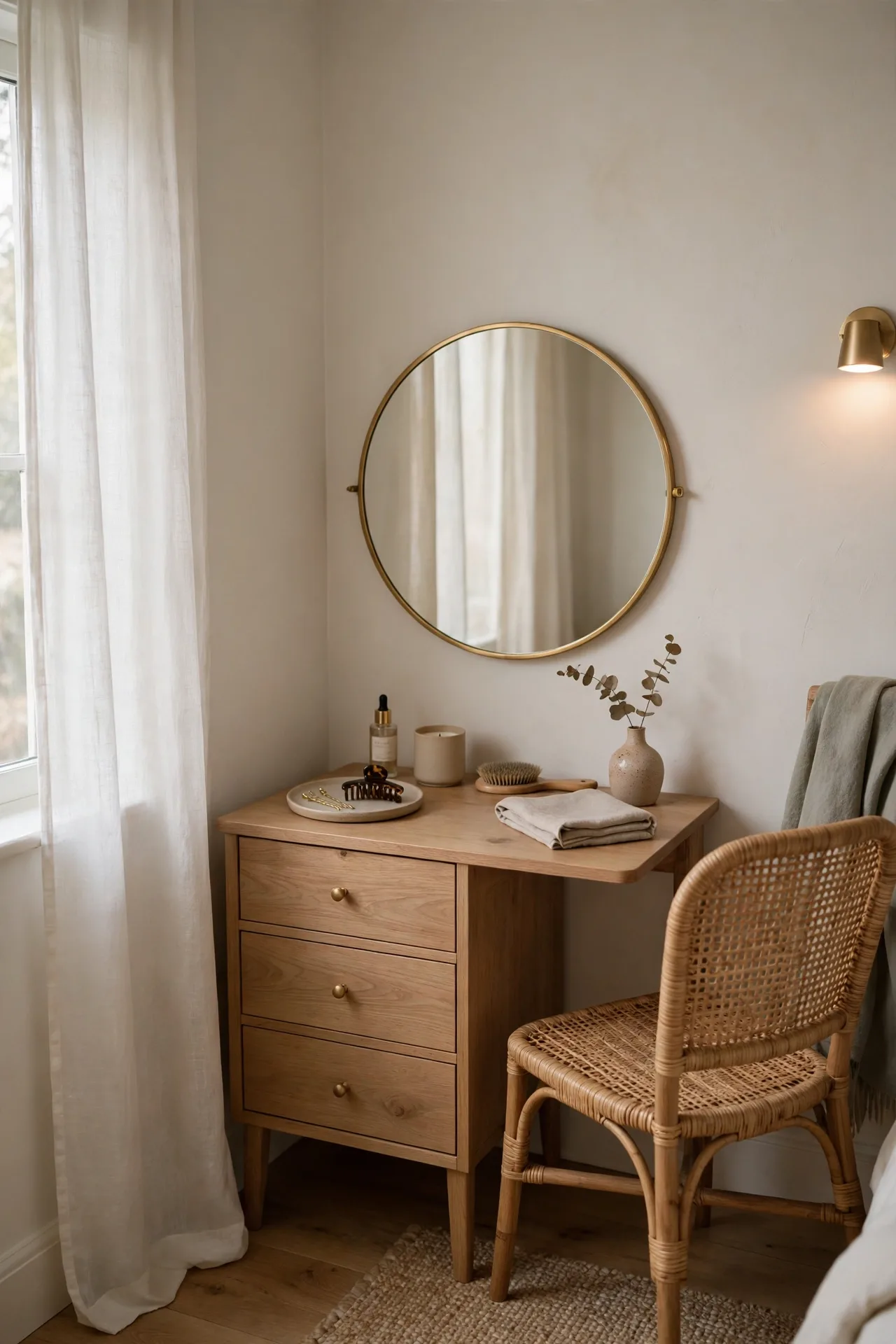
A bedroom vanity earns its place only when getting ready has a real home in the room. It needs three things: a mirror at face height, light from both sides or a well-placed lamp, and a seat that slides fully under the table when not in use. Without the seat clearance, the vanity becomes a second dresser that you never sit at.
Place a bedroom vanity near natural light if you can, with the mirror facing the window rather than backed against it, so daylight helps instead of glaring. Keep the surface to daily items only, and let the dresser hold the rest. In a small room, a bedroom vanity is the first piece to drop, because a mirror above the dresser with the task light from this guide does the same job without the extra floor.
The Room in Order: A Final Checklist
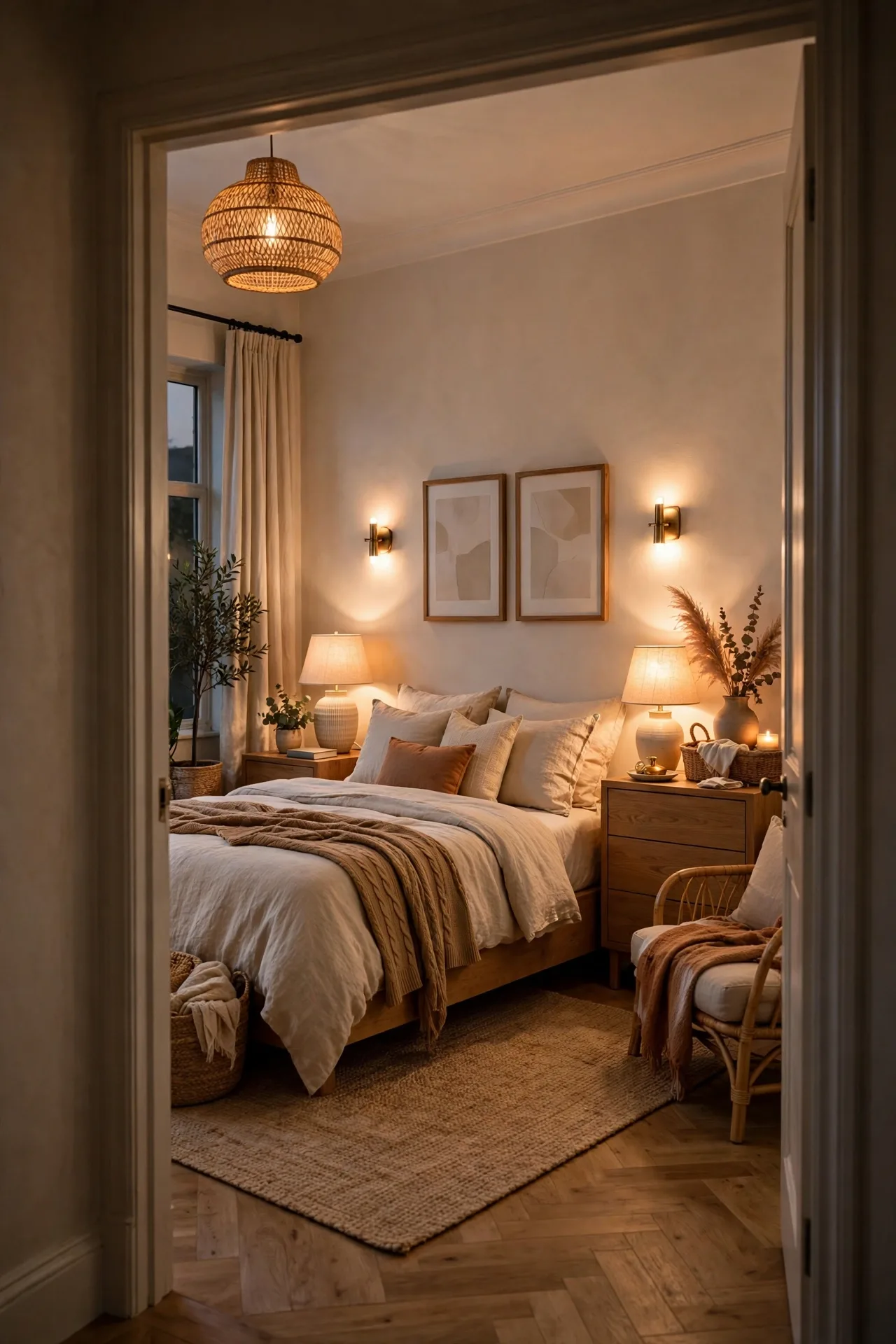
Walk the room in this order and check each decision once. Bed placed with walking space on both sides. Nightstand holding lamp, phone, book, and water at mattress height. Dresser drawers opening fully where it stands. Mirror at face height for getting ready. Wardrobe only if the closet cannot carry the clothes. Ambient light even and warm. Bedside light at shoulder height when sitting up. Mirror light from the sides. One warm, dim accent layer for evenings. Two pieces matched, the rest bridged by one shared finish. Dresser top styled in three parts with empty space left over. If the furniture calls turn into a full refresh, the bedroom makeover weekend plan sequences the whole job across three days so the decisions here land in the right order.
Frequently Asked Questions
Do I need a full matching bedroom furniture set?
No. A matching set is the fastest way to coordinate, but matching two pieces and bridging the rest with one shared finish gives most rooms more character with the same calm. The test is whether the room reads as chosen, not whether every piece came from the same collection.
What if my room fits only one nightstand?
Use one. A single nightstand on the side you sleep on, plus a wall shelf on the other side for a phone and a book, keeps the room functional without blocking a door or closet. Symmetry matters less than a clear path through the room.
What is the one lighting upgrade that matters most?
A dimmer on the evening layer, or a warm low lamp you can switch to at night. Most bedrooms already have enough light; what they lack is a low, warm setting that tells the room it is evening.
Can a bedroom mirror really change a small room?
It can change how the room reads, because a mirror placed opposite a window or beside a light source bounces light and depth back into the room. It does not add floor space, but it stops a small room from feeling closed in, especially above a dresser or leaning full length near the door.