18 Small Apartment Storage Ideas That Actually Reduce Clutter
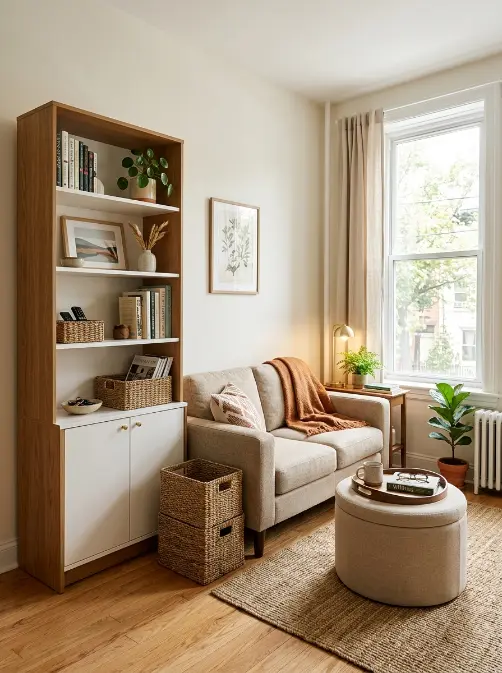
A small apartment does not necessarily need more storage furniture. It needs better places for the things that already create clutter.
That distinction matters. Adding baskets, shelves, carts, and organizers without first deciding what they need to hold can leave a small home feeling even busier.
A better approach is to work in this order: edit what you own, identify where clutter collects, use overlooked vertical and hidden spaces, and only then buy organizers or furniture.
These small apartment storage ideas are designed around real compact-space problems—limited closets, crowded countertops, tiny entryways, rental restrictions, and rooms that need to serve more than one purpose.
Before Adding Storage, Do a 10-Minute Clutter Audit
Walk through your apartment and notice where belongings naturally pile up.
Look for shoes beside the door, bags on dining chairs, toiletries around the sink, mail on the kitchen counter, clothes on a bedroom chair, or charging cables scattered around the sofa.
Those piles are useful information. They tell you where storage needs to be.
Instead of asking, “Where can I fit another organizer?” ask:
- What keeps ending up here?
- How often do I use it?
- Could it live closer to where I use it?
- Does it need to be visible?
- Do I actually need to keep it?
Storage becomes much easier when you design around habits instead of trying to force belongings into arbitrary containers.
1. Declutter Before Buying Containers
The cheapest way to create storage space is to remove things you no longer need.
Start with one overloaded zone rather than attempting the entire apartment at once. A crowded bathroom cabinet, overflowing kitchen drawer, or chaotic entryway can usually reveal whether your problem is genuinely a lack of storage or simply too many objects competing for the same space.
Remove obvious trash, duplicates, items that belong elsewhere, and belongings you no longer use.
Only after that should you measure for bins, dividers, shelves, or baskets.
Otherwise, you may spend money organizing things you would have been happier removing.
2. Use Vertical Space Before Taking More Floor Space
When floor area is scarce, look upward.
Tall bookcases, wardrobes, shelving units, door organizers, and other vertical solutions can increase storage without spreading additional furniture around the room.
The key is to organize vertically according to frequency of use.
Keep everyday belongings within comfortable reach. Less frequently used items can go higher. Visually heavy or physically heavy items generally make more sense lower down.
There is also an important safety consideration: tall or top-heavy furniture may need to be anchored. The U.S. Consumer Product Safety Commission advises anchoring furniture with drawers, doors, and shelves to help prevent tip-over injuries. Follow the furniture manufacturer’s installation instructions and appropriate rental requirements.
3. Choose Closed Storage for Visually Busy Rooms
Open shelves can look beautiful when they hold a carefully edited collection. They are less successful when they become the default home for cords, paperwork, cleaning supplies, spare toiletries, electronics, and miscellaneous household items.
If your small apartment already feels visually crowded, prioritize more closed storage.
Think cabinets, drawers, lidded boxes, baskets with solid sides, storage benches, or furniture with concealed compartments.
Then reserve open shelving for objects that are useful or attractive enough to display.
A simple decision rule helps:
If you use it often but do not enjoy looking at it, make it easy to reach—but hide it.
4. Use the Back of Doors
Doors occupy valuable vertical space that is often ignored.
An over-door organizer can work in a bedroom, closet, pantry, bathroom, or utility area without requiring another piece of floor-standing furniture.
Match the organizer to the room rather than filling every pocket simply because it exists.
In a bathroom, it might hold lightweight personal-care items. In a closet, it can organize accessories. Near an entry, it may hold small everyday items.
Make sure the organizer does not interfere with the door closing properly, and check that its weight and installation method are appropriate for the door.
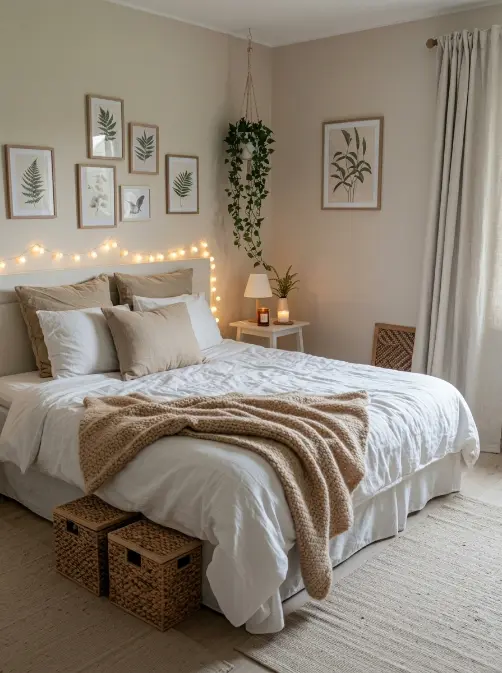
5. Turn the Space Under the Bed Into a Storage Zone
The area beneath a bed can provide valuable storage without taking up additional visible floor space.
It works especially well for items you do not need every day, such as spare linens, seasonal clothing, or occasionally used accessories.
Choose containers that fit the actual clearance beneath your bed rather than buying generic under-bed organizers first.
Clear or labeled containers can make stored items easier to identify, while covered storage helps protect belongings from dust.
The important part is accessibility. If retrieving one sweater requires moving half the bedroom, the system is probably too difficult to maintain.
6. Choose a Bed With Built-In Storage When Replacing One
If you already need a new bed, a design with drawers or accessible storage underneath can make the furniture work harder.
This can be particularly helpful in apartments where a separate dresser would consume too much floor area.
However, multifunctional furniture is only worthwhile if both functions genuinely solve a problem.
Do not replace a perfectly functional bed solely because a storage version looks clever. First decide whether under-bed storage would actually reduce the need for another piece of furniture.
7. Replace a Basic Ottoman With a Storage Ottoman
A storage ottoman can combine hidden storage, a footrest, and sometimes additional seating in one footprint.
That makes it useful for storing soft, lightweight items such as throws, spare pillow covers, or hobby supplies near the place where they are used.
The mistake is choosing one that is too large for the room.
Measure the available floor area and make sure people can still move comfortably around nearby furniture when the ottoman is in place.
In a tiny living room, the best multifunctional furniture is not the piece with the most features. It is the piece that solves a problem without creating a new space problem.
8. Add a Slim Rolling Cart to Awkward Gaps
A narrow rolling cart can turn a small unused gap into flexible storage.
Depending on the room, it might hold pantry items, office supplies, craft materials, bathroom essentials, or laundry supplies.
Its main advantage is mobility.
Instead of permanently occupying prime floor space, it can be moved where it is needed and tucked away afterward.
Before buying one, measure the gap carefully—including depth—and consider what will actually live on each tier.
A cart filled with unrelated objects quickly becomes mobile clutter.
9. Use Shelf Risers Inside Cabinets
Sometimes the problem is not too little cabinet space. It is poorly divided cabinet space.
A shelf riser creates another usable level inside a tall cabinet so that shorter items do not waste all the air above them.
This can be particularly helpful for dishes, mugs, pantry goods, toiletries, or other compact categories.
Keep each level logically grouped.
If you have to remove five objects to reach the item behind them, the cabinet may technically hold more but function less efficiently.
Storage capacity is useful only when you can still retrieve what you need.
10. Use Cabinet Doors Carefully
The inside of a cabinet door can provide a small amount of otherwise-unused storage.
Lightweight organizers may work for items such as cleaning accessories, small kitchen tools, or bathroom supplies when the door and organizer are suitable for the load.
Avoid turning the door into a heavily loaded storage wall.
You also need enough internal clearance for the cabinet to close without the organizer colliding with shelves or contents.
Think of cabinet-door storage as a bonus zone for lightweight essentials, not a replacement for a properly organized cabinet.
11. Build a Tiny Entryway Landing Zone
Small apartments often have little or no formal entryway, yet the front door attracts some of the home’s most persistent clutter.
Shoes, keys, mail, bags, jackets, and delivery items all arrive here.
Instead of spreading them into the living area, establish one small landing zone.
Depending on your space, that might include a narrow shoe solution, tray for small everyday items, compact basket, wall storage where permitted, or slim cabinet.
Keep the system proportional to the space.
A deep bench or oversized hall tree may technically add storage while making a narrow entrance harder to use.
12. Give Shoes a Hard Storage Limit
Shoes tend to expand into whatever space is available.
A small apartment benefits from establishing a fixed limit for how many pairs remain near the door.
Store the everyday rotation in the most accessible location and move less frequently used shoes elsewhere.
That could mean a closet shelf, under-bed container, or another designated storage area.
The point is not to create more shoe storage indefinitely. It is to prevent the entryway from becoming the permanent home of every pair you own.
13. Make the Closet Work in Layers
A small closet often contains unused vertical space above or below the main hanging area.
Before adding another wardrobe, examine whether the existing closet can work harder.
Possible strategies include shelf dividers, drawers or bins below hanging clothing, hanging organizers, and upper-shelf storage for less frequently used items.
Group similar items together rather than scattering categories throughout the closet.
A well-organized small closet should let you understand what you own without unpacking the entire space.
If every surface is completely filled, editing the wardrobe may be more useful than adding another organizer.
14. Store Items Near Their Point of Use
One of the most useful storage principles in a small apartment is simple:
Put things where you naturally use them.
Blankets belong near the sofa if that is where you use them. Charging cables belong near the devices they charge. Everyday cooking tools belong near the kitchen work area. Bags and keys usually need storage near the entrance.
This reduces the effort required to put things away.
And when putting something away becomes easier than leaving it out, a storage system has a much better chance of surviving everyday life.
15. Use the Space Behind the Sofa Carefully
If your sofa does not sit directly against a wall, a narrow space behind it can sometimes accommodate useful storage.
A slim console or narrow shelving unit might hold books, charging accessories, or other living-room items while also creating a visual boundary in an open-plan apartment.
But measure carefully.
Adding storage behind a sofa is only worthwhile if it does not make the seating area too deep, obstruct circulation, or force other furniture into awkward positions.
Unused space is not automatically wasted space. Sometimes leaving a clear route is more valuable than filling another gap.
16. Keep Bathroom Storage Shallow
Tiny bathrooms can become cramped quickly when storage projects too far into the room.
Look for shallow solutions first: medicine cabinets where already installed, slim shelving, compact drawer organizers, door storage, or small containers inside an existing vanity.
Keep frequently used items easiest to reach and move backups or occasional items elsewhere.
Do not feel obligated to store every bathroom-related product in the bathroom.
In a tiny apartment, overflow toilet paper, spare toiletries, or extra towels may fit better in another clean, dry storage area.
Storage should follow available space—not imaginary room boundaries.
17. Protect Kitchen Counter Space
Small kitchens often have limited work surfaces, so using countertops as permanent storage can make cooking unnecessarily difficult.
Start by deciding which items genuinely deserve to stay out.
Frequently used appliances may earn countertop space. Items used once a week or less may be better stored elsewhere if accessible storage is available.
Use cabinets vertically with risers, group pantry categories, and relocate non-kitchen belongings that have migrated onto the counter.
If you add decorative storage, keep it functional.
A beautiful basket that occupies your only preparation area is not really a storage improvement.
18. Rotate Seasonal Items Instead of Storing Everything Within Reach
Not every possession needs equally convenient storage all year.
Seasonal clothing, holiday decor, extra blankets, travel accessories, or special-occasion items can usually occupy less accessible zones while everyday belongings get the best storage positions.
This is where upper shelves, under-bed containers, or other secondary storage areas become useful.
Review those categories periodically instead of automatically returning everything to storage.
Seasonal rotation can reveal belongings you repeatedly store but rarely use.
Open Storage vs. Closed Storage: Which Is Better?
Neither is automatically better. They solve different problems.
| Choose open storage when… | Choose closed storage when… |
|---|---|
| You use the items frequently | The items create visual clutter |
| The collection is easy to keep tidy | Categories contain many small objects |
| You want items to double as decor | You prefer a calmer visual look |
| You need quick visibility | You need to hide everyday household supplies |
| The shelf will remain lightly edited | The room already contains many visible objects |
Most small apartments benefit from a combination.
Use open storage selectively and allow closed storage to handle the less photogenic realities of daily life.
Small Apartment Storage Ideas for Renters
Renters do not necessarily need permanent built-ins to create meaningful storage.
Start with portable options such as freestanding shelving, appropriately secured furniture, over-door organizers, under-bed containers, rolling carts, storage ottomans, and furniture with built-in drawers.
For anything attached to walls or doors, check the lease, manufacturer instructions, surface compatibility, and required safety installation first.
“Renter-friendly” should never mean ignoring furniture safety.
What Should You Store in the Most Accessible Places?
Give your easiest storage to things you use most.
A simple hierarchy works well:
- Daily items: easiest shelves, drawers, hooks, and containers.
- Weekly items: slightly higher, lower, or deeper storage.
- Occasional items: upper shelves and secondary storage zones.
- Seasonal items: under-bed or other less convenient areas.
- Rarely used items: reconsider whether they deserve apartment space at all.
This prevents valuable eye-level storage from being occupied by something you use twice a year.
How to Make Small-Apartment Storage Look Less Cluttered
More containers are not always the answer.
First reduce the number of categories visible at once. Use closed storage for unattractive everyday items and keep open shelves more lightly edited.
Repeat a small number of container styles instead of mixing dozens of unrelated baskets and boxes.
Leave some empty space where possible.
An open shelf does not need to be filled to capacity simply because storage space exists.
Visual breathing room can make a compact apartment feel calmer and also makes frequently used belongings easier to access.
What If Your Apartment Has Almost No Closets?
When built-in storage is minimal, think in layers rather than adding a room full of cabinets.
Start with vertical storage and the backs of doors. Use existing furniture more efficiently. Add hidden storage beneath the bed and inside multifunctional furniture. Create one intentional storage zone in each room rather than scattering containers everywhere.
Then decide whether you still need additional freestanding storage.
The goal is not to turn every wall into shelving.
It is to give each important category one logical home.
Final Takeaway
The best small apartment storage ideas do more than fit extra belongings into a limited floor plan.
They reduce the effort it takes to live in the space.
Start by decluttering. Notice where mess naturally collects. Put everyday storage close to those areas. Use vertical and hidden space before sacrificing more floor area, and choose closed storage when visible shelving would make the apartment feel busier.
Most importantly, make every storage solution answer a specific question:
What belongs here, and why is this the easiest place to put it away?
When you can answer that clearly, even a small apartment can feel dramatically easier to organize.