
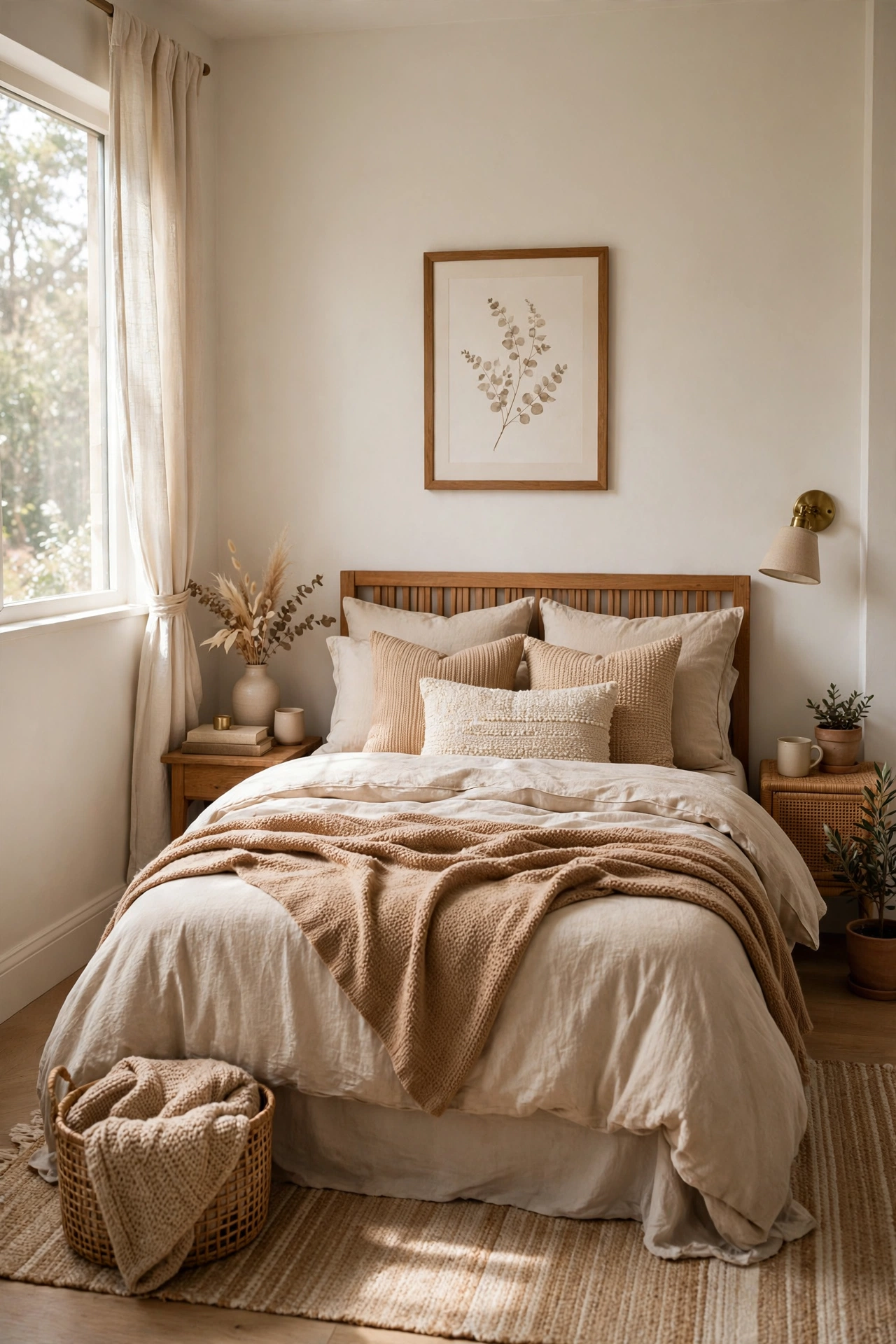
Bedroom decor ideas work best when you start with your constraint, not with a shopping list. A decorated bedroom is not a room full of objects. It is a bedroom where the bed sits in the right place, the palette stays in one direction, clutter has a home, and one or two focal points carry the room.
This is a start-here guide, not another long list. Pick your constraint first, size, budget, renter limits, or style, then follow the route that fits. Each route points you to a deeper guide that covers that topic in full.
Bedroom decor and bedroom design are often used as if they mean the same thing. Decor is what you see: bedding, colour, art, textiles, light. Design is how the room works: layout, storage, walking paths, habits. This guide covers both, because a bedroom that looks good but does not work will not stay looking good for long.
Use bedroom design ideas as a starting point, not a finished plan. The best bedroom style for you is the one that fits your room, your budget, and your habits.
Start Here: Pick Your Constraint First
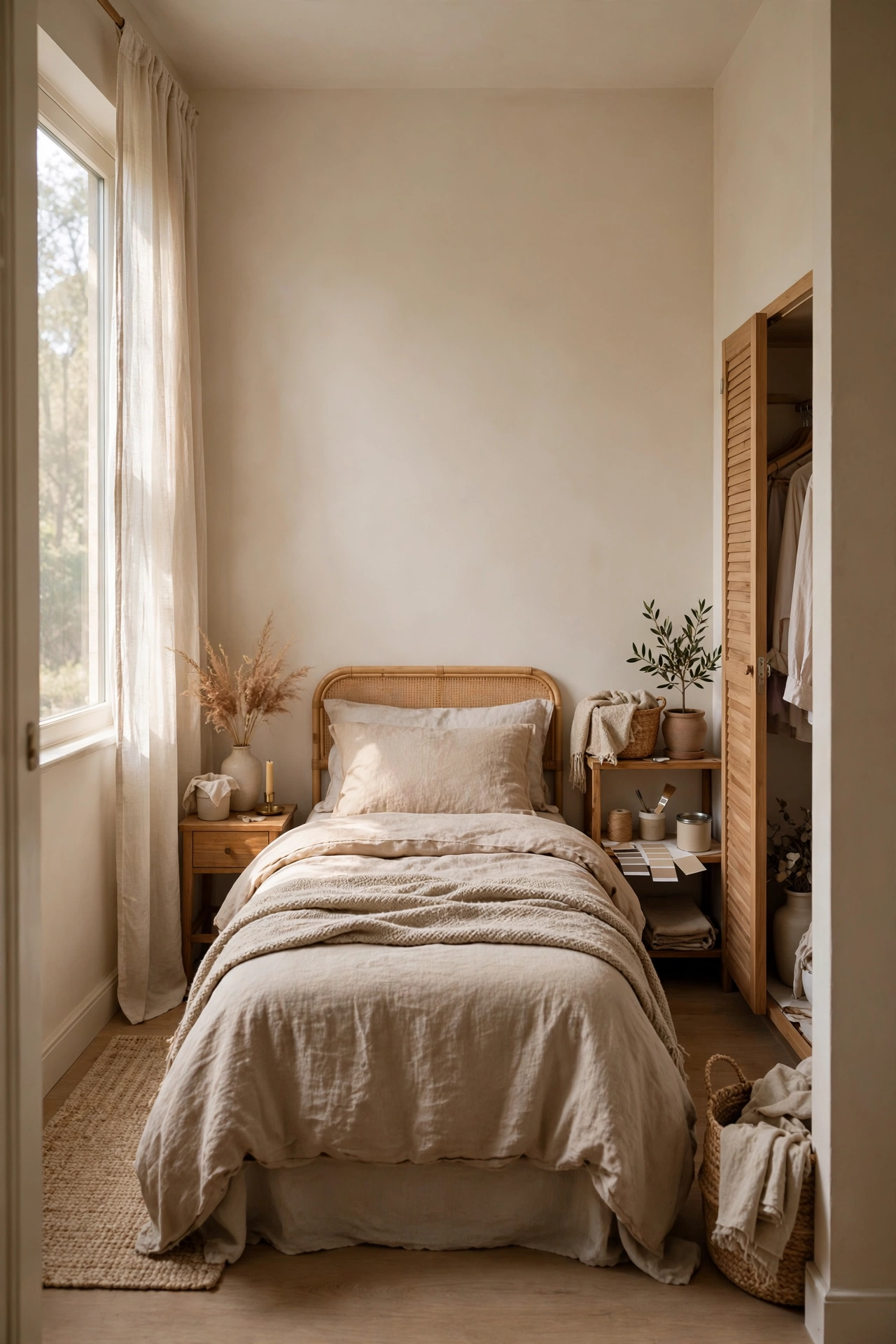
Most bedroom decor fails because people shop before they decide. Pick your constraint first, then let it choose the route.
Seven routes, pick one to start:
- Small room or tight layout: layout first
- Colour and walls feel disconnected: palette and materials
- Clutter with no home: storage
- Room looks fine but never stays tidy: habits
- Cannot paint or drill: renter-friendly
- Room feels flat or cold: one living accent
- Money is tight: budget order, free first
Start with one route. Finish it before you open the next guide. Bedroom inspiration works best when you act on one constraint at a time.
For example, if you pick size, your next step is layout, not shopping. If you pick budget, your next step is the free sequence, not a cart. If you pick renter limits, your next step is swaps that leave no marks. The constraint tells you what to do first, which is why this guide starts here and not with a product list.
Layout First: Set the Bed Before You Decorate
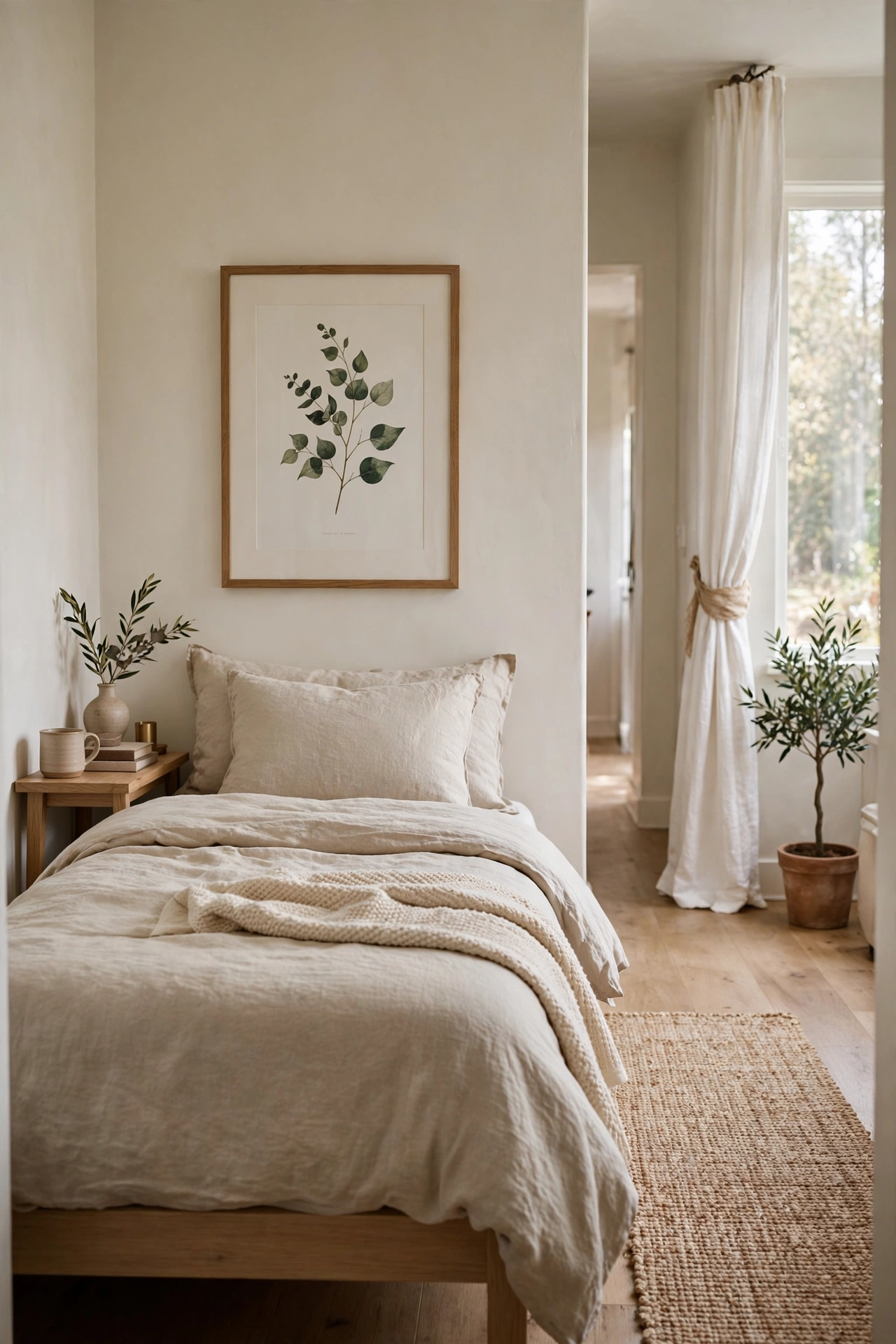
Decor cannot fix a layout that fights you. Set the bed position first, with a clear walking path from the door and room to open drawers and the closet. Every decor choice gets easier once the layout works. A bed that fits the room, with space to walk on at least one side, is the foundation every other decor decision builds on.
Before you buy anything, set the bed position with the layout map in the small bedroom layout hub, because every decor choice gets easier once the layout works.
Keep one focal point. In most bedrooms, the focal point is the bed itself, with bedding and one piece of art or one textile above it. Let the rest of the room stay quieter, so the eye lands in one place.
Common layout mistakes are easy to spot: a bed that blocks the closet door, a dresser that stops a drawer from opening, or a walking path that forces you to turn sideways. Fix these before you decorate, because no amount of styling will make a blocked door feel calm.
Choose a Style Direction
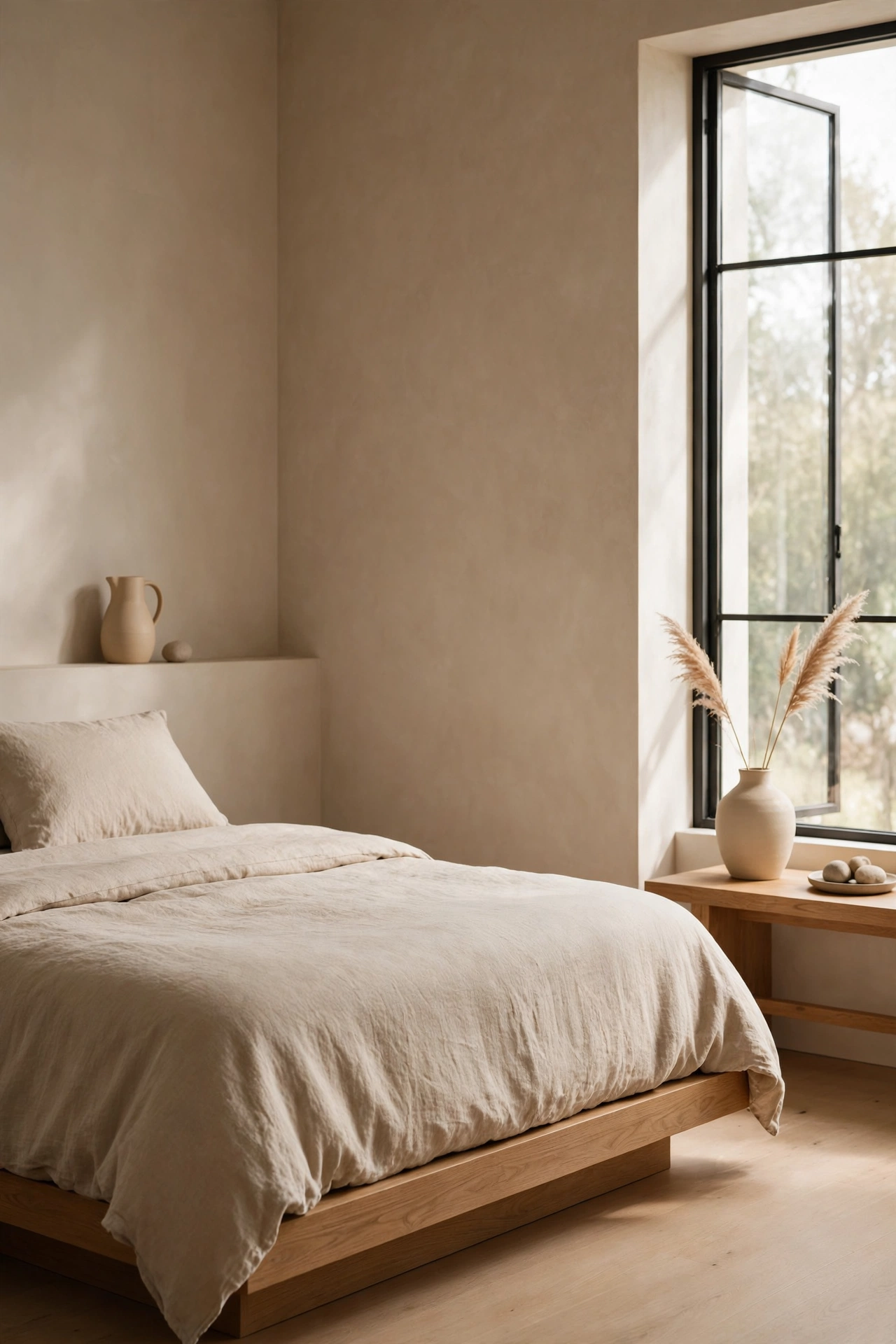
A style direction is a promise you keep. Pick one, modern, cozy, minimalist, boho, or earthy, and let it choose your next three decisions: palette, textiles, and how much to keep. Bedroom style ideas only help when they narrow your choices, not when they add more.
For small rooms, a calmer style direction usually wins. Cozy and minimalist styles use fewer pieces and more texture, which keeps a small room from feeling crowded. Boho can work in a small room if you keep it to one textile at a time, not a full set. Modern works when you keep lines clean and surfaces clear, not when you add more furniture.
Write your style direction down in three words, for example warm, calm, textured. If a new item does not fit those three words, it does not come home.
Test your direction with three items you already own. Put them on the bed together: one textile, one cushion, one object. If they look like they belong together, your direction is clear. If they fight, your direction needs one more decision, usually about palette, not about style.
If deep tones pull you in, the moody bedroom ideas guide shows how dark palettes stay calm and romantic instead of cave-like. If calm and uncluttered pulls you in, the minimalist bedroom ideas guide shows the warm system behind it: fewer pieces, warm neutrals, and texture instead of objects. For a relaxed, textile-led look, follow the boho bedroom ideas guide and build the room in layers around the bed.
Colour and Walls: Pick One Palette

Colour carries most of what you see in a bedroom. Pick one palette and keep it: one main colour, one secondary, one accent. When bedding, curtains, and one textile share related tones, the room reads as one calm element.
If walls and wood feel disconnected, the five earthy bedroom palettes guide gives you a palette and materials system that works without repainting.
Change colour through bedding first. Bedding carries most of the colour in a small bedroom, so a bedding refresh changes the room without repainting or replacing furniture.
A simple way to split colour is 60, 30, 10: about 60 percent one main colour, 30 percent one secondary, 10 percent one accent. In a bedroom, the main is usually bedding and walls, the secondary is curtains and rug, and the accent is one throw, cushion, or art piece. Use it as a guide, not a strict formula.
Storage: Give Clutter a Home

Decor looks better when clutter has a home. A decorated room with clothes on the chair and bags on the floor still looks undecorated. Storage is not the opposite of decor, it is what lets decor show.
Decor looks better when clutter has a home, so use the bedroom storage ideas map to add capacity under the bed and on walls.
Start with the easiest capacity: under the bed, the closet interior, and one wall. Give each category one home, then stop. More storage than you need becomes clutter storage.
The rule that makes storage work is one home per category. Clothes go in one place, bags in one place, small items in one tray. When every category has one home, putting things away takes seconds, and the room stays decorated without effort.
Habits: Keep the Room Looking Decorated

A decorated bedroom only stays decorated if you can keep it that way. Habits, not more storage, keep surfaces clear and the bed made. The best decor system is the one you can reset in five minutes.
After decor is done, the five-minute bedroom reset keeps surfaces clear so the room still looks decorated next week.
Build two habits: make the bed every morning, and clear one surface every evening. Those two habits protect everything else you did in this guide.
Habits beat storage for keeping decor visible. More bins will not help if the bed is never made and one surface is never clear. Two small habits keep the room looking decorated long after the initial effort fades.
Apartment and Renter Decor: Swaps That Leave No Marks
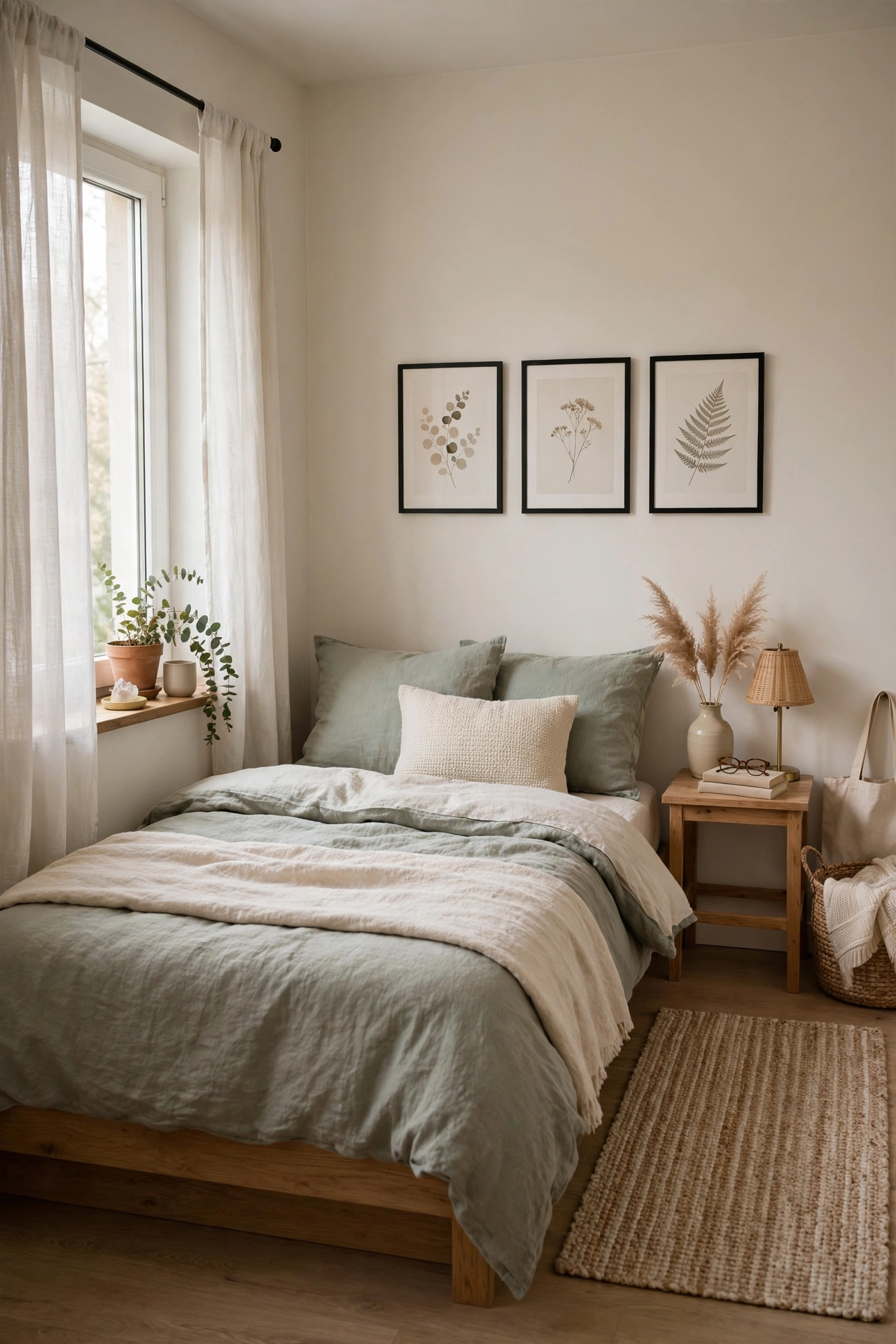
Renters can decorate fully without touching walls or floors. Focus on what moves with you: bedding, curtains, one rug, lighting, and removable hooks or shelves. These swaps change the room and leave no marks.
If you cannot paint or drill, the renter-friendly bedroom ideas show decor swaps that leave no marks.
Check your lease before drilling or painting, and keep one record of what you changed. When you move, the best decor is the decor you can take with you.
A quick lease-friendly checklist: bedding and throws, curtains on tension or removable rods, one rug, plug-in or battery lighting, removable hooks, and freestanding shelves. Each one changes the room and leaves no marks when you leave.
Plants: Add One Living Accent
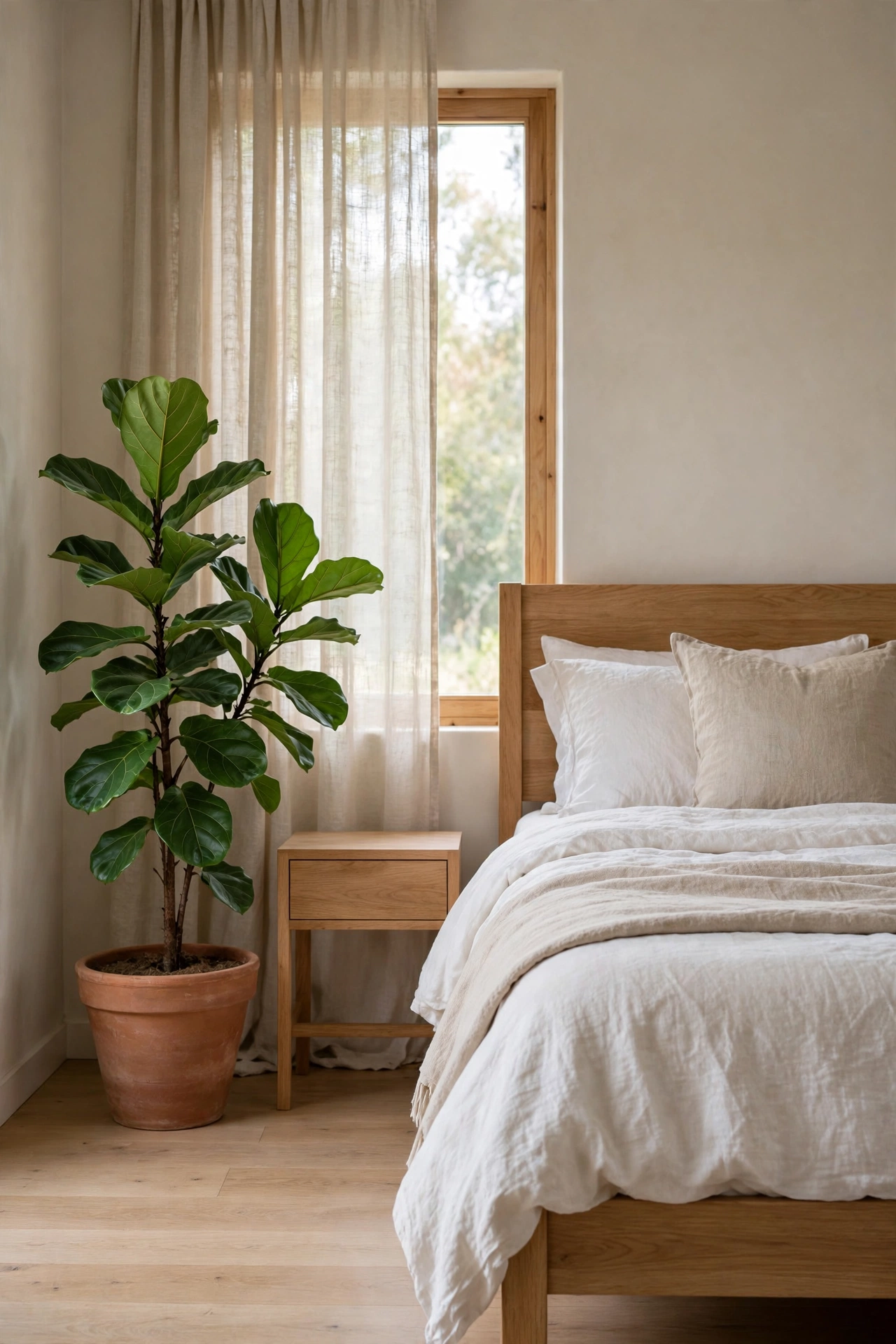
One plant changes a whole room. It adds a living green accent, softens hard furniture lines, and gives the eye one natural focal point. Keep it to one plant and one home for small items, so the plant stands out instead of getting lost in clutter.
One statement plant changes a whole room, so start with the greenery bedroom guide to pick plants by your light.
For shelf placement that saves floor space, use the plant shelf ideas for bedrooms.
Pick a plant that fits your light and your routine. One plant you can keep is better than three plants that struggle.
Pick by light first, not by looks. A bright window suits different plants than a north-facing corner. When the plant matches your light, it stays healthy with less work, and the room keeps its one living accent.
Budget Order: Free First, Then One or Two Buys
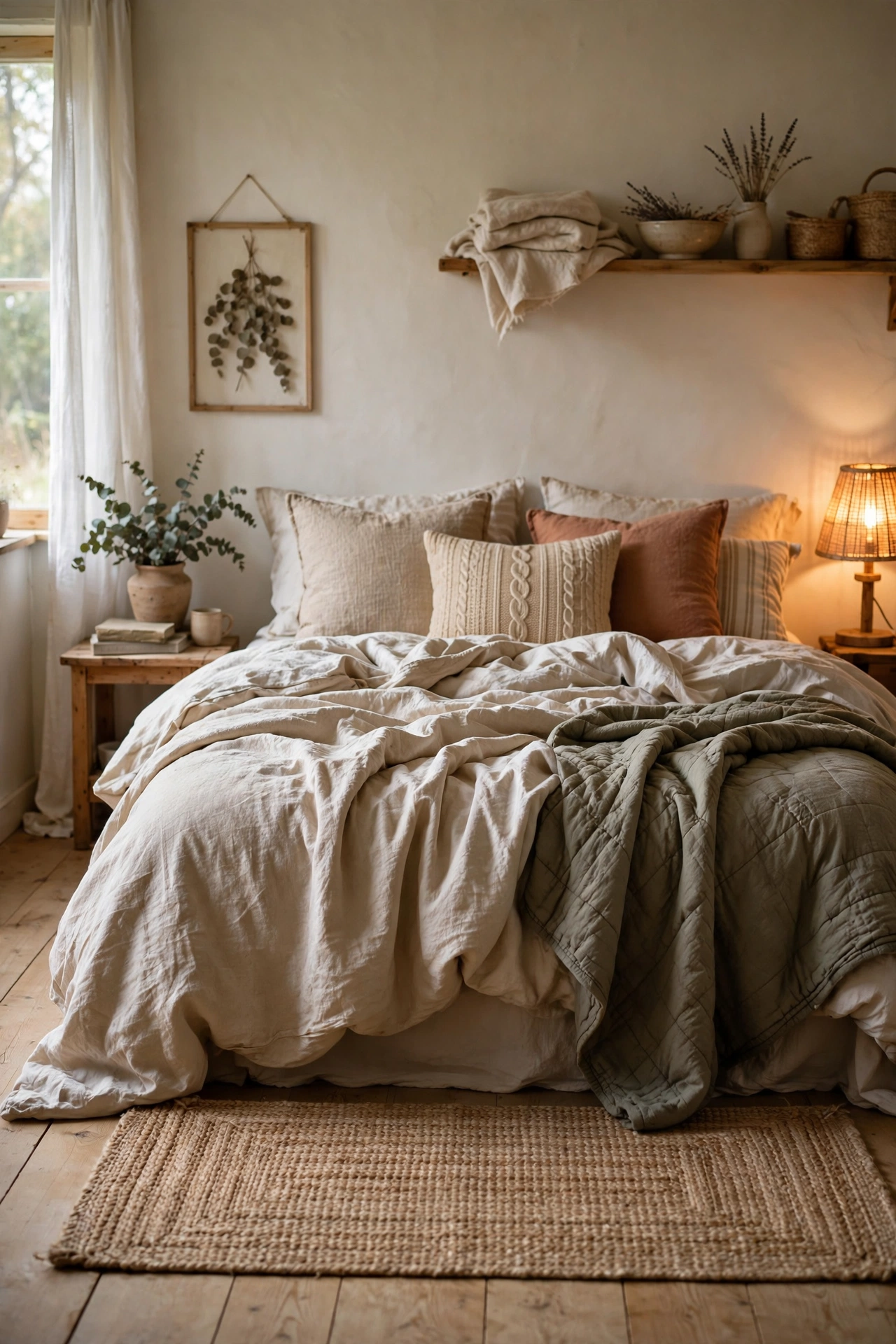
Decor on a budget is a sequence, not a list. Do free steps first: rearrange for a clear path, declutter one surface, swap textiles from another room, and warm the light. Then spend on one low-cost change that solves one problem.
When money is tight, do the free-first cozy bedroom upgrades first and save budget for the one or two buys that matter.
Skip what adds noise: matching sets, many small decor pieces, and new furniture before layout. One well-chosen buy in the right size beats three small purchases.
What to buy last depends on what the room still needs after the free steps. If bedside light is weak, buy one lamp. If the floor feels cold, buy one rug. If walls feel bare, buy one textile or one frame. Never buy all three at once, buy the one that solves the biggest gap.
How to Start Decorating a Bedroom in 5 Steps
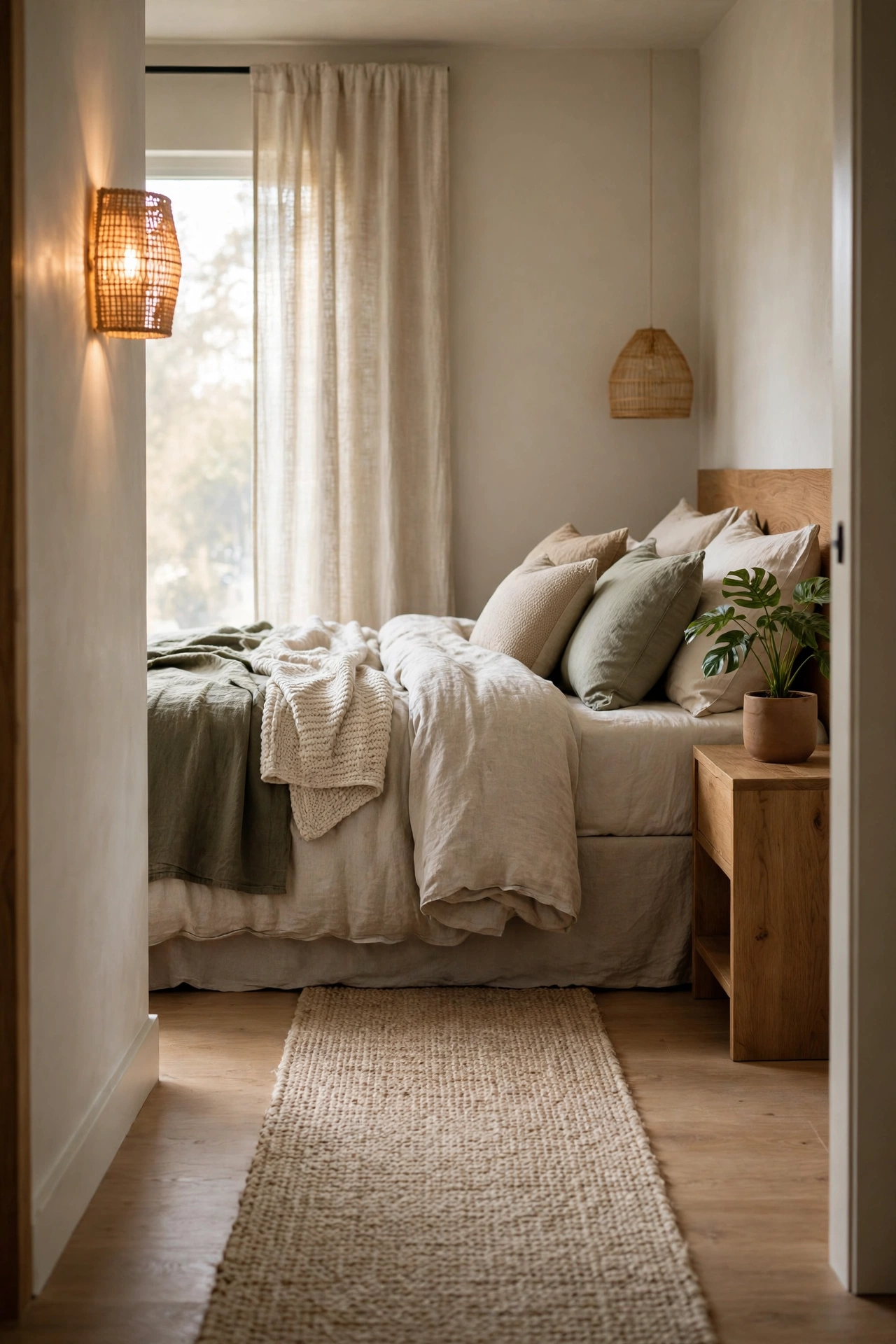
- Pick your constraint. Choose size, budget, renter limits, or style. Start with the one route that fits. Do not open two guides at once.
- Set the layout. Place the bed for a clear path and one focal point. Measure door and drawer clearance before you move anything heavy.
- Choose style and palette. Pick one style direction and one palette. Change colour through bedding first, then curtains, then one textile.
- Add storage and habits. Give each category one home, under the bed, in the closet, or on one wall. Build the five-minute reset to keep it that way.
- Add one accent last. One plant, one textile, or one piece of art. Stop when the room feels calm, not when you run out of ideas.
Bedroom Decor Ideas FAQs
What is trending for bedroom decor?
Bedroom trends lean toward warm neutrals, natural materials, and fewer pieces with more texture. The strongest direction is calm and lived-in, not maximalist. Pick trends that fit your constraint, not trends that force you to replace everything. A trend that needs new furniture, new paint, and new bedding is not a trend for your room, it is a shopping list.
How can I beautify my bedroom?
Start with layout, then palette, then one focal point. A clear path, one colour direction, layered bedding, and one plant or one textile beautify a bedroom more than many small objects. Beautifying is mostly removing what fights the room, then adding one or two things that carry it.
What are the best bedroom design ideas for 2026?
The best bedroom design ideas for 2026 follow the same basics: layout first, one palette, storage with a home for each category, habits that keep it tidy, and one living accent. Use bedroom design ideas as a starting point, then adapt to your room. The ideas that last are the ones that fit small rooms, renters, and tight budgets, not the ones that need a new room.
What colors are best for a bedroom?
Warm neutrals work in most bedrooms: cream, oatmeal, sand, sage, and warm brown. Pick one palette and keep it across bedding, curtains, and one textile. One accent colour is enough. If you want more colour, add it through one throw or one cushion, not through walls you cannot repaint.
Bedroom decor ideas only work when you start with your constraint and finish one route at a time. Pick your route above, do the free steps first, and let the deeper guides carry you from there. A calm, decorated bedroom is not bought in one trip, it is built one clear decision at a time.

3 Comments
[…] a piece from without moving in. Whichever fork you take, the room sits inside the wider map of the bedroom decor ideas pillar, and the sixteen ideas below are the boho route through […]
[…] minimalism is one of several styles being weighed, the wider bedroom decor ideas guide routes every style before you commit to one direction. If you already know you want fewer pieces, […]
[…] you are still choosing a direction, the wider bedroom decor ideas guide routes every style before you commit to one palette. If you want depth, drama, and low warm light, […]