
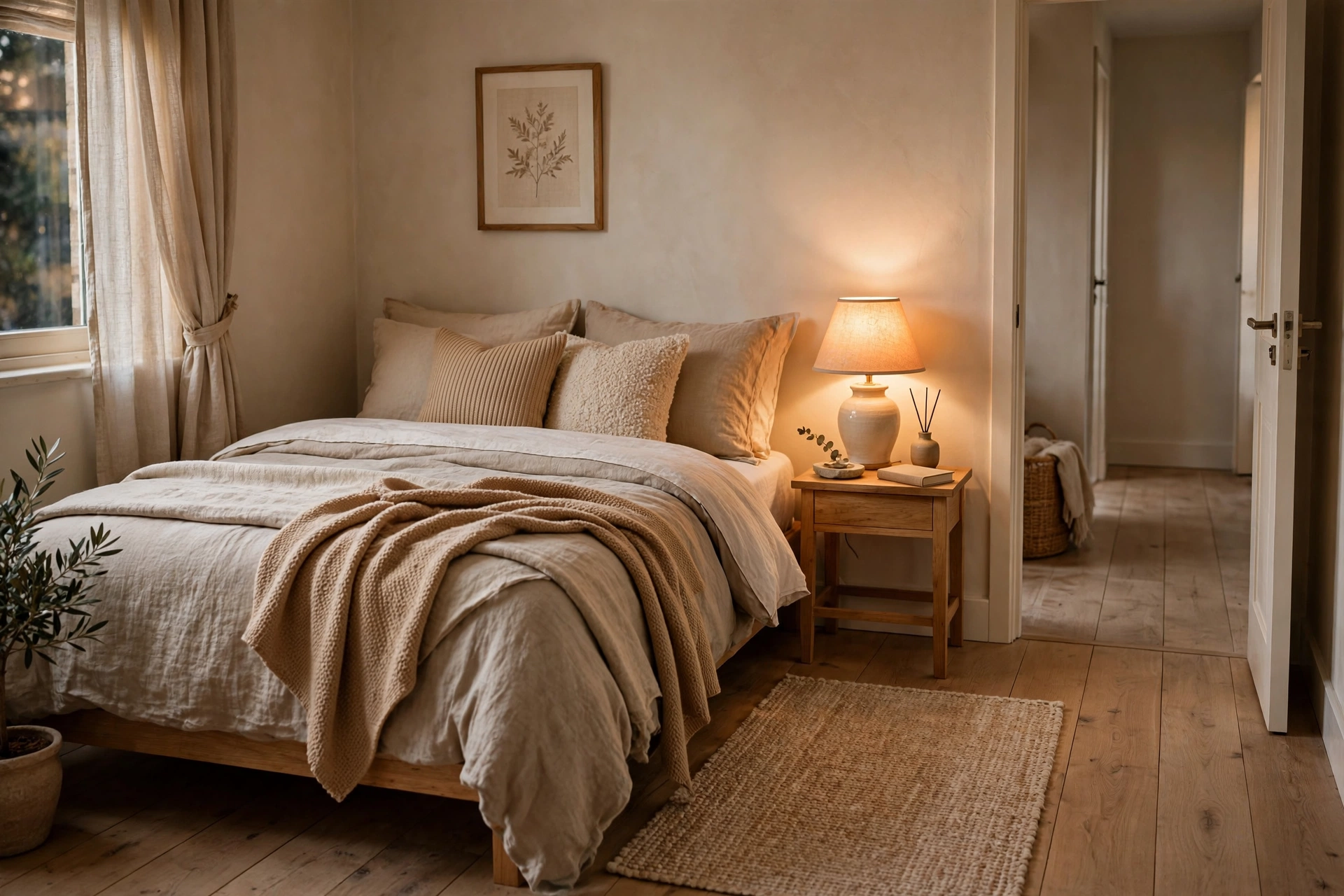
Cozy bedroom ideas on a budget start with what costs nothing: a clear walking path, one clear surface, and warm light. A cozy bedroom is not a room full of decor. It is a bedroom that feels warm, clear, and easy to use, with layered bedding, one focal point, and nothing blocking the way you move through it.
This guide is bedroom-only. It covers 12 bedroom upgrades in free-first order: 4 free, 5 low-cost, and 3 to save for last. For whole-apartment cozy, see cozy small apartment aesthetic. For whole-apartment budget, see small apartment ideas on a budget.
Use the tiers as a sequence. Do the free steps first. If the room already feels calmer, you may not need to buy anything.
1. Rearrange the Layout for a Clear Path and a Focal Point
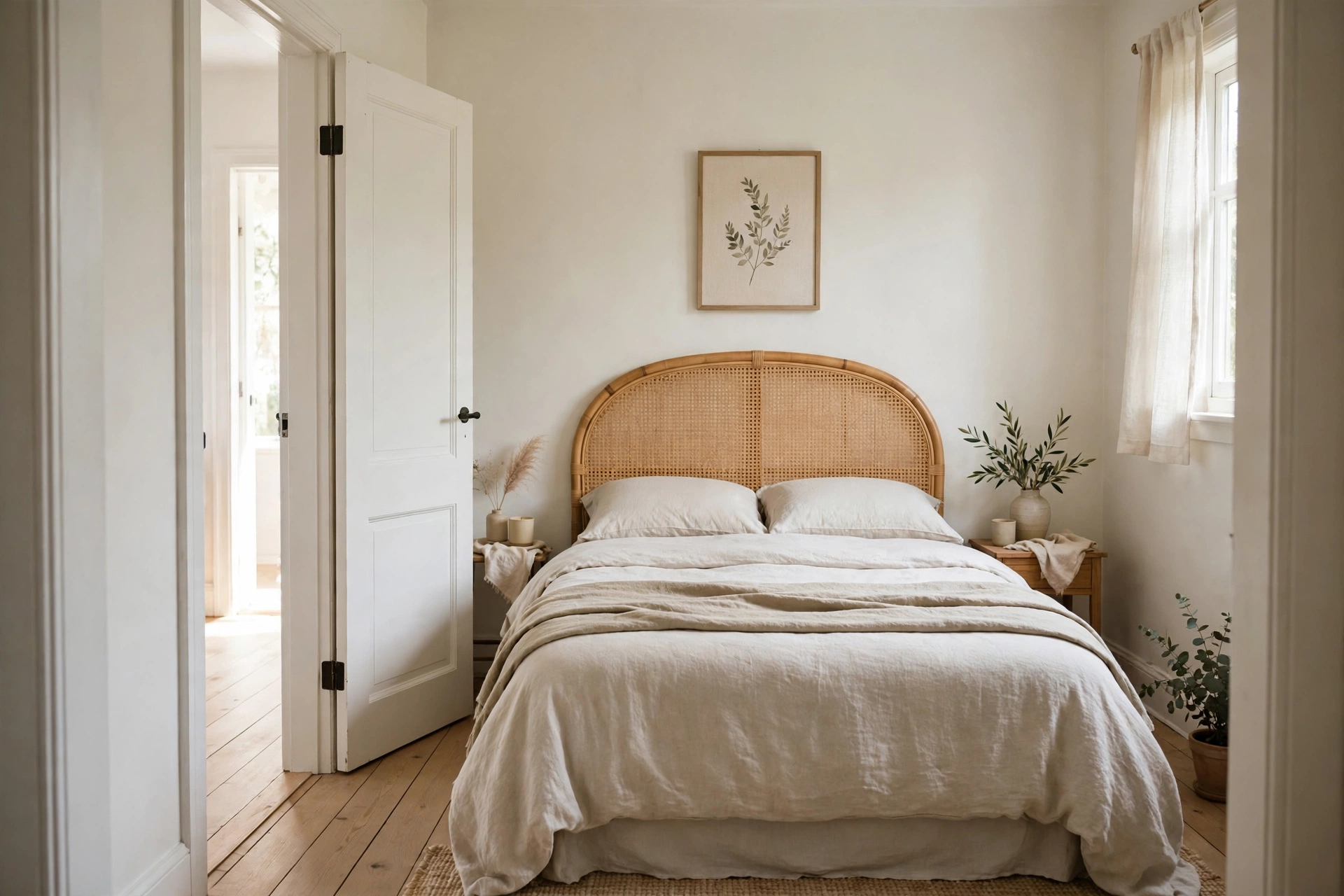
Start with the bed. Place it where you can walk from the door to the bed without squeezing past furniture, and where you can open the closet and drawers fully. A clear path does more for coziness than any new object, because you feel the room every time you move through it.
Then pick one focal point. In most bedrooms, the focal point is the bed itself, with bedding and one piece of art or one textile above it. Keep the rest of the room quieter, so the eye lands in one place. If two people share the room, keep a clear path on the side each person uses, even if the sides are not symmetrical.
For the full measure-first method, including bed placement and walking path checks, see small bedroom ideas.
2. Declutter and Keep One Surface Clear
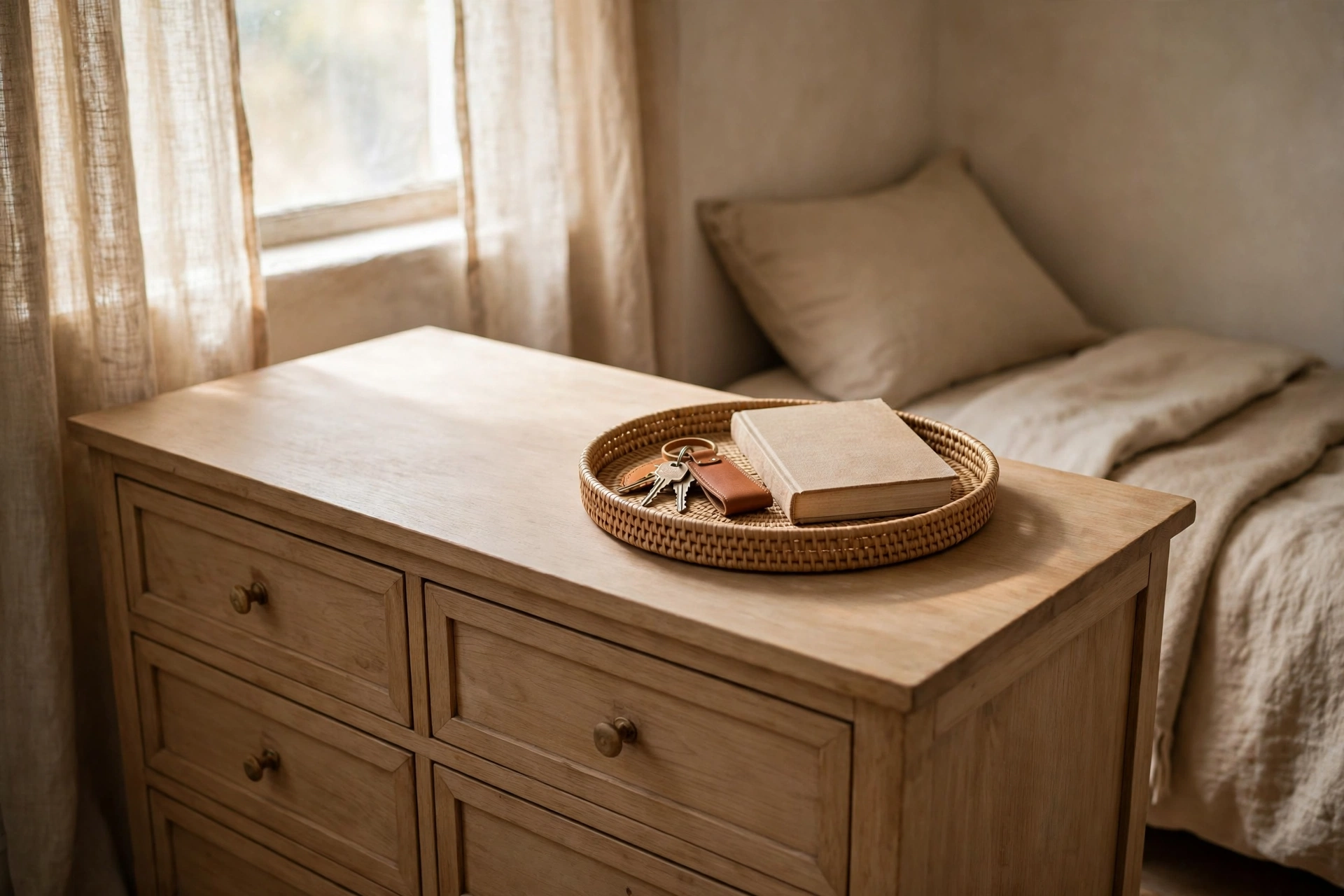
Take everything off one surface, the dresser top or one side of the nightstand, and keep it clear. A clear surface gives you a place to set down a bag, fold laundry, or sort a few items without using the bed or the floor. It also makes clutter easier to notice, because one pile on a clear surface stands out.
Then declutter by category, not by corner. Start with the easiest category: items that belong in another room, trash, and clothes you no longer wear. Move those out first. Do not try to organize what you do not need. For capacity, such as where each category should go, see small bedroom storage ideas.
Keep the rule simple: one surface stays clear, every day. If that surface fills up, that is your signal to reset, not to add another organizer.
3. Use What You Own: Swap Textiles From Other Rooms
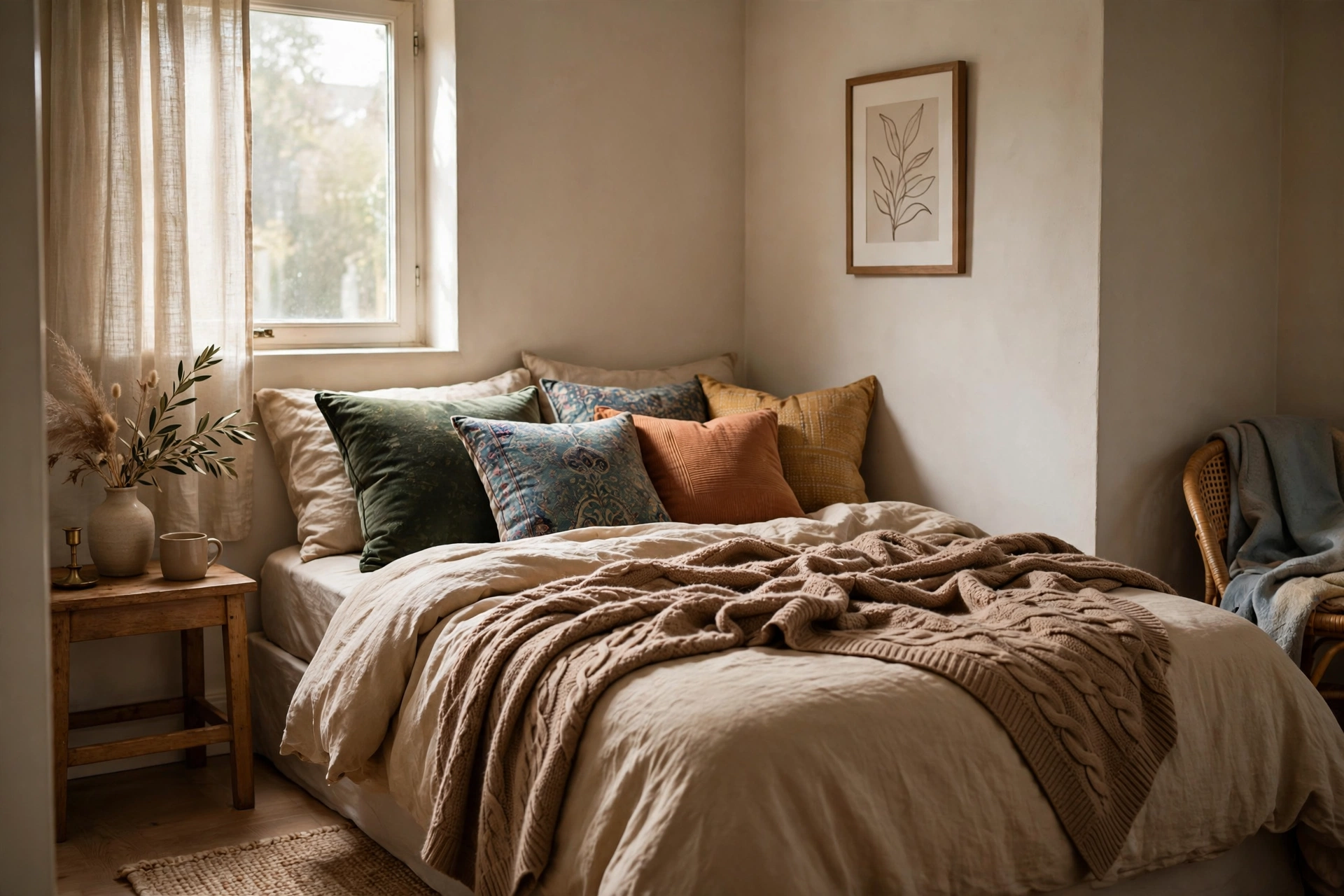
Before you buy bedding or throws, shop your own home. A throw from the living room, a cushion from a guest room, or a quilt stored in a closet can change the bedroom without spending anything. The test is simple: does the textile add warmth and texture, and does it fit the one color direction you already have?
Swap, do not stack. Bring in one throw and one cushion, then remove one that does not fit. Keep the bed easy to make and easy to reset.
For small rooms, one warm textile beats three thin ones. A single woven throw in a warm neutral, plus one cushion in a deeper tone, gives the bed depth without making it look crowded.
4. Warm the Light: Move One Lamp and Tame the Cord
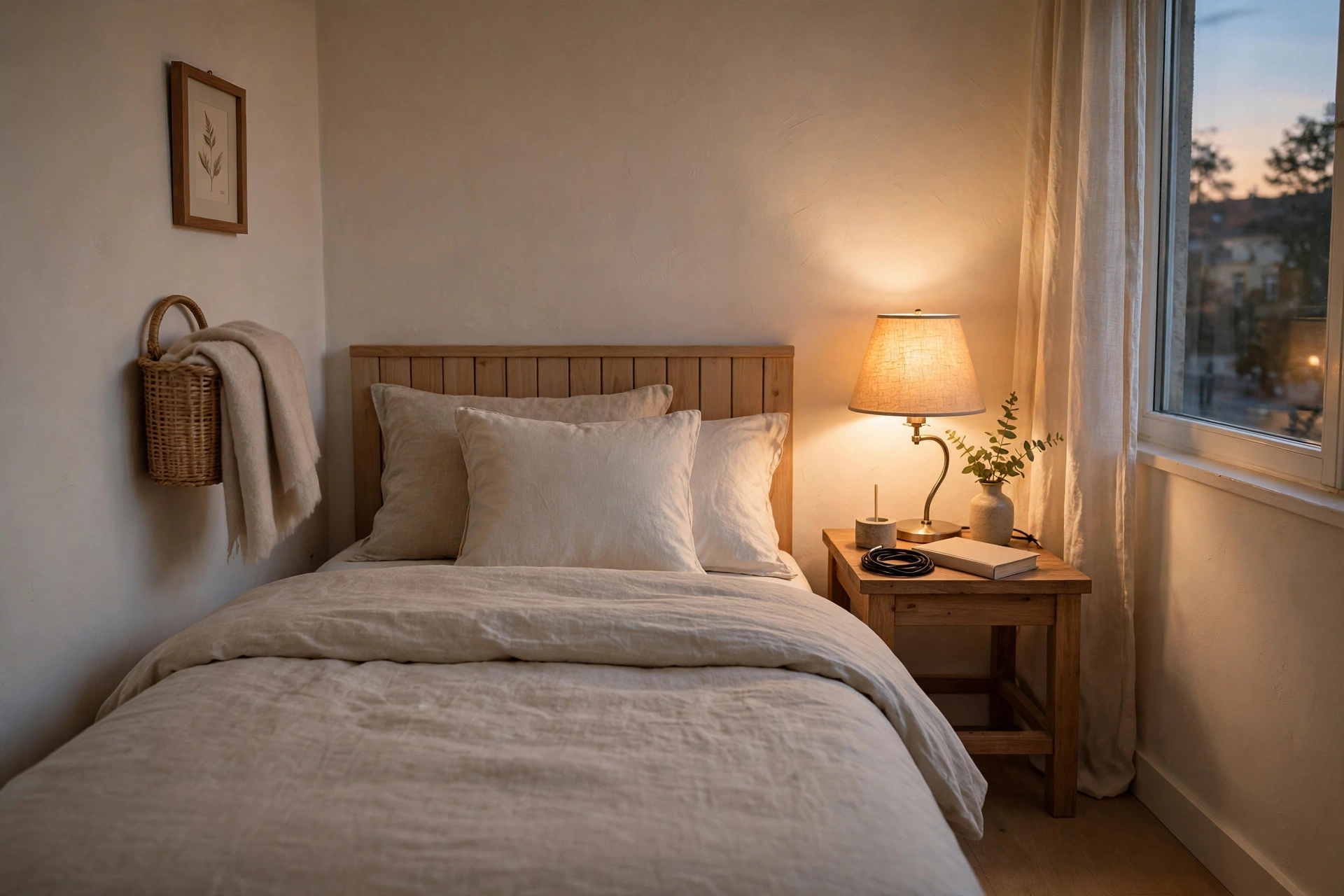
Move one lamp to where you actually use light: beside the bed for reading, or near a chair for winding down. Warm light at head height feels cozier than a single bright ceiling light, and it costs nothing to move a lamp you already own.
Then tame the cord. Coil the extra cord, move the charger to a drawer or a small tray, and keep the nightstand surface to what you use at night: lamp, water, book, phone. A clear nightstand with warm light makes the whole room feel calmer, even when nothing else changes.
Keep enough light to read and move safely, with soft, layered light, not a dark room.
5. Layer the Bedding: One Duvet Plus One Throw
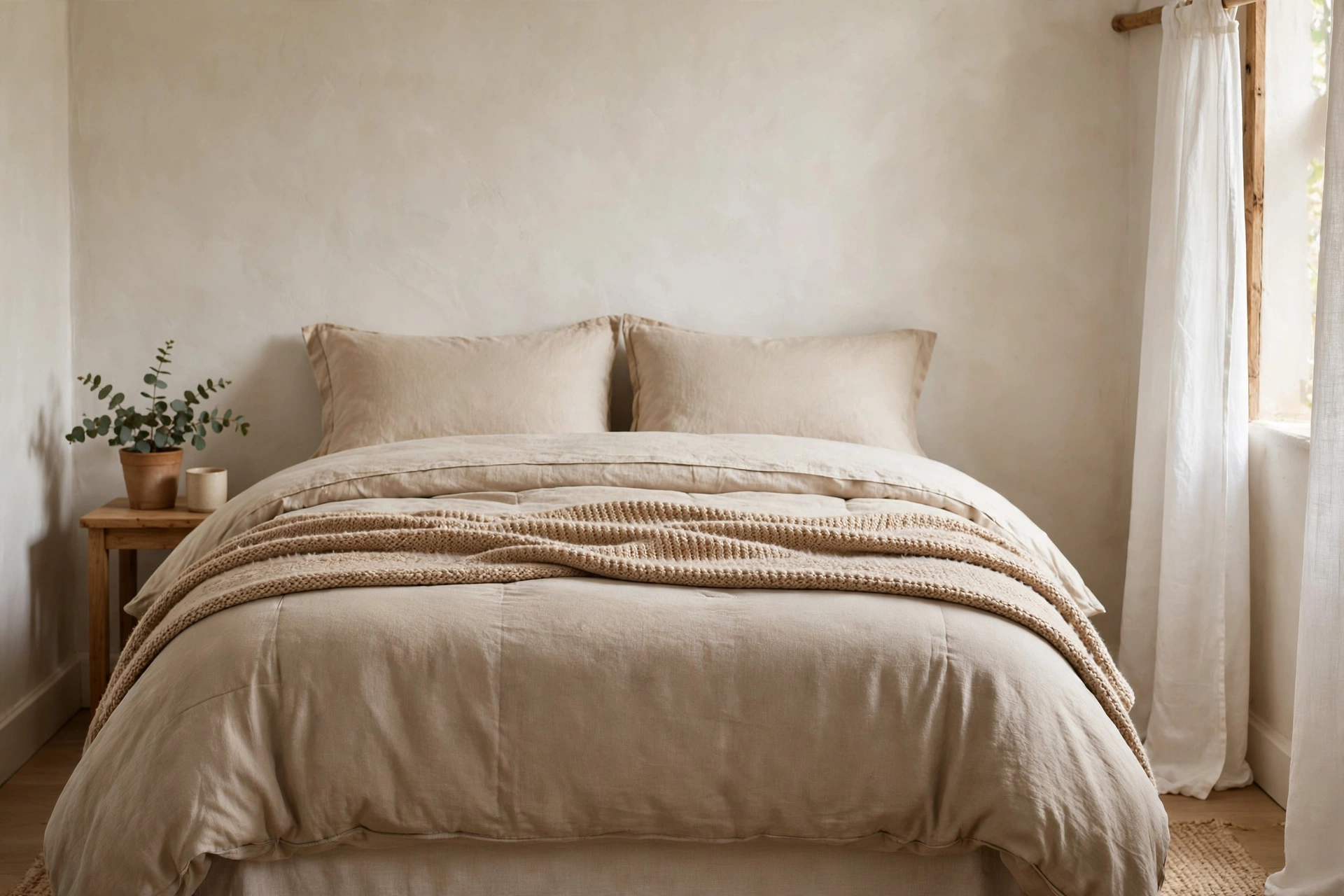
Layering is the lowest-cost way to make a bed feel cozy. Use the bedding you have: one duvet or quilt as the base, one throw folded at the foot, and pillows you already own. The layers add warmth and texture without new furniture.
Keep the palette to two or three tones. A cream duvet, a warm oatmeal throw, and one deeper cushion in rust or olive is enough. When bedding, throw, and cushion share related tones, the bed reads as one calm element, not as many separate patterns.
Two sleeping pillows plus one decorative cushion is enough. If pillows end up on the floor every evening, the bed has too many layers.
6. Hang One Pair of Curtains to the Ceiling
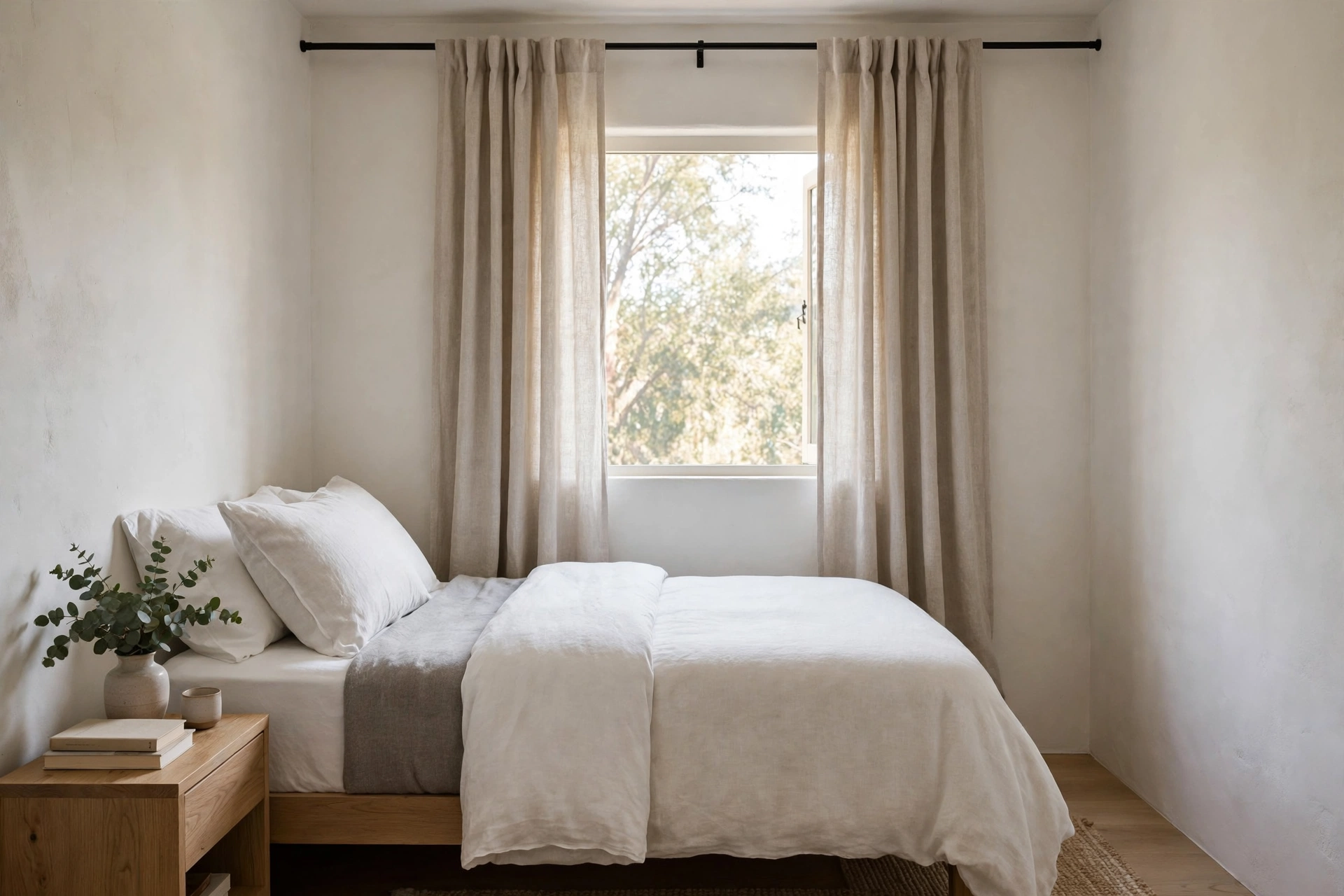
One pair of curtains, hung close to the ceiling and falling to the floor, makes a small bedroom feel taller and softer. It is a low-cost change with a large visual effect, because the window line draws the eye upward.
Choose curtains in a warm neutral that matches your bedding, not a bold pattern that competes with it. Keep the fabric simple and the length clean. If you rent, check your lease before drilling, and use removable or tension options where drilling is not allowed. For lease limits and renter-friendly changes, see small apartment bedroom ideas.
Avoid heavy, bulky curtains. One light pair that frames the window is enough.
7. Add One Rug, Correctly Scaled
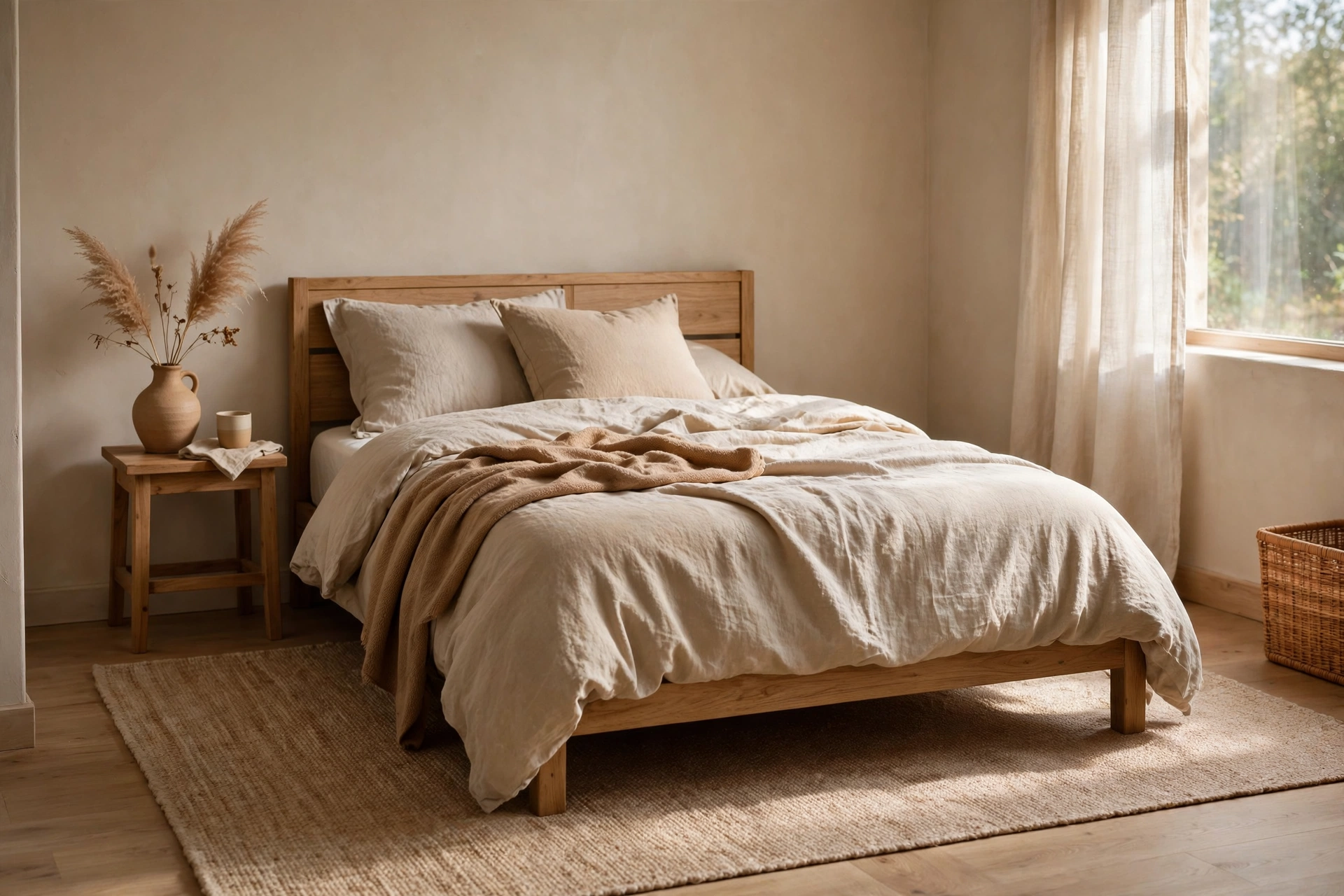
One rug, placed so it extends beyond the sides of the bed, adds warmth underfoot and anchors the sleeping area. In a small bedroom, the rug should relate to the bed, not sit as a small isolated patch in the middle of the floor.
Choose a rug that is large enough to step onto when you get out of bed, but small enough to keep the walking path and closet clear. A flat, low rug in a warm neutral is easier to keep clean and easier to move than a thick rug that blocks doors or drawers.
If the room is very tight, a runner beside the bed works. Measure door swing and drawer clearance before you buy.
8. Choose One Large Textile or Art, Not Many Small Pieces
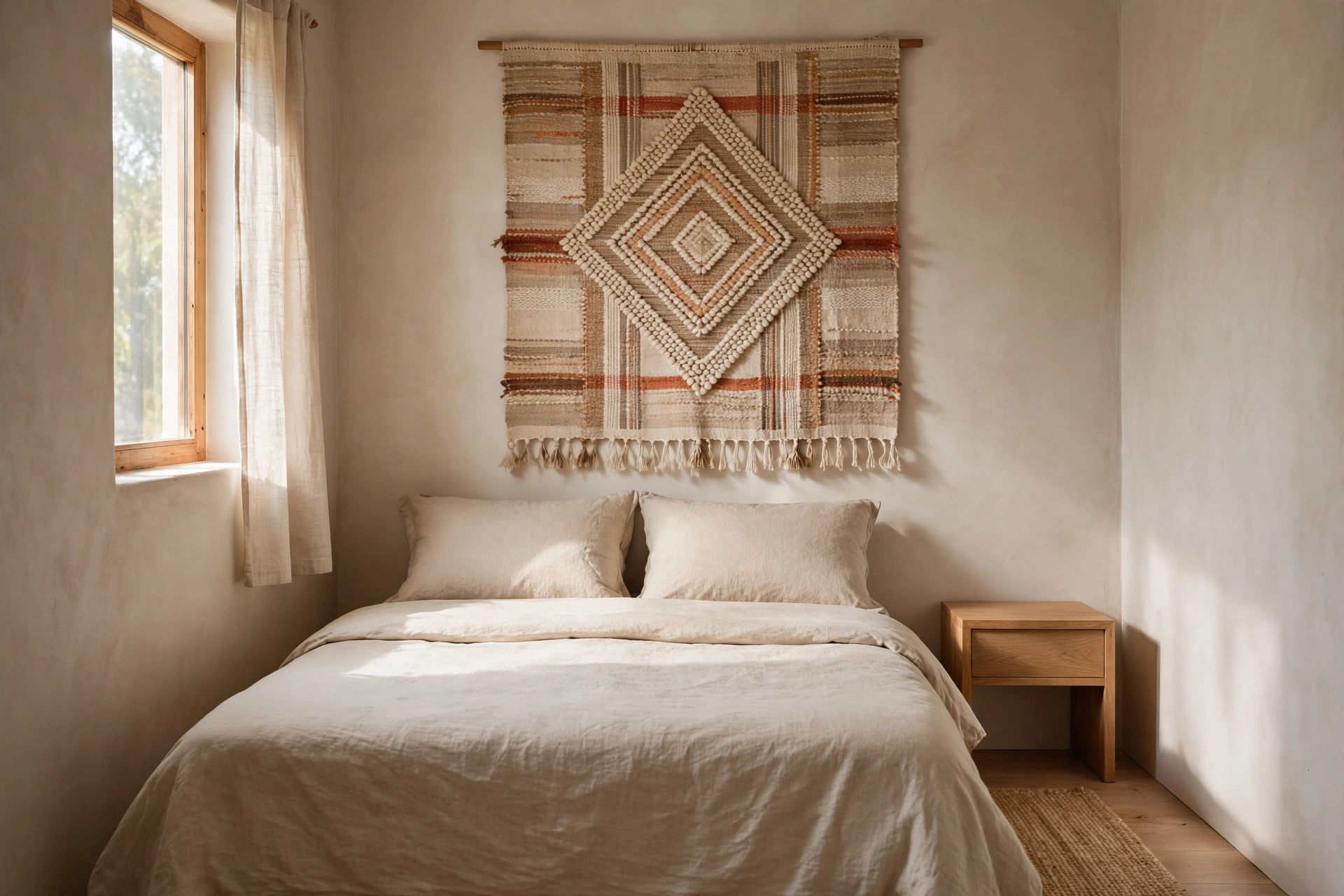
One large textile or one large piece of art gives the bedroom a focal point without filling every surface. A woven wall hanging, a large quilt, or one framed print above the bed can carry the room, while many small frames, baskets, and objects create visual noise.
Pick one piece that means something to you, or one textile in a warm tone that repeats your bedding palette. Hang it where you see it from the door, so the room feels intentional at a glance. Keep the surrounding surfaces clear, so the one piece has room to breathe.
If you already own a large textile or art piece in another room, try swapping it in before you buy. One strong piece beats five small purchases.
9. Buy Secondhand With Dimensions, One Piece Only
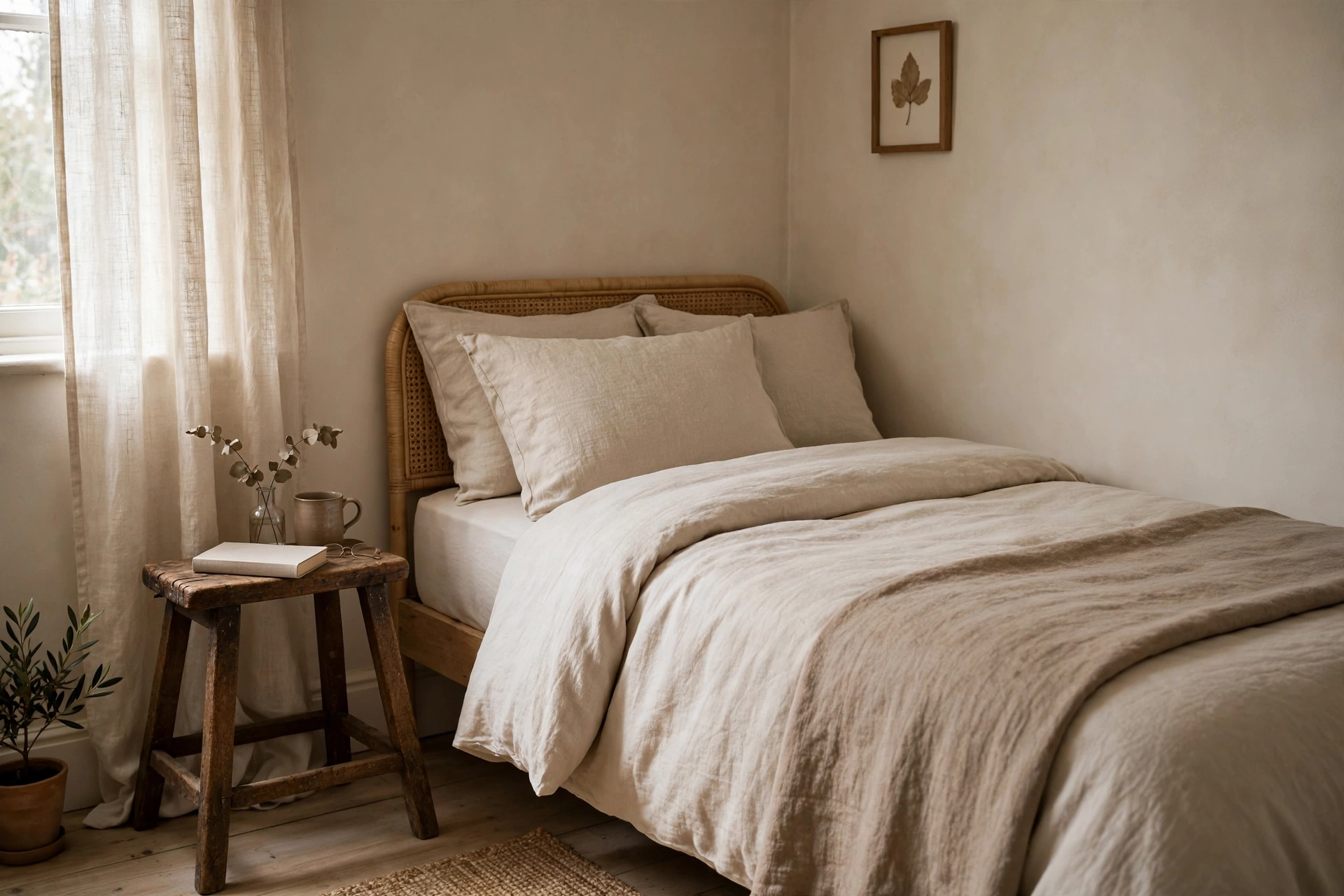
If you do buy, buy one piece, secondhand, with dimensions in hand. Measure the space first: width, depth, height, plus door and drawer clearance. Bring those numbers with you, and do not buy a piece that fits on paper but blocks the walking path.
Good secondhand candidates for a cozy bedroom are a small wooden stool, a narrow side table, a mirror with a job, or a single storage basket. Each one solves one problem. Avoid buying a set, or a piece that only adds storage without replacing something else.
Check drawers, wobble, and color direction in person. One well-chosen piece adds more coziness than three new small items.
10. Add One Statement Light or One Mirror With a Job
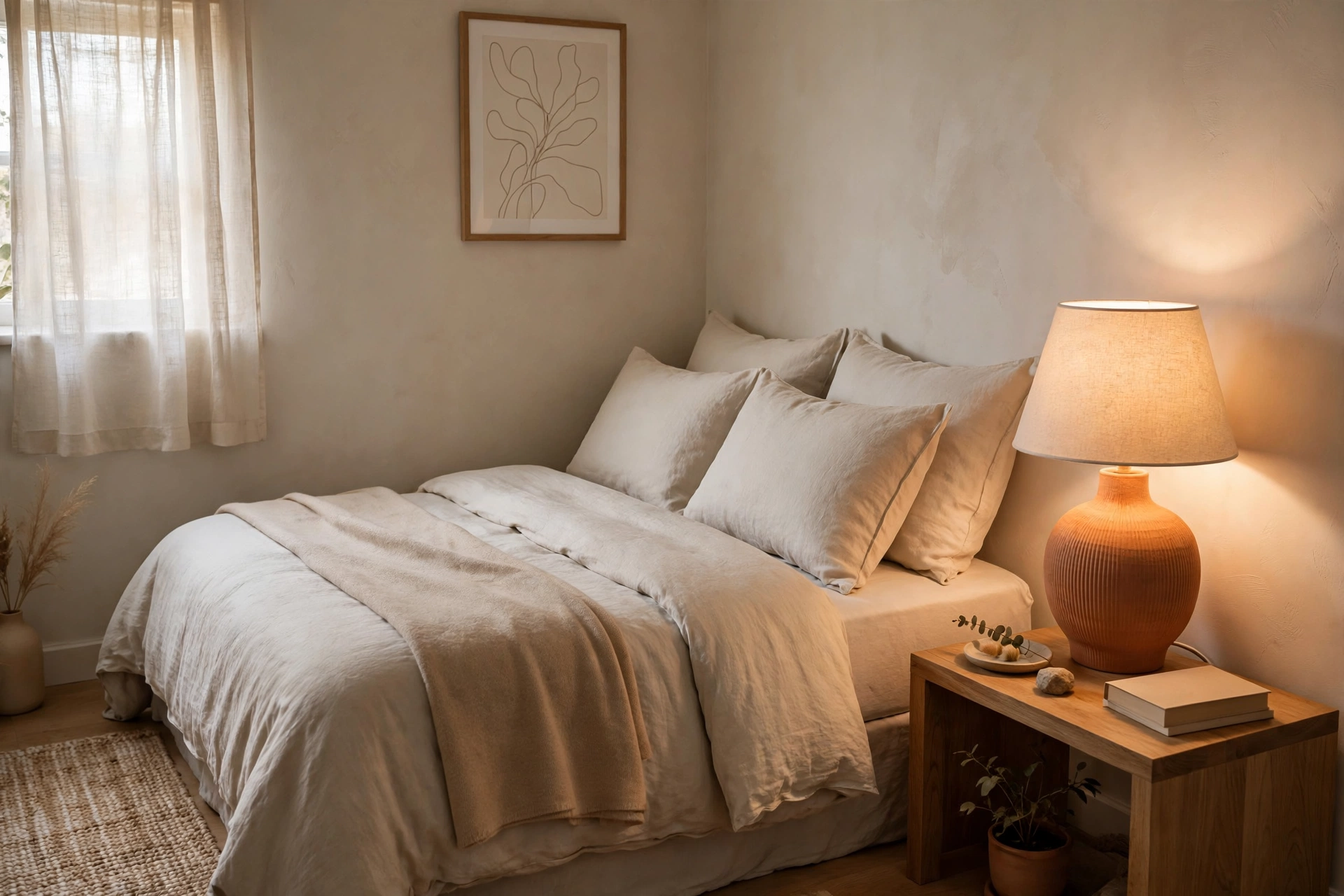
Save statement pieces for last, after layout, declutter, bedding, curtains, and rug are done. One statement light, such as a warm table lamp with a fabric shade, or one mirror with a job, such as a full-length mirror that reflects a window, can finish the room.
The test for a mirror is simple: what does it reflect? A mirror that reflects a window, light, or an open part of the room makes the bedroom feel more open. A mirror that reflects clutter only duplicates the mess. Place it where the reflection helps.
Do not buy both at once. Pick the one your room needs most: a mirror if light is already good, a lamp if the room feels dark.
11. Add One Plant Plus One Tray
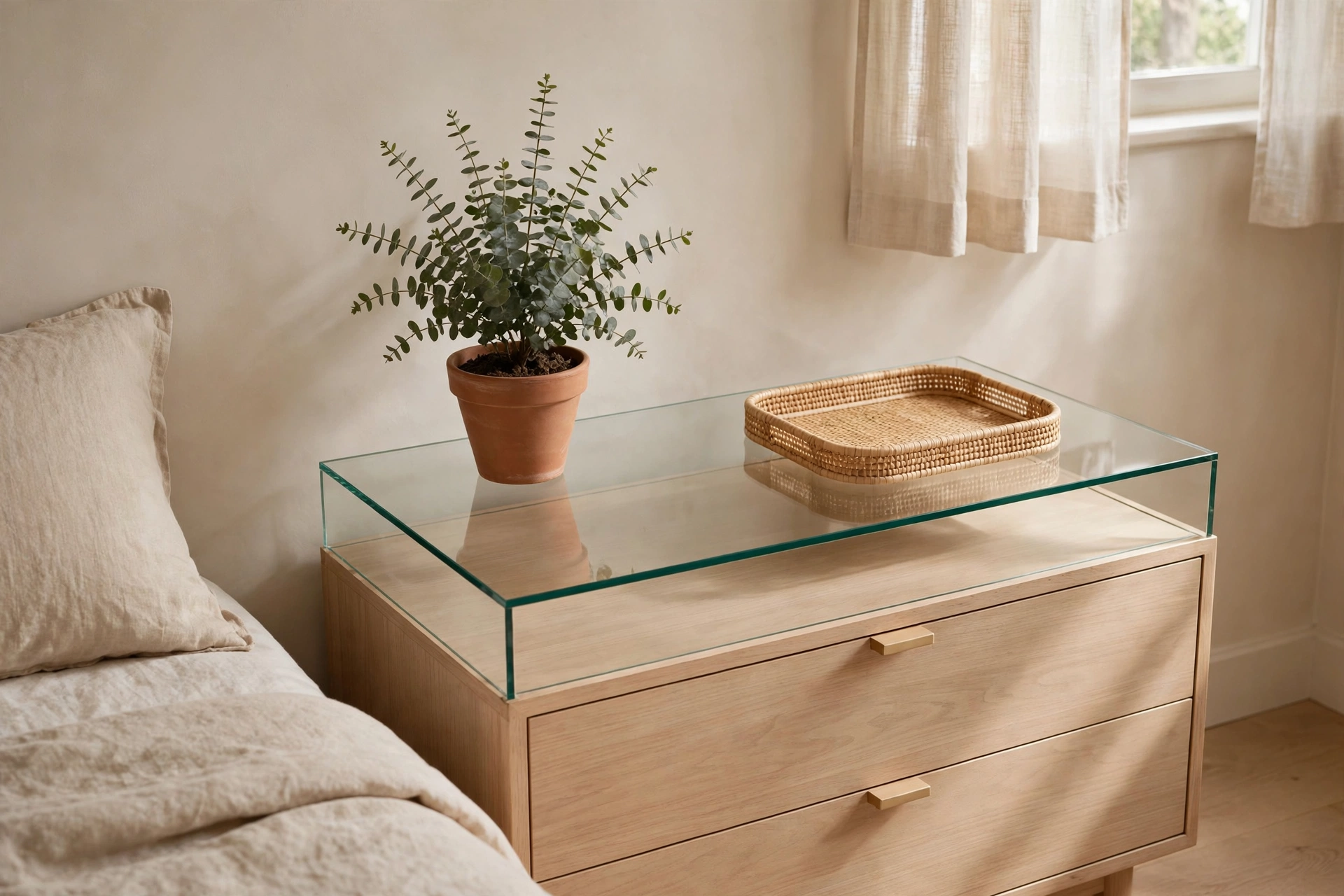
One plant plus one tray is enough for a cozy bedroom. The plant adds a living green accent, and the tray keeps one surface clear by giving small items a home. Keep the rest of the surfaces empty, so the plant stands out instead of getting lost in clutter.
For plant placement that does not add clutter, including common mistakes and a weekend setup, see greenery bedroom ideas. For shelf placement that saves floor space, see plant shelf ideas. This post does not repeat plant care, it keeps plants to one accent.
Pick a plant that fits your light and your routine, and place it where you will notice it. One plant you can keep is cozier than three plants that struggle.
12. Refresh One Palette Through Bedding Only
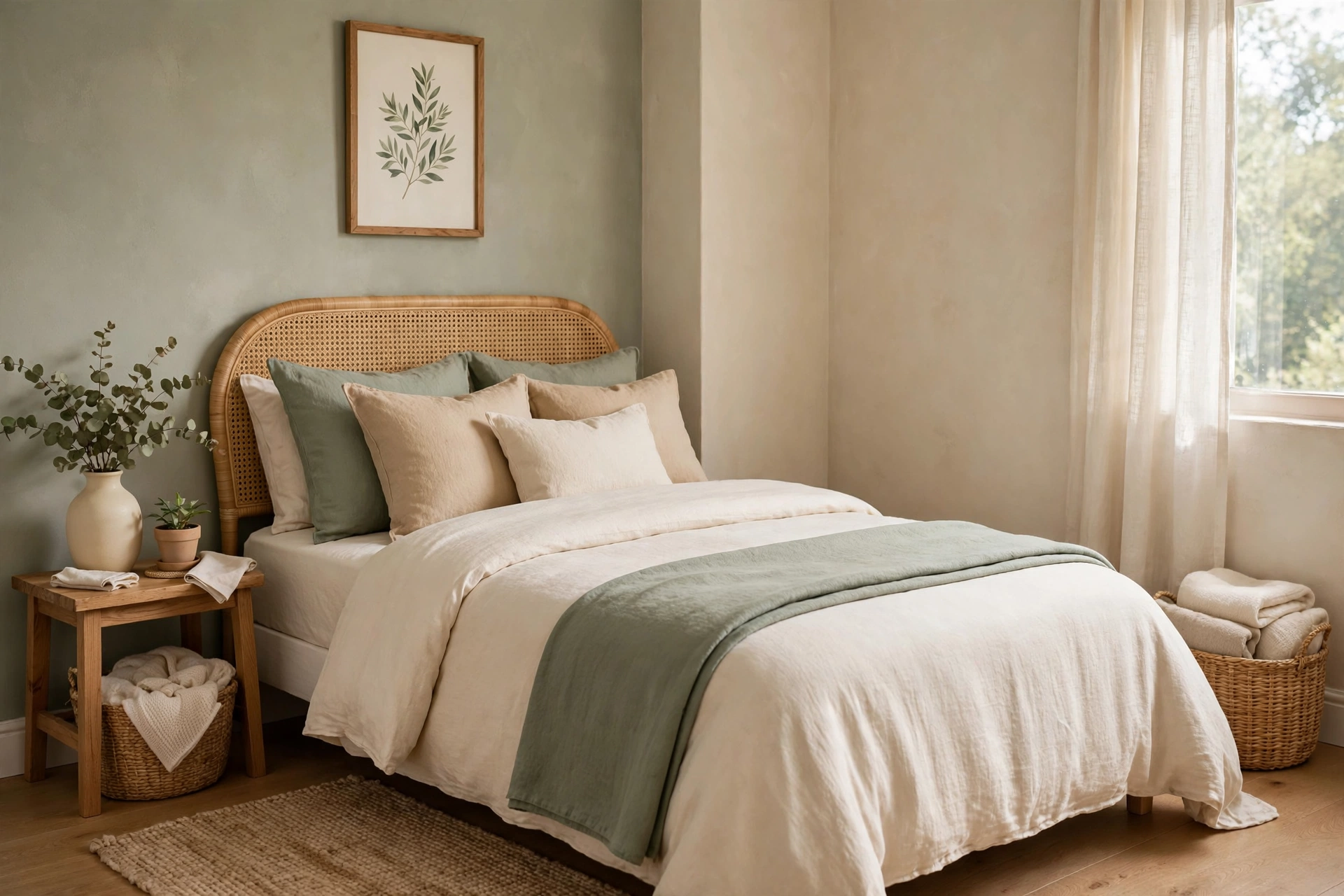
Refresh color through bedding only. Change the duvet cover, throw, and one cushion to one palette, and leave walls, curtains, and rug as they are. Bedding carries most of the color in a small bedroom, so a bedding refresh changes the room without repainting or replacing furniture.
Pick one palette and stay with it. For palettes and how to get color without repainting, see earthy bedroom ideas. This post does not repeat palette theory, it uses bedding as the one place to apply it.
Keep the same rule: two or three tones, one throw, one cushion. Four new colors will feel busier, not cozier.
What to Skip
Skip matching sets. Mixed wood tones, one secondhand piece, and bedding in related tones feel warmer than a full set bought at once.
Skip many small decor pieces. Five small frames, three baskets, and two trays on every surface create more visual noise than one large textile or one piece of art. If a decor item does not solve a problem or carry the focal point, it is clutter.
Skip new furniture before layout. A new dresser, desk, or storage unit will not fix a bed that blocks the door or a walking path that squeezes past the wardrobe. Rearrange first, then decide if you still need furniture.
Skip trendy palettes that do not fit what you own. Stay with one palette that fits what you already have.
Skip buying storage before decluttering. Storage does not fix a room that holds more than it can hold comfortably. Declutter first, give each category one home, then buy one piece only if a category still has no home.
How to Do It in One Weekend
Use this sequence for one weekend, free steps on day one, low-cost steps on day two.
- Day one, morning: rearrange. Move the bed for a clear path and one focal point. Measure door and drawer clearance as you go.
- Day one, midday: declutter. Remove items that belong elsewhere, trash, and clothes you no longer wear. Keep one surface clear.
- Day one, afternoon: swap and light. Swap one textile from another room. Move one lamp to where you use light, and tame the cord.
- Day two, morning: layer and hang. Layer bedding with one duvet plus one throw. Hang one pair of curtains to the ceiling if you have them.
- Day two, afternoon: rug and one piece. Place one rug, correctly scaled. Add one large textile or art, or buy one secondhand piece with dimensions.
- Day two, evening: reset. Run a five-minute reset: make the bed, clear one surface, return items to their homes. For the full reset routine, see small bedroom organization ideas.
Stop when the room feels calm. You do not need to finish all 12 ideas in one weekend. The free steps alone may be enough.
FAQs
How can I make my bedroom look cozy?
Start with a clear path, one clear surface, and warm light. Then layer bedding with one duvet plus one throw, hang one pair of curtains, and add one rug. Coziness comes from warmth, clarity, and texture, not from many objects.
What are the must-haves for a cozy bedroom?
A bed that leaves a clear path, bedding that feels warm, one clear surface, warm light at head height, and one focal point. Those five cover most cozy bedrooms. Everything else is optional.
How do I make my bedroom cozy on a budget?
Do free steps first: rearrange, declutter, swap textiles, move one lamp. Then spend on one low-cost change that solves one problem, such as bedding, curtains, or a rug. Save statement pieces and palette refreshes for last.
How do I make a very small bedroom cozy?
Keep only what the room needs: bed, one clear path, one clear surface, and bedding that carries the color. Use vertical space for one shelf or one curtain line, and keep the floor as clear as possible. A small room feels cozy when it is clear, not when it is full.
What is the 60/30/10 rule for a bedroom?
The 60/30/10 rule splits color: about 60 percent one main color, 30 percent one secondary, 10 percent one accent. In a bedroom, the main is usually bedding, the secondary is curtains and rug, and the accent is one throw or cushion. Use it as a guide, not a strict formula.
What are budget-friendly ways to upgrade a bedroom?
Rearrange the layout, declutter, swap textiles from other rooms, move one lamp, layer bedding, hang curtains, add one rug, and buy one secondhand piece with dimensions. Skip matching sets and many small decor pieces. Spend last on one statement light, one plant, or one bedding palette refresh.
A cozy bedroom does not need more things. It needs fewer jobs, one clear path, one color direction, and changes you can live with. Start with the free steps, add one low-cost change if you need it, and save the rest for last.

2 Comments
[…] find carry a corner. For the complete budget-first way of building a room like this, follow the cozy bedroom budget system after this […]
[…] money is tight, do the free-first cozy bedroom upgrades first and save budget for the one or two buys that […]