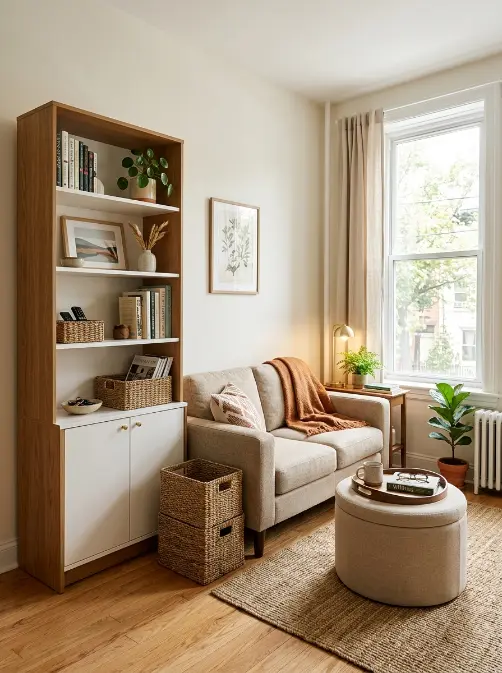
25 Small Apartment Bedroom Ideas for a Cozy, Functional Space
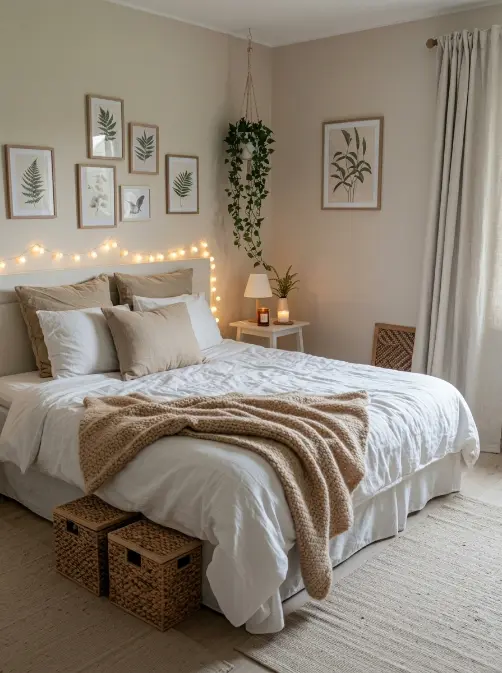
Small apartment bedroom ideas work best when you start with what the room must do, then choose changes that fit your lease. In a rental, that usually means: place the bed first, keep one clear walking path, use tall and under-bed storage with intent, pick one color direction, and favor decor you can take with you when you move.
That order matters because an apartment bedroom has limits a house bedroom often does not. You may not be able to paint, drill freely, move a closet, or change the lighting. The advantage of a small apartment bedroom is that a few deliberate choices show up fast. Moving the bed to the wall that leaves a clear path to the door, for example, can make the same room feel calmer the same evening, without buying anything. This guide gives you 25 ideas in that order: function first, then layout, storage, color, and decor that moves.
This guide is about apartment and renter bedrooms: lease limits, layout in a rental, color, curtains, and decor that moves. For layout method, see small bedroom ideas. For capacity, see storage. For upkeep, see organization.
Start With What Your Bedroom Actually Needs to Do
Before you shop, name the jobs your bedroom must handle. Sleep is the first job. Then add only what is real for your life: getting dressed, working from home, reading, storing clothes and laundry, or charging devices. A room that tries to do everything ends up doing none of them well.
Write the list in priority order. If sleep and getting dressed matter most, the bed and the closet come first. If you also work in the room, the desk gets a defined zone, not a corner that spreads across the bed. If you share the room, each person needs one place to charge a phone, one place for clothes, and one clear side of the bed.
Solve the practical problems before you decorate. That sounds plain, but it is the step that keeps decor from becoming clutter. A rug looks better when the laundry already has a home. Art looks better when the dresser top is not holding every small item you own. Start with function, then add the pieces that make the room feel like yours.
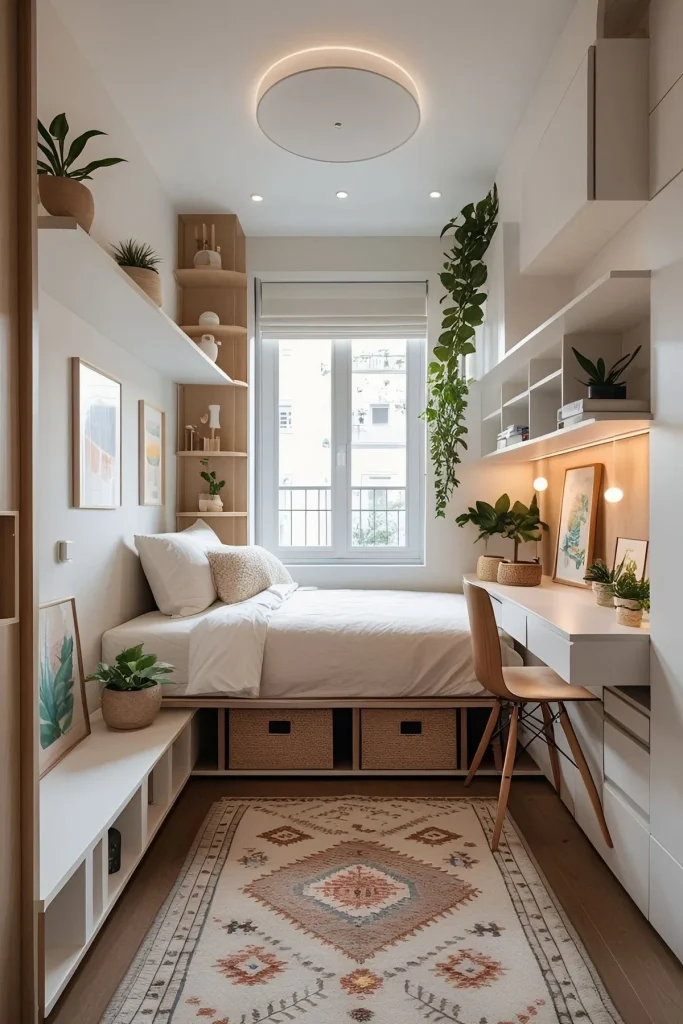
1. Position the Bed Before Anything Else
The bed is the largest object in the room, so it sets the layout. Place it first, then fit everything else around it. In most small apartment bedrooms, the best spot is against the longest clear wall, with one side open for getting in and out and one path left clear to the door.
Try the bed in two or three spots before you commit. Push it into a corner if you need floor space for a desk or a dresser. Keep it off the wall if two people use it and both need to get up without climbing over each other. Leave room for the closet door and drawers to open fully. For a full measure-first method, including walking path and clearance checks, see small bedroom ideas.
One useful test: stand at the door and look in. You should see the bed, one clear walking path, and one focal point, such as bedding or art above the bed. If the first thing you see is a pile of clothes or a blocked path, the bed position still needs work.
2. Do Not Buy a Larger Bed Simply Because It Fits
A bed that fits on paper can still crowd the room. A queen bed in a small room often leaves no space for a nightstand, a clear path, or a dresser that opens. A full or double bed with a clear path usually sleeps better than a queen bed that traps you against the wall.
Ask two questions before you size up. First, can two people get in and out without climbing over each other? Second, can you open the closet, the drawers, and the bedroom door without moving something? If the answer to either is no, the larger bed is costing more comfort than it gives.
If you share the room and both people want more space, look at the bed frame first. A low frame, a frame without a bulky footboard, and bedding that does not hang to the floor all make the same mattress feel less dominant in the room.
3. Replace Bulky Nightstands With Smaller Bedside Solutions
Traditional nightstands can take more floor space than the job needs. A standard nightstand is often about as wide as a small dresser drawer and as deep as a bedside table that holds only a phone, a book, and a glass of water. A wall shelf can hold those same three items while leaving the floor clear below it.
In a rental, good bedside options include a small floating shelf, a wall-mounted sconce with a small ledge, a narrow stool, or a small table that you already own. Pick one per side. If you share the room, keep the two sides balanced so neither person ends up with no surface at all.
Keep the surface simple: phone, book, water, and one small tray for small items. If the bedside surface starts collecting mail, keys, and chargers, move those categories to their own homes instead of letting the nightstand become a second dresser.
4. Move Bedside Lighting Off the Table
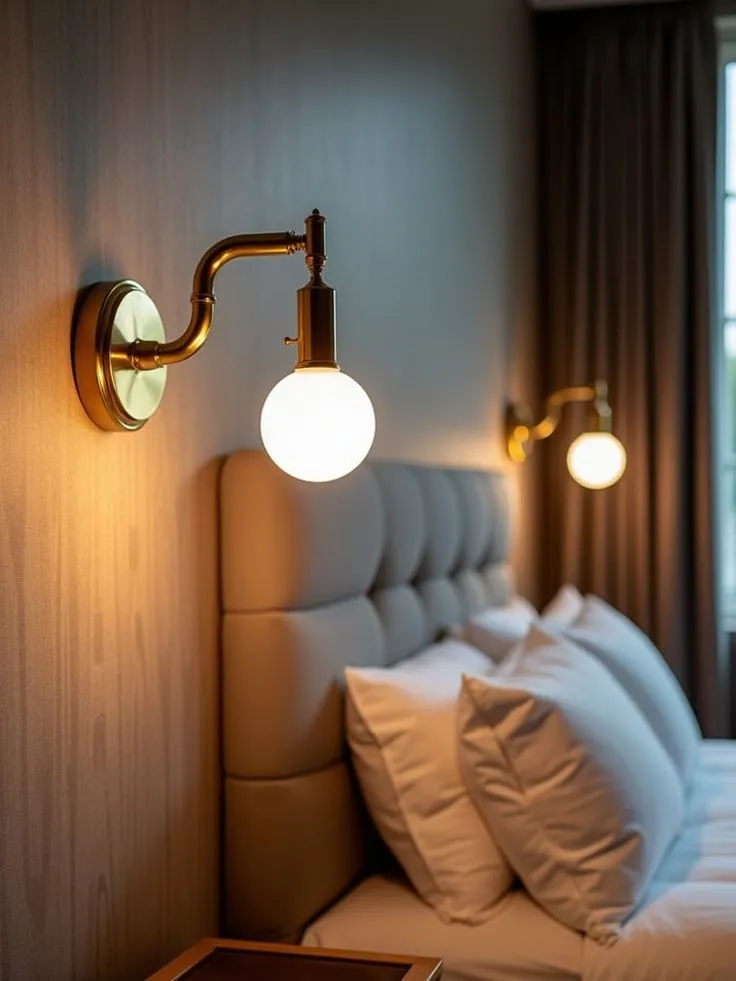
Table lamps take up the exact surface you need most at night. A wall sconce, a clip light on a shelf, or a plug-in pendant frees the bedside surface and gives you light where you read.
For renters, look for plug-in sconces, adhesive or clamp lights, and cord covers that keep the cord tidy. Check your lease before you drill. Many landlords allow small holes that can be filled at move-out, but some do not. When in doubt, choose a no-drill option and confirm it in writing.
Pick warm light for the bedroom and keep the brightest light off the bed. A small reading light at head height is more useful than a bright ceiling light that washes out the whole room.
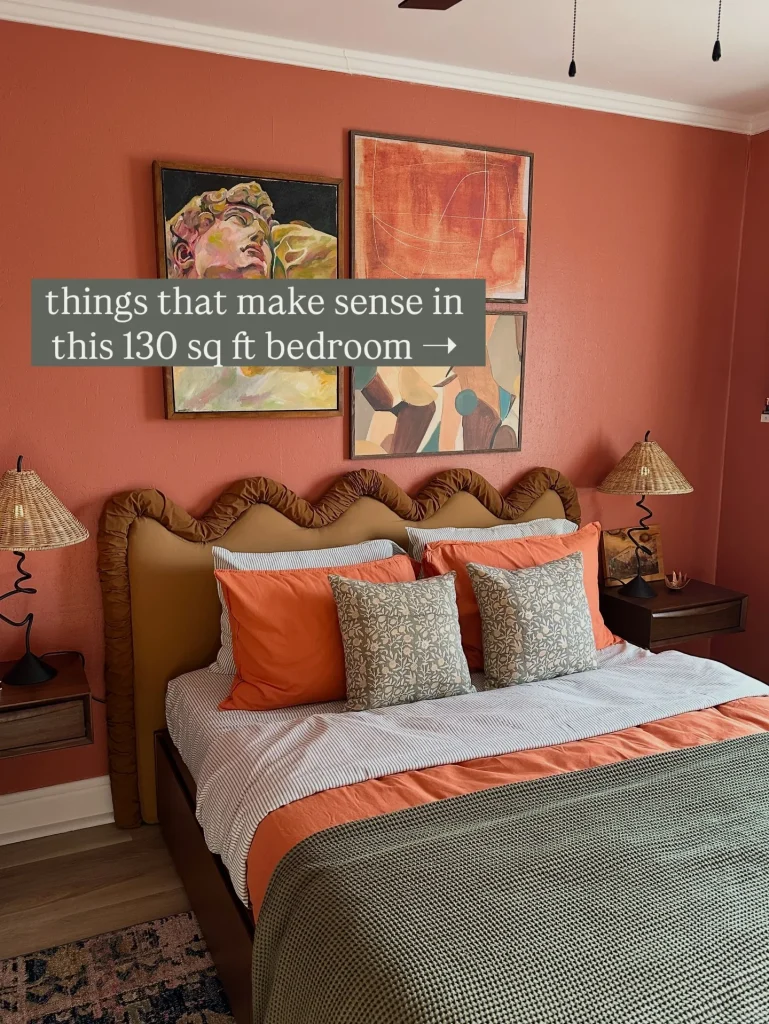
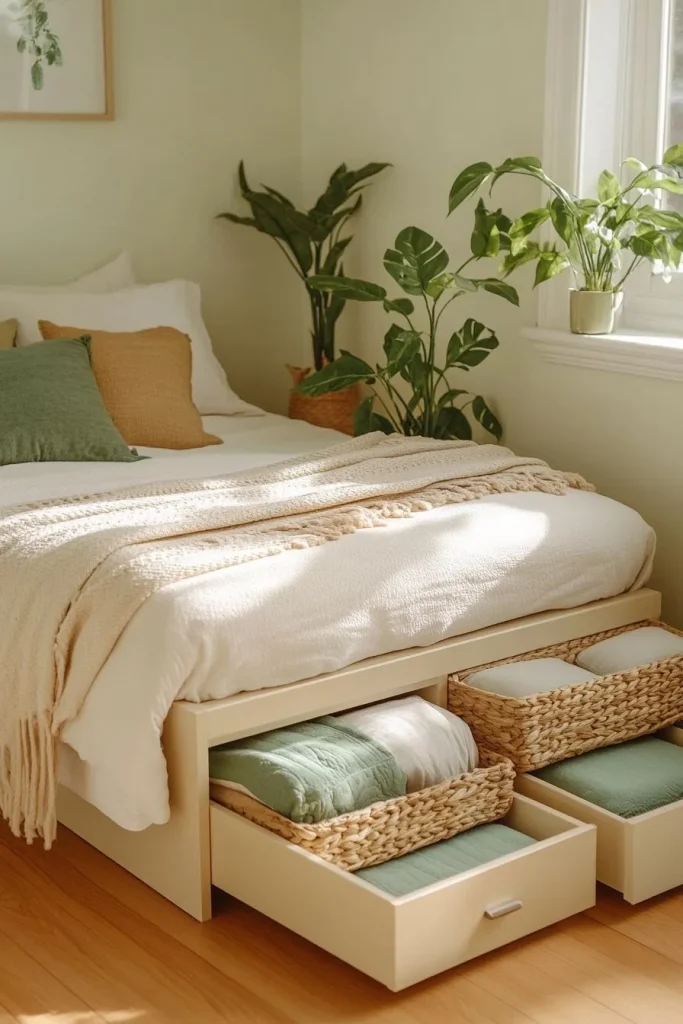
5. Use the Space Under the Bed Deliberately
Under-bed space is useful only when it has a clear job. Give it one category, such as off-season clothes or extra bedding, and keep daily items out of it. For the full method, including bins, what goes where, and frequency, see the storage guide.
Use flat bins or bags that slide out without lifting the mattress. Label the front edge so you can find the right bin without pulling out every box. If you have to move three things to reach one item, that item lives in the wrong place.
6. Choose Tall Storage Before Adding Another Wide Dresser
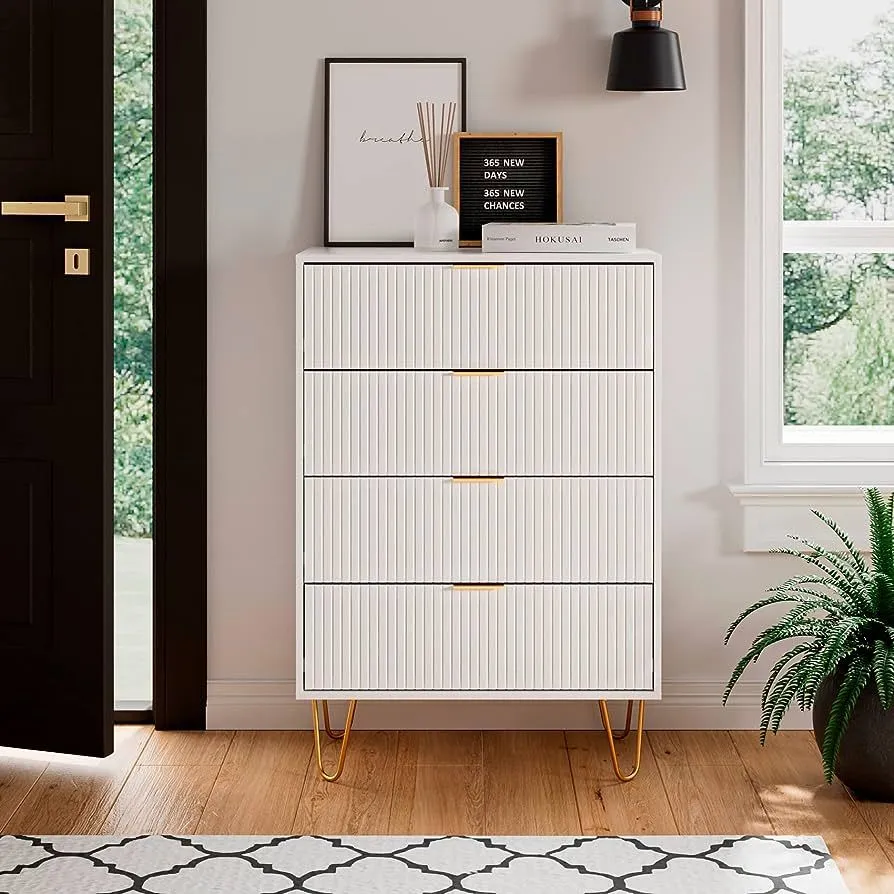
In a small apartment bedroom, floor space is scarce and wall height is often unused. A tall, narrow dresser or wardrobe uses the same footprint as a wide dresser but gives you more storage per square foot of floor. That is a better trade than adding a second wide piece that blocks the walking path.
Choose renter-safe tall storage: freestanding pieces that do not need wall anchors unless your lease and your wall type allow them. If a tall piece feels tippy, keep heavy items low, keep the top light, and ask your landlord before anchoring anything to the wall. For the full capacity plan, including closet, wall, and door storage, see small bedroom storage ideas.
One tall piece is usually enough. If you still need more, add a second tall piece only after you have cleared the closet and the under-bed space. Adding furniture before clearing space is how a small room ends up feeling like a storage unit.
7. Make the Closet Work Harder Before Buying More Furniture
The closet is the storage you already pay for. Before you buy another dresser, check what the closet can do with a second rail, a shelf, or a hanging organizer. A double rail often doubles hanging space without changing the room at all.
Use a simple split: frequently worn clothes at eye and hand level, rarely worn items up high, and shoes or bags in one defined spot. If the closet holds things you never wear, move those items out before you add organizers. Organizers do not fix a closet that is full of things you do not use.
For the full closet-first plan, including the no-closet zone with a rail plus a dresser, see small bedroom storage ideas.
8. Give Laundry a Defined Home
Laundry piles up fastest where the hamper is hard to reach. Put the hamper where clothes actually come off, near the closet or the bed, not behind the door or in another room. One hamper is enough for most small bedrooms. If you sort lights and darks, use a divided hamper rather than two separate bins.
Keep the laundry loop short: dirty clothes go in the hamper, clean clothes go straight to their home after washing. When clean clothes sit on the bed or the chair, the room looks messy even when it is clean. For the full reset and laundry routine, see small bedroom organization ideas.
9. Use the Wall Above the Bed Carefully
The wall above the bed is prime space in a small room, but it needs a careful touch. One large piece of art, one shelf, or a pair of sconces is enough. A crowded gallery above the bed makes the room feel busy and can feel unsafe if items are heavy.
Choose renter-safe hanging: light frames, adhesive hooks rated for the weight, or a leaning frame on a shelf. Keep heavy objects off the wall directly above pillows. If your lease limits holes, one strong adhesive hook and one light frame still give you a focal point without risking your deposit.
10. Make the Bed the Main Decorative Feature
In a small bedroom, the bed takes up the most visual space, so it should carry the decor. One good duvet, two sleeping pillows, and one accent pillow or throw will do more than a shelf of small objects. When the bed looks finished, the whole room looks finished.
Choose bedding in your one color direction (see Section 12) and keep it consistent. If you like pattern, use it on the duvet or the throw, not on every surface. A plain wall, a plain rug, and one patterned bed is calmer than pattern on the bed, the curtains, and the rug at once.
11. Use Fewer Pillows If the Bed Becomes a Daily Storage Problem
Decorative pillows are fine until they create a daily chore. If you pile six pillows on the floor every night and put them back every morning, they are not decor, they are a storage problem.
Keep the pillows you can place in one move. Two sleeping pillows plus one accent pillow or one lumbar pillow is enough for most small beds. If you love the layered look, keep the extra pillows in a basket near the bed so the nightly reset takes seconds, not minutes.
12. Choose One Clear Color Direction
Small rooms look calmer with one color direction. Pick a base neutral (warm white, soft beige, or light gray), one main color (sage, clay, dusty blue, or warm brown), and one accent that repeats in two or three places, such as the throw, a cushion, and one piece of art.
Keep the largest surfaces light or neutral, and let the main color show up in bedding, curtains, and one or two objects. That keeps the room from feeling chopped into small blocks of color. A single color direction also makes it easier to shop, because every new item has a clear test: does it fit the palette?
For color direction, see Earthy Bedroom Ideas, which covers 5 palettes plus how to get color without repainting, and paint vs no-paint options for renters. Use that guide for the palette, and keep this post focused on apartment layout and decor that moves.
13. Do Not Assume a Small Bedroom Has to Be White
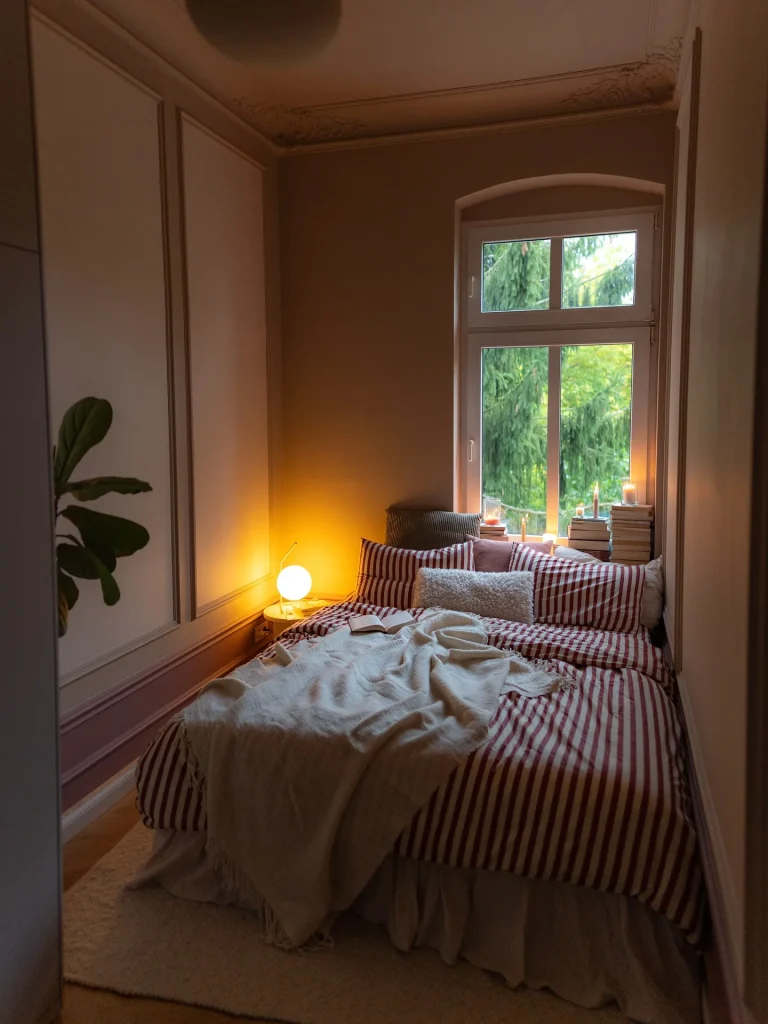
White can feel clean, but it can also feel cold and unfinished in a small room with little natural light. A warm neutral, a soft sage, or a muted clay on bedding, curtains, and art can make the room feel warmer without making it feel smaller.
If you cannot paint, bring color in through bedding, curtains, a rug, and one piece of art. Those four pieces set the color of the room more than the wall color does. If you can paint one accent wall with permission, keep it behind the bed so it reads as a backdrop, not as a box closing in on you.
14. Use Curtains to Strengthen the Vertical Lines
Curtains change how tall a room feels. Hang the rod close to the ceiling and let the curtains fall to the floor, even if the window is small. That long vertical line draws the eye up and makes the window feel larger.
Choose a simple curtain in your main color or a neutral that matches the walls. Avoid heavy patterns on curtains in a small room, because they break the vertical line. If you rent, use a tension rod inside the window frame or a rod with adhesive or clamp mounts, and check your lease before drilling into trim.
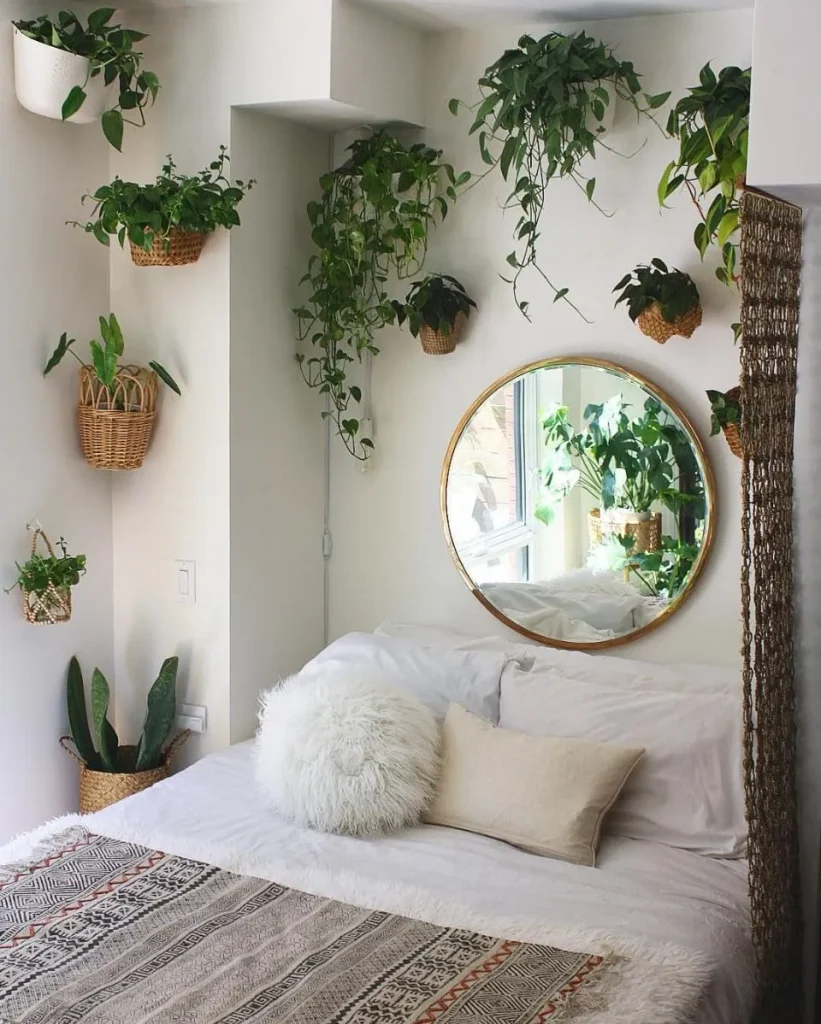
15. Add a Mirror Where It Has a Useful Job
A mirror helps most when it has a job: checking your outfit, bouncing light from a window, or making a narrow room feel less closed in. A mirror without a job is just another object on the wall.
Place one full-length mirror where you get dressed, ideally on the closet door or the wall beside it. If you want a second mirror, place it across from a window so it reflects light, not across from clutter. Skip the mirror that faces the bed if it reflects a messy dresser or a pile of laundry.
16. Use a Rug to Add Warmth Without More Furniture
A rug is one of the easiest ways to make a small bedroom feel warmer without adding furniture. It softens the floor, defines the bed zone, and adds color and texture in one move.
Size it so it extends past the sides of the bed where your feet land. A rug that only sits under the bed does nothing you can feel. If you rent and the floor is cold or worn, a rug also covers the floor without any change to the apartment itself. Choose a low-pile rug that is easy to clean, and use a non-slip pad so it stays put.

17. Keep the Top of the Dresser Mostly Functional
The dresser top is a work surface, not a display shelf. Keep it mostly functional: a tray for daily items, a lamp or sconce, and one object you like. When the dresser top holds every small item you own, it reads as clutter even when each item is small.
Use a tray to set a limit. Keys, watch, and lip balm go in the tray. Everything else goes in a drawer or in its own home. If the tray overflows, the drawer behind it needs a clear job, not a bigger tray.
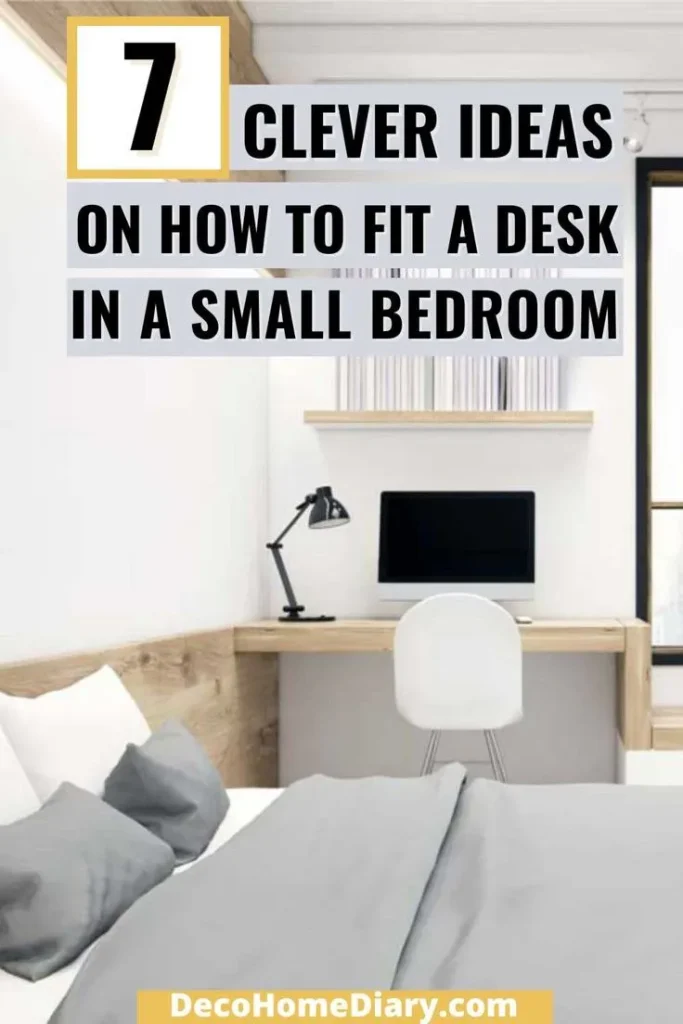
18. Create a Desk Zone Only If You Really Need One
A desk in the bedroom is useful only if you actually work there. If you work at the desk once a week and use the bed the rest of the time, the desk is taking up space for a job it does not do. Be honest about how often you use it before you give it floor space.
Test the need first: use a small table or a fold-down surface for two weeks and track how often you sit there. If you use it most days, give it a real zone with a chair, light, and one drawer or shelf for work items. If you use it rarely, keep a small laptop tray or use a fold-down desk that folds flat against the wall.
If you do keep a desk, keep it near natural light and away from the bed, so work does not spread onto the bedding. One desk, one chair, one lamp, and one place for papers is enough. For the full layout method, including desk plus dresser plus wardrobe combinations, see the layout guide.
19. Use Doors and Awkward Areas for Practical Storage
Doors and awkward corners are often the most overlooked storage in an apartment. The back of the bedroom door can hold hooks for a robe, a bag, or tomorrow’s outfit. The narrow gap beside the dresser can hold a slim rolling cart. The corner that fits nothing else can hold a tall plant stand or a narrow shelf.
Keep door storage shallow and light. Heavy over-door racks can damage hinges and doors, which can cost you part of your deposit. Use hooks rated for the weight, and keep the door able to close fully without catching. For the full door and wall capacity plan, see small bedroom storage ideas.
20. Keep Some Floor Visible
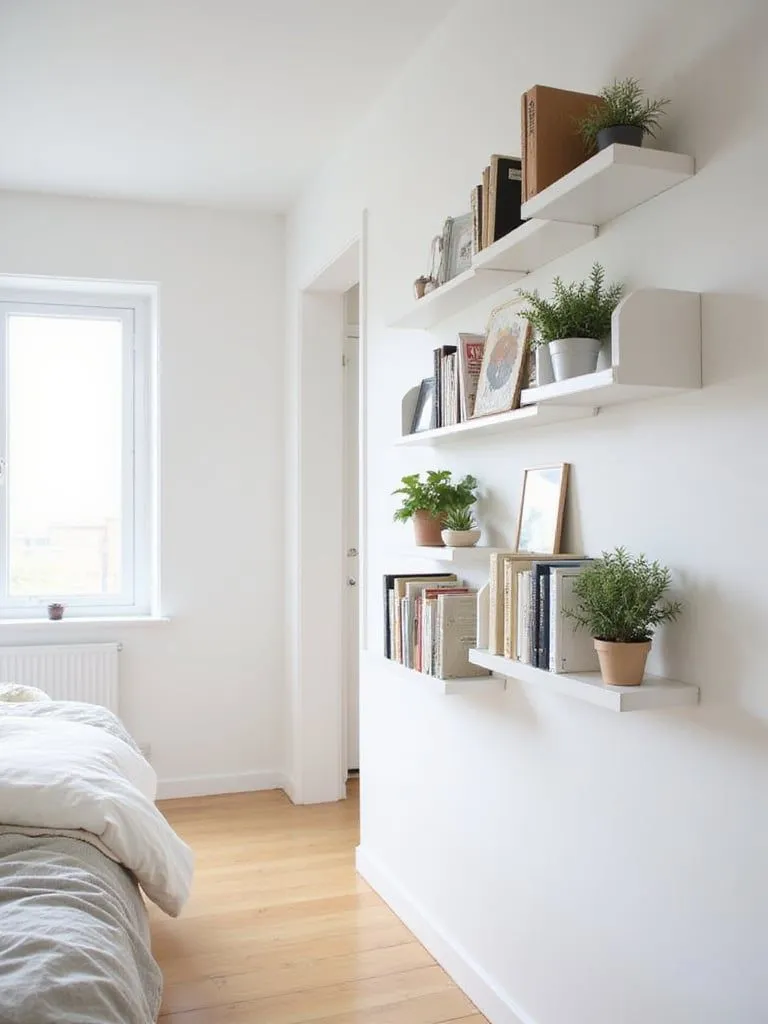
A small room feels larger when you can see some floor. That does not mean the room must be empty. It means every piece of furniture earns its floor space, and the path from the door to the bed stays clear.
Check the floor from the door. If you can see a clear path and a patch of floor on at least two sides of the bed, the room will feel open. If every inch of floor is covered, remove one piece or move one piece up the wall before you buy anything new.
21. Add Personality Without Covering Every Surface
Personality in a small room comes from a few strong choices, not from covering every surface. Pick three things that feel like you: one piece of art, one textile (throw, cushion, or rug), and one object (a plant, a book stack, or a framed photo). Let those three carry the room.
Edit the rest. If a surface holds five small objects, keep the one you like most and move the others to a drawer, a shelf, or another room. Fewer objects with more space around them look more intentional than many objects crowded together. Decorating fewer horizontal surfaces, such as keeping the dresser top to a tray and one object, is one of the fastest ways to make a small room feel calmer.
22. Add Texture for a Cozier Bedroom
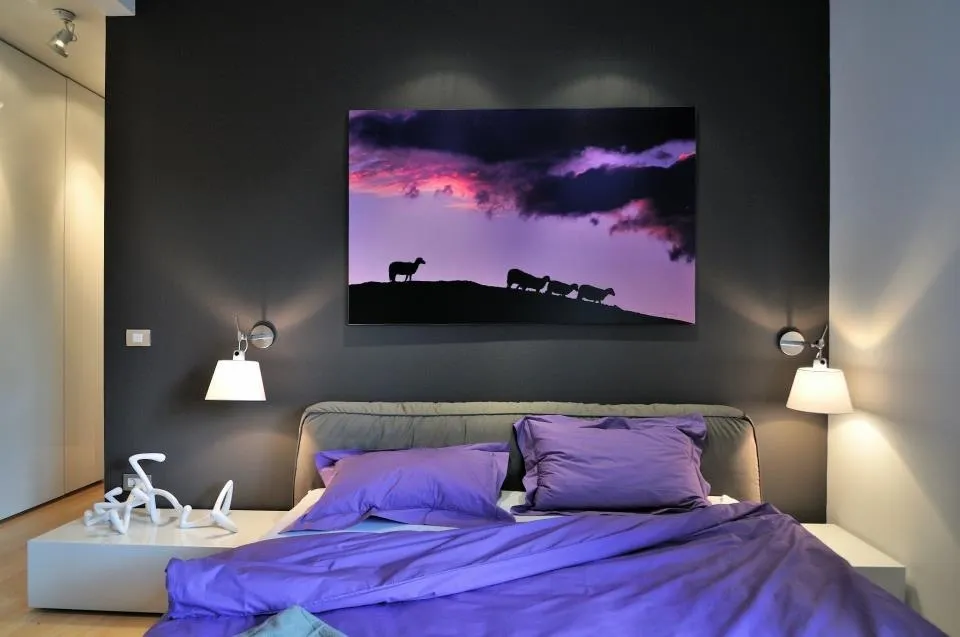
Texture makes a small room feel cozy without adding color or clutter. A linen duvet, a knit throw, a woven basket, and a wood frame give the room depth even when the palette stays neutral. Texture is how a simple room avoids feeling flat.
Mix two or three textures, not six. Linen plus wood plus one woven basket is enough. If every surface has a different texture, the room feels busy. If the textures repeat, such as wood on the frame and wood on the shelf, the room feels settled.
For one plant as decor without clutter, see Greenery Bedroom Ideas, which covers small bedrooms plus a plant shelf. One plant and one tray on a clear surface is enough. Do not add a collection of plants to a room that is already short on surfaces.
23. Make a Narrow Apartment Bedroom Work With Its Shape
A narrow bedroom is not a failed square room. It is a long room that needs a long layout. Place the bed along one long wall, keep one clear path along the other long wall, and let the short walls hold the closet, the dresser, or the desk. Fighting the shape by placing the bed across the narrow width usually blocks the path and wastes the long wall.
Use the long walls for vertical lines: curtains hung high, one tall shelf, or one long piece of art. Keep the short wall at the far end as the focal point, with bedding or art that draws the eye to the end of the room instead of to the narrow sides.
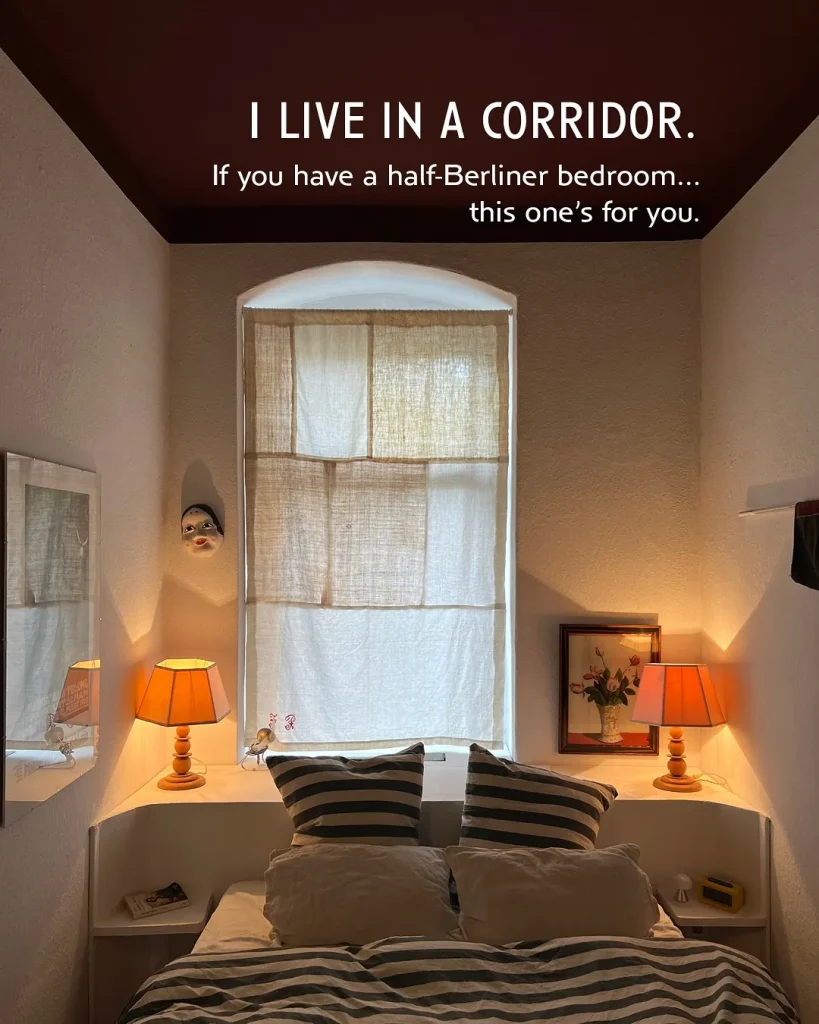
24. Make a Tiny Bedroom Cozy Without Making It Crowded
A tiny bedroom needs fewer jobs, not more furniture. If the room barely fits a bed and a dresser, let it be a sleep and dressing room, and move work, storage, or hobbies elsewhere. A tiny room that does two jobs well feels cozier than a tiny room that tries to do five jobs badly.
Keep the bed made, the floor clear, and one surface clear. Those three habits make a tiny room feel calm even when it is full. Use soft light, one warm textile, and one plant or one piece of art. Cozy comes from warmth and order, not from filling every gap.
25. Use Renter-Friendly Changes for the Biggest Visual Impact
The highest-impact renter changes are the ones you can undo in an afternoon. Start with curtains, bedding, a rug, and lighting. Those four change the color, the height, the warmth, and the mood of the room without touching the walls.
Next, add removable changes: peel-and-stick wallpaper on one wall, removable hooks, a plug-in sconce, and new cabinet hardware that you keep in a bag for move-out. Save paint, shelving, and hardwired lighting for last, and only after written approval.
Lease limits checklist: check before you change anything
- Paint: ask if painting is allowed, if you must return it to the original color, and if there is a fee. Get the answer in writing.
- Holes: ask what size holes are allowed, whether anchors are allowed, and what counts as normal wear. Small nail holes and large anchor holes are often treated differently.
- Shelves: ask if wall shelves are allowed, and if freestanding shelves are preferred. Keep heavy shelves off walls unless anchoring is approved.
- Lighting: ask if you may swap a light fixture, and whether the original must be reinstalled at move-out. Plug-in lights are the safest default.
- Curtains: ask if you may change the curtain rod, and whether the original rod and hardware must stay. Tension rods avoid the question in many rooms.
- Hardware: ask if you may change knobs or pulls. Keep the originals in a labeled bag so you can restore them.
Removable changes that move with you
- Peel-and-stick wallpaper or decals on one wall, removed with heat at move-out per the product instructions.
- Curtains and a tension rod or clamp rod, hung high to strengthen vertical lines.
- Plug-in lighting, such as sconces, clip lights, or a pendant on a hook, with a cord cover.
- Hardware swaps, such as knobs and pulls, with originals saved for move-out.
- A rug, bedding, and a throw in your one color direction, which set the palette without paint.
- Freestanding shelves, a tall dresser, and a rolling cart, which add storage without wall changes.
Narrow vs tiny vs studio: one paragraph each
Narrow: A narrow bedroom is long and thin, so place the bed along the long wall, keep one clear path on the opposite side, and use the short walls for the closet, dresser, or desk. The goal is to work with the length, not to force a square layout into a rectangle.
Tiny: A tiny bedroom barely fits a bed and one storage piece, so give it fewer jobs, keep the floor and one surface clear, and move work or extra storage elsewhere. Cozy comes from warmth and order, not from filling every gap.
Studio: A studio bedroom is a sleeping zone inside a larger room, so define it with a rug, a curtain or shelf divider, and one light source of its own. Keep the sleeping zone simple and keep work and living items outside it, so the bed does not become the couch, the desk, and the closet at once.
One warning about the chair: if the chair holds clothes at the end of the day, it is not a reading chair, it is a second wardrobe. Give lightly worn clothes one real home, such as a hook or a basket, and keep the chair clear. For the full re-wear habit, see the organization guide.
How to Make It Look Bigger
A small apartment bedroom looks bigger when the layout is easy to read at a glance. Keep the bed, one clear walking path, and one focal point visible from the door. That single view tells the eye where to go, instead of asking it to sort out a crowded room.
Use the same tricks in every section above: curtains hung high, one tall piece instead of two wide pieces, some visible floor, and one color direction. Mirrors help when they reflect light from a window, not when they reflect clutter. Light bedding and a plain rug help when the room is dark, but color is fine when it stays in one direction.
Do not chase every look-bigger trick at once. Pick three: high curtains, one clear path, and one focal point. If those three are in place, the room will already feel larger than a room with ten tricks and no clear path.
On a Budget
Start with no-cost changes, then add low-cost changes, then save one bigger change for last. That order keeps you from buying decor for a layout that still needs fixing.
- No-cost: Move the bed to the wall that leaves a clear path. Clear one surface. Move laundry to its home. Edit the dresser top to a tray plus one object. Rehang curtains higher with the rod you already have.
- Low-cost: Add a tension rod and simple curtains, a plug-in sconce, a rug pad, a flat under-bed bin, or one set of bedding in your color direction. Swap cabinet hardware and save the originals.
- One bigger change: Pick one item that fixes a real problem, such as a tall dresser that replaces a wide one, a fold-down desk if you work in the room daily, or a peel-and-stick accent wall if your lease allows it. Buy it after the no-cost and low-cost steps, not before.
Test every purchase with three questions: does it replace something, does it free floor space, or does it give a category a home? If it does none of those three, it is decor, not a solution. Decor is fine when the room already works, but it does not fix a room that does not.
Mistakes to Avoid
- Buying storage before clearing space. A new dresser does not fix a closet full of things you do not wear. Clear first, then buy only what is still missing.
- Adding furniture that blocks the path. If you must step around a piece to reach the bed or the closet, the piece is in the wrong place or the room does not need it.
- Drilling before checking the lease. Holes, anchors, and paint can cost part of your deposit. Get approval in writing, and prefer removable options when approval is unclear.
- Letting the chair become a wardrobe. One hook or basket for lightly worn clothes keeps the chair clear. For the full habit, see small bedroom organization ideas.
- Decorating every surface. A few strong choices beat many small objects. Keep one surface clear, and let the bed, the curtains, and one piece of art carry the room.
- Using daily items as under-bed storage. Under-bed space is for lower-frequency items. Daily items belong at hand level. For the full split, see small bedroom storage ideas.
A Simple Order for Decorating
Follow this order so decor does not cover up problems that still need fixing:
- List the jobs. Sleep, dressing, work, reading. Keep only what is real.
- Place the bed. Leave one clear path to the door and room for doors and drawers to open.
- Fix storage. Closet first, then tall storage, then under-bed for lower-frequency items. For capacity, see small bedroom storage ideas.
- Set the laundry home. Hamper where clothes come off, clean clothes straight to their home.
- Pick one color direction. Base neutral, one main color, one accent that repeats. For palettes, see Earthy Bedroom Ideas.
- Add light and curtains. Warm light at head height, curtains hung high to the floor.
- Add texture and one plant. One throw, one rug, one plant or one piece of art. For plants, see Greenery Bedroom Ideas.
- Reset daily. Make the bed, clear one surface, return items to their homes. For the routine, see small bedroom organization ideas.
Checklist
- Bed placed first, with one clear path to the door.
- Closet working before any new furniture is bought.
- Laundry has one defined home where clothes come off.
- Under-bed space has one job, for lower-frequency items.
- One color direction, repeated in bedding, curtains, and one object.
- Curtains hung high, falling to the floor.
- One mirror with a useful job, not a mirror for its own sake.
- One surface intentionally clear.
- Lease checked in writing before paint, holes, shelves, or lighting changes.
- Removable changes chosen where approval is unclear.
- Daily reset: bed made, one surface clear, items back in their homes.
FAQs
What is the best layout for a small apartment bedroom?
Place the bed first, against the longest clear wall, with one clear walking path to the door and room for closet doors and drawers to open. Then add storage, then a desk only if you need one daily. For the full measure-first method, see small bedroom ideas.
What are some must-haves for a small apartment bedroom?
A bed that leaves a clear path, a closet that works before you buy more furniture, a laundry home where clothes come off, one bedside surface with light, and one clear surface that stays clear. Those five cover sleep, dressing, and daily upkeep.
How can I make a small apartment bedroom cozy without making it crowded?
Give the room fewer jobs, keep the floor and one surface clear, and add warmth through texture: linen bedding, a knit throw, a rug, and warm light. Cozy comes from warmth and order, not from filling every gap.
Can I paint my apartment bedroom?
Only if your lease allows it. Ask in writing whether painting is allowed, whether you must return it to the original color, and whether there is a fee. If painting is not allowed, use bedding, curtains, a rug, and art in one color direction to set the palette.
How do I store clothes in a small apartment bedroom with no closet?
Build one clear clothing zone: a rail for hanging clothes, one dresser or tall storage piece for folded items, and one home per category. Keep frequently worn items at hand level and rarely worn items up high. For the full no-closet plan, see small bedroom storage ideas.
How do I keep a small apartment bedroom tidy?
Use a simple frequently vs rarely split: daily items at hand level, lower-frequency items up high or under the bed, and one home per category. Then reset daily: make the bed, clear one surface, and return items to their homes. For the full routine, see small bedroom organization ideas.
The Small-Bedroom Rule Worth Remembering
A small apartment bedroom does not need more things. It needs fewer jobs, one clear path, one color direction, and changes you can undo or take with you. Fix the layout first, give every category a home, and let the bed, the curtains, and one or two objects you love carry the room. That is how a small rental bedroom feels cozy, functional, and yours, without risking your deposit.