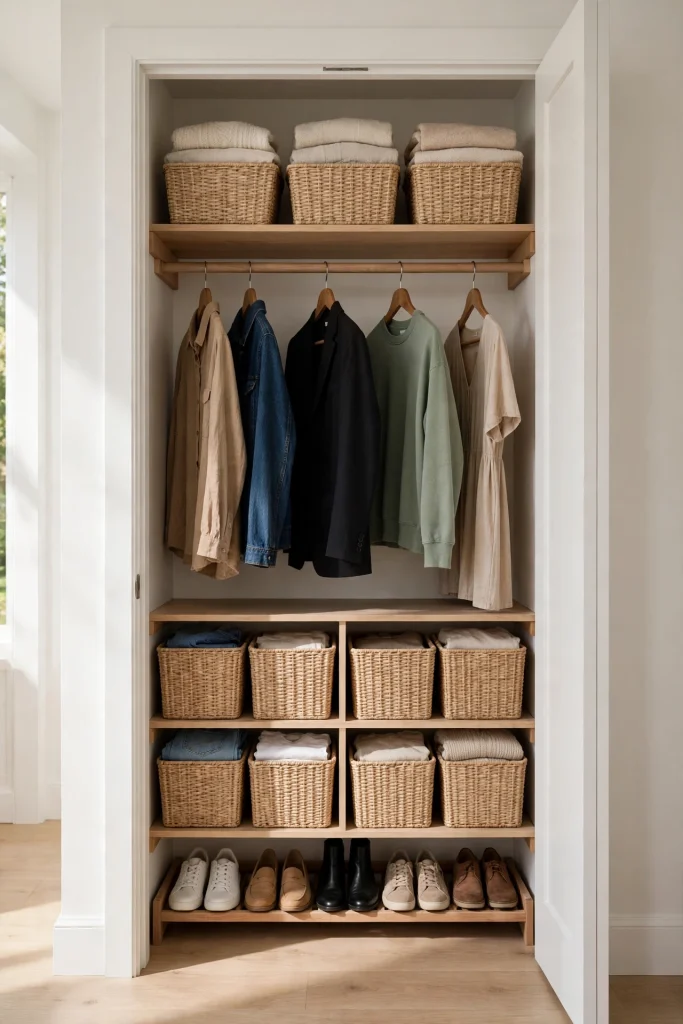
16 Small Closet Organization Ideas for a Closet That Actually Works
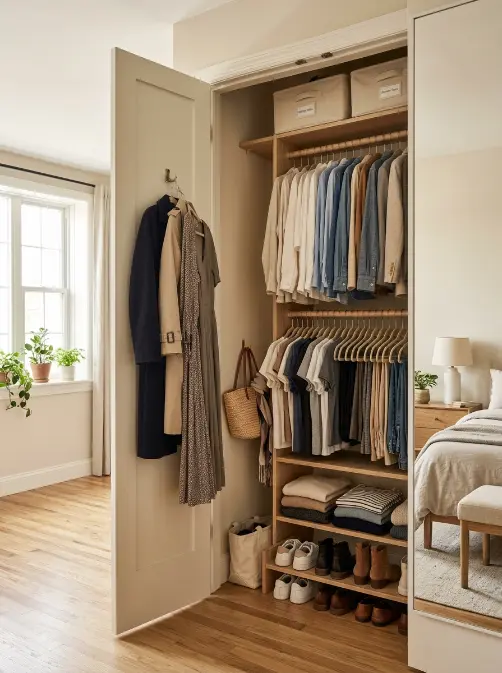
A small closet can hold a surprising amount, but fitting more inside should not be the only goal. If you have to move three boxes to reach your favorite sweater or fight through an overcrowded rail every morning, the closet may technically be full of storage while functioning poorly.
The better approach is to organize around access. Everyday clothes get the easiest positions. Occasional items move higher or lower. Short garments can share vertical space. Shoes get a defined boundary. Small accessories get contained rather than scattered.
And before adding another basket, shelf, or hanger, decide what genuinely belongs in the closet.
Start by figuring out why the closet feels too small
A storage problem can have several different causes.
Sometimes there are simply too many clothes for the available space. Sometimes one long hanging rail wastes vertical room beneath shirts. Sometimes the top shelf has become an inaccessible pile. In other closets, shoes cover the entire floor while small accessories disappear among larger clothes.
Spend a few minutes identifying the bottleneck before shopping.
If hanging space is crowded but shelves are half empty, another storage bin will not solve the real problem. If folded clothing constantly collapses into piles, adding another hanging rail may not help either.
Organize the problem you actually have.
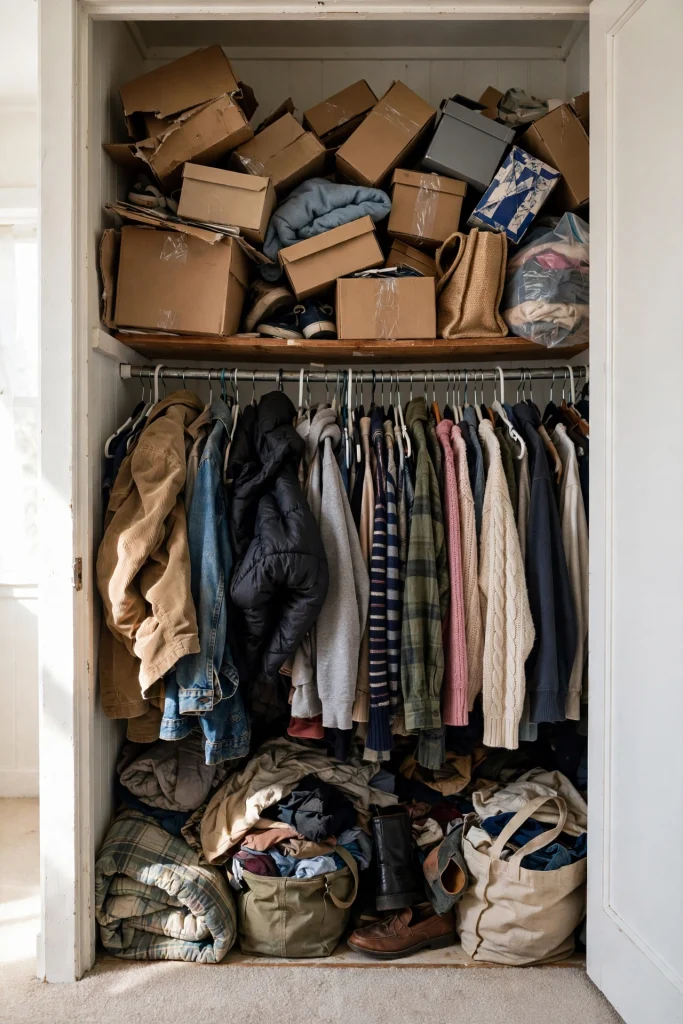
Decide what deserves closet space
A small closet does not need to hold every clothing-related item you own.
Keep the closet focused on items that make sense in that particular location. Everyday clothes, frequently worn shoes, workwear, accessories, and current-season pieces usually deserve convenient storage. Special-occasion pieces and off-season items can often tolerate less accessible positions.
This is also the best moment to remove duplicates, damaged items you no longer intend to repair, and clothing you no longer wear.
Do this before measuring for organizers. Otherwise, you can end up spending money to store things that did not need to remain in the closet.
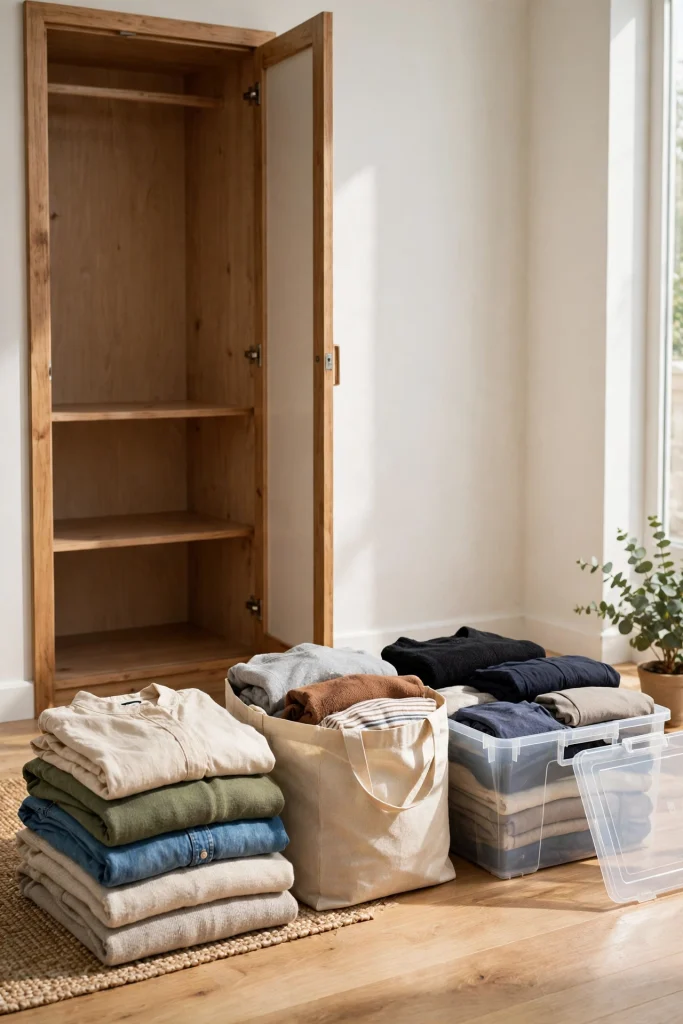
Divide the closet into prime and secondary zones
Not every inch of closet space has equal value.
The section between comfortable hand and eye level is your prime zone. Reserve it for items you reach for regularly. Higher shelves, low corners, and awkward rear sections are better suited to belongings you use less often.
For example, everyday shirts and pants might stay in the easiest hanging section, while seasonal accessories occupy labeled containers above. Frequently worn shoes could remain visible near the floor, while formal footwear can move to a less convenient area.
This simple hierarchy often improves a closet even before you add anything.
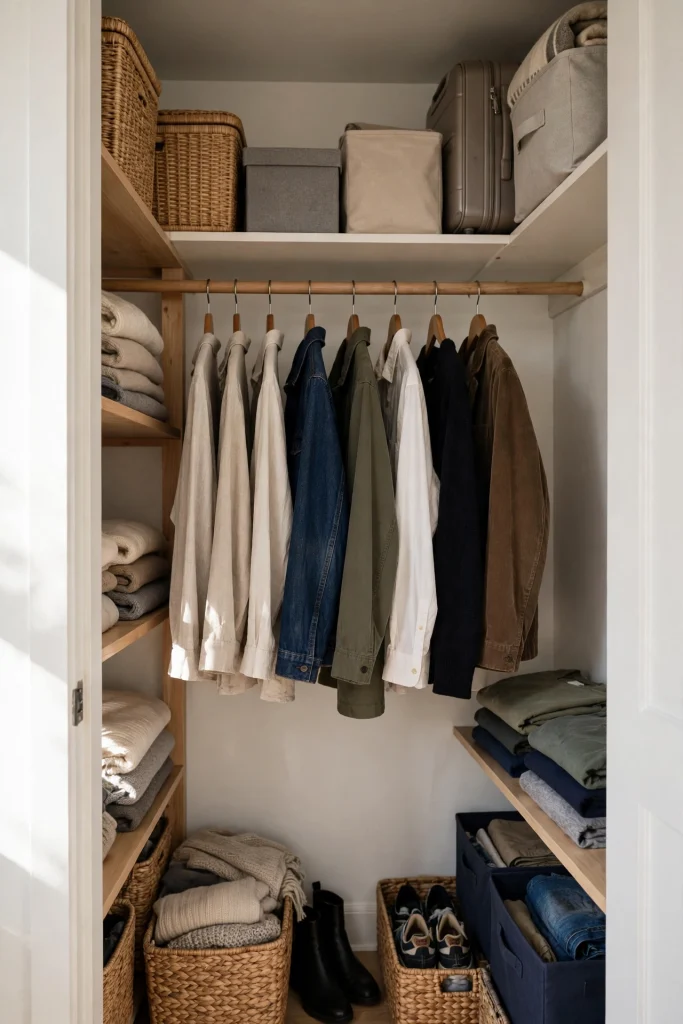
Group hanging clothes by length
Randomly mixing shirts, dresses, jackets, pants, and long coats can waste useful space underneath shorter garments.
Group clothes with similar lengths together.
Once all shirts and shorter pieces occupy one section, you can clearly see whether there is enough room beneath them for a second hanging zone, shoe storage, drawers, or another suitable organizer.
Long dresses and coats can remain together where they need uninterrupted vertical clearance.
This is more efficient than trying to make every section of the closet identical.
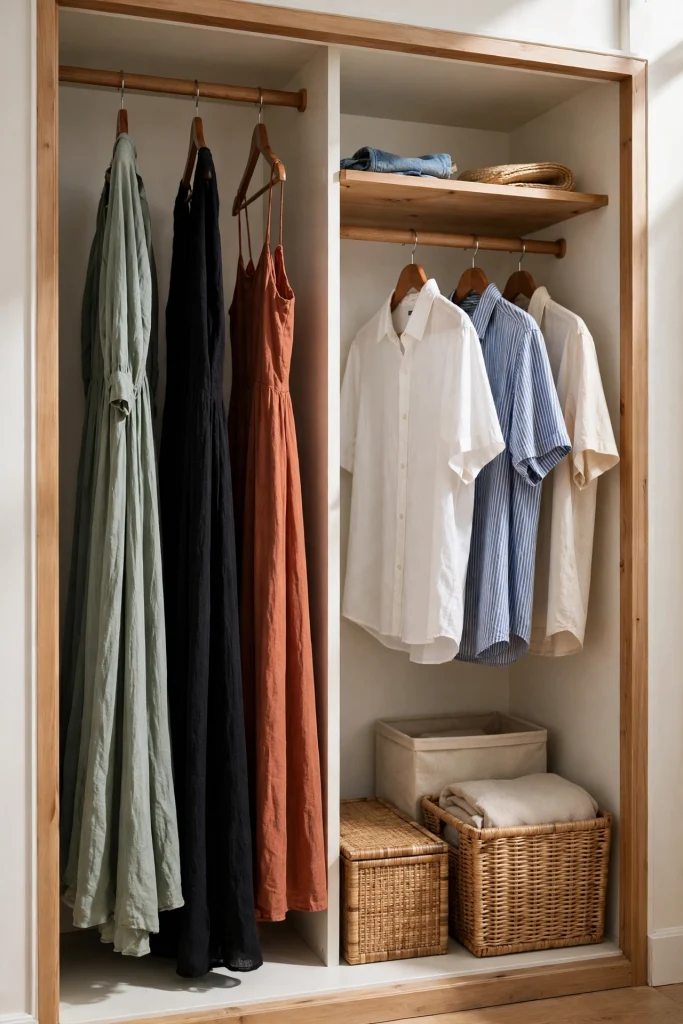
Add a second hanging level only where it makes sense
A second rail or hanging organizer can be useful when most of the clothes in one section are short enough to fit in two tiers.
Think shirts above shirts, or shirts above folded-over pants.
But do not sacrifice the only full-length area if you regularly hang dresses, long coats, or other garments that need it.
This is why sorting by garment length comes first. The clothes should determine the closet layout—not the organizer you happen to find.
For renters, portable hanging systems that work with an existing closet may be worth considering before permanent changes. Always make sure any system is compatible with the existing rod and intended load.
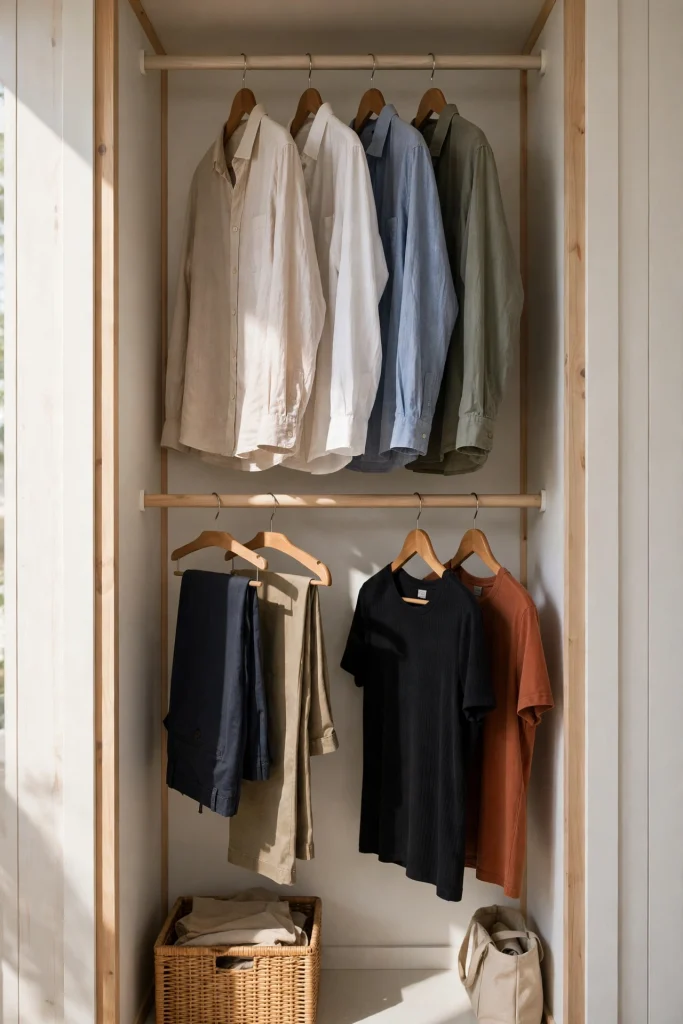
Put the top shelf to work without creating a mystery zone
High shelves are valuable because they use space that otherwise sits empty, but they are poor locations for items you need every morning.
Use the top shelf for less frequently accessed categories such as seasonal accessories, spare bedding, occasional bags, or other lightweight belongings that genuinely belong in the closet.
Keep categories separated instead of filling the shelf with unrelated objects.
If you use opaque containers, label them clearly enough that you do not need to pull every box down to find one item.
And avoid turning the shelf into permanent storage for belongings you have forgotten about. If something survives several seasonal rotations without being used, reconsider whether it needs closet space at all.
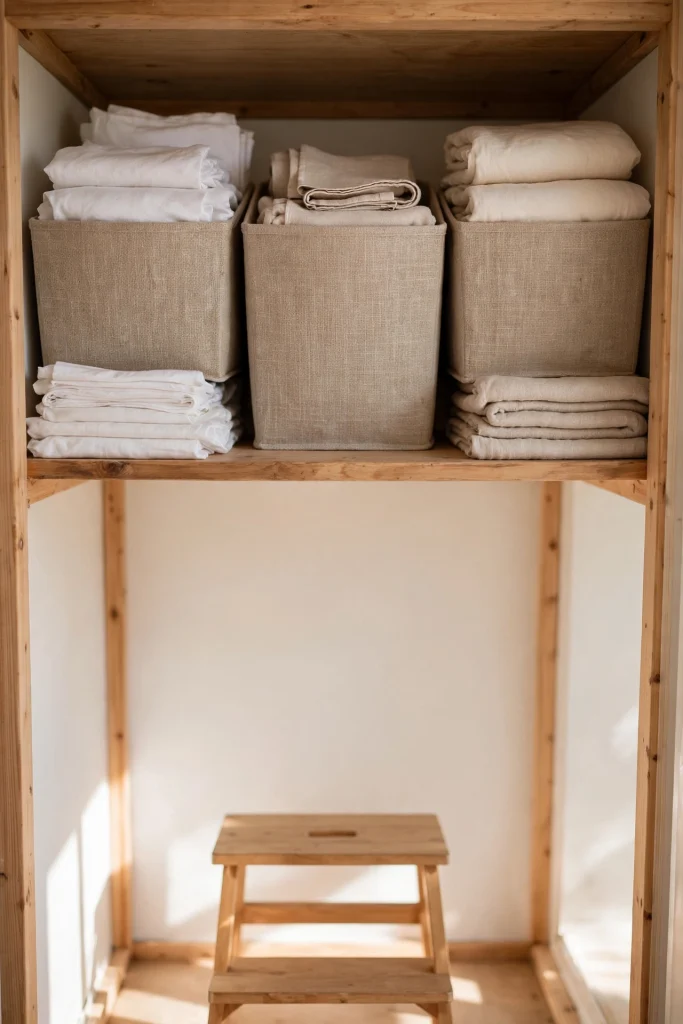
Keep folded clothing from becoming unstable piles
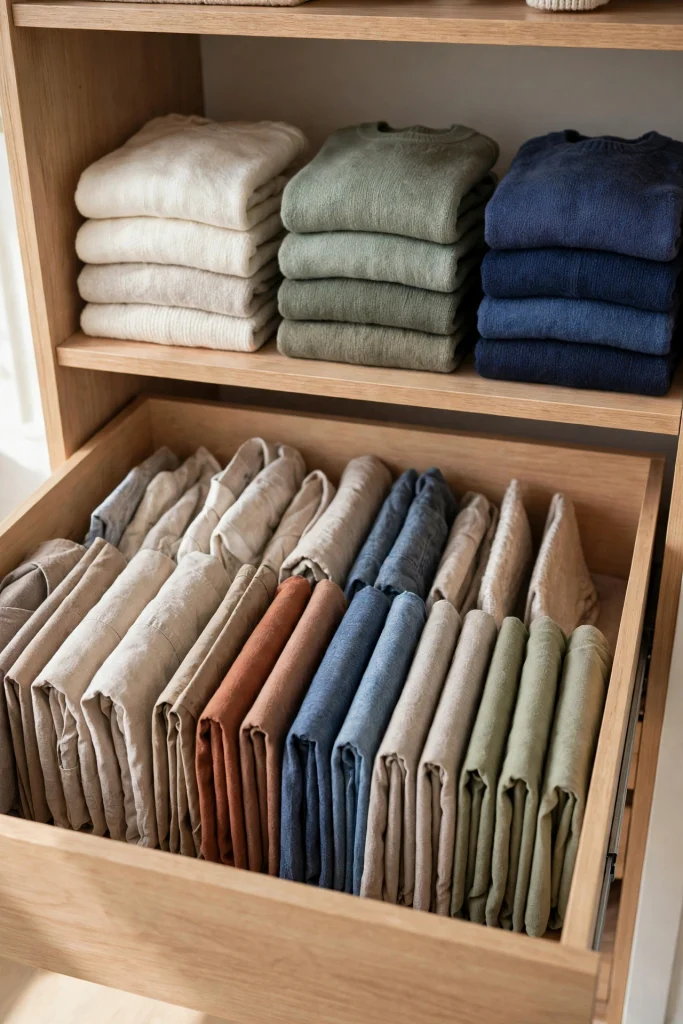
Tall stacks of sweaters, jeans, or shirts can look organized immediately after folding and collapse as soon as you remove something from the bottom.
Use shorter stacks and give each category a defined section.
Existing shelves may be enough once the categories are separated. Shelf dividers, small drawers, or contained bins can help when clothing repeatedly spreads sideways, but they should solve a specific problem rather than simply fill the shelf.
Frequently used folded items should remain easy to see and retrieve.
If a storage system requires perfectly refolding the entire pile every time you get dressed, it may be too demanding for everyday use.
Use slim hangers selectively
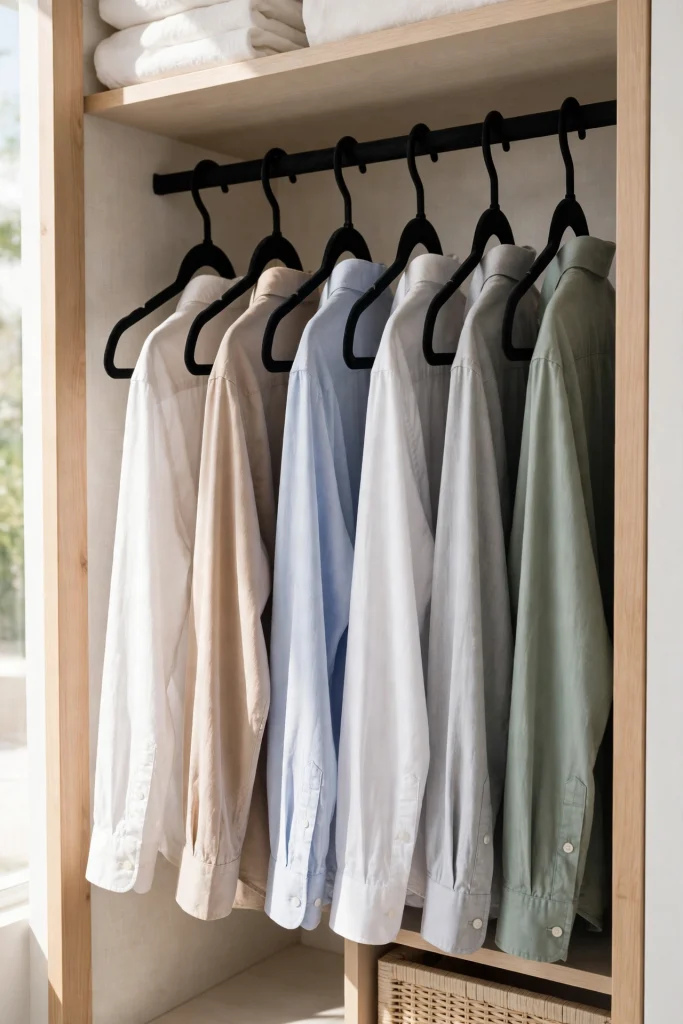
Replacing bulky hangers with slimmer versions can reduce the amount of horizontal space each garment takes up, which may be useful on a crowded rail.
But thinner is not automatically better for every garment.
Heavier coats and structured clothing may need stronger or differently shaped support, so do not force every item onto one hanger style simply for the sake of visual uniformity.
The priority is a closet that protects clothing and makes items easy to browse.
Matching hangers can create a calmer appearance, but function comes first.
Give shoes one defined zone
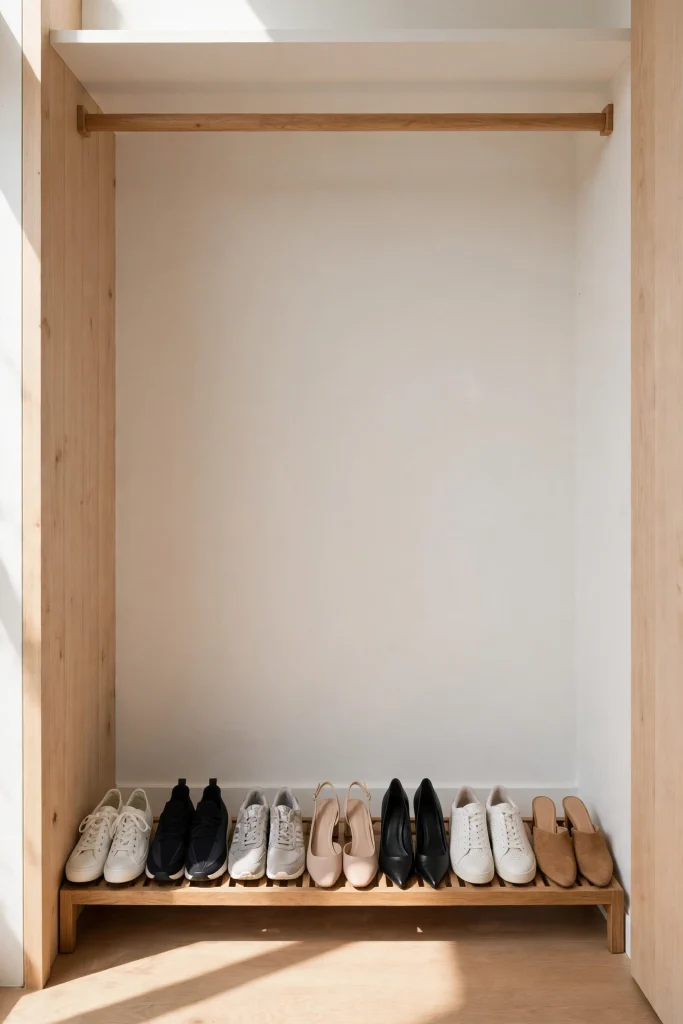
Without a boundary, shoes tend to spread across the closet floor.
Choose one logical shoe area based on how many pairs need convenient access. That might be a low rack, existing shelf, compact cubbies, or another contained system suited to the closet.
Keep the most frequently worn pairs easiest to reach.
Less-used footwear can occupy secondary storage elsewhere if necessary rather than forcing every pair into prime closet territory.
Defining the available shoe area also creates a natural limit: once it is full, edit or rotate the collection instead of automatically expanding shoe storage.
Treat the closet floor as storage—not a dumping zone
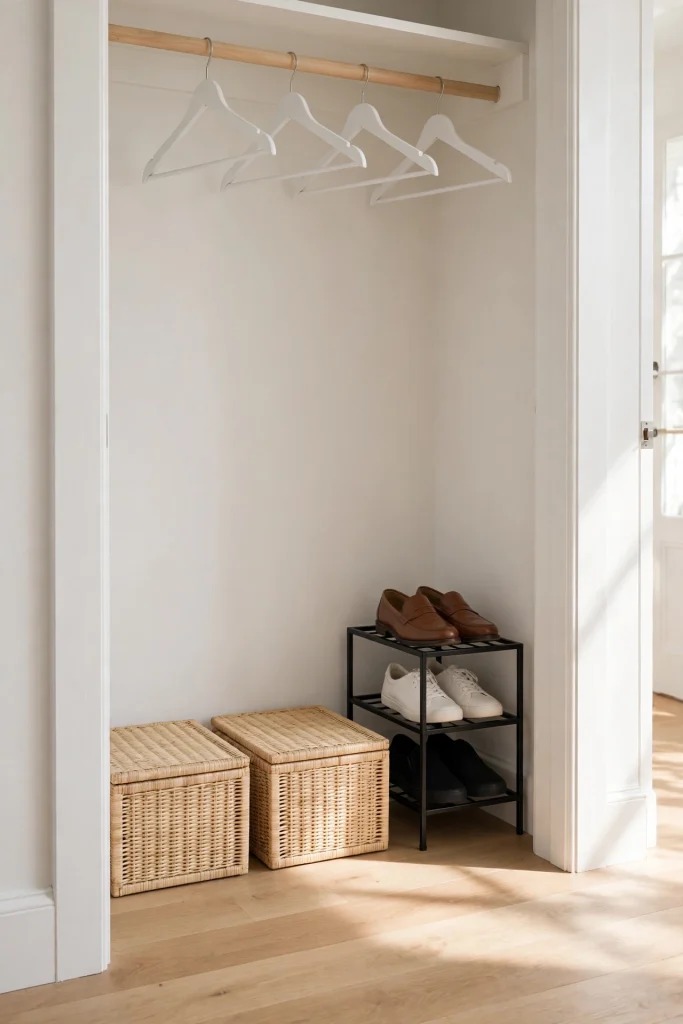
The floor can be useful, particularly beneath short hanging clothes, but only when it remains organized enough that you can reach what is there.
Low bins, shoe storage, drawers, or other suitable containers can work depending on the closet configuration.
Avoid loose piles.
Once bags, shoes, laundry, and boxes begin stacking directly on the floor, they block access to everything behind them and can make the closet feel smaller than it is.
Leave enough clear space that the closet remains easy to use rather than filling every possible inch.
Use the back of the door for lightweight categories
A closet door can provide useful vertical storage when the door type and organizer are compatible.
Over-door organizers can work particularly well for accessories, lightweight shoes, scarves, belts, small bags, or other compact categories.
The important part is restraint.
Do not fill every pocket simply because it is available. Assign the organizer a clear job, and make sure it does not prevent the door from opening and closing normally.
This can be especially useful for renters because some over-door systems avoid permanent alterations, but always check the product instructions and lease requirements.
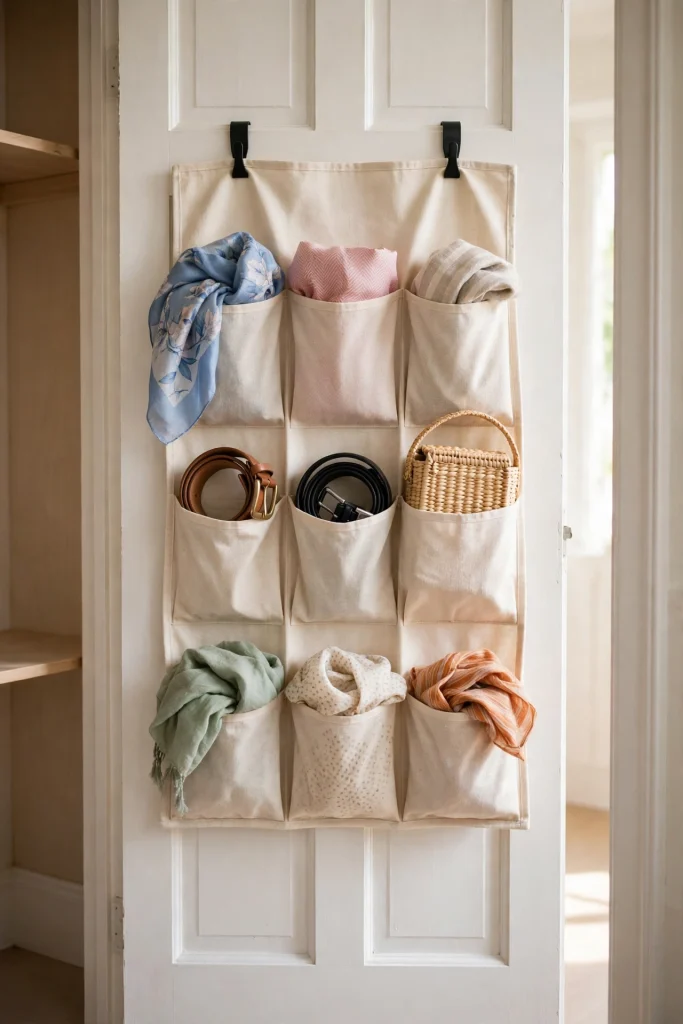
Contain small accessories before they disappear
Closets become difficult to maintain when tiny belongings have no defined home.
Belts, scarves, small bags, jewelry, ties, and other accessories benefit from small, clearly assigned zones rather than being mixed into larger bins.
The storage method matters less than the logic.
One container for scarves is more useful than a beautifully arranged collection of small organizers whose purpose you cannot remember.
Keep categories simple enough that putting something away takes only a moment.
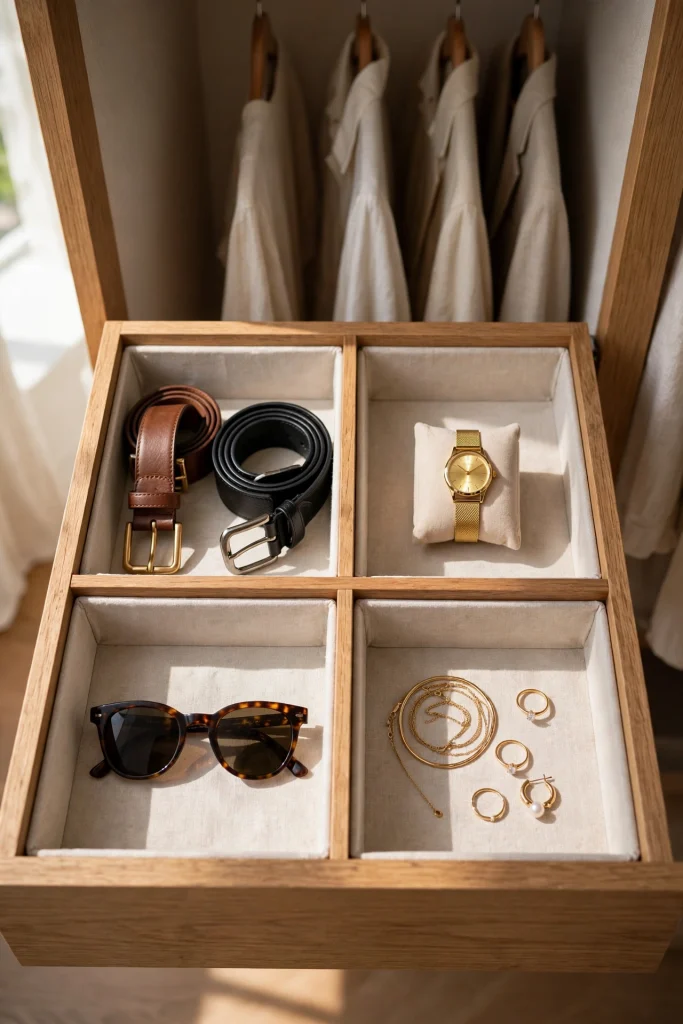
Rotate seasonal clothing out of prime space
A small closet should not give winter coats and summer clothes equally convenient positions all year.
When the season changes, move items you will not use for several months to less accessible storage, provided they are stored appropriately for the item.
That may mean a high closet shelf, another suitable storage area, or under-bed storage if the closet is part of a small apartment.
Seasonal rotation frees your best storage for what you are actually wearing now.
It also creates a natural opportunity to review pieces before putting them away again.
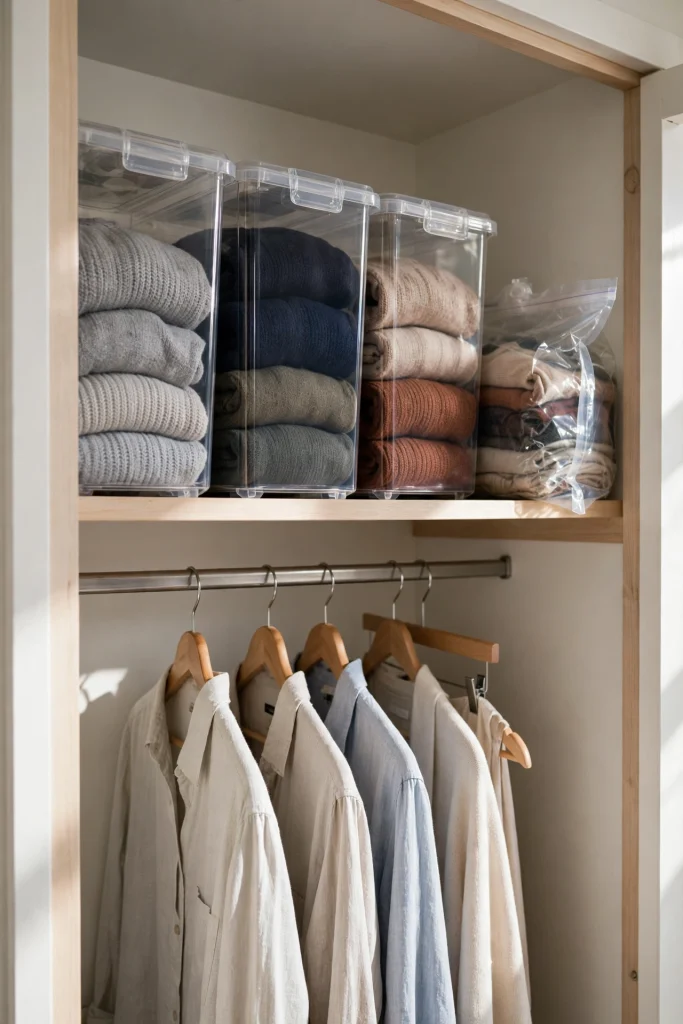
Make a shared small closet easier to understand
A shared closet can become frustrating when everyone uses every section.
Instead of treating the entire space as one storage area, create clear boundaries.
That might mean assigning each person a hanging section and shelf, or dividing the closet by clothing type if that better suits the household.
The zones do not necessarily need to be identical. One person may need more long-hanging space while the other needs more folded storage.
A fair system is one that works for the actual wardrobes—not one that makes both sides look perfectly symmetrical.
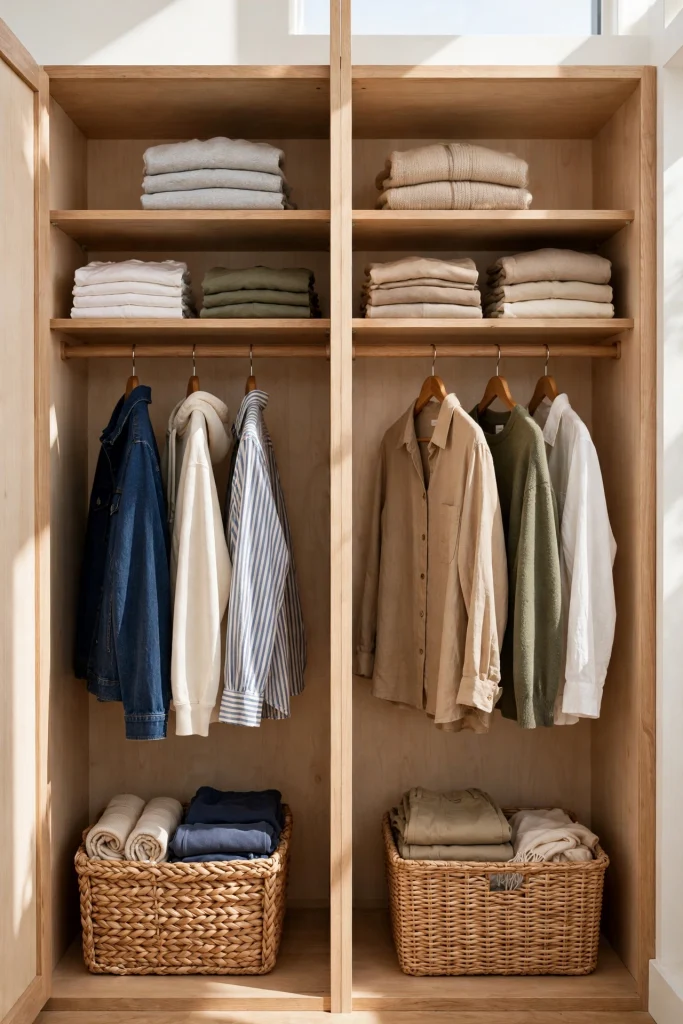
Leave a little breathing room
Filling a closet to maximum capacity creates a fragile system.
The moment laundry returns, a new coat comes in, or you need to move something, there is nowhere for it to go.
Whenever possible, leave some working space on the rail, shelf, or floor.
That small buffer makes it easier to see clothes, remove items, return laundry, and maintain the system.
Empty space in a small closet is not wasted space. It is part of what makes the storage usable.
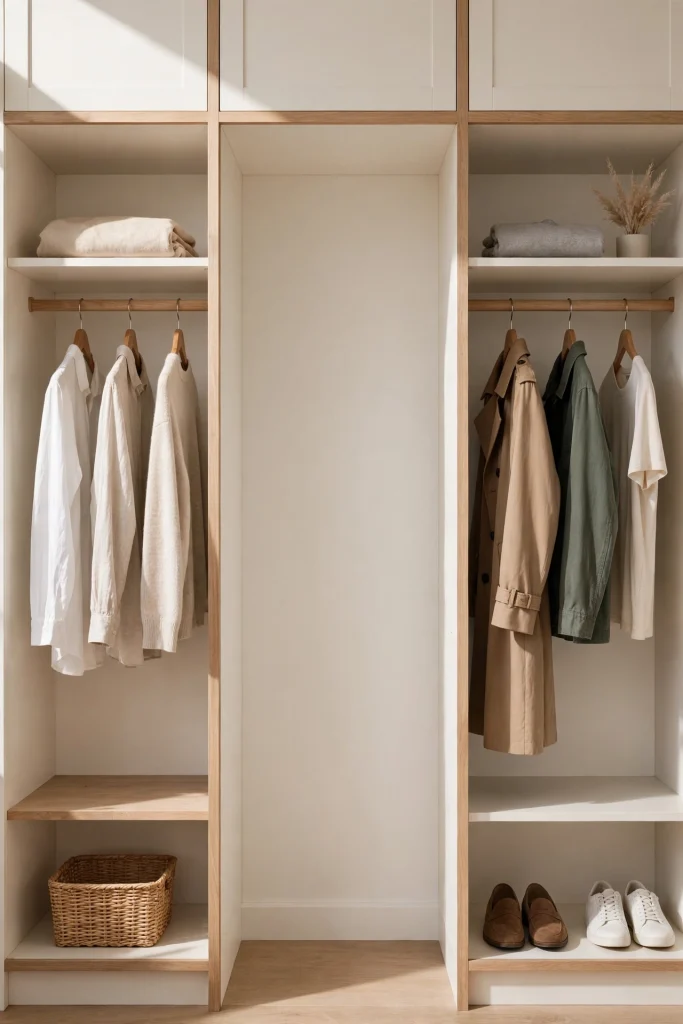
Keep open storage visually simple
If you can see into the closet from the bedroom, visual organization matters as well as capacity.
Reduce the number of unrelated containers and colors competing for attention. Group similar categories together. Keep visible shelves lightly edited where possible, and use more concealed storage for small miscellaneous items.
That does not mean buying an entire matching organizer collection.
Using what you already own consistently can be enough. The objective is easy visual scanning: you should be able to look into the closet and understand where things belong.
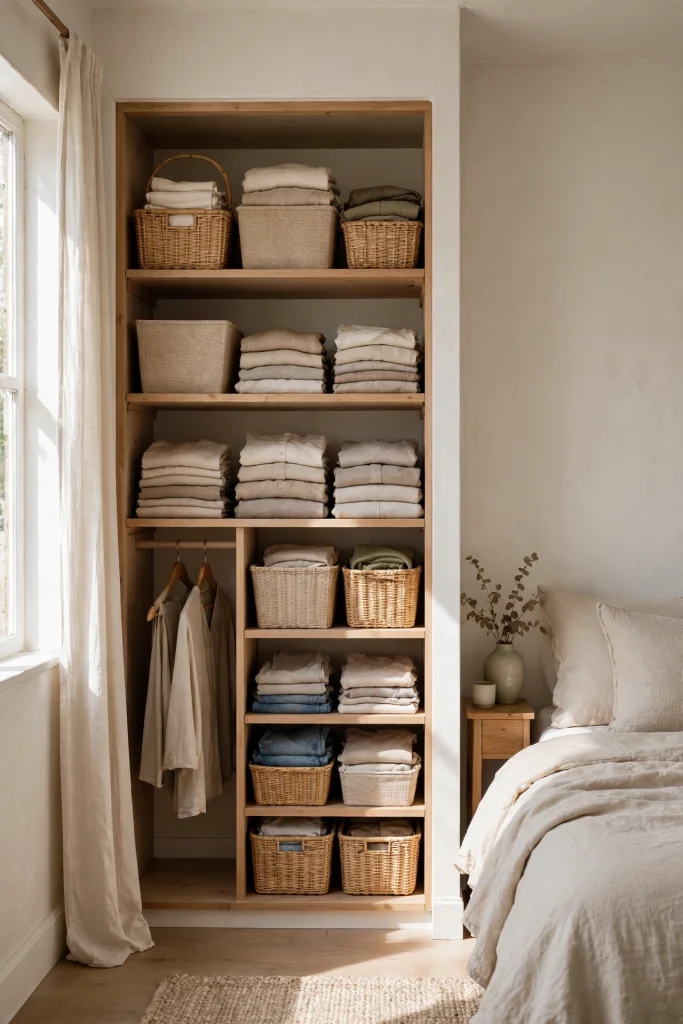
How to organize a small closet without buying anything
Start by removing items that do not belong there, then group what remains by category and garment length.
Move everyday pieces into the easiest positions and less frequently used belongings higher, lower, or farther back. Put shoes into one defined area. Move off-season clothing out of prime space. Fold stacks into smaller categories and use containers you already own before purchasing new ones.
Once everything has a temporary home, use the arrangement long enough to notice what still causes problems.
Only then will it become obvious whether you genuinely need another shelf, rail, bin, or organizer.
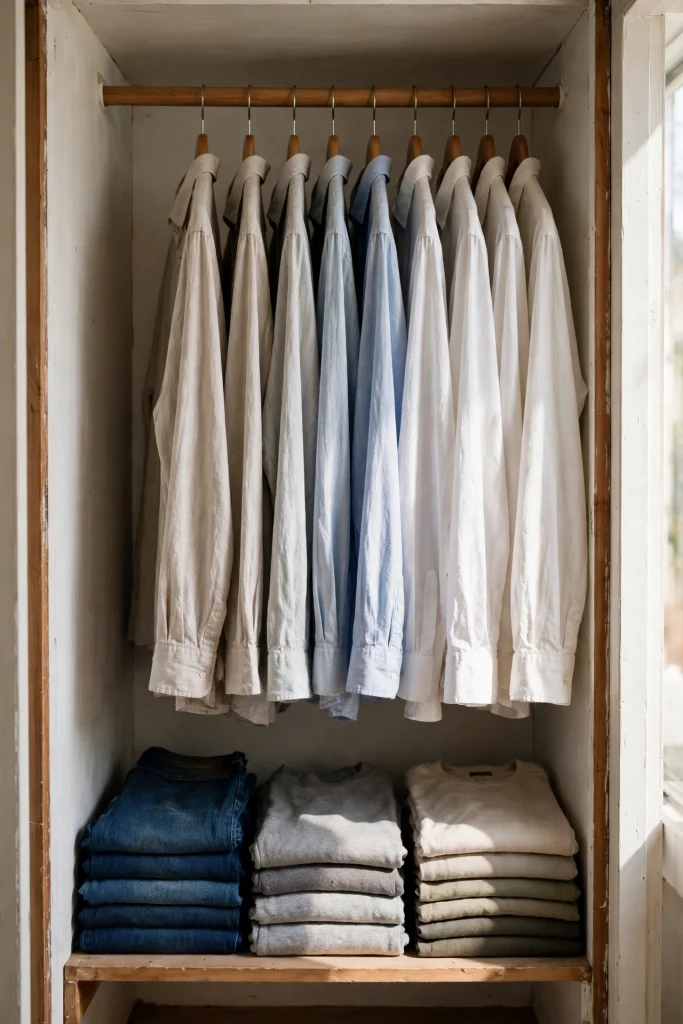
What should go on the top shelf of a small closet?
The top shelf is best used for items you do not need constantly.
Seasonal accessories, occasional bags, lightweight linens, and other infrequently accessed categories can work well there, provided the storage is safe and easy enough to retrieve.
Keep heavier items lower whenever practical.
And avoid putting daily-use clothing on a shelf you dislike reaching. Convenience should follow frequency.
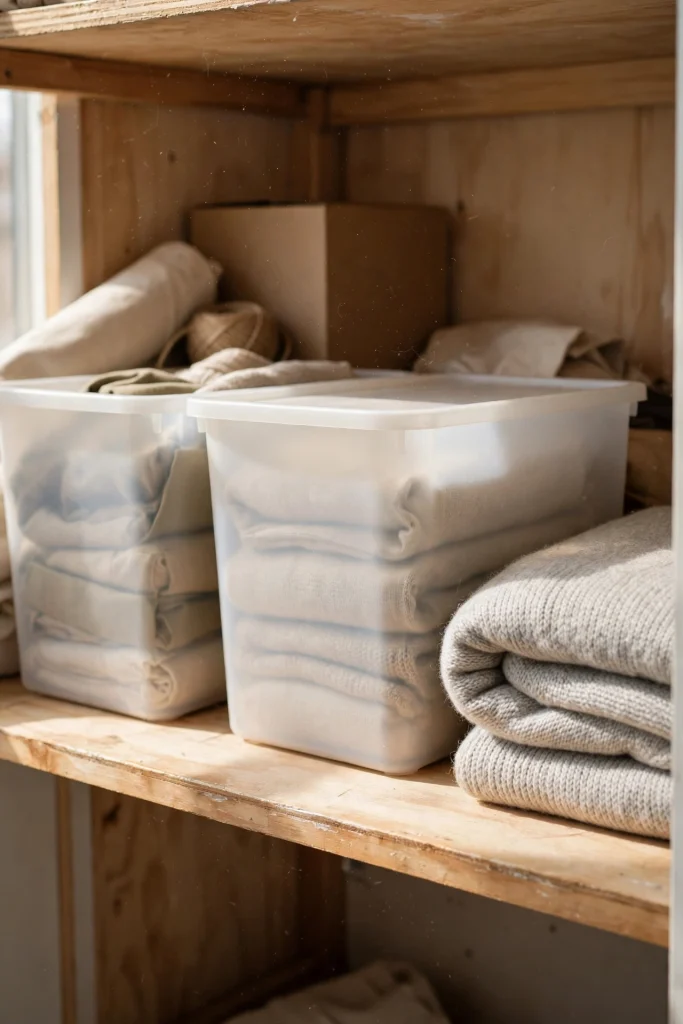
Is open or closed closet storage better?
The best small closets usually use both.
Open storage works well for clothes and accessories that benefit from visibility and are easy to keep orderly. Closed or contained storage is better for small objects and visually busy categories.
When everything is displayed, a tiny closet can look more crowded even when it is technically organized.
A useful rule is: display what you need to see; contain what you simply need to find.
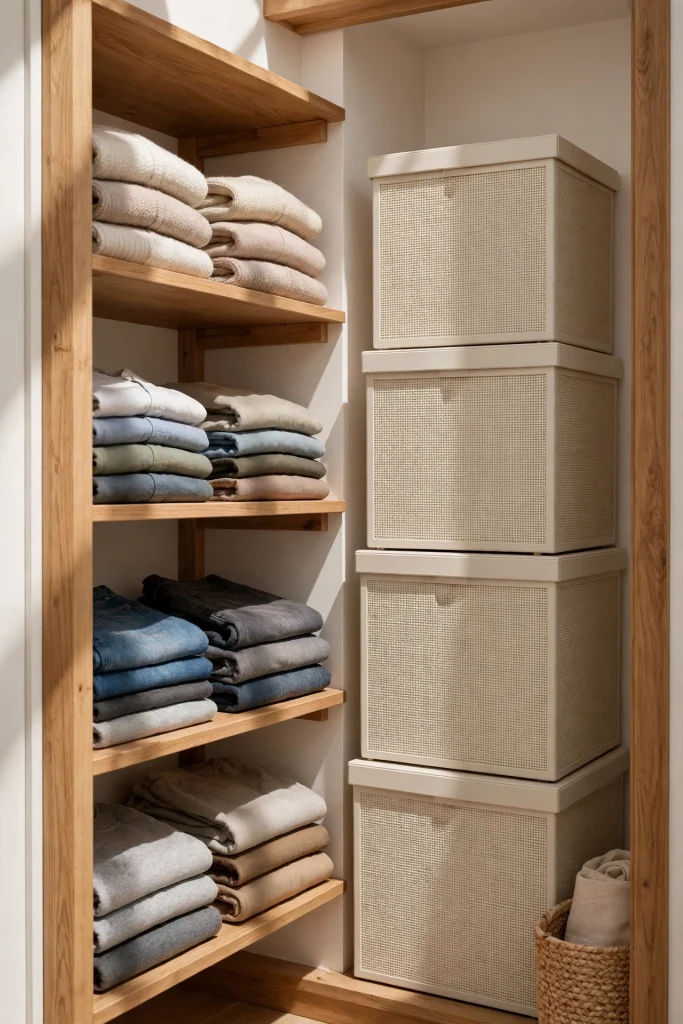
A simple small-closet reset
The most effective order is straightforward:
- Edit the contents.
- Group clothes by type and length.
- Assign the prime storage zones.
- Deal with shoes and small accessories.
- Use overlooked vertical space.
- Decide whether an organizer is still necessary.
The process should make your closet easier to use—not just more impressive on the day you organize it.
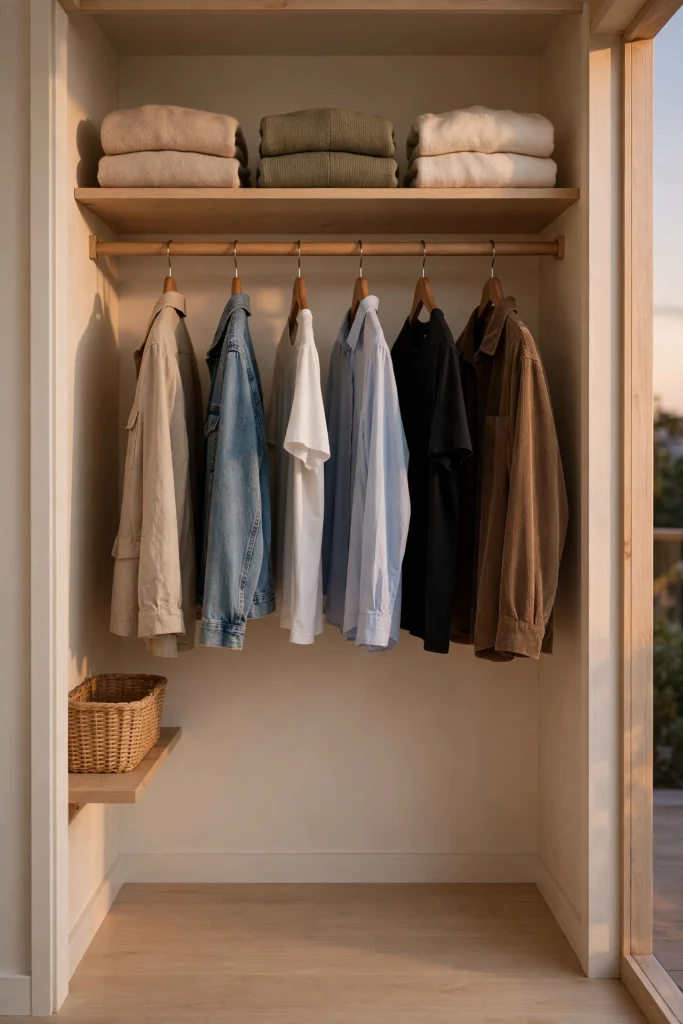
Final takeaway
Good small closet organization is not about squeezing the maximum number of things behind a door.
It is about making the belongings you actually use easy to see, reach, and put away.
Protect the best positions for everyday clothes. Use the top, bottom, and door strategically. Group hanging clothes by length before adding another rail. Give shoes and accessories firm boundaries. Rotate seasonal items away from prime space and resist filling every available gap.
When the closet is arranged around your real routine, a small footprint can become much easier to manage.