15 Corner Plant Stand Ideas for Small Apartments
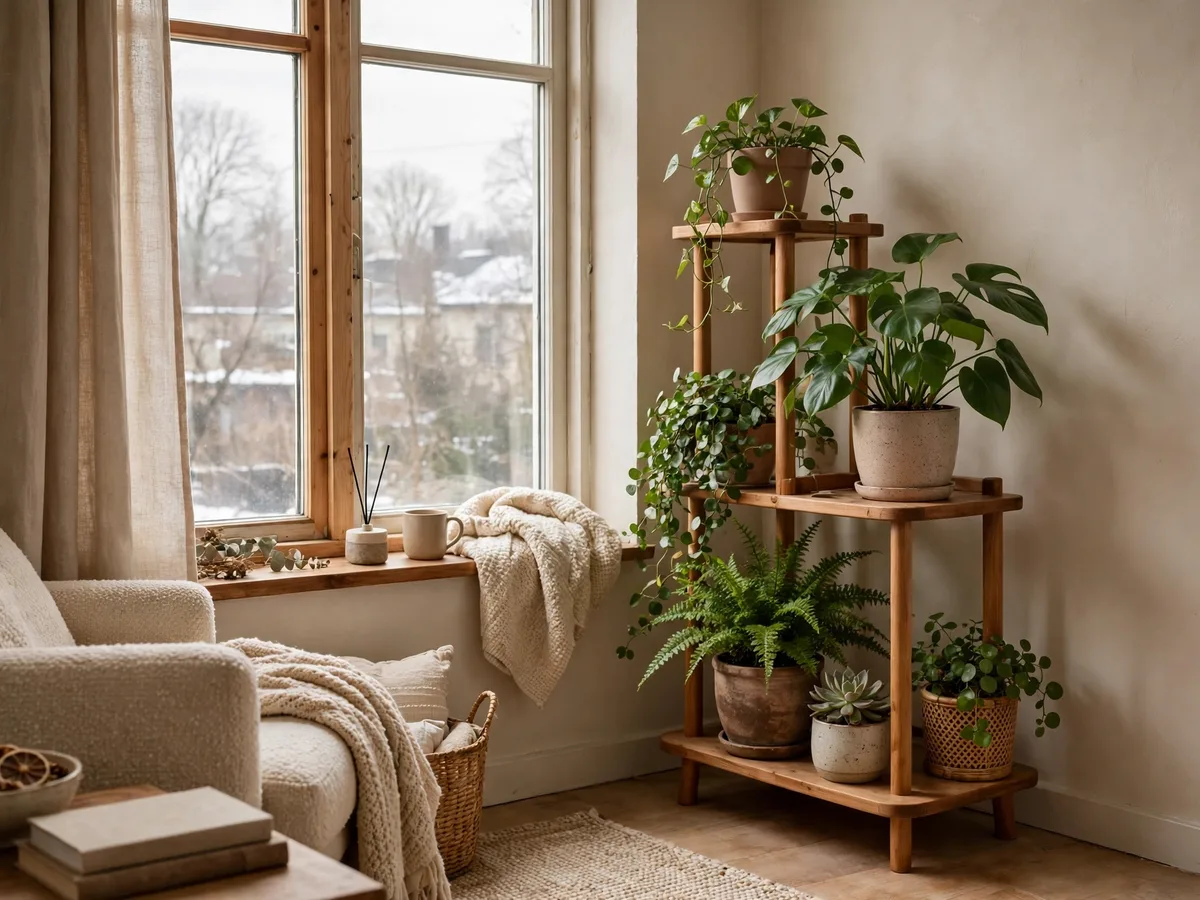
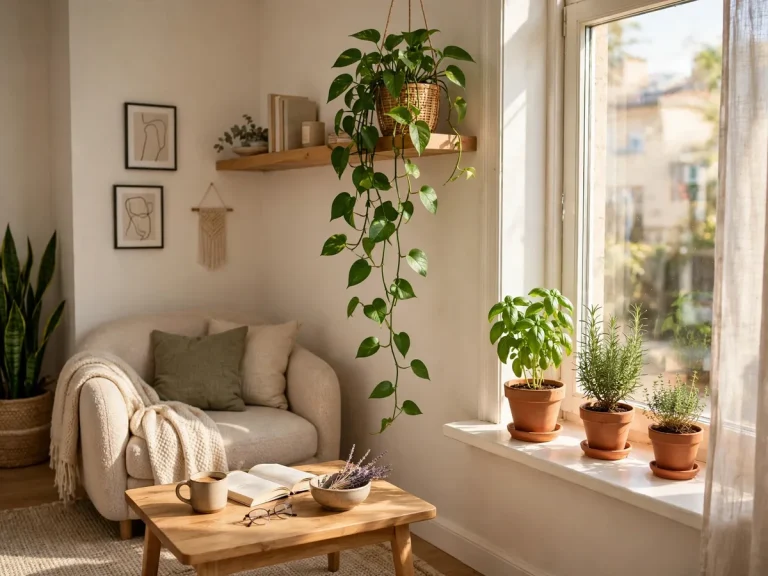
Corner plant stand ideas are how I finally stopped killing plants in my small apartment. For two winters I kept my plants on the floor and on the windowsill, and every February the same thing happened: the floor plants stretched toward the window and went leggy, the windowsill plants got scorched by the radiator below, and the corner of my living room sat empty and dark. The fix was not a new plant. It was height. A stand lifts a pot thirty or sixty centimetres, and that small lift moves it from gloom into the brightest patch of the room. If you already love plant shelf ideas, a corner stand is the freestanding cousin: no holes in the wall, no landlord call, and you can move it when the sun moves.
Every idea below works in a real small apartment. I picked stands that fit a corner, not a greenhouse, and I note the price band and the renter question for each one. A corner is the most wasted square foot in a small home, and it is also where a plant gets the least attention. Put the right stand there and the corner starts working for you. If you want ideas beyond the corner, this guide to plant decor for small apartments shows 17 ways to fit plants into every spot in a small home.
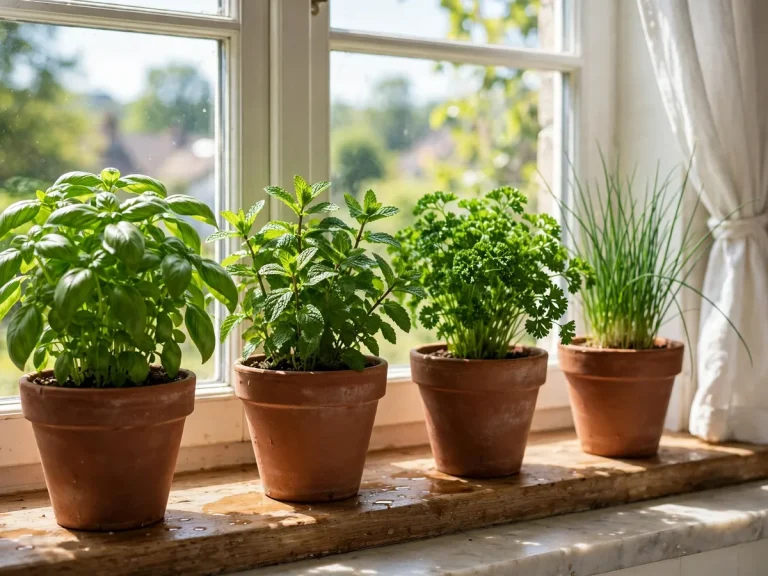
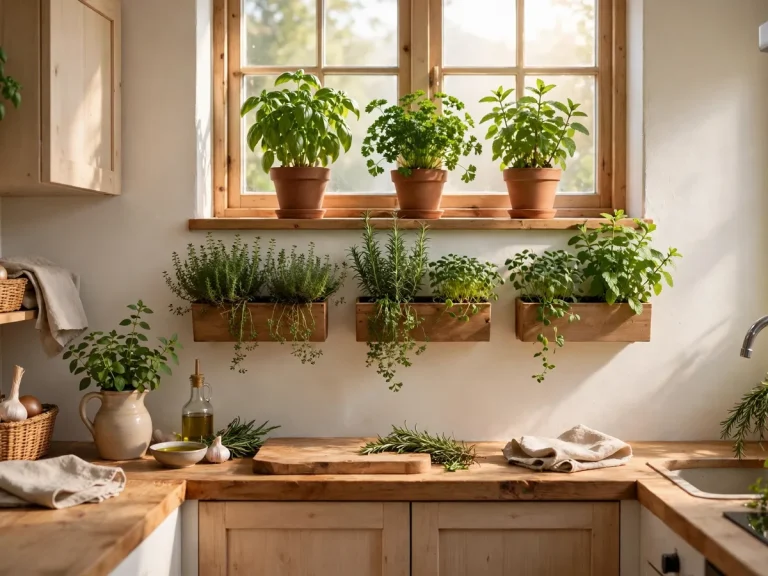
If you want the corner stand to earn its keep in the kitchen, see these indoor herb garden ideas for growing basil, parsley and mint in the same small footprint. To pick the exact varieties for those pots, see the herbs to grow indoors that thrive in small spaces.
1. Tiered Corner Tower: Three Shelves in One Square Foot
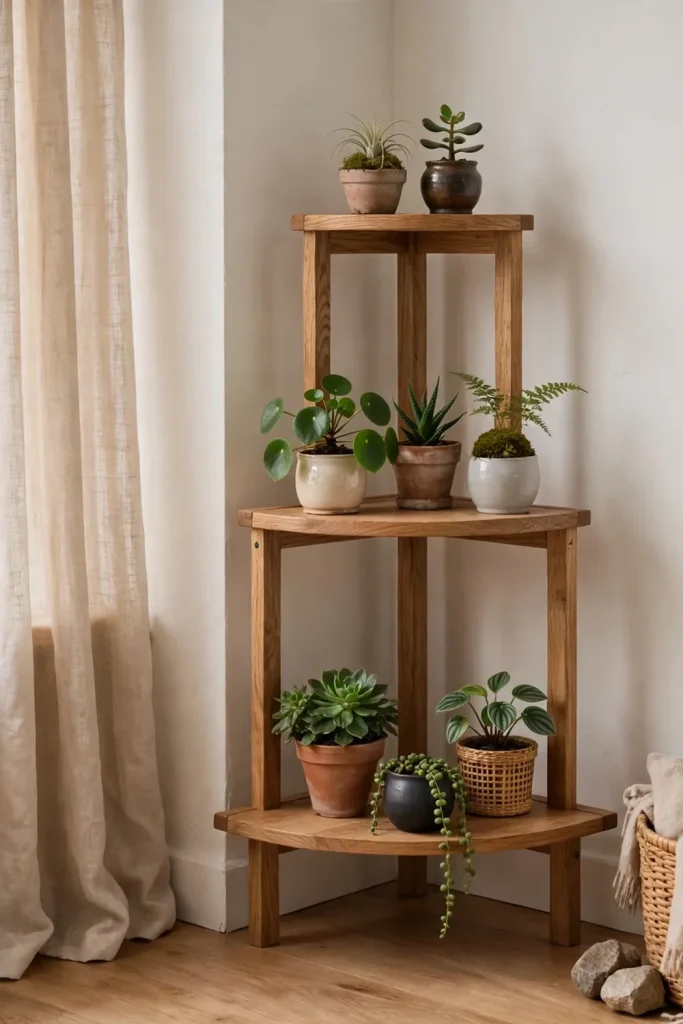
A tiered corner tower stacks three to five shelves vertically in a footprint no wider than a floor cushion, and it is the single best answer to the question of where plants go when there is no floor left. The top tier sits closest to the light, so put your sun lover there: a jade plant, a small succulent, a compact cactus. The middle tier takes medium-light plants like pilea or peperomia. The bottom tier lives in the shadow of everything above it, so give it the shade tolerant ones: a ZZ plant, a pothos, a snake plant.
Buy the tower in bamboo or slim black metal. Bamboo reads warm against grey winter light and costs less than a dinner out; black metal disappears against a dark wall and suits a modern room. Whatever you buy, give every tier its own saucer or drip tray. Water drips downward, and overflow from the top shelf will waterfall through every level below it if you skip the trays. A three-tier tower holds five to seven small pots and costs about $20 to $45. It is the highest plant-per-square-foot ratio of any stand on this list.
2. Leaning Ladder Shelf (No Holes, No Landlord Call)
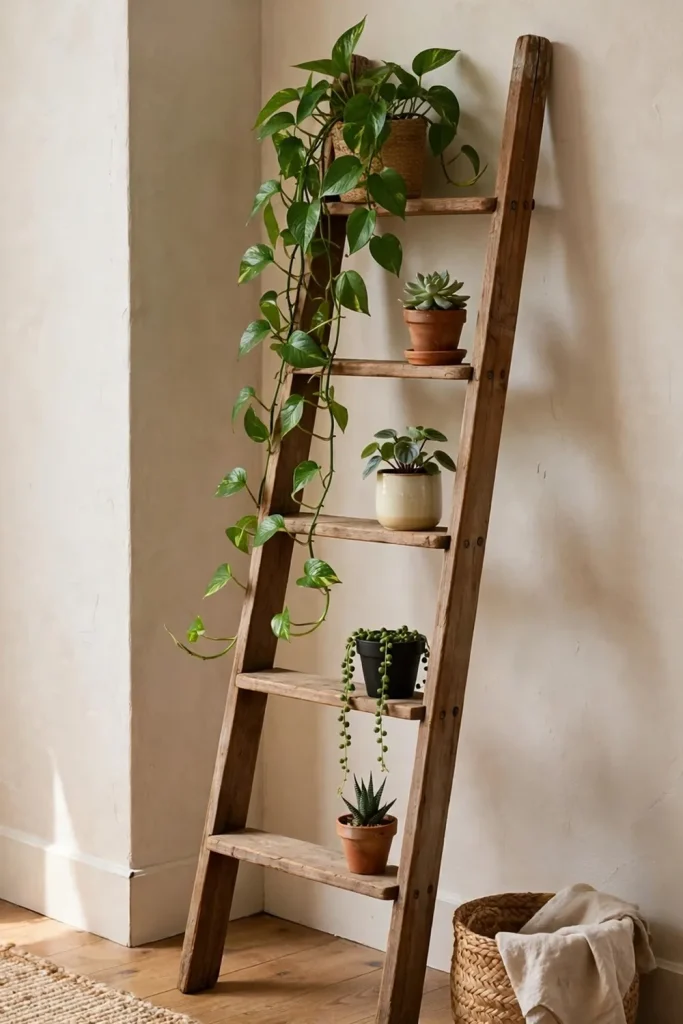
A leaning ladder shelf leans under its own weight, which makes it the best option for renters who cannot put holes in walls. You lean it in the corner, you load it, and when you move house you carry it out in one piece. If your lease has a no-drilling rule, this is your stand. It also fits the way small apartment decorating ideas actually work in real rentals: everything freestanding, everything movable, nothing that leaves a mark.
Pick a ladder with four or five rungs and a depth of about 25 centimetres. Shallow rungs force you to use small pots, which is a feature, not a flaw: a ladder full of small pots looks curated, while a ladder full of big pots looks like a storage shelf. Put trailing plants on the top rung so they spill down and soften the frame, and keep one rung partly empty. A little breathing room is what makes a ladder look styled instead of stuffed. Expect $30 to $60 for a decent wooden one, less if you find a secondhand ladder and sand it yourself.
3. Rolling Plant Cart That Follows the Sun
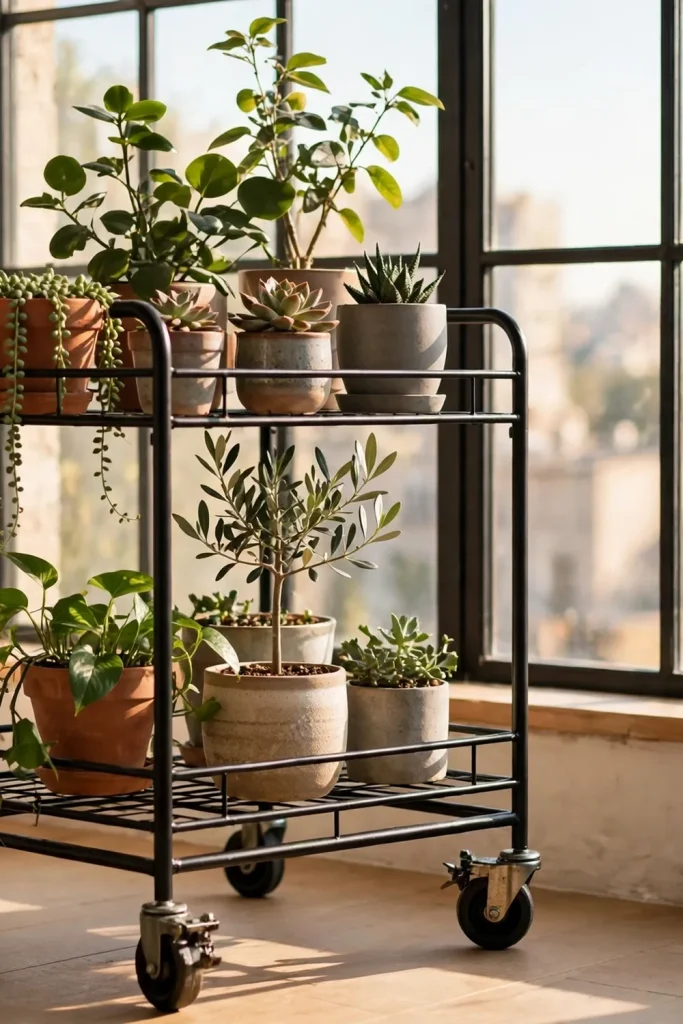
A rolling cart is the only plant stand on this list that moves, and in winter that matters more than any other feature. When the sun angle drops, your usual bright spot dims, and the brightest patch in the room migrates across the floor during the day. Push the cart to the window for four hours of morning sun, then roll it back to its display position. No other stand can do that.
This is the stand to buy if your only bright window is also the main traffic path or your working surface. Get one with lockable casters so it stays put when you want it to, and keep the total weight in mind: a cart full of wet soil is heavy, so choose a metal frame over a flimsy plastic one. Two tiers are enough for most apartments; three tiers turn the cart into a mobile garden. Budget $25 to $50, and look for one that folds flat if you ever need to store it.
4. Narrow Slim Stand for the Gap Beside the Sofa
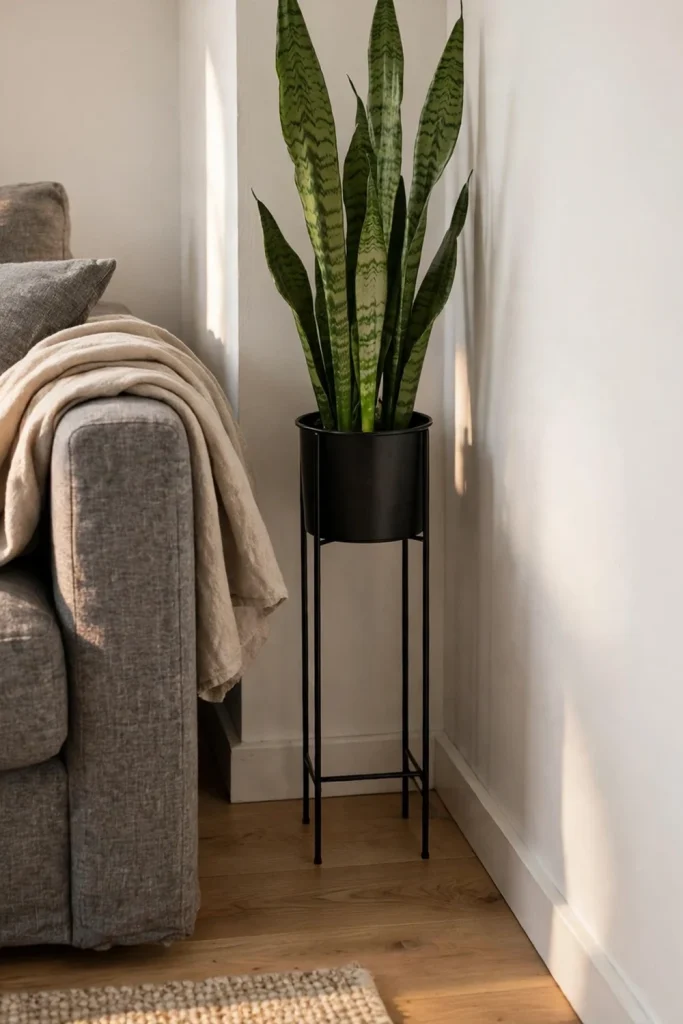
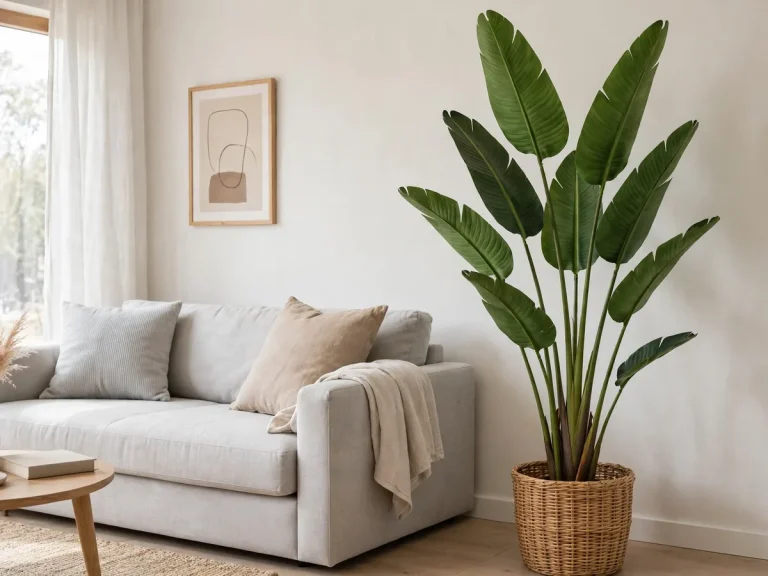
Every small living room has a dead gap: the strip between the sofa and the wall, the space beside the TV unit, the ten centimetres nobody uses. A narrow slim stand, six to ten inches wide, fills exactly that gap. It takes one upright plant, a snake plant or a ZZ plant, and turns wasted space into a green edge. If you are working through small living room ideas and the room still feels unfinished, this is often the missing piece: not more furniture, just one vertical line of green where the eye expects nothing.
Measure the gap before you buy, not after. Slim stands look wrong when they are even two centimetres too wide, because then they jut out and catch every hip that passes. The plant should be narrow too: upright, not bushy. A snake plant in a tall slim pot is the classic pairing, and it forgives the low light that usually lives in a sofa gap. Most slim stands cost $15 to $30.
5. Wooden Stool, Three Jobs in One Corner
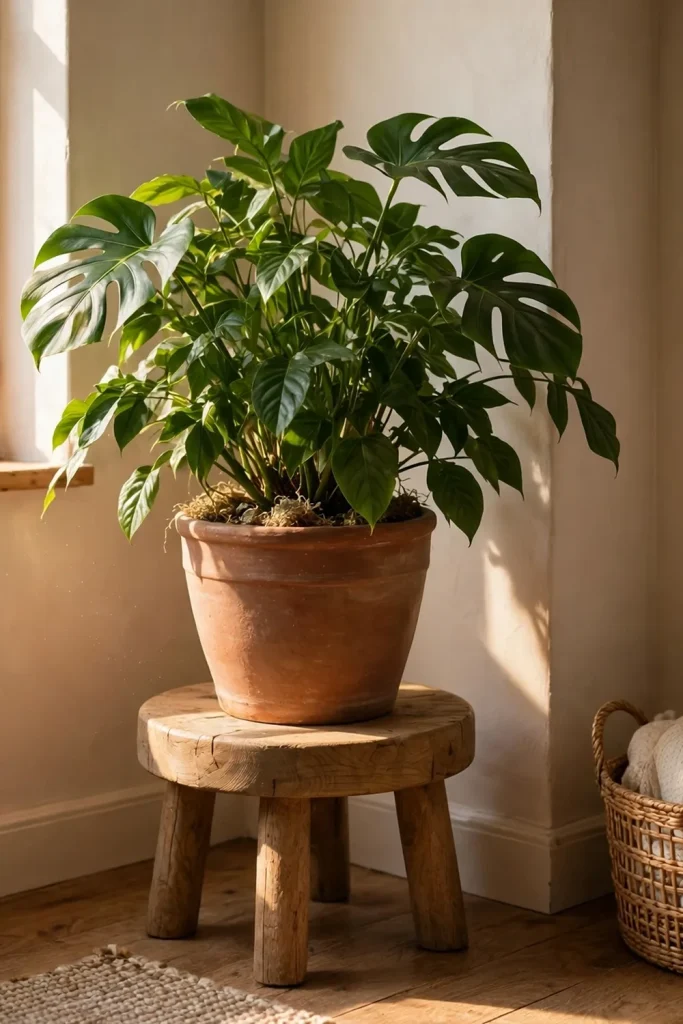
The humble wooden stool is the renter’s secret weapon, because it is a plant stand, a side table and a step stool in one, and nobody will ever mistake it for a single-purpose purchase. Put a large planter on it in the corner and the plant sits at the perfect height to catch low winter sun. Need to reach a high shelf? Move the stool, step up, put it back. Guests coming over? Clear the pot for an evening and it is a side table again.
Choose a stool with a round top at least 30 centimetres across so the pot sits stable, and check the weight rating if your planter is ceramic and full of wet soil. A solid wood stool holds far more than a hollow one. Secondhand stools are everywhere for $10 or less, and a coat of paint makes a mismatched one look intentional. This is the cheapest idea on the list, and in my apartment it is also the one I use every single day.
6. Hairpin-Leg Stand for One Statement Pot
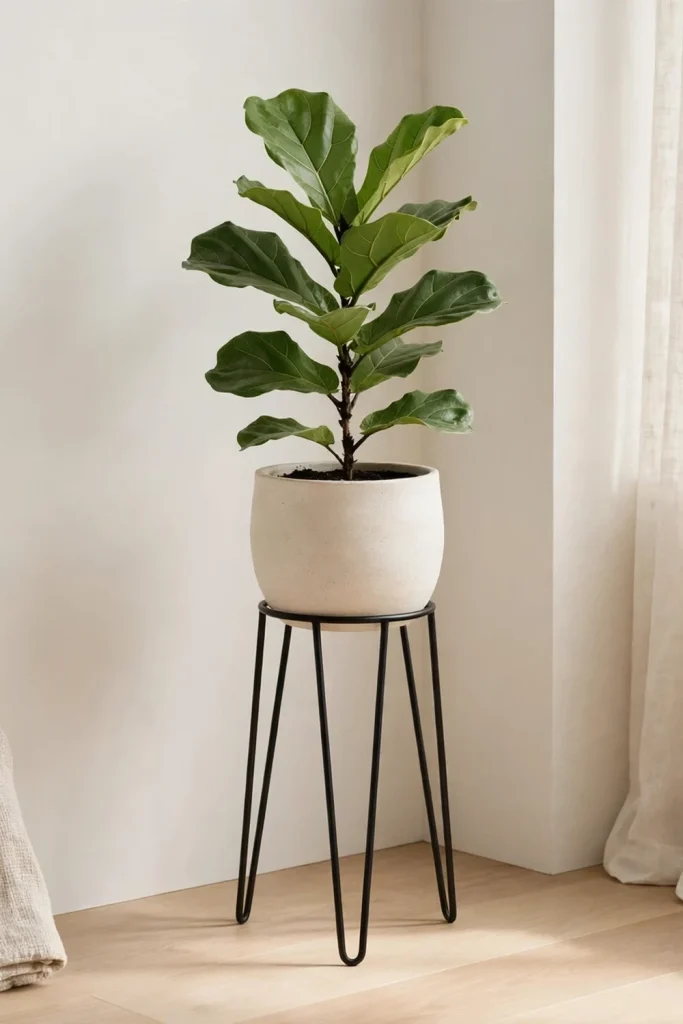
A hairpin-leg stand is the minimalist’s answer to winter plant display: a slim steel frame, usually in matte black or brushed gold, that holds a single pot at the perfect height to catch low winter sun. It does one thing and does it well. If your corner already has enough going on, a hairpin stand adds height without adding visual weight, because you can see straight through the frame to the wall behind it.
This is the stand for your best plant, the one you want people to notice. A fiddle leaf fig in a cream pot on a black hairpin stand is a whole styling decision in one object. Keep it to one pot, though. Two hairpin stands side by side start to look like a furniture showroom, and the point of the frame is that it disappears. Expect $12 to $25 for a single stand, with taller versions at the upper end. Put it next to an armchair, in an empty corner by the balcony door, or flanking a television unit where a larger piece of furniture would crowd the room.
7. Bamboo Tiered Stand for Warm Winter Light
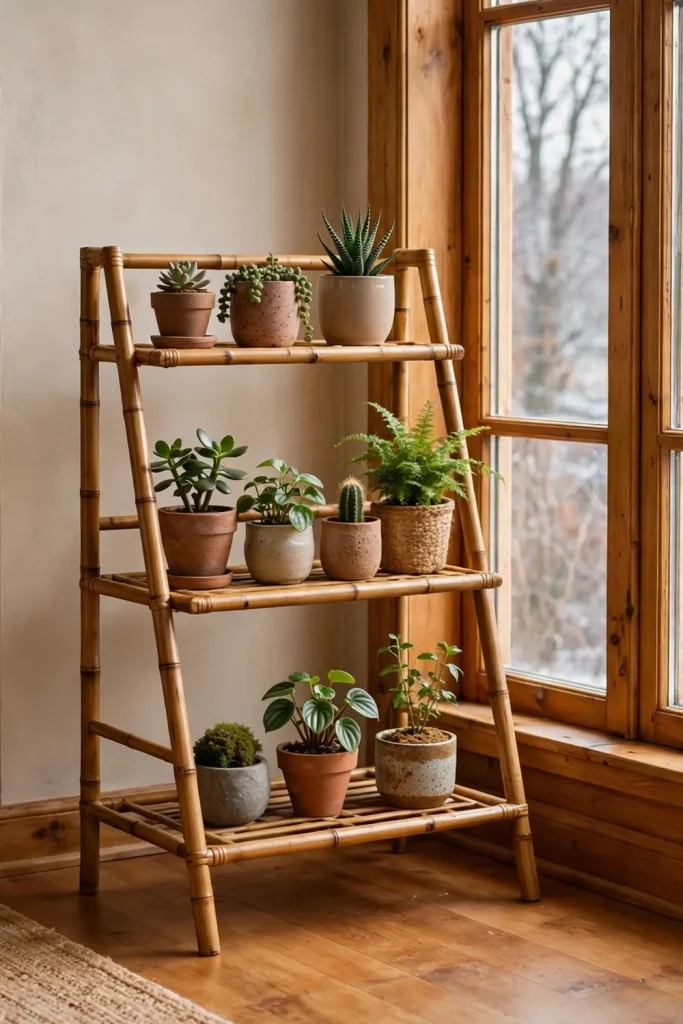
Bamboo suits winter especially well, because its warm honey tone reads cosy against grey January light. A two or three-tier bamboo stand holds three or four plants in the footprint of one, with the top shelf sitting roughly knee height and the lower shelves stepping down toward the floor. It is the workhorse of small-space plant care, and the folding style is the best value of all: it packs flat when you move house, which matters more than most people admit until moving day arrives.
Put the bamboo stand beside a south or west-facing window in the living room, or at the end of a narrow hallway where a single row of plants would block the walkway. Bamboo and water are not best friends, so wipe the shelves after watering and use saucers under every pot. A two or three-tier bamboo stand usually runs $18 to $25, and it is the stand I recommend first to anyone who wants a corner garden without spending much or committing to anything permanent.
8. Hanging Corner Shelf (Zero Floor Space)
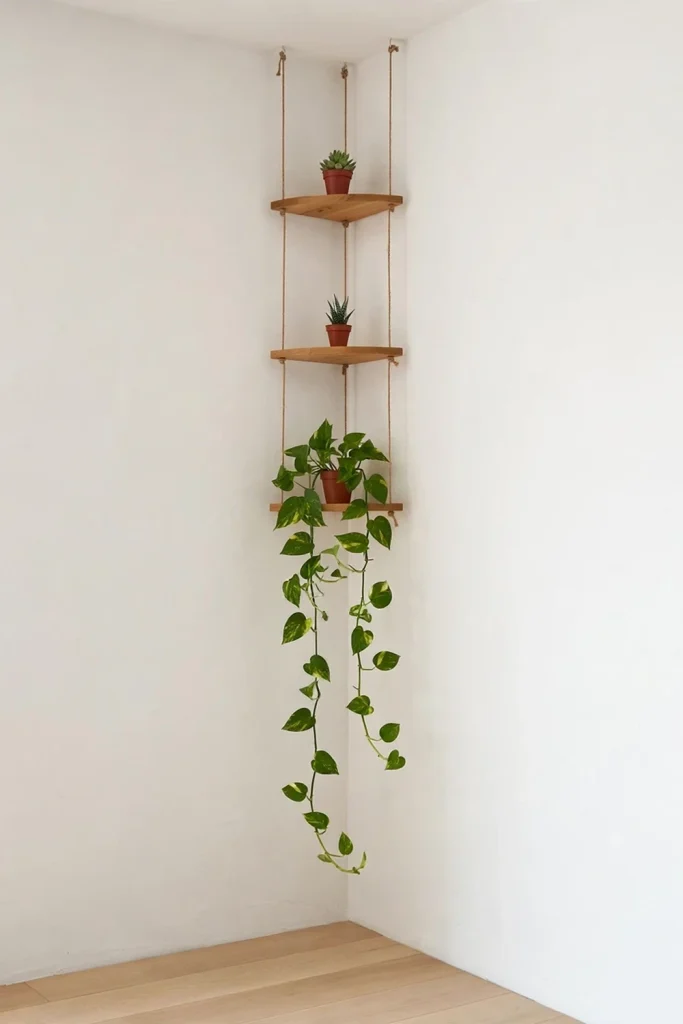
Some corners have no floor to spare at all. A hanging corner shelf takes the stand off the floor entirely: two or three small triangular shelves mounted in the corner, one above the other, holding small pots at eye level. The floor stays clear, the vacuum still fits, and the plants get light that a floor stand would never reach, because they sit higher and closer to the window line.
This is the one idea on the list that needs a drill, so check your lease first. If drilling is allowed, use proper wall anchors, not just screws, because a shelf full of wet pots is heavier than it looks. If drilling is not allowed, skip this one and take the ladder shelf instead; the result is similar and the landlord stays happy. Trailing plants belong on a hanging shelf: a pothos or a string of hearts spilling down from the top shelf turns a bare corner into a green waterfall. Budget $15 to $35 for the shelves plus anchors.
The Light Test: Three Numbers That Decide the Corner
Before you buy any stand, test the corner with three numbers. First, the distance from the window: every metre away from the glass cuts the light sharply, so a corner two metres from a window gets far less light than a corner half a metre away. Second, the window direction: a south or west-facing corner gets real sun in winter, a north-facing corner gets almost none, and that decides which plants can live there. Third, the hours: count how many hours of bright light the corner actually gets on a grey winter day, not a sunny one. If the answer is under two hours, the corner needs either a low-light plant or a small grow light, not a bigger stand. A stand moves a plant into the light that exists; it cannot create light that does not. Test first, buy second, and the plants will stop dying on you.
9. Floor-to-Ceiling Pole Stand
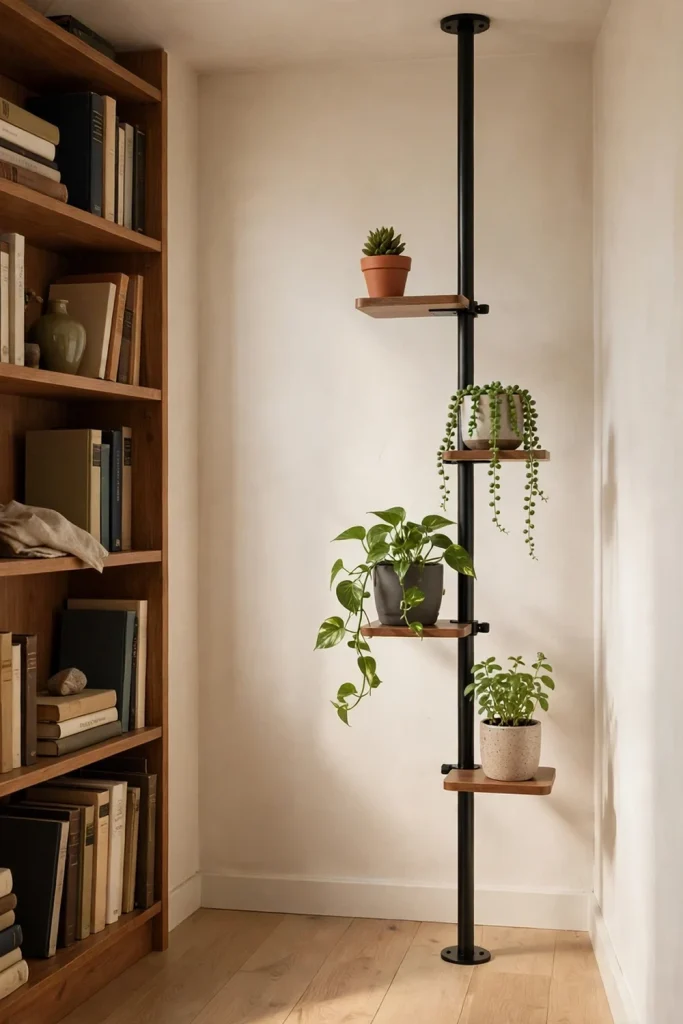
A floor-to-ceiling pole stand uses tension to hold itself between the floor and the ceiling, which means no drilling and no screws, and it turns one corner into a vertical garden. Most poles hold three to five small shelves that you slide to whatever height suits each plant. The top shelf gets the most light, the bottom shelf gets the least, so grade your plants the same way you would on a tiered tower: sun lovers up high, shade tolerant plants down low.
Measure your ceiling height before ordering, because poles come in fixed ranges and a pole that is two centimetres too short will not hold tension. This is also the stand to pick when you want a lot of plants but almost no footprint: the pole itself takes up less floor than a floor lamp. It suits a narrow corner beside a bookshelf or a desk, and it looks best with small to medium pots rather than one huge one. Expect $30 to $60, and check the weight limit per shelf before you load it with ceramic pots full of wet soil.
10. Corner Stand Plus Grow Light for Dark Winter Corners
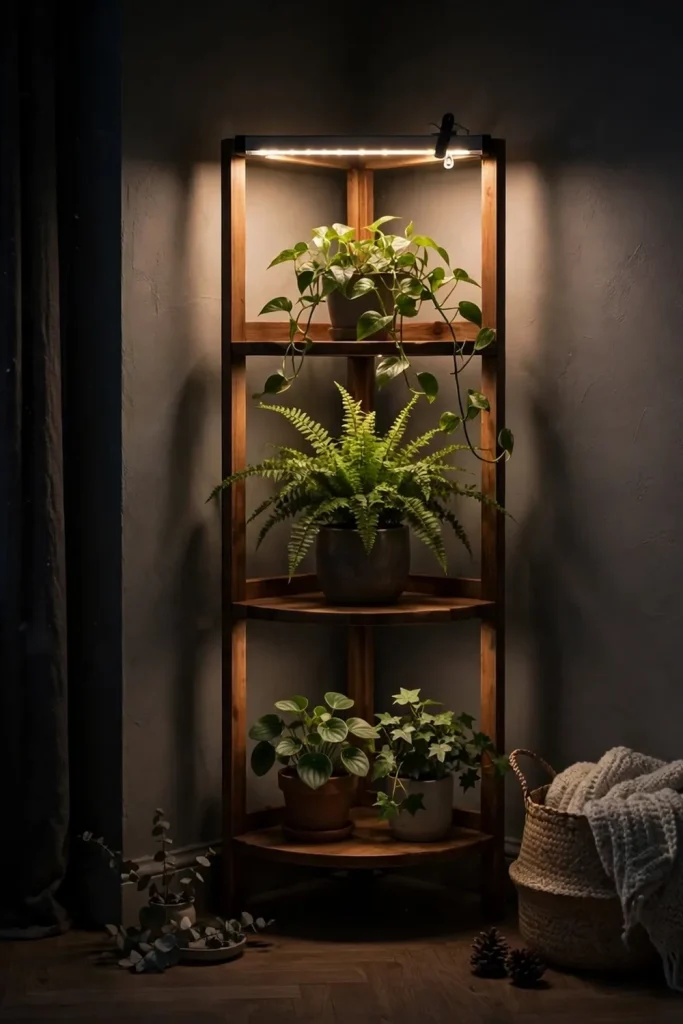
Some corners are dark no matter what you do: north-facing rooms, ground-floor flats, corners far from any window. A stand alone will not fix those corners, but a stand plus a small grow light will. Clip a full-spectrum LED bar to the top shelf of a tiered stand or a pole stand, set it on a timer for 10 to 12 hours, and the corner becomes a growing spot instead of a plant graveyard. This is the honest version of the winter plant advice you see everywhere: light is the limiting factor, and a $20 light beats a $100 plant every time. If even a grow light feels like too much fuss for a dark spot, try artificial plants for dark corners to fill the spot with greenery that never needs light or watering.
Pick a light that looks like decor, not a laboratory: a warm white bar or a slim bulb in a nice lamp reads as home, not as a grow room. If you are rethinking the whole room around this corner, it is worth reading up on living room design ideas first, because a lit plant corner changes where the eye lands and the rest of the layout should follow it. Budget $20 to $40 for the light on top of the stand, and keep the light about 30 centimetres above the top leaves so nothing scorches.
11. Macrame Hanger for Trailing Plants in the Corner
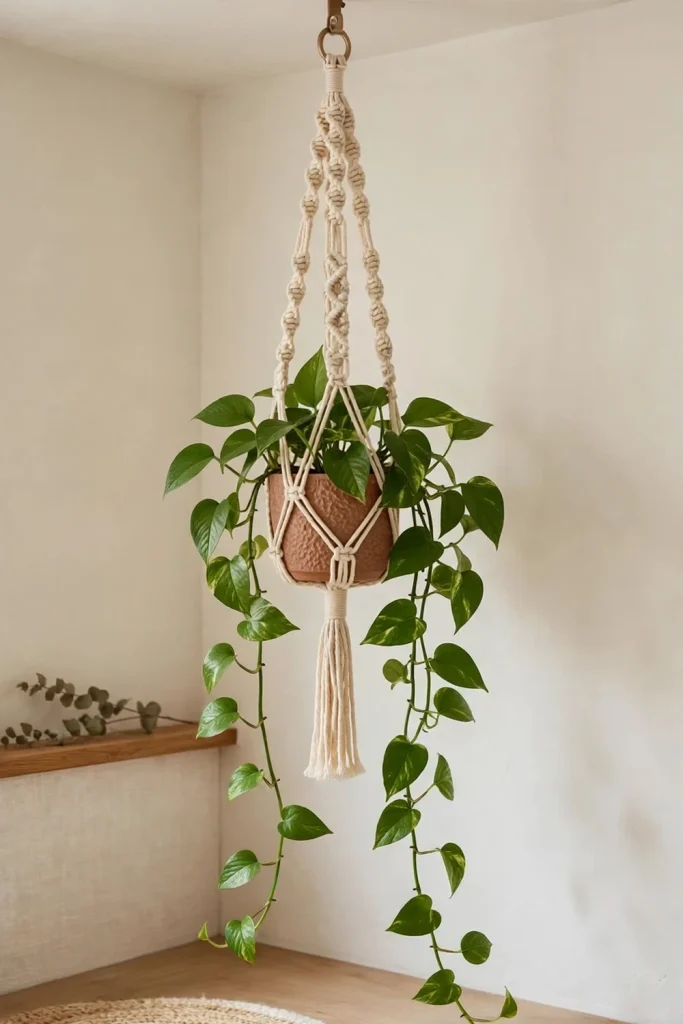
A macrame hanger turns a corner into a soft spot instead of a hard one. Hang it from a ceiling hook in the corner and let a trailing plant do the work: a pothos, a philodendron, a string of pearls spilling down a metre or more. The hanger itself takes no floor space at all, which makes it perfect for the corner behind a door or beside a wardrobe where no stand would ever fit.
One warning: a hanging plant is harder to water than a plant on a stand, because you have to lift it down or water it in place with a long-spout can. Use a pot with a built-in saucer or a cache pot with no drainage hole, and water less often than you think. The hanger suits one plant, not five; a corner full of macrame hangers looks like a craft fair. One hanger, one trailing plant, one corner. Macrame hangers cost $10 to $25, and a handmade one from a local maker beats a mass-produced one every time.
12. Small Corner Greenhouse Cabinet
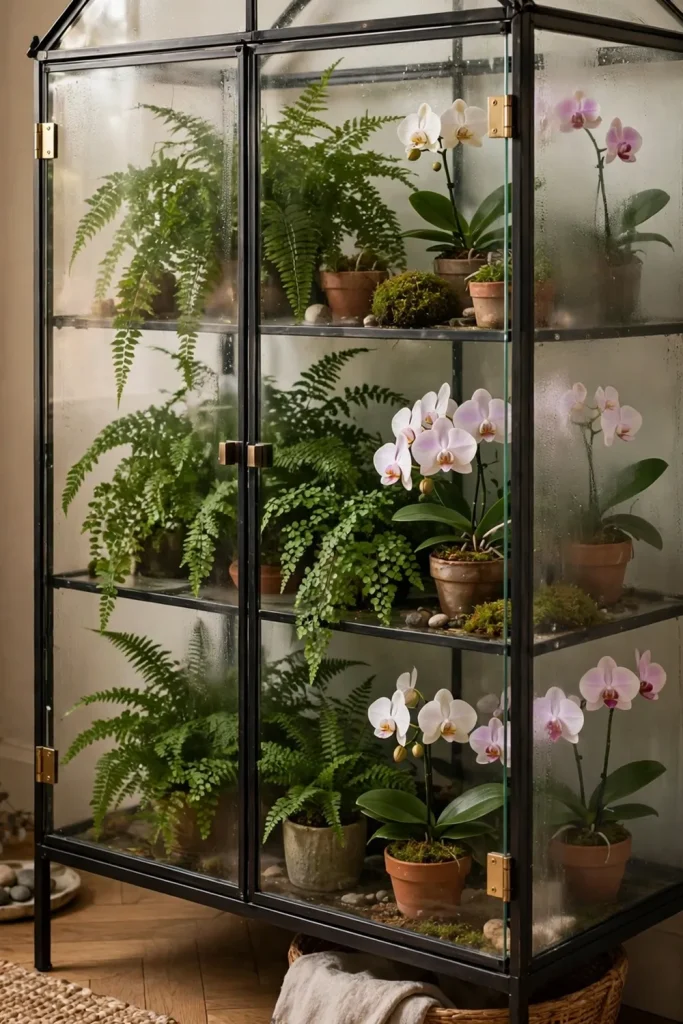
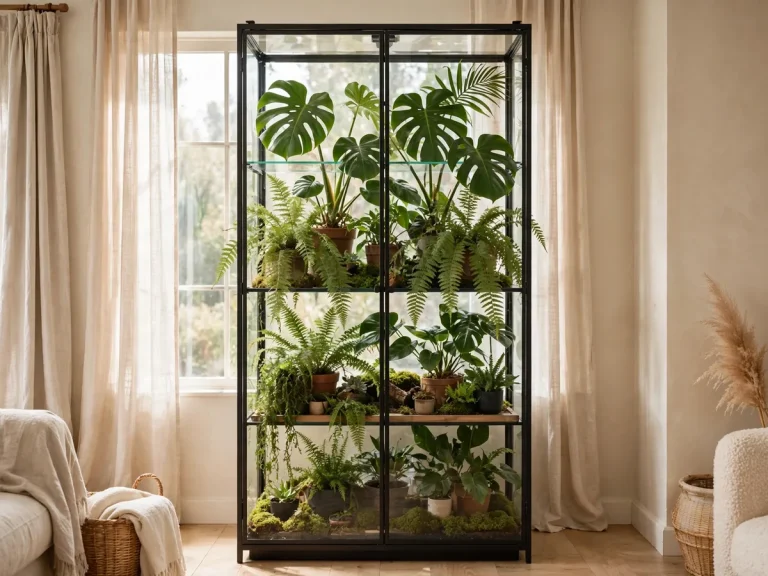
A small glass cabinet in the corner is a greenhouse in miniature, and it is the stand to buy if your apartment air is dry from central heating. The glass holds humidity around the plants, the shelves keep them organised, and the whole thing looks like furniture instead of equipment. Calatheas, ferns and orchids that sulk on an open shelf often thrive inside a cabinet, because the air inside stays soft and still while the room air dries out. If your tropicals still struggle in that corner, indoor greenhouse ideas for small spaces show 17 cabinet, tabletop and windowsill setups that hold humidity high without taking over the room.
Keep the cabinet close to a window if you can, and open the door for an hour a day so stale air does not invite mould. A small fan inside helps, and so does a cheap thermometer so you can spot a cold corner fast. This is the most expensive idea on the list, $80 to $200 for a small cabinet, so it is not a first purchase. Buy it when you already love plants and you know which ones keep dying on you in dry air. For everyone else, the tiered tower does the same job for a tenth of the price.
The Renter’s Corner: No-Drill Rules That Actually Work
Four rules keep a rented corner green without losing your deposit. One, everything freestanding: ladder shelves, tiered towers, rolling carts, stools and pole stands all work without a single hole. Two, felt pads under every stand leg, because a dragged stand scratches wood floors faster than anything else in the flat. Three, a waterproof tray or mat under every stand, because one overwatering on a wooden floor costs more than the stand did. Four, nothing heavier than you can lift alone, because you will need to move it for cleaning, for guests, and eventually for moving day. Follow those four and the corner stays green and the landlord stays happy.
13. Crate Stack Stand (The Cheapest DIY on the List)
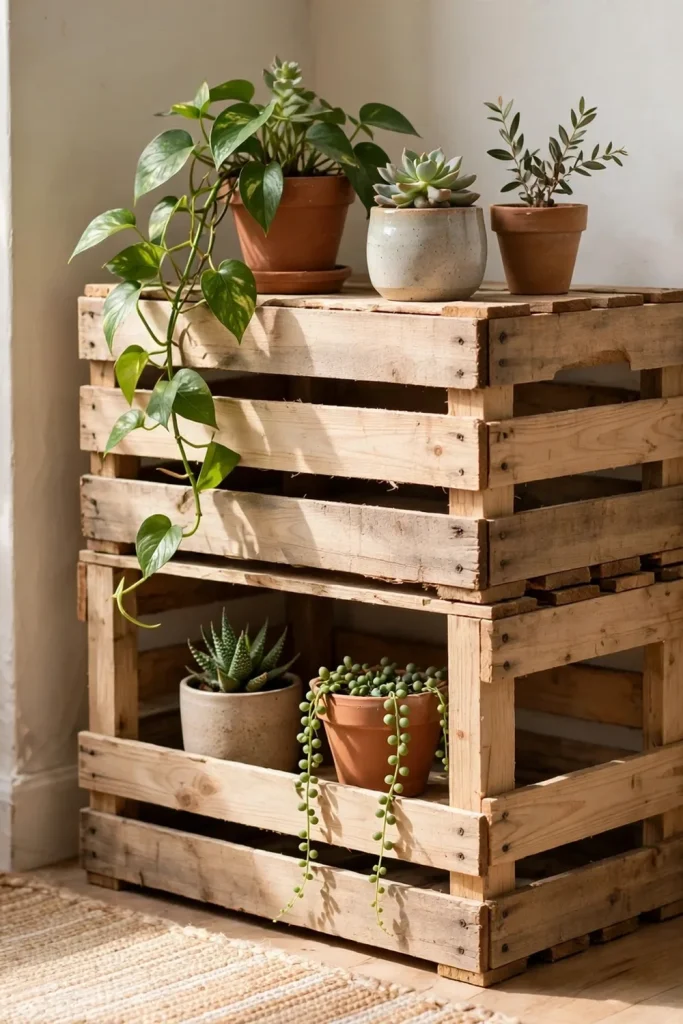
Two wooden crates, one on top of the other, offset so the top one sits back against the wall: that is a corner plant stand, and it costs less than a takeaway dinner. Stack them, screw them together from the inside if you own the crates, or just stack them if you rent. The top crate holds a trailing plant, the bottom crate holds two small pots, and the whole thing looks intentionally rustic instead of cheap, as long as you sand the rough edges and give the wood a coat of oil or paint.
Crates are everywhere: fruit crates from a market, wine crates from a shop, old storage crates from a secondhand store. Check that the wood is untreated or food-safe if you plan to grow herbs on it, and line the inside with a plastic tray so water never touches the wood directly. Total cost is usually $0 to $15, and it is the best first stand for anyone who is not sure plants are their thing yet. If the plants die, you still have two useful crates. If they live, you have a corner garden for the price of lunch.
14. Rotating Stand for Even Growth
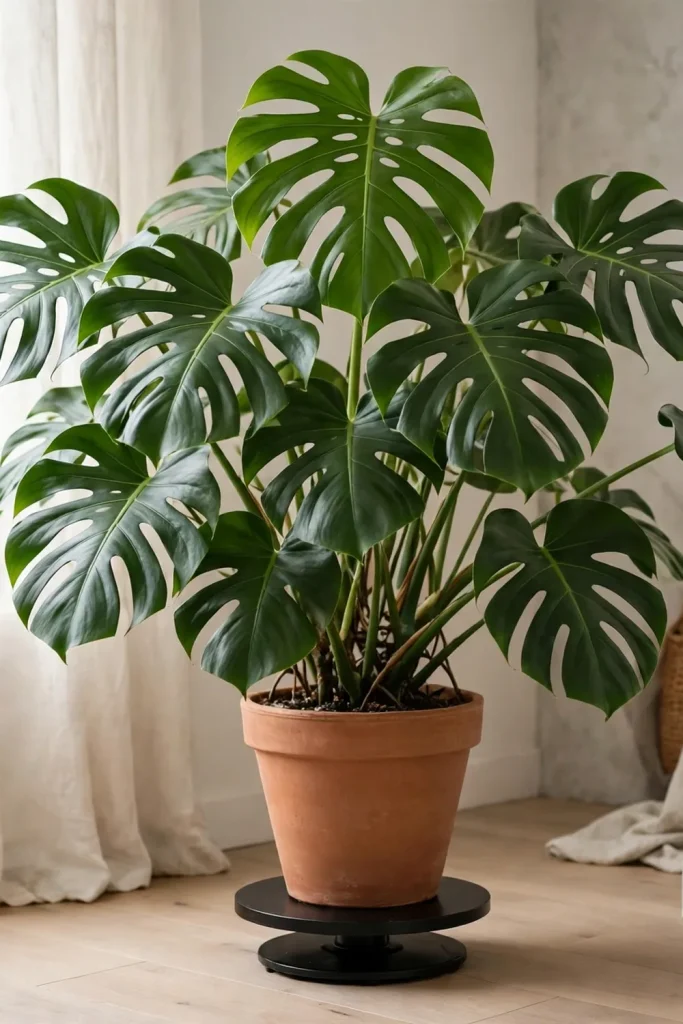
Plants lean toward the light, and a plant on a fixed stand in a corner leans hard: one side grows long and one side stays bare. A rotating stand fixes that by turning the pot a quarter turn every time you water it, so every side gets its share of light. You can buy a small turntable base for a few dollars and put it on any stand, or buy a stand with a rotating top built in.
This matters most for plants that grow fast and show it: monsteras, fiddle leaf figs, rubber plants. A plant that has been rotated looks full from every angle, which is exactly what you want in a corner that people see from two sides. The turntable itself is nearly invisible once the pot sits on it, and it costs $8 to $20. It is a small purchase that makes every other stand on this list work better, so consider adding one even if you buy nothing else here.
Watering Without Ruining the Floor
The fastest way to ruin a corner garden is to water it like a garden. Pots on stands drip, and drips on wood floors stain, on carpet they smell, and on a downstairs neighbour’s ceiling they become a problem you do not want. Three habits prevent all of it. First, take the pot to the sink, water it there, let it drain fully, and put it back; this one habit prevents almost every water stain a stand causes. Second, give every shelf its own saucer, and empty the saucers after watering instead of letting plants sit in water. Third, water in the morning, so any splash dries during the day instead of sitting overnight. A stand that protects the floor is a stand that stays in the corner. A stand that stains the floor gets thrown out, plants and all.
15. Window-Corner Stand (The Brightest Spot in the Room)
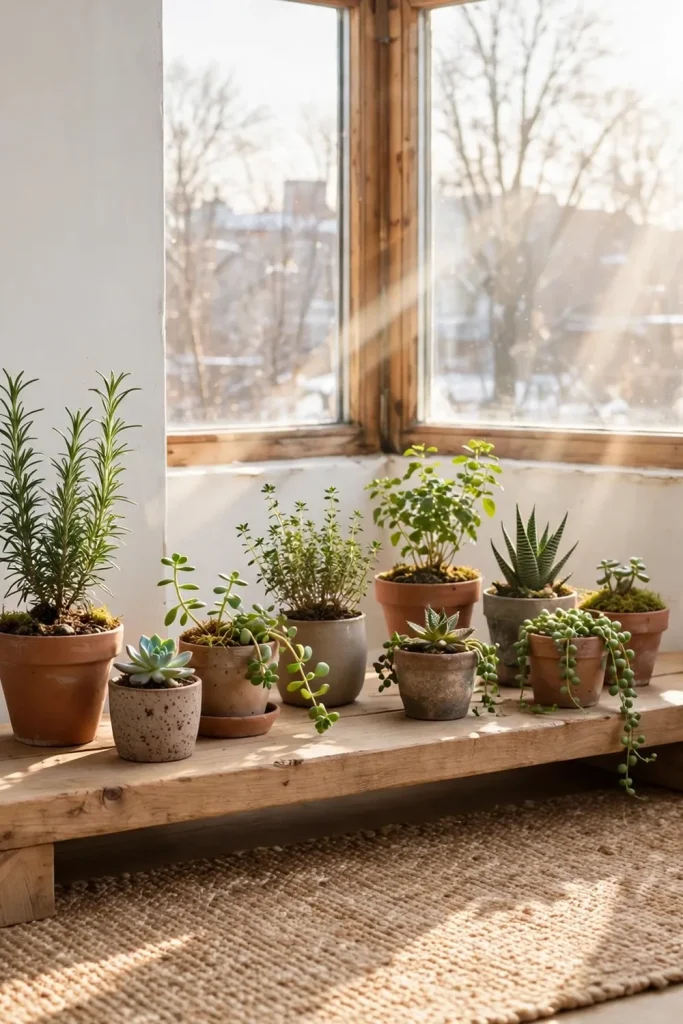
The best corner in any apartment is the one beside the window, and the best stand for it is a short, wide one that sits low and lets the plants live in the light instead of chasing it. A low two-tier stand or a wide stool in the window corner holds the plants that want the most sun: succulents, cacti, herbs, a small citrus if you are ambitious. The light here is the brightest in the room, so this is where your fussiest plants go, not your toughest ones.
Watch two things. First, the radiator: if the window corner sits above a radiator, the hot dry air will crisp leaf edges all winter, so lift the stand a little higher or move it a few centimetres to the side. Second, the cold glass: in deep winter the window itself is cold, so keep leaves from touching it overnight or they will chill and blacken. Get those two right and the window corner becomes the healthiest spot in the flat, the place where plants actually grow instead of just surviving. A low wide stand costs $20 to $40, and it is the stand I would buy if I could only buy one.
Frequently Asked Questions
What plants are best for a corner plant stand?
Match the plant to the light, not the look. Bright corners take succulents, jade plants and herbs. Medium corners take pothos, philodendron and pilea. Dark corners take snake plants, ZZ plants and cast iron plants. The stand does not change what the plant needs; it only changes where the plant sits.
How tall should a corner plant stand be?
Tall enough to lift the pot into the light, short enough to water without a step stool. For most apartments that means 60 to 90 centimetres for a tiered stand and 30 to 45 centimetres for a single-pot stand. If you cannot reach the top shelf comfortably, the plants on it will be the first ones you forget.
Do corner plant stands work in north-facing rooms?
Yes, with the right plants and sometimes a small grow light. North-facing corners get no direct sun all year, so use shade tolerant plants like snake plants, ZZ plants and pothos, and add a clip-on LED bar in winter if the plants start stretching toward the window.
How do I keep a tall corner stand from tipping over?
Put the heaviest pots on the bottom shelf, the lightest on top, and push the stand flush into the corner so two walls brace it. For a ladder or pole stand, check the feet sit flat and the stand does not wobble before you load it. If you have a toddler or a large dog, anchor the stand or choose a low, wide one instead of a tall narrow one.
Can I put a heavy ceramic pot on a ladder shelf?
Only on the bottom rung, and only if the shelf is rated for it. Most ladder shelves are built for small plastic or terracotta pots, not a large ceramic pot full of wet soil. When in doubt, use a lighter pot on the ladder and save the heavy ceramic for a stool or a tiered stand with a solid frame.
A corner is the most wasted square foot in a small home, and a stand is the cheapest way to put it to work. Pick the corner with the best light you have, choose the stand that fits the space and not the one that looks best in a photo, and put the plant that matches the light on it. The plants will tell you quickly whether you got it right, and unlike a new sofa, a stand can be moved in thirty seconds if you did not. Start with one corner, one stand, and three plants. That is enough to change the whole room.
If you want the plants on that stand to grow in water, these small-space hydroponic setups show 15 countertop and bucket ideas for tight corners.