15 Small Apartment Decorating Ideas That Make Every Inch Work
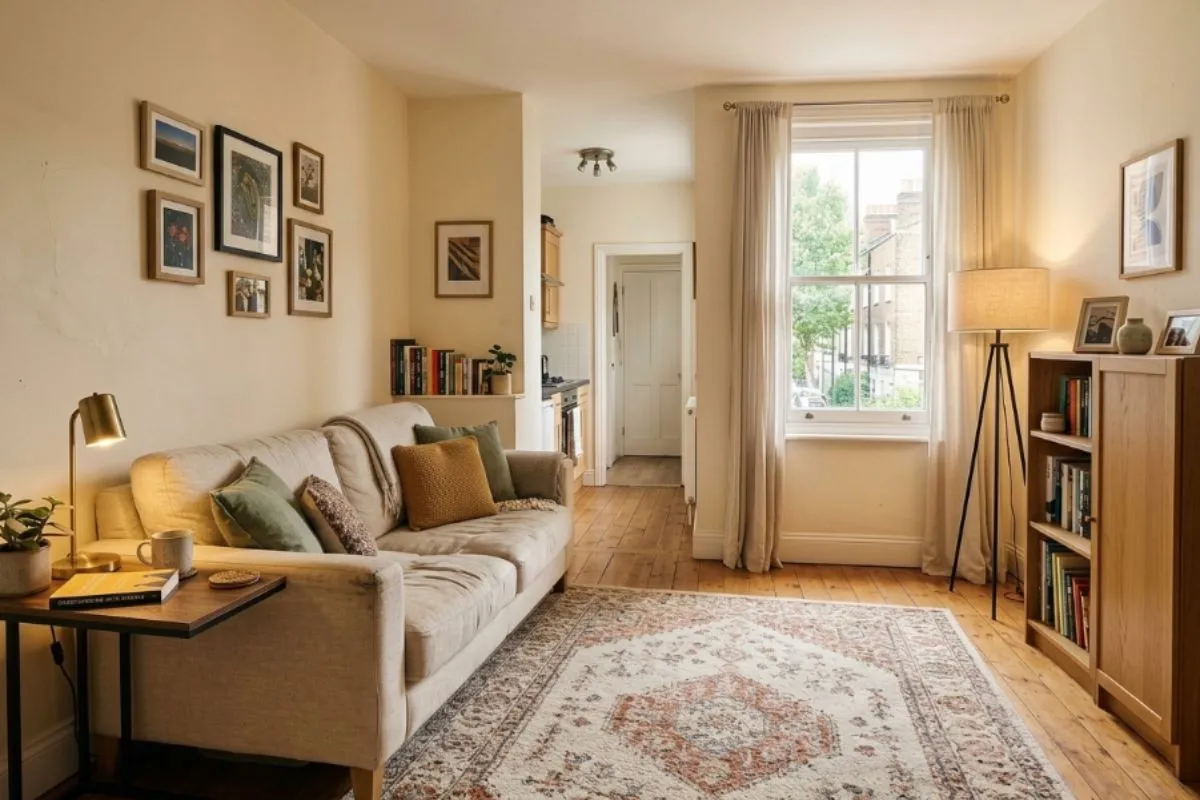
A small apartment can be stylish without being sparsely furnished, completely white, or packed with space-saving gadgets. The more useful approach is to make every major decision earn its place.
Start with how you move through the apartment. Then choose furniture that fits those routines, solve the storage problems that create visible clutter, improve the lighting, and only then add decorative layers.
That order matters. A beautiful coffee table will not fix a living room you cannot comfortably walk through, and another basket will not solve storage if there is nowhere sensible to put it.
These small apartment decorating ideas focus on creating a home that looks intentional and functions well at real apartment scale, including practical options for renters.
The Best Way to Decorate a Small Apartment
Before getting into individual rooms, use this five-step order:
- Fix the layout and walking paths.
- Choose the furniture pieces the apartment truly needs.
- Give everyday belongings practical storage.
- Improve the lighting and visual balance.
- Add color, art, textiles, and personal details.
It is tempting to start with decorative accessories because they are fun to shop for. In a compact home, however, the first four steps determine whether those accessories look intentional or simply make the apartment feel fuller.
1. Plan the Layout Before Buying More Decor
One of the easiest ways to make a small apartment feel crowded is to decorate around an inefficient layout.
Before buying anything, look at the routes you use every day: the path from the front door to the living room, from the bed to the bathroom, from the kitchen to wherever you eat, and around doors, cabinets, and drawers that need to open.
Furniture should support those movements rather than interrupt them.
In a living room, for example, moving an accent chair out of the main walkway may improve the room more than replacing the chair with a smaller version. In a studio, turning a sofa perpendicular to a wall may help define a living zone while still leaving a clear route to the sleeping area.
Try This First
Make a quick sketch of the room and mark:
- doors and their swing direction
- windows
- outlets
- radiators or other fixed elements
- major furniture
- the routes you actually walk
You do not need a professional floor plan. The goal is simply to spot conflicts before spending money.
2. Use Fewer Furniture Pieces Without Making Everything Tiny
Small apartments do not automatically require miniature furniture.
A room filled with several undersized pieces can sometimes look busier than one with fewer, appropriately scaled pieces.
Think in terms of jobs rather than traditional furniture categories.
Instead of automatically buying a sofa, two chairs, a coffee table, two side tables, and a media console, ask which functions you actually need. Perhaps one comfortable sofa, a movable side table, and an ottoman cover the way you live.
The same principle works in a bedroom. A bed plus a storage dresser may be more useful than squeezing in two small nightstands simply because bedrooms traditionally have them.
A helpful rule is to choose the smallest number of pieces that comfortably handle the activities that happen in that zone.
3. Choose Furniture That Can Do Two Useful Jobs
Multifunctional furniture can be especially valuable in a compact apartment, but only when both functions are genuinely useful.
Good examples include:
- an ottoman with concealed storage
- a dining table that also works as a desk
- a bench that provides seating and storage
- a dresser that doubles as a TV stand
- a side table with shelving underneath
- nesting tables that separate when needed
- a movable kitchen cart for storage and prep space
Be more skeptical of complicated convertible furniture that technically performs several jobs but makes each one inconvenient.
A folding desk is not a space saver if you never want to unfold it.
4. Create Zones Instead of Tiny Rooms
Open-plan apartments and studios usually work better when different activities have recognizable zones.
You do not necessarily need walls or bulky room dividers.
Use visual cues such as:
- a rug under the living area
- the back of a sofa marking the edge of a zone
- a lamp beside a reading chair
- a narrow console separating an entry from a living room
- artwork over the dining area
- a bookcase used as a partial divider
- a curtain where additional privacy is useful
The goal is not to chop the apartment into smaller boxes. It is to make each part of an open space feel purposeful.
In a studio, for example, a rug can establish the living area while bedding and a bedside lamp identify the sleeping area. Keeping some sightlines open helps prevent the room from feeling maze-like.
5. Use a Substantial Rug to Anchor the Room
A common small-space instinct is to choose the smallest possible rug. That can make furniture appear disconnected and emphasize how little floor area each object occupies.
A more substantial rug can visually connect the main furniture pieces and make a seating area read as one composition.
Before buying, mark the proposed rug footprint on the floor using an appropriate temporary method. Look at it from the doorway as well as from inside the room.
The right rug should define a zone without interfering with doors or making the exposed flooring feel like a narrow border around it.
6. Take Storage Upward Before Using More Floor Space
When floor space is limited, the walls become valuable storage space.
Tall bookcases, shelving, over-door organizers, freestanding vertical storage, and tall cabinets can increase capacity without introducing another wide piece of furniture.
The important part is restraint.
Filling every wall from floor to ceiling can make a compact apartment feel dense. Instead, choose the wall where vertical storage solves the biggest problem and allow some surrounding space to remain visually quiet.
This gives you storage without making the whole room feel like a storage system.
7. Combine Open Storage With Closed Storage
Open shelves can look beautiful because they put attractive belongings on display.
Everyday life, however, also includes chargers, paperwork, toiletries, cleaning supplies, spare linens, cables, and objects that are difficult to make decorative.
Small apartments usually benefit from a combination of open and closed storage.
Use open storage for objects you actually want to see, such as:
- books
- ceramics
- framed photographs
- attractive kitchen items
- neatly arranged everyday essentials
Use closed storage for visually inconsistent necessities.
This approach can make an apartment look calmer without forcing you to own almost nothing.
8. Protect Some Empty Space
Not every open wall, shelf, tabletop, or corner needs decoration.
In a compact apartment, empty space is part of the design.
A clear stretch of kitchen counter makes food preparation easier. An uncluttered side of a dresser lets the eye rest. Leaving some floor visible around furniture helps the room feel easier to navigate.
Treat negative space as something you deliberately allocate rather than something waiting to be filled.
One particularly useful rule is simple: when a surface has an important function, protect that function before decorating the surface.
A desk needs room for work. A kitchen counter needs room for cooking. An entry table may need a place for keys or mail.
Function gets first claim.
9. Use Mirrors Intentionally
Mirrors can reflect light and extend sightlines, making them useful in apartments with limited windows or narrow rooms.
Placement matters more than simply owning one.
Before hanging or leaning a mirror, check what it will reflect.
A mirror facing a bright window, attractive artwork, or an open part of the room can increase the sense of depth.
A mirror facing a cluttered shelf, television cables, or a crowded utility area simply gives you two views of something you were trying to minimize.
Think of a mirror as a second view and make that view worthwhile.
10. Use Curtains to Emphasize Height
Window treatments affect more than privacy.
When appropriate for the room and rental conditions, curtains that visually emphasize the height of the wall can make windows feel more substantial and draw the eye upward.
Avoid allowing heavy fabric to overwhelm a narrow room.
Choose enough fullness to make the curtains look intentional without creating a bulky mass next to the window.
Renters should always check lease requirements and approved installation methods before drilling or making permanent changes.
11. Layer Lighting Instead of Relying on One Ceiling Light
Lighting can change how an apartment feels without taking up much space.
Instead of expecting one central ceiling fixture to handle every activity, combine different light sources according to how you use the room.
A living space might include:
- general room lighting
- a floor or table lamp near seating
- a focused reading or desk light
- a small accent light for a shelf or corner
Different light sources let you adjust the atmosphere for working, reading, eating, cleaning, or relaxing.
Portable and plug-in lighting can also be particularly useful for renters because it does not depend on permanent electrical changes.
12. Repeat a Limited Color Palette
A small apartment does not have to be monochrome, but repeating a few colors or materials can make separate areas feel connected.
For example, you might use:
- warm wood
- cream
- muted green
- black accents
The living room might include a muted green pillow, the kitchen a green towel, and the bedroom a piece of artwork with the same family of tones.
The colors do not need to match perfectly.
You can create the same continuity with materials. Repeating wood, brass, black metal, woven fibers, or terracotta can make different rooms feel like parts of the same home.
13. Do Not Be Afraid of Color
White can work beautifully in a compact apartment, especially if you prefer light neutral interiors.
It is not a requirement.
A small apartment can also support darker, warmer, or more colorful decorating choices when the overall composition is controlled.
If you love color but worry about overwhelming the room, use it deliberately.
Try:
- one deeper wall or defined zone
- a colorful sofa against neutral surroundings
- curtains that carry an accent color vertically
- one bold artwork instead of many tiny pieces
- repeated accent colors in textiles and accessories
A room usually feels chaotic because too many unrelated elements are competing for attention, not because a particular color is automatically too dark.
14. Give Each Zone One Strong Focal Point
Small apartments can handle personality. What they struggle with is visual competition.
Choose one element in each major zone that gets to lead.
That might be:
- an oversized piece of art
- a patterned rug
- a colorful sofa
- a vintage cabinet
- dramatic curtains
- a distinctive lamp
- a headboard or large textile above the bed
Then allow the nearby accessories to support that element rather than competing with it.
One confident focal point can make a compact space feel more intentional than many small decorative objects scattered around the room.
15. Add Texture Without Adding Clutter
A cozy apartment does not require filling every surface.
Texture can add depth without demanding much additional space.
Consider:
- linen or woven curtains
- a textured rug
- layered bedding
- a throw over a chair
- visible wood grain
- baskets used for actual storage
- ceramic accessories
- upholstered seating
Whenever possible, let texture and function overlap.
A woven basket used for storage is more valuable in a small apartment than an equally sized object whose only purpose is filling a shelf.
Small Apartment Living Room Ideas
The living room often carries more jobs than any other part of a small apartment. It may function as a lounge, TV room, office, dining space, and place for guests.
Start with the activity you do most.
If relaxing and watching TV are central, establish comfortable seating first. If the room doubles as a home office, decide where the work surface belongs before adding decorative furniture.
Float Furniture When It Improves the Layout
Do not assume the sofa must always sit against a wall.
In some apartments, positioning it slightly away from a wall or using its back to define a dining or work zone creates a clearer arrangement.
In other spaces, wall placement preserves more usable floor area.
The better arrangement is the one that creates comfortable movement and gives each activity a recognizable place.
Use Flexible Surfaces
A movable side table, nesting tables, or a storage ottoman may provide room for drinks, a laptop, or occasional guests without permanently filling the center of the room.
That flexibility becomes particularly valuable if the same floor space is sometimes needed for hobbies, exercise, or entertaining.
Small Apartment Bedroom Ideas
A compact bedroom benefits from restraint because too much furniture near the bed can make the room difficult to navigate.
Start with the bed, then add only the storage and surfaces you use regularly.
Let the Bed Be the Visual Anchor
Instead of decorating every wall equally, make the bed the main focal point with bedding, a headboard where suitable, or artwork behind it.
This gives the eye somewhere to settle.
Use the Bedside Area Creatively
If a conventional nightstand is too bulky, consider:
- a slim side table
- a small stool
- a compact wall-mounted option where permitted
- an existing dresser positioned within reach
- a headboard with integrated storage
Choose according to what you actually need beside the bed rather than what a traditional bedroom setup is supposed to contain.
Make Hidden Space Useful
Under-bed storage can work well for less frequently used belongings if access remains practical.
Containers that fit neatly underneath are usually easier to manage than loose belongings pushed out of sight.
Small Apartment Kitchen and Dining Ideas
In a compact kitchen, decorating and organization are closely connected.
Every object left on the counter becomes part of the room visually.
Keep the Main Work Zone Clear
Identify the part of the counter you use most for preparing food and protect it.
Move attractive but nonessential objects elsewhere before buying additional organizers.
A small kitchen often feels calmer as soon as one meaningful stretch of counter becomes clear.
Let Useful Items Become Part of the Decor
If storage is limited, choose a few everyday objects that are attractive enough to remain visible.
Examples include:
- a bowl
- a cutting board
- a utensil container
- a kettle
- neatly grouped pantry containers
This is more practical than filling the countertop with objects purchased only as decoration.
Let Dining Furniture Perform Another Job
A compact dining table can also work as a desk, project table, or additional prep surface.
If you rarely use a traditional dining table, a smaller or more flexible setup may serve you better than sacrificing valuable floor space just to maintain a conventional arrangement.
Small Apartment Bathroom Ideas
Bathrooms can become cluttered quickly because many small products are stored and used there.
Start by grouping similar items together.
Keep everyday toiletries in the most accessible storage and move backups somewhere else if your apartment has a better location for them.
A tray or container is useful when it makes cleaning or daily routines easier, not simply because every surface needs styling.
Vertical storage can help, but avoid turning every wall into a collection of shelves. A few well-organized areas usually look calmer than many separate organizers.
Small Apartment Entryway Ideas
Even an apartment without a formal foyer benefits from a landing zone.
Without one, keys, bags, shoes, coats, and mail tend to migrate into the living room.
A compact entry setup might include:
- wall hooks where permitted
- a narrow console
- a shoe cabinet
- a small basket
- a mirror
- a storage bench
You do not need every item on the list.
Choose the pieces that solve the things you routinely drop when you enter the apartment.
That is the difference between simply decorating an entry and designing one that helps the rest of the apartment stay organized.
Studio Apartment Decorating Ideas
A studio apartment decorating concentrate the main small-space challenge into one room: sleeping, relaxing, eating, working, and storing belongings may all need to coexist.
Prioritize three things.
Give the Bed a Clear Zone
You can create separation with furniture placement, rugs, curtains where appropriate, lighting, or open shelving.
Privacy may justify a stronger divider, but try not to block valuable daylight simply to create a visual boundary.
Keep the Center Easy to Read
If every zone points in a different direction, a studio can quickly feel chaotic.
Try to maintain at least one clear sightline through the room and avoid placing tall storage where it unnecessarily cuts the apartment in half.
Repeat Materials Across Zones
Using some of the same colors, woods, textiles, or finishes in the sleeping and living areas helps prevent the studio from looking like several unrelated mini-rooms.
Renter-Friendly Small Apartment Decorating
A rental can still feel personal, but renter-friendly decorating should not depend on permanent alterations.
Lease terms, paint finishes, flooring, and permitted modifications vary.
Before painting, drilling, replacing hardware, attaching adhesive products, or changing fixtures, check the lease and building requirements.
Lower-commitment decorating options include:
- freestanding furniture
- rugs
- portable lamps
- textiles
- mirrors
- decorative storage
- framed artwork
- curtains installed using an approved method
- plants suited to the actual light conditions
- removable treatments only when suitable for the surface and rental rules
When in doubt, prioritize objects you can pack and take with you when you move.
How to Make a Small Apartment Feel Bigger
There is no decorating trick that literally creates more square footage, but some decisions can make an apartment feel less crowded.
Keep Important Sightlines Open
When you enter a room, being able to see farther into it generally feels more spacious than immediately encountering the back of bulky furniture.
Leave Some Floor Visible
Furniture does not need to fill every wall or corner.
Visible floor between major pieces helps the layout feel easier to understand.
Reduce Visual Competition
Ten small decorative objects are not necessarily visually lighter than one larger piece.
Editing can often be more effective than simply choosing smaller accessories.
Emphasize Height
Tall storage, vertical artwork, curtains, and appropriately placed lighting can direct attention upward instead of concentrating everything close to the floor.
Use Color Intentionally
Light colors can be helpful, but so can deeper or more expressive tones.
Good proportions, consistent materials, lighting, and clutter control are often more important than following a strict pale-color rule.
How to Decorate a Small Apartment on a Budget
A practical budget strategy is to improve the apartment in stages rather than trying to buy an entire look at once.
First, Fix What Is Not Working
Prioritize missing storage, poor seating, an inadequate desk, or another daily frustration before purely decorative purchases.
Second, Improve the Largest Visual Areas
A rug, curtains, bedding, or substantial artwork can change more of the room visually than several small accessories.
Third, Improve the Lighting
Portable lamps can make a room more comfortable and attractive without using much floor space.
Fourth, Add Personality Slowly
Books, artwork, photographs, secondhand pieces, ceramics, and textiles collected over time can make a home feel more individual than buying a matching collection of accessories at once.
Finally, Buy Organizers
An organizer is most useful after you know what needs to be stored and where that storage should live.
Buying containers before sorting belongings can simply organize clutter rather than solve it.
Small Apartment Decorating Mistakes to Avoid
Buying Before Measuring
A piece can technically fit into a room and still interfere with a door, walkway, drawer, cabinet, or daily activity.
Measure the actual location and consider how nearby furniture needs to function.
Filling Every Corner
An empty corner does not mean the apartment is unfinished.
Sometimes the right thing to put there is nothing.
Choosing Everything in Miniature
A collection of tiny furniture and accessories can create more visual fragmentation than several confident, appropriately scaled pieces.
Treating Storage as an Excuse to Keep More
Storage should reduce friction, not turn every available inch of the apartment into inventory.
Decorating Before Fixing the Layout
If a room feels awkward, rearrange what you already own before assuming you need new furniture.
Mixing Too Many Unrelated Elements
Eclectic interiors can be beautiful, but repetition still matters.
Give different pieces something in common, such as color, material, shape, era, or visual weight.
Copying Inspiration That Does Not Match Your Apartment
A design can be beautiful and still be wrong for your home.
Pay attention to room shape, window placement, ceiling height, storage needs, rental rules, and the activities happening in your space.
Borrow the principle instead of trying to copy the exact room.
A Simple Small Apartment Decorating Plan
If the entire apartment feels unfinished, avoid trying to fix every area at once.
Use this order:
Step 1: Edit
Remove obvious clutter and relocate belongings that belong somewhere else.
Step 2: Rearrange
Test your furniture placement and improve the main walking routes.
Step 3: Solve Storage
Identify what remains visible because it genuinely has no suitable home.
Step 4: Improve Lighting
Place task and ambient lights where you actually use them.
Step 5: Establish a Palette
Look at the furniture and textiles you already own and identify a few colors or materials worth repeating.
Step 6: Add Personality
Bring in artwork, photographs, books, textiles, plants where suitable, and objects that are meaningful to you.
Step 7: Edit Again
Remove anything that makes an important surface, walkway, or sightline feel unnecessarily busy.
You do not need to complete these stages in seven literal days. The sequence matters more than the schedule.
Small Apartment Decorating Checklist
Before buying something for a compact apartment, ask:
- What job will this item perform?
- Where exactly will it live?
- Does anything need to open or move around it?
- Am I solving a real problem or simply filling empty space?
- Could something I already own do the same job?
- Will it make storage easier or create something else to store?
- Does its scale work with the furniture nearby?
- Does it repeat a color, material, or style already in the apartment?
- If I rent, is the installation permitted?
- Would I still want it if I had not just seen it in an inspiration photo?
If you cannot answer the first two questions, waiting is usually the better decorating decision.
Frequently Asked Questions
How Can I Decorate a Small Apartment Without Making It Cluttered?
Start with layout and storage before adding decorative objects. Keep important work surfaces relatively clear, combine concealed and open storage, and choose fewer decorative pieces with stronger visual impact instead of scattering many small accessories throughout the apartment.
What Colors Are Best for a Small Apartment?
There is no single required palette. Light neutrals can feel bright and airy, while deeper or stronger colors can make compact rooms feel intentional and cozy. The most important factor is creating a cohesive palette rather than using too many unrelated colors.
Should Small Apartment Furniture Be Small?
Not necessarily. Furniture should be proportionate to the room and useful for the way you live. Several undersized pieces can sometimes create more visual clutter than fewer appropriately scaled pieces.
How Do You Decorate a Small Apartment Rental?
Prioritize portable and low-commitment elements such as furniture, rugs, lamps, textiles, artwork, mirrors, and storage. Check your lease before painting, drilling, applying adhesives, replacing fixtures, or making other alterations.
What Should I Buy First for a Small Apartment?
Start with necessities related to sleeping, seating, eating, working, and storage. Once the apartment functions well, prioritize major visual elements such as lighting, rugs, curtains, bedding, and artwork before collecting small accessories.
The Most Important Small-Space Decorating Rule
The goal is not to make your apartment look as though it contains more square footage than it does.
The goal is to make the square footage you have feel intentional.
That usually means a clearer layout, fewer pieces doing more useful work, storage where you actually need it, better lighting, enough visual breathing room, and personal details chosen because you love them rather than because an empty shelf seemed to need something.
A small apartment does not have to look minimal, neutral, or temporary. It simply benefits from being edited more deliberately.
Once the foundation works, you can take the style in almost any direction.