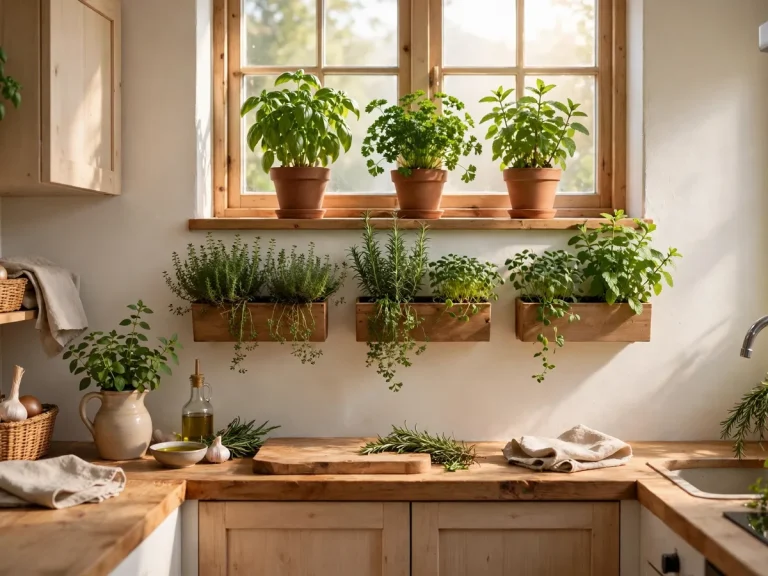
15 Best Herbs to Grow Indoors for Small Spaces
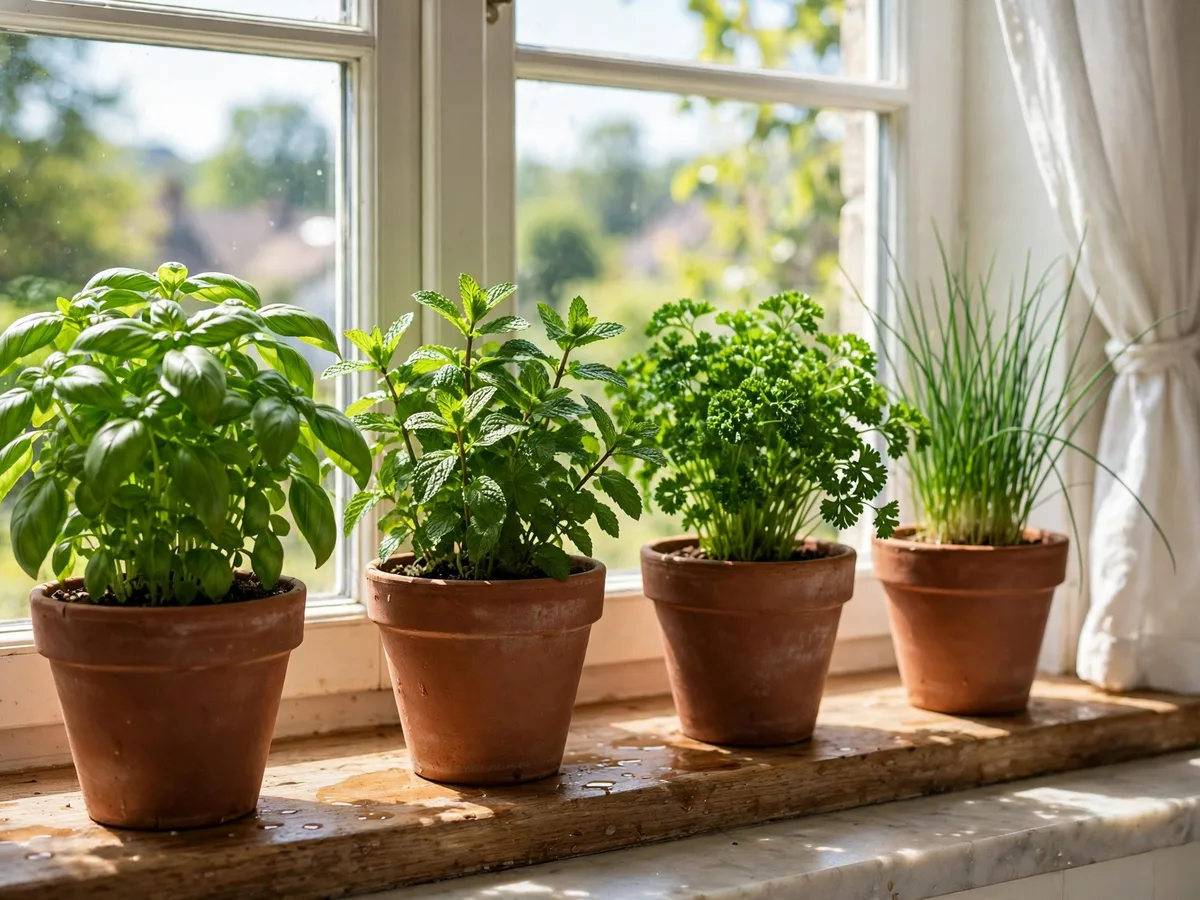
Fresh herbs change a small kitchen. A pot of basil by the stove, mint for tea, parsley for soup: the best herbs to grow indoors turn a windowsill into a pantry. You do not need a garden, a greenhouse, or a green thumb. You need the right herb for your light, a pot with drainage, and a little routine.
This guide lists the 15 best herbs to grow indoors for small spaces. Each herb gets its light need, its water need, its difficulty, and its best kitchen use. Pick the ones that fit your window and your cooking. Start with three herbs you already cook with, and add more once the first pots thrive. If your kitchen gets only a few hours of sun, there is still an herb on this list for you.
The list runs from the easiest herbs, the ones that forgive a missed watering, to the fussy ones that demand full sun and dry soil. Chives lead the list, since they are the safest first pick, and rosemary closes it, since it is the hardest. Pick from the easy end first, and the hard ones will feel less risky later.
Before You Pick: 5 Rules for Growing Herbs Indoors
A few rules make every herb on this list easier, so follow them before you buy a single pot. Light, water, and harvest are the three things that decide whether an herb lives or dies. They are all in your hands from day one.
- Light first: most herbs want 6 or more hours of bright light, so pick your sunniest window first, then choose herbs that match it.
- Match water needs: leafy herbs like steady moisture, while Mediterranean herbs want dry soil between waterings, so never plant both groups in one pot.
- Start small: begin with three herbs you cook with every week, and add more only when the first pots thrive.
- Drainage always: every pot needs a hole in the base, since wet roots kill more indoor herbs than any other mistake.
- Harvest little and often: snip no more than a third of a plant at once, and cut just above a pair of leaves so new shoots follow.
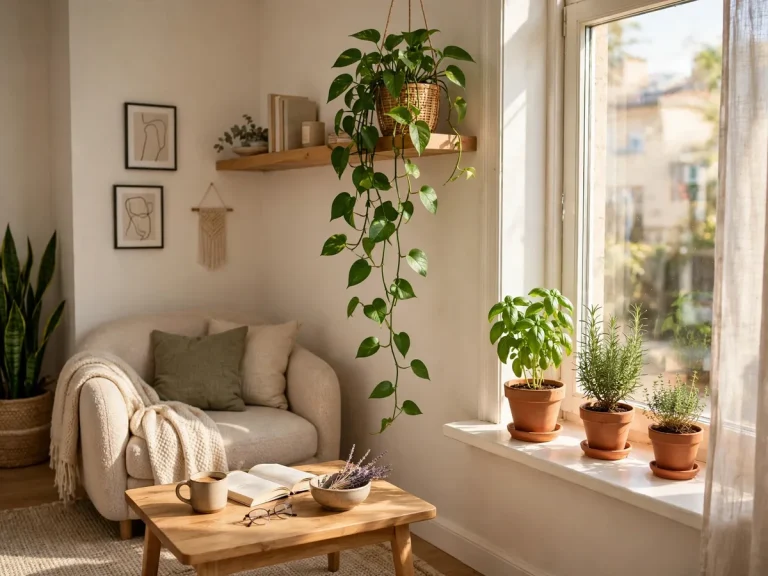
Most kitchen herbs suit a 6-inch terracotta pot with drainage holes, and a starter setup of three small pots, one seed packet, mix and perlite, saucers and a clamp grow light costs about $60. Check new plants for aphids, whitefly and spider mites, and keep new arrivals apart for a week.
1. Chives, the Most Forgiving of the Best Herbs to Grow Indoors
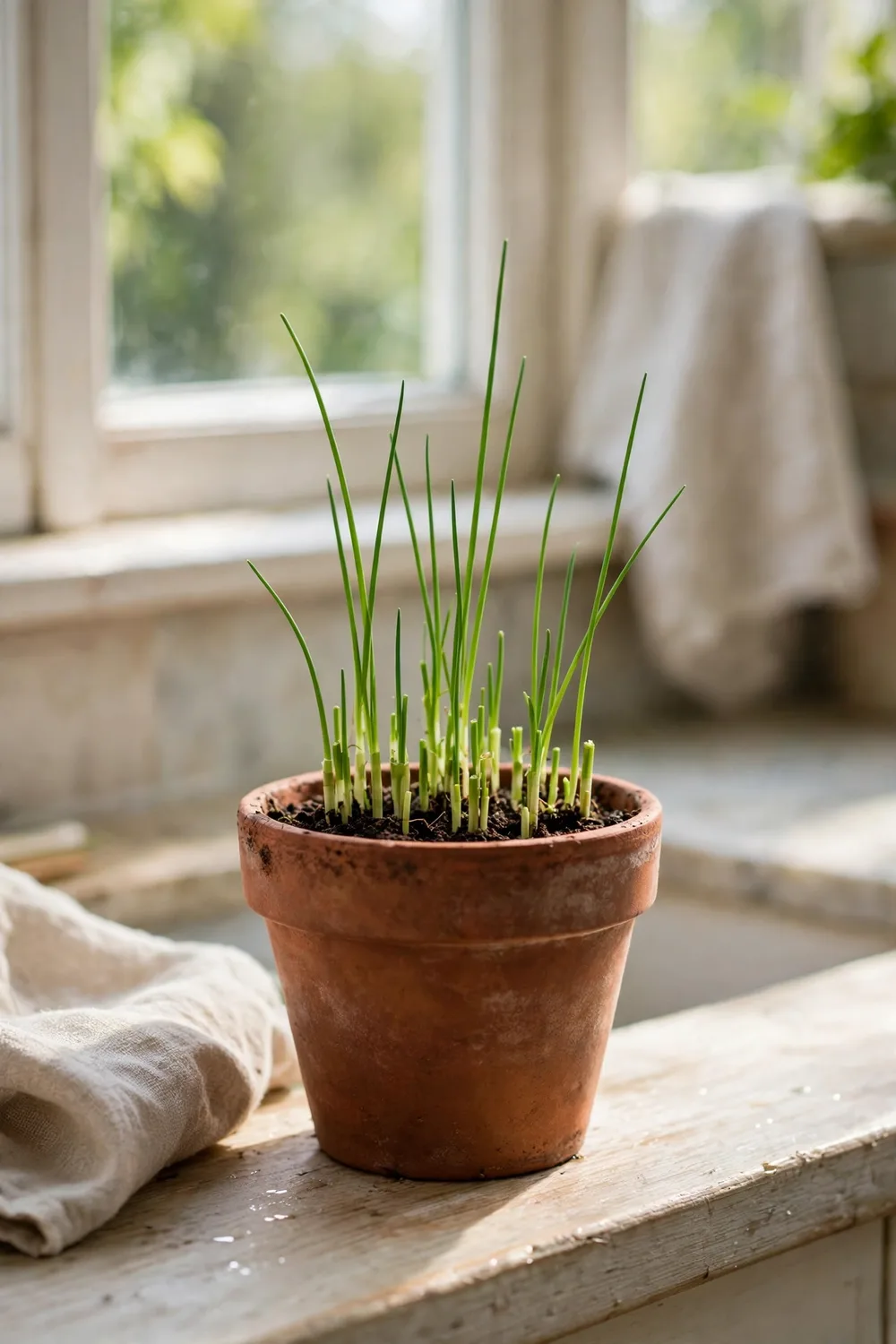
Chives are the most forgiving herb on this list, and they tolerate lower light than most culinary herbs. They need only 4 or more hours of light a day, so they suit a kitchen that gets just a few hours of sun. They are a perennial, so one pot keeps producing for years with almost no care. Snip the green blades down to about two centimetres, and they regrow within a fortnight. Give them a bright window and steady moisture, and they will never ask for more.
Chives suit eggs, baked potatoes, soups, dips, and cream cheese, and a snip of fresh chives lifts any plain dish. I snip my chives down to two centimetres after every big cooking weekend. The pot is full again before the next one. They are the best first herb for a beginner, since they recover from every mistake. If you can keep one herb alive, make it chives. A 6-inch terracotta pot suits them best.
2. Green Onions: The Easiest Harvest Indoors
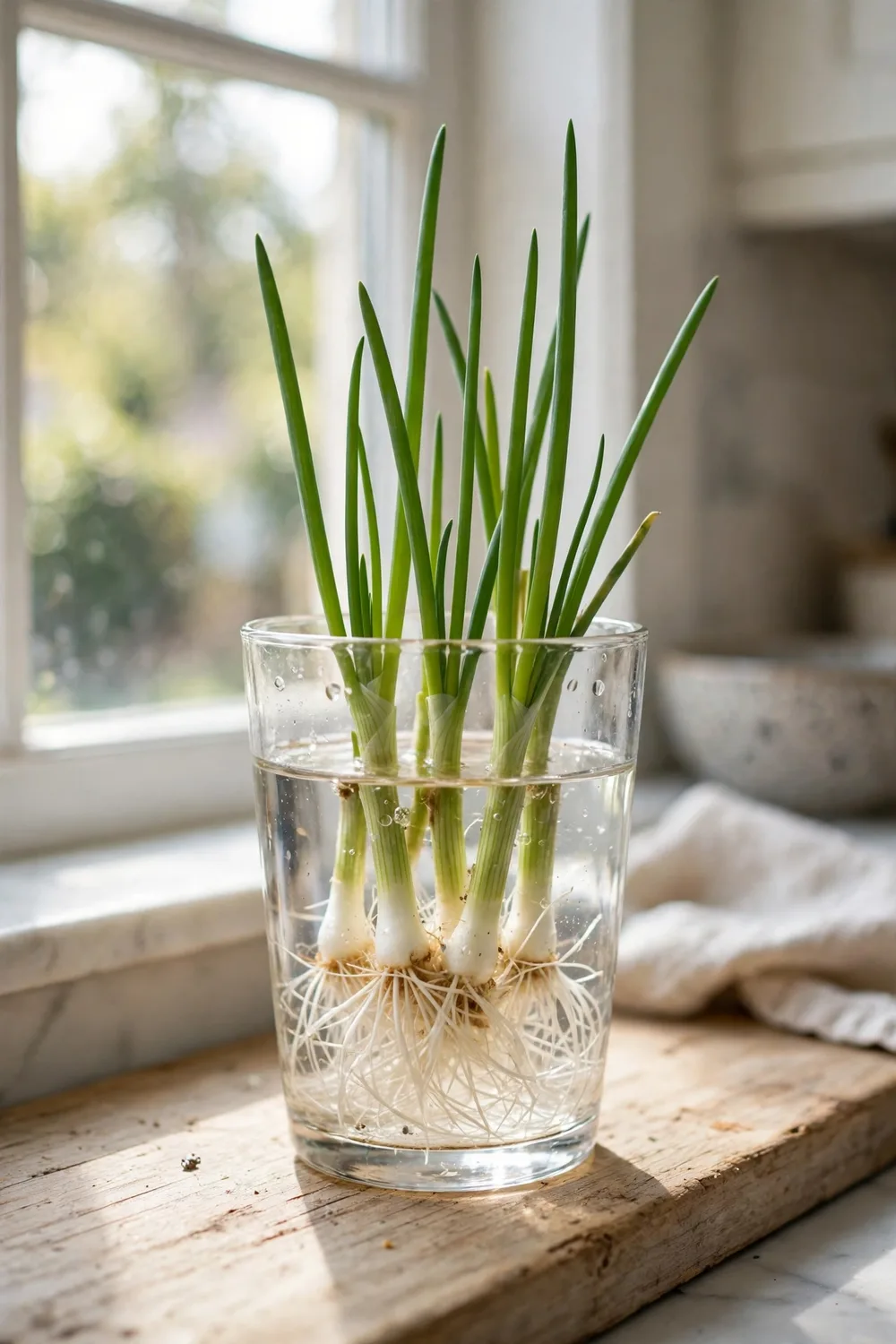
Green onions might be the single easiest edible plant you can grow indoors. You can regrow them from the white ends of store-bought bunches, in a glass of water or a small pot of soil. They need only a bright window and a little water, and they are ready to snip in about a week. No seed, no special soil, and no waiting for months.
Green onions suit garnish, stir-fries, soups, salads, and eggs, and a fresh snip beats a wilted bunch from the store. I regrow green onions from the white ends in a glass of water, and they are ready to snip in a week. Change the water every few days, and move them to soil once the roots look strong, since soil-grown stalks turn out thicker and more flavourful than water-grown ones. One bunch can regrow three or four times before it fades.
3. Mint, the Hardiest of the Best Herbs to Grow Indoors
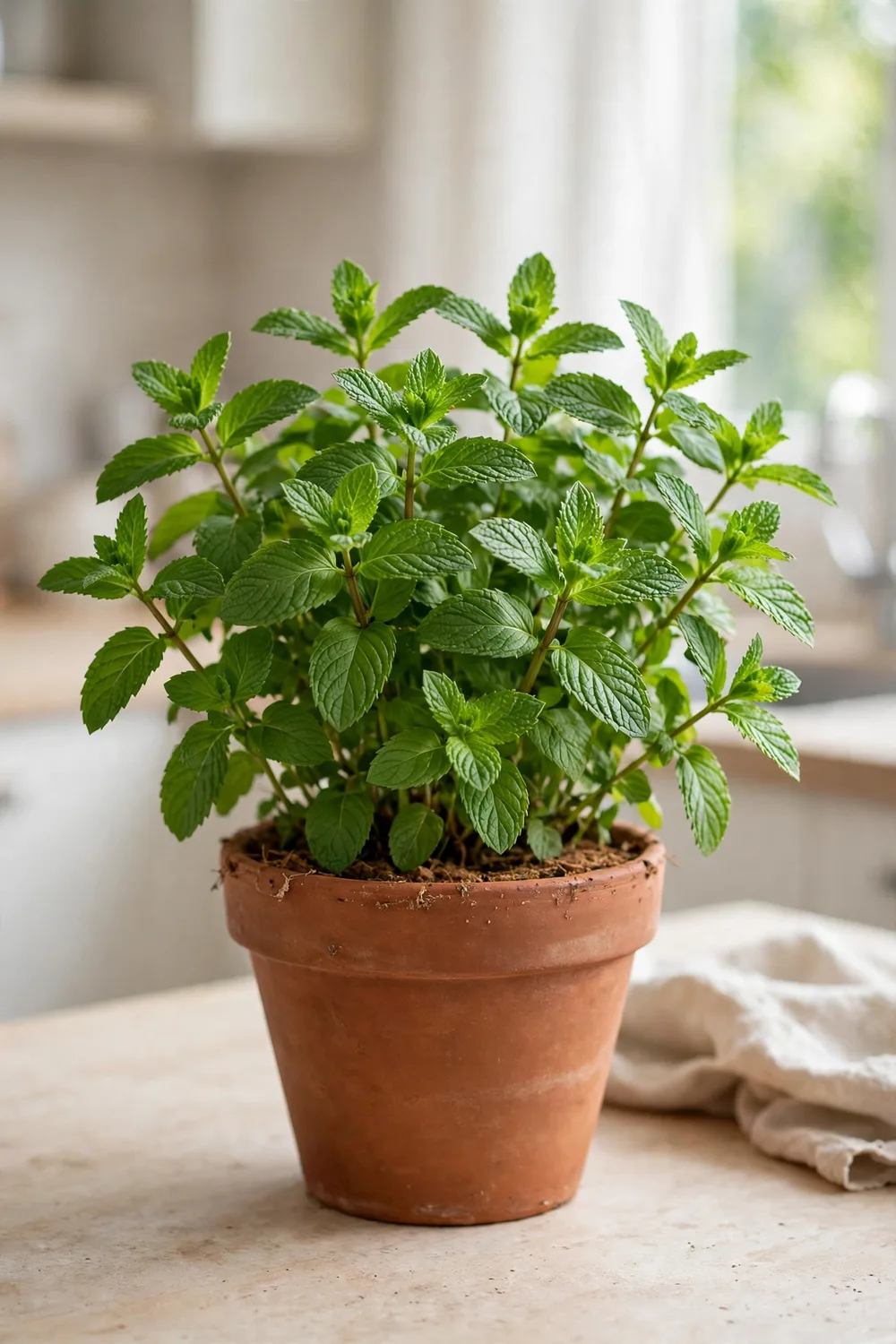
Mint is the most forgiving herb you can grow indoors. It tolerates lower light, 4 to 6 hours a day is enough, missed waterings, and general neglect, and it still gives you leaves for tea. Give it steady moisture and a spot near any bright window, and it will grow fast. The one rule is strict: mint must live in its own pot. It spreads by runners and will swallow every plant it shares soil with.
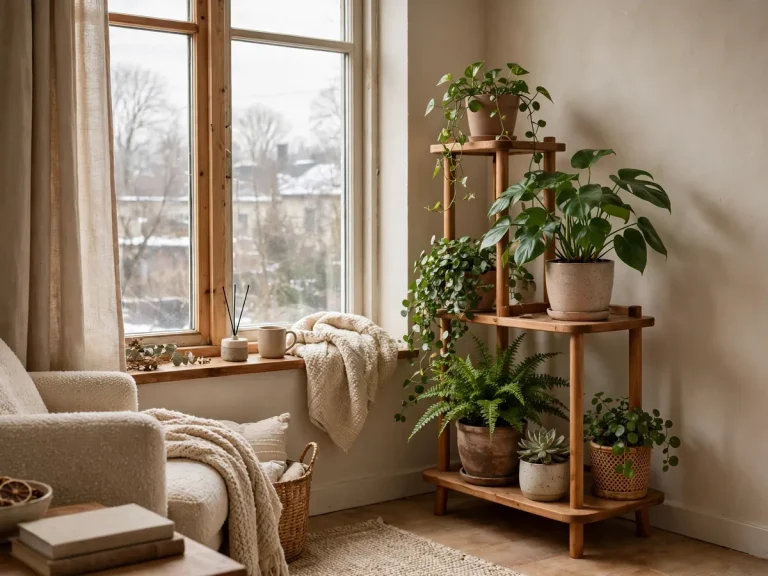
Mint suits tea, summer drinks, desserts, and Middle Eastern dishes, and a few fresh leaves beat dried mint every time. I learned to give mint its own pot after it swallowed my parsley in one summer, and I never mix it with other herbs now. A corner plant stand gives mint its own sunny spot away from your other pots. It can spread there without harming anything. Snip the tops often, and the plant stays bushy instead of leggy.
4. Lemon Balm: Tea Herb That Forgives Neglect
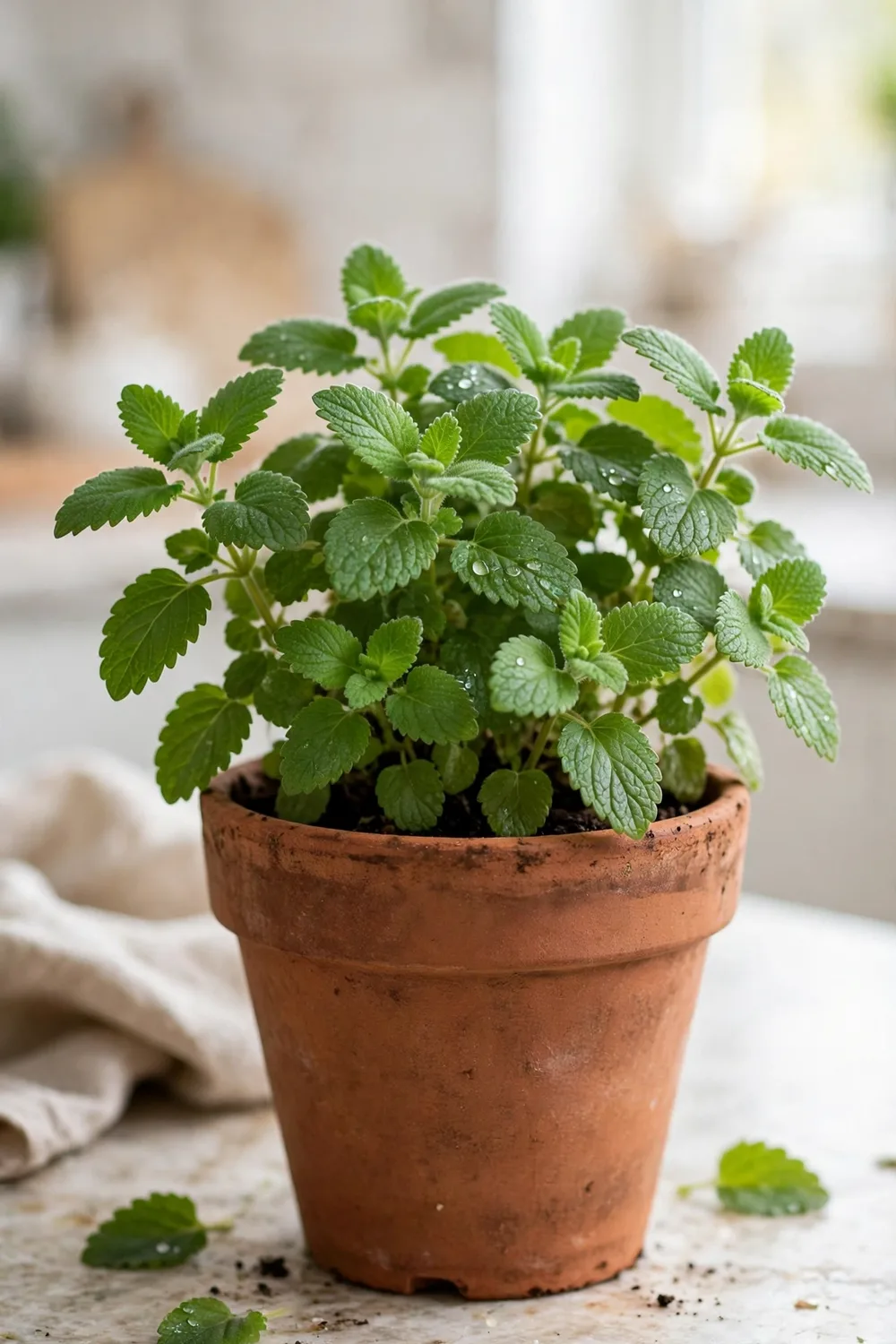
Lemon balm is a gentle herb with a fresh citrus scent, and it is one of the easiest herbs to grow indoors. It tolerates a little shade and a missed watering, and it grows fast once it settles in. Give it steady moisture and a pot of its own, since it belongs to the mint family and spreads the same way. A few leaves in hot water make a calming evening drink.
Lemon balm suits tea, desserts, fruit salads, and summer drinks, and its scent fills the kitchen when you brush past it. I crush a lemon balm leaf into evening tea, and the scent fills the whole kitchen. Keep it away from other herbs, since it will take over a shared pot in one season. Prune it hard in spring, and it comes back soft and full.
5. Basil, One of the Best Herbs to Grow Indoors
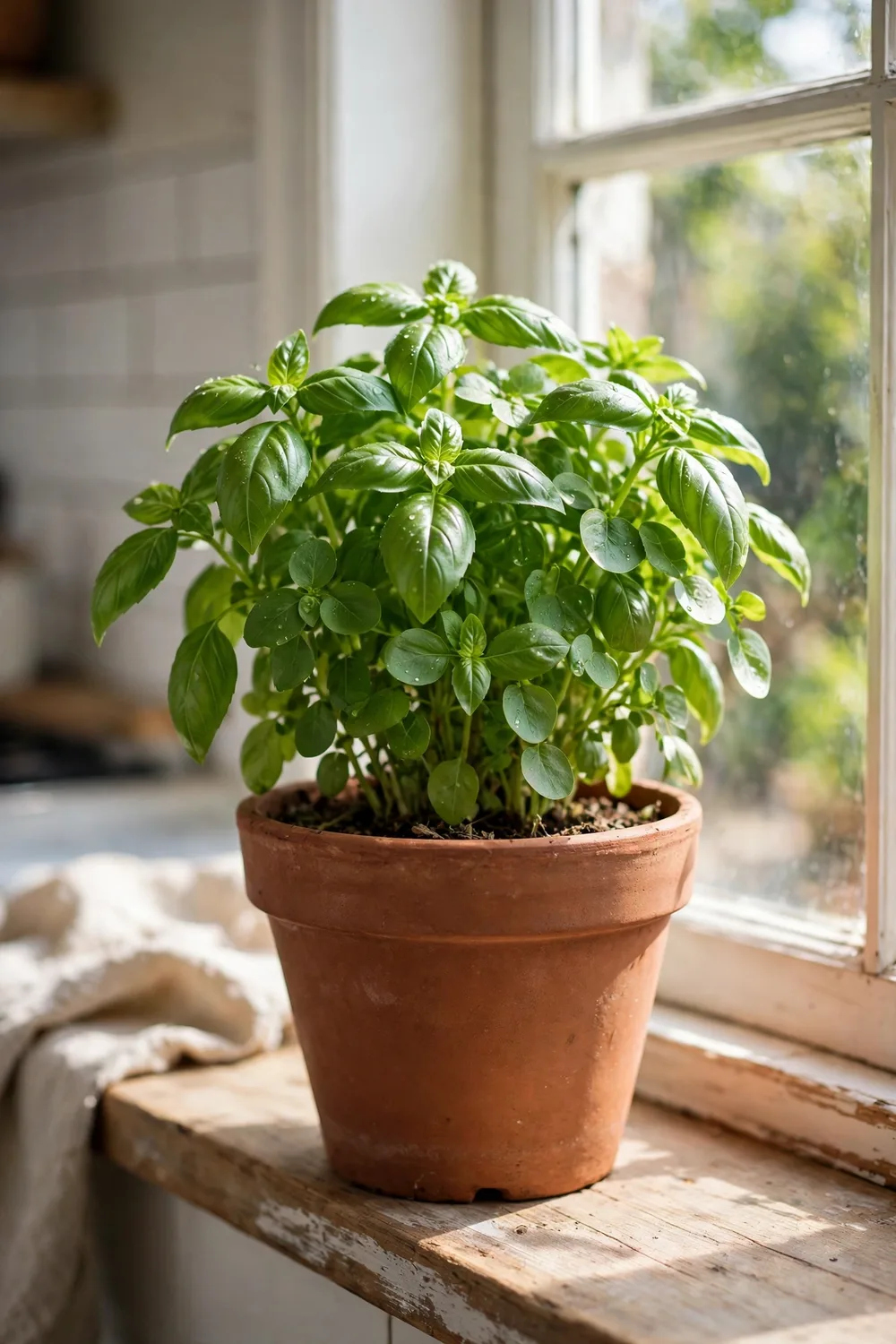
Basil is the kitchen workhorse of the indoor herb world. It loves warmth and bright light, so give it 6 to 8 hours of sun a day from your brightest window. Keep the soil evenly moist, and water at the base, not over the leaves. Pinch off the flower buds the moment they appear, since flowering makes the leaves bitter and ends the plant early. Keep basil away from cold windows, since it suffers below 10 degrees and dies back in a cold draught.
Basil suits pasta, salads, pizza, and pesto, and it grows fast enough to harvest within weeks of planting. I keep my basil on the south-facing sill and pinch the top weekly. It stays bushy for months. Basil sprouts from seed in 5 to 10 days, and a pot at least 15 to 20 cm wide and deep suits it best. For the full setup, indoor herb garden ideas show how to arrange a herb corner around your basil. Start with one plant, and add a second only when the first is full.
6. Parsley, a Quiet Star Among the Best Herbs to Grow Indoors
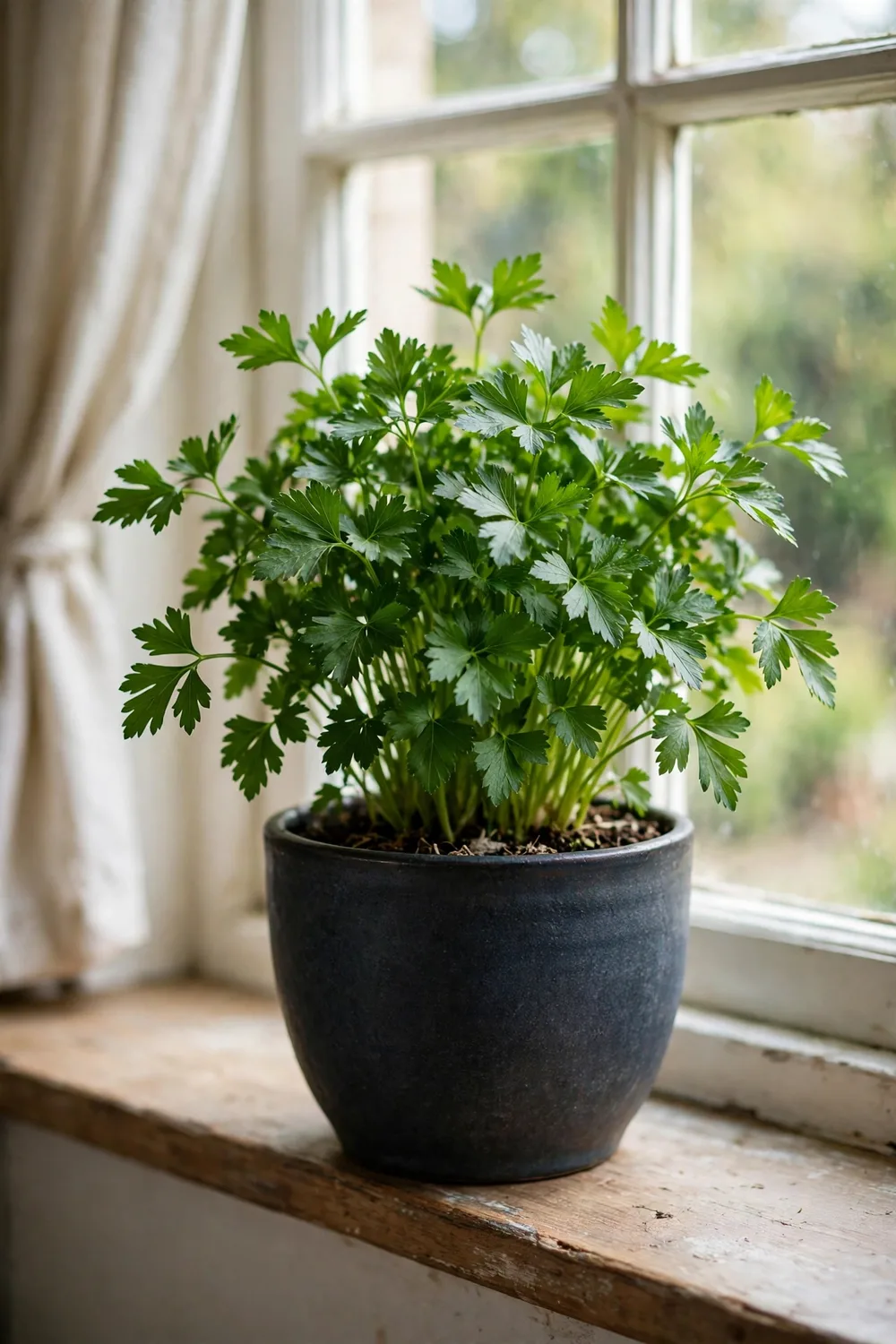
Parsley is quiet and dependable, and it handles slightly less light than basil or rosemary. It grows well on 6 to 8 hours of sun, and it tolerates 4 to 6 hours when the window is dim. Flat-leaf parsley has the better flavour for cooking, while curly parsley is hardier and prettier as a garnish. It is slow from seed, taking 2 to 4 weeks to sprout, so buy a small plant if you want leaves this month. Keep the soil evenly moist, and give it a deep pot, since parsley grows a long taproot.
Parsley suits soups, sauces, salads, tabbouleh, and chimichurri, and it keeps producing for two full years. I buy parsley as a small plant now, since seed took three weeks to show in my kitchen. Cut the outer stems at the base, and new growth follows from the centre. One pot of parsley covers most of a family’s garnish needs.
7. Cilantro, a Fast Favorite Among the Best Herbs to Grow Indoors
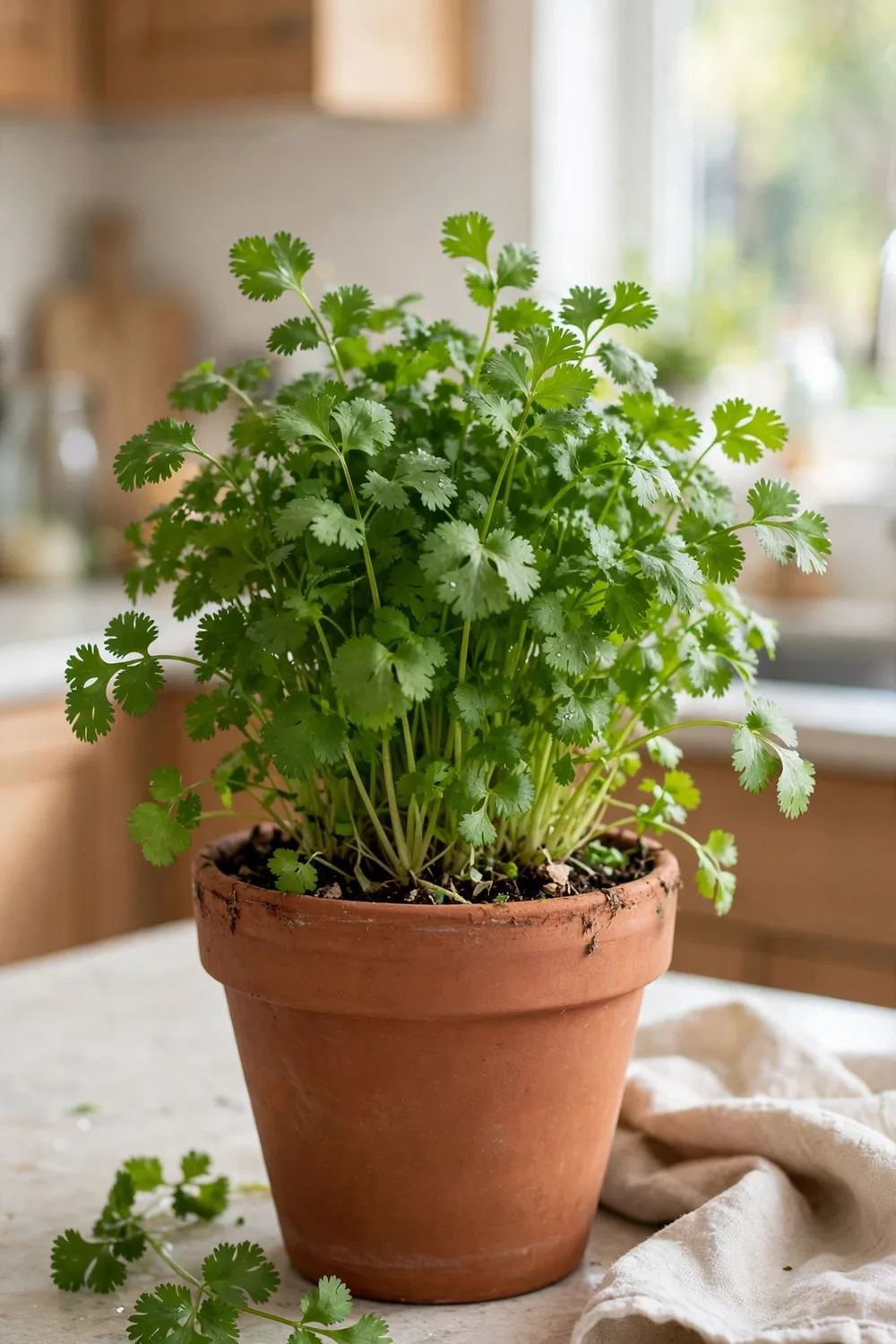
Cilantro grows fast from seed, and it reaches harvest size in three to four weeks. It prefers cooler conditions, around 60 to 70 degrees, and it bolts quickly in heat. Sow a pinch of seed every three weeks, and there will always be a young pot ready. Give it medium light, 4 to 6 hours tolerated, and steady moisture, and cut the outer leaves first so the centre keeps growing.
Cilantro suits salsas, guacamole, curries, tacos, and fresh spring rolls, and its flavour is hard to replace with anything dried. I sow a pinch of cilantro seed every three weeks. There is always a young pot ready on the sill. Do not wait for one plant to last, since cilantro is a short-lived annual. Treat it as a crop you replant, not a plant you keep.
8. Thyme, the Toughest of the Best Herbs to Grow Indoors
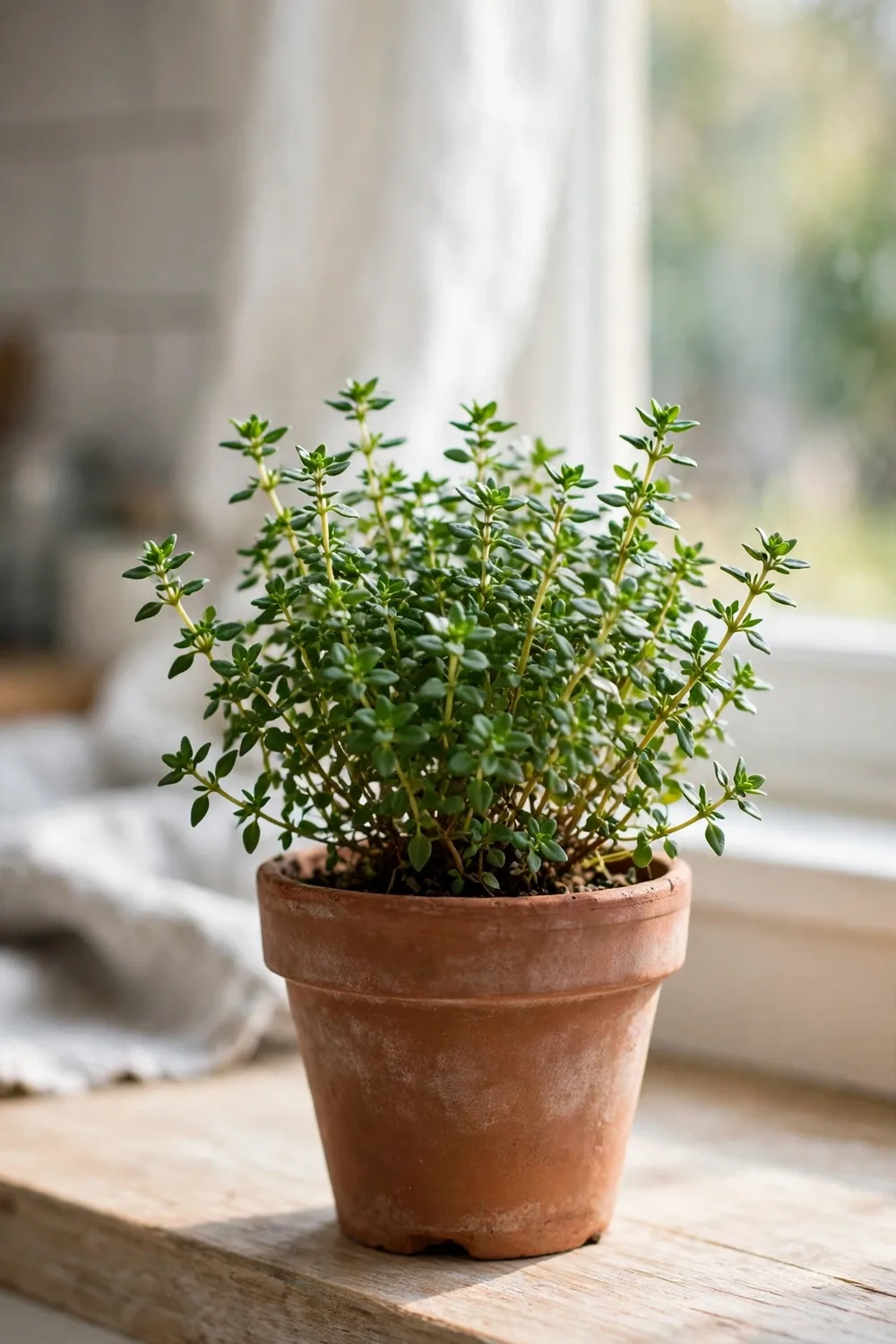
Thyme thrives on neglect, which makes it ideal for a busy kitchen. It prefers to dry out between waterings, and it actually performs better in the dry air of heated homes than most other herbs. Give it your brightest spot and a gritty, fast-draining mix. It stays small and compact, so it fits the narrowest sill. Buy thyme as a young plant, since it is slow from seed.
Thyme suits roasted meats, soups, stews, bread, and beans, and its flavour deepens with long cooking. I water my thyme less than any other herb, and it still thrives on the brightest sill. Lemon thyme is worth trying too, since it adds a citrus note to chicken and fish. Keep it in a small 6-inch terracotta pot, and it will stay neat for years.
9. Oregano, a Sun Lover Among the Best Herbs to Grow Indoors
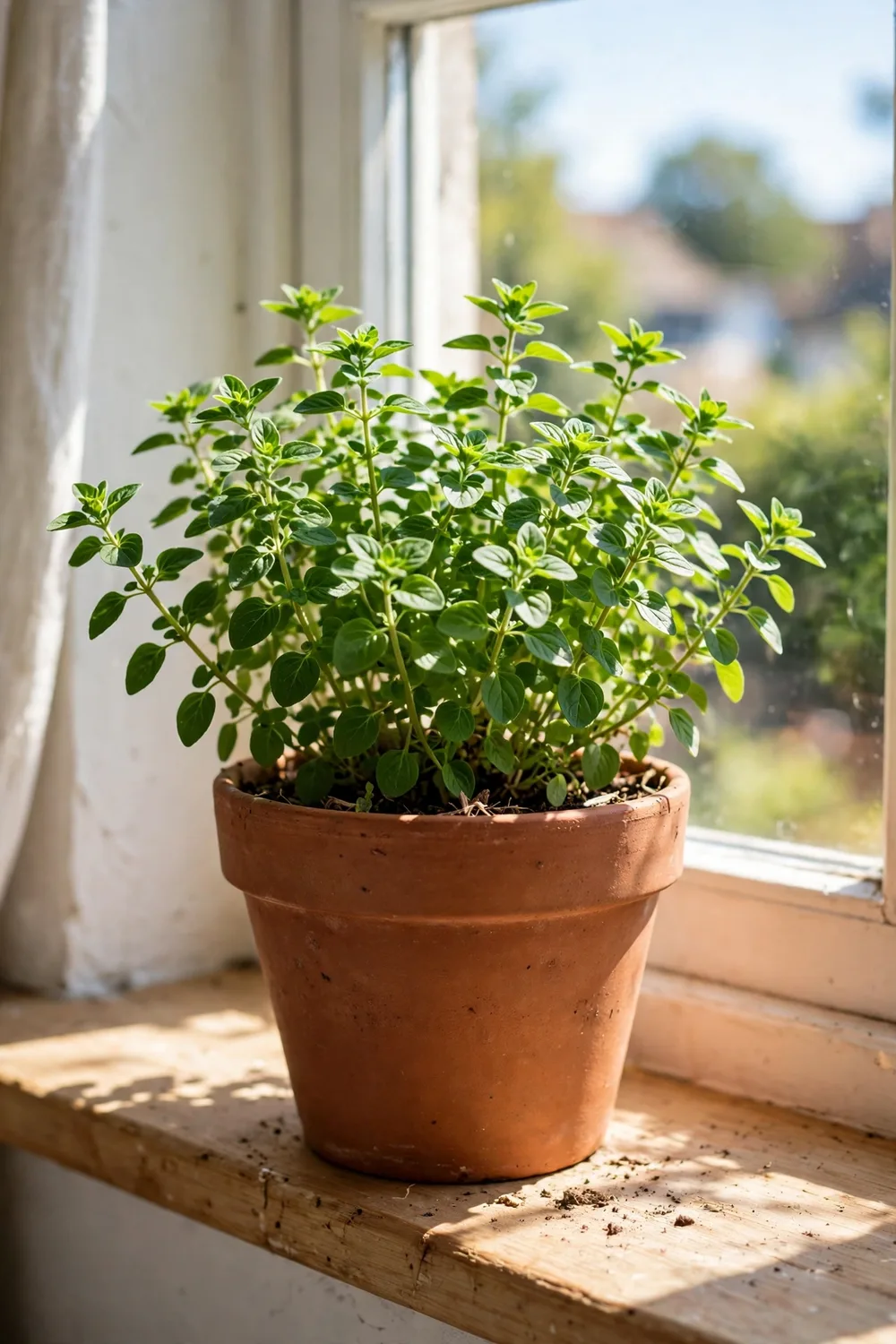
Oregano is a Mediterranean herb that adapts well to indoor life, as long as it gets enough sun. Give it 6 or more hours of bright light, and let the soil dry between waterings. It needs regular pruning, since a leggy plant gives weak flavour. Pinch the tips often, and never let it flower, since flowering reduces growth and leaf flavour. Buy oregano as a young plant, since it is slow from seed.
Oregano suits tomato dishes, pizza, marinades, and roasted vegetables, and a little dried oregano goes a long way. I prune my oregano hard in spring and it comes back bushier every time, so do not be shy with the scissors. Grow it in a terracotta pot, since the porous walls help the soil dry out. One small plant covers a family’s pizza nights.
10. Marjoram: Softer, Sweeter Cousin of Oregano
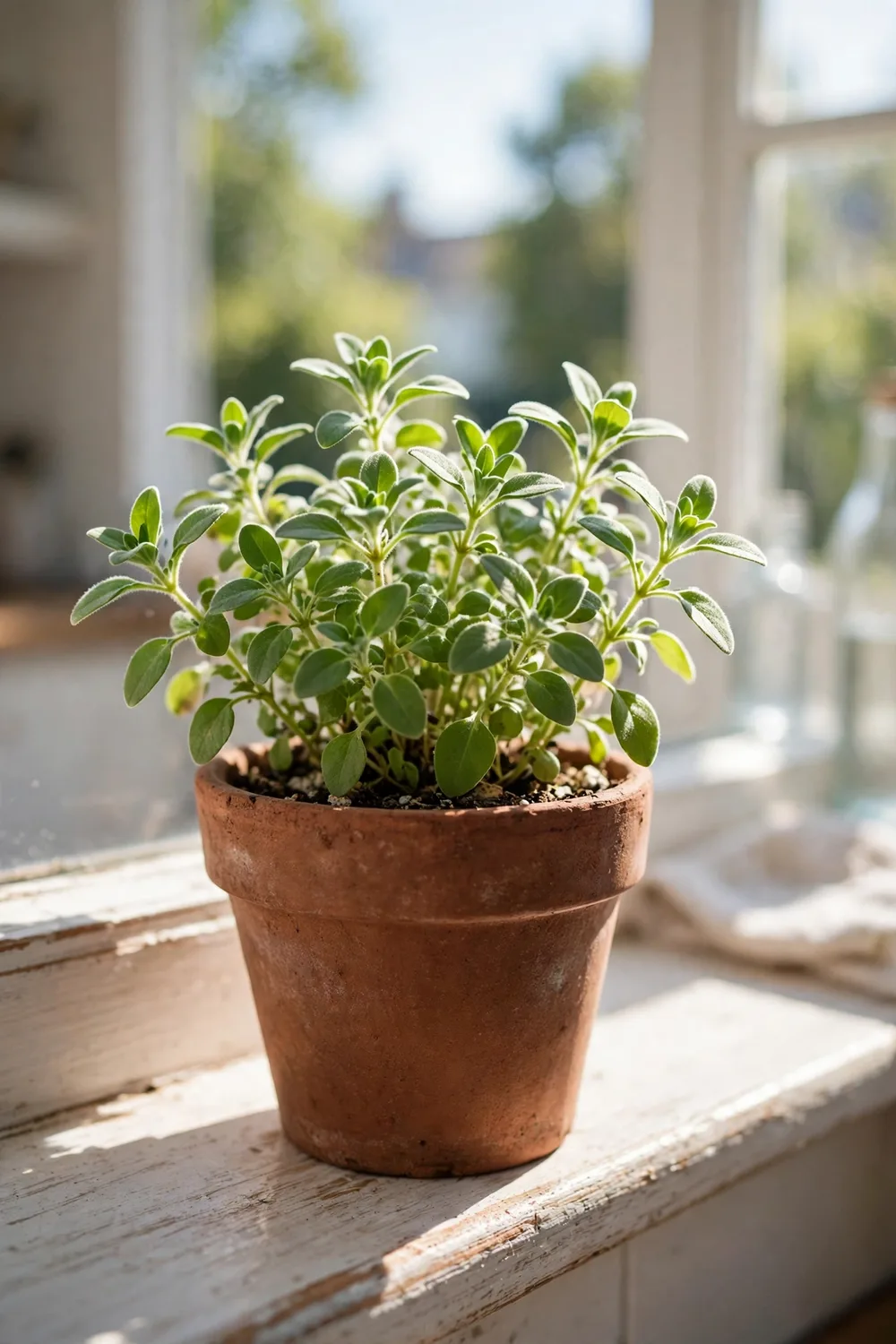
Marjoram is oregano’s softer, sweeter cousin, and it suits cooks who find oregano too strong. It wants bright light, 6 or more hours, and soil that dries a little between waterings, much like its Mediterranean family. It grows as a small, neat plant, so it fits a narrow sill easily. Pinch the tips to keep it bushy, and harvest the leaves before it flowers. Buy marjoram as a young plant, since it is slow from seed.
Marjoram suits beans, chicken, vegetables, and tomato sauces, and it never overpowers a dish the way oregano can. I reach for marjoram when oregano feels too strong, since its flavour stays gentle even in a big pinch. Grow it in a small pot on your sunniest sill, and water it less than your leafy herbs. One plant gives you soft, sweet leaves all season.
11. Sage: Dry Soil, Strong Flavor
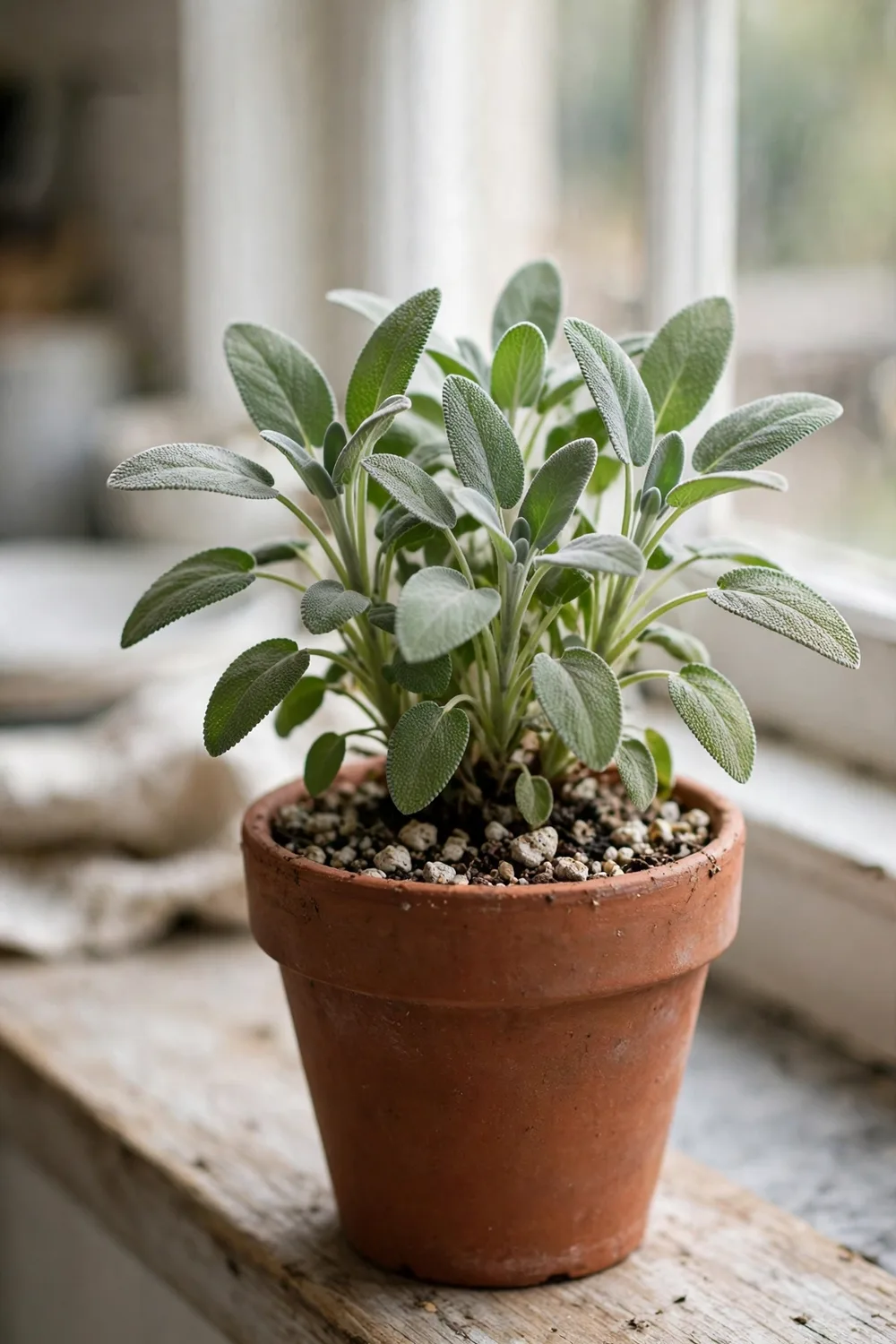
Sage is a Mediterranean herb that wants dry soil and strong light, much like rosemary and thyme. It hates wet roots, so give it a gritty mix and a pot with good drainage. Water only when the top of the soil feels dry, and keep it in your brightest spot. Give it good airflow, since still, damp air invites powdery mildew on its leaves. It grows slowly indoors, but one plant gives leaves for a whole year. Buy sage as a young plant, since it is slow from seed.
Sage suits roasts, stuffing, brown butter, and winter squash, and its flavour is bold enough to lead a dish. I lost my first sage to wet soil, so now it lives in the grittiest mix I own. Grow it in a small terracotta pot, and prune it lightly to keep it bushy. A little sage goes far, so one plant is enough for most kitchens.
12. Dill: Tall, Fast, and Great for Pickles
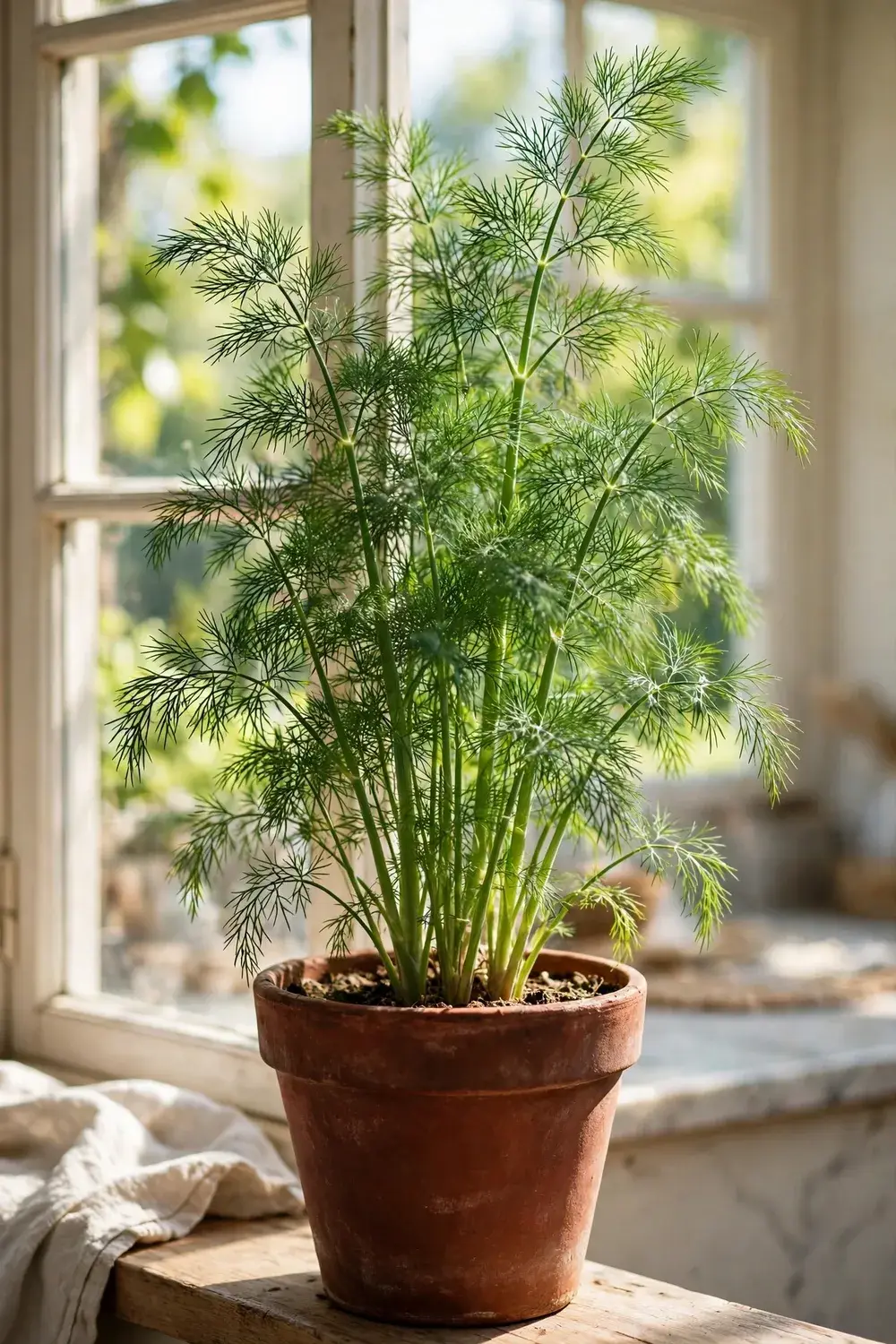
Dill needs good light and room to grow, since it can get tall and floppy in a dim room. Give it your brightest window and a tall, deep pot, and sow it where it will live, since it dislikes moving. It grows quickly from seed, and it reaches harvest size in a few weeks. Water it steadily, and give it support if it starts to lean. Dill is not a first pick for a tiny space, since it grows a deep taproot and a tall stem, so try it only once your easy herbs are thriving.
Dill suits fish, pickles, dips, potato salad, and fresh beets, and its feathery leaves look lovely on the sill. I grow dill in the tallest pot I own, since it shoots up fast in a sunny window. Sow a few seeds every month for a steady supply, since each plant is short-lived. Cut the leaves often, and the plant stays full instead of thin.
13. Tarragon: The French Herb for Eggs and Chicken
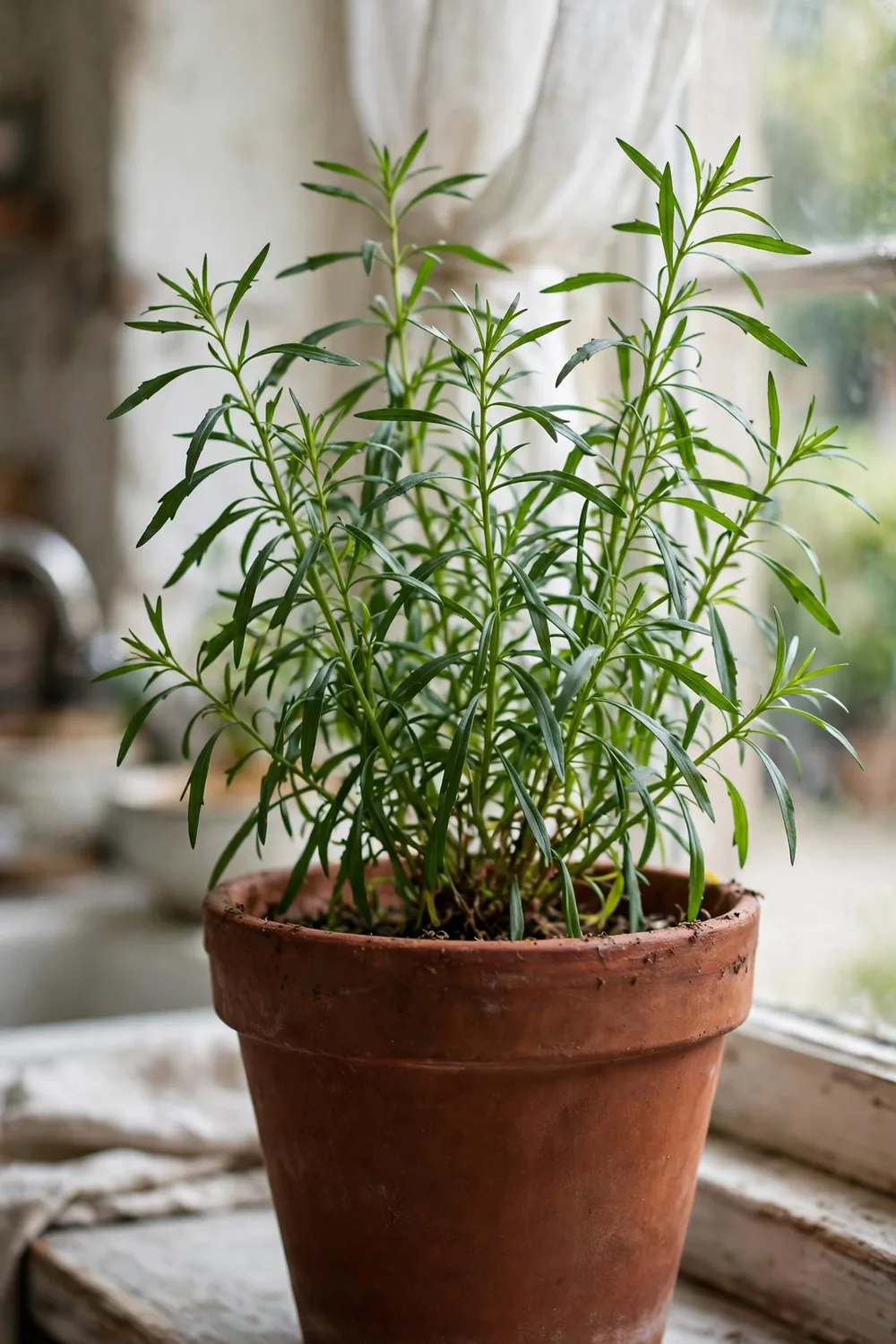
Tarragon is the classic French herb for eggs, chicken, and fish, and its anise flavour is unlike any other herb on this list. It wants bright light and steady moisture, and it prefers a cool room to a hot one. French tarragon grows best from a plant, not from seed, so buy a small one. Give it a deep pot, since it grows a long root.
Tarragon suits omelettes, roast chicken, fish, and creamy sauces, and a little goes a long way. I keep one tarragon plant just for Sunday eggs, and it earns its sill space every week. Cut the stems often to keep the plant young, and dry the leaves if you have more than you can use. One plant covers a whole season of breakfasts.
14. Bay: One Leaf, Years of Flavor
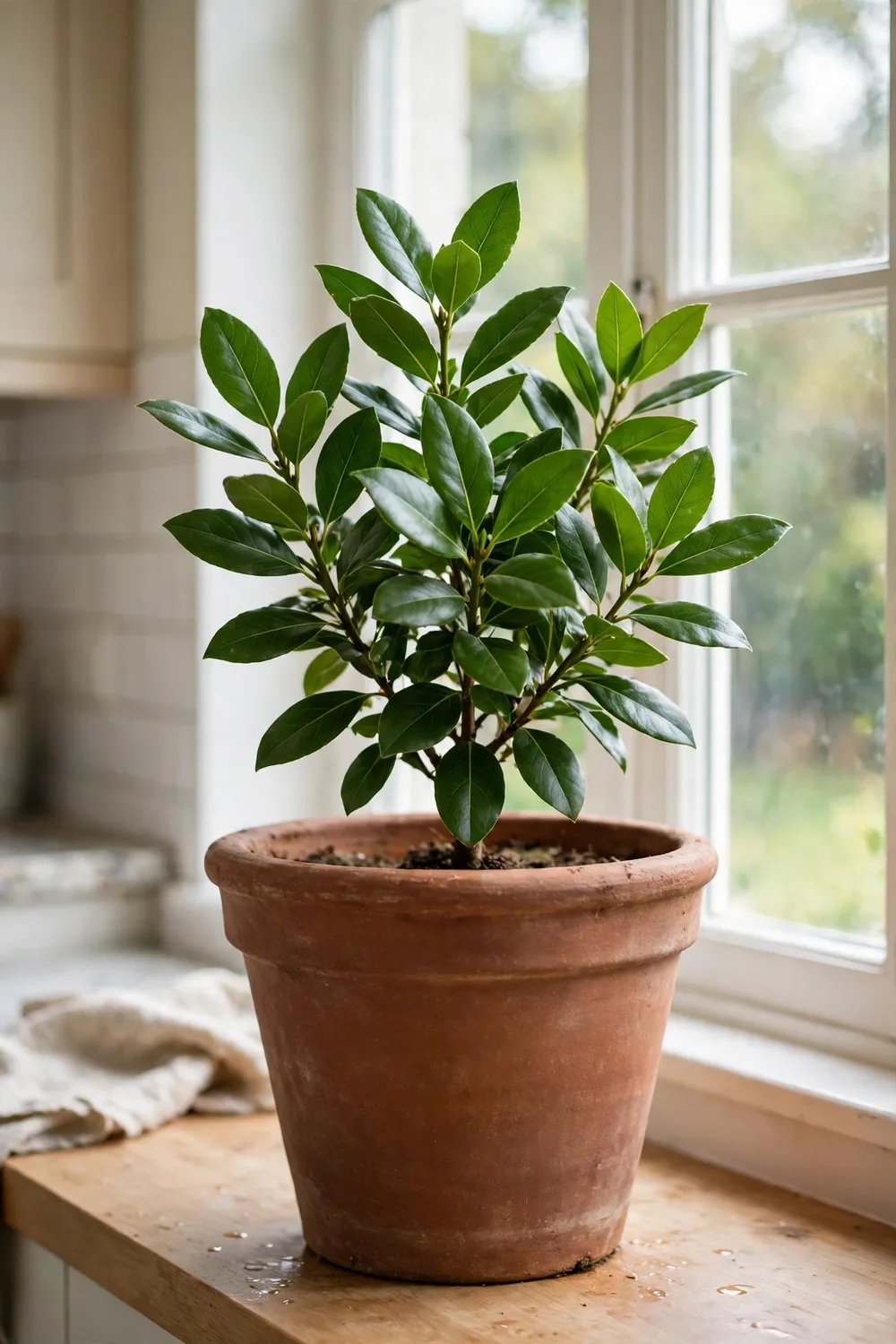
Bay is the slowest herb on this list, and it is also the longest lived. One small plant can give you a leaf for every soup and stew for years, and it asks for almost nothing. Give it bright light, a large pot, and soil that drains well, and water it only when the top feels dry. It grows as a small shrub, so give it room to spread.
Bay suits soups, stews, stocks, and slow-cooked beans, and one leaf is enough for a whole pot. I bought a small bay plant two years ago, and it still gives me a leaf whenever a stew needs one. Once the herbs thrive, small apartment plant decor has simple ways to make a kitchen sill look planned. Dry the leaves if you pick more than you need, since dried bay keeps its flavour for months.
15. Rosemary, the Hardest of the Best Herbs to Grow Indoors
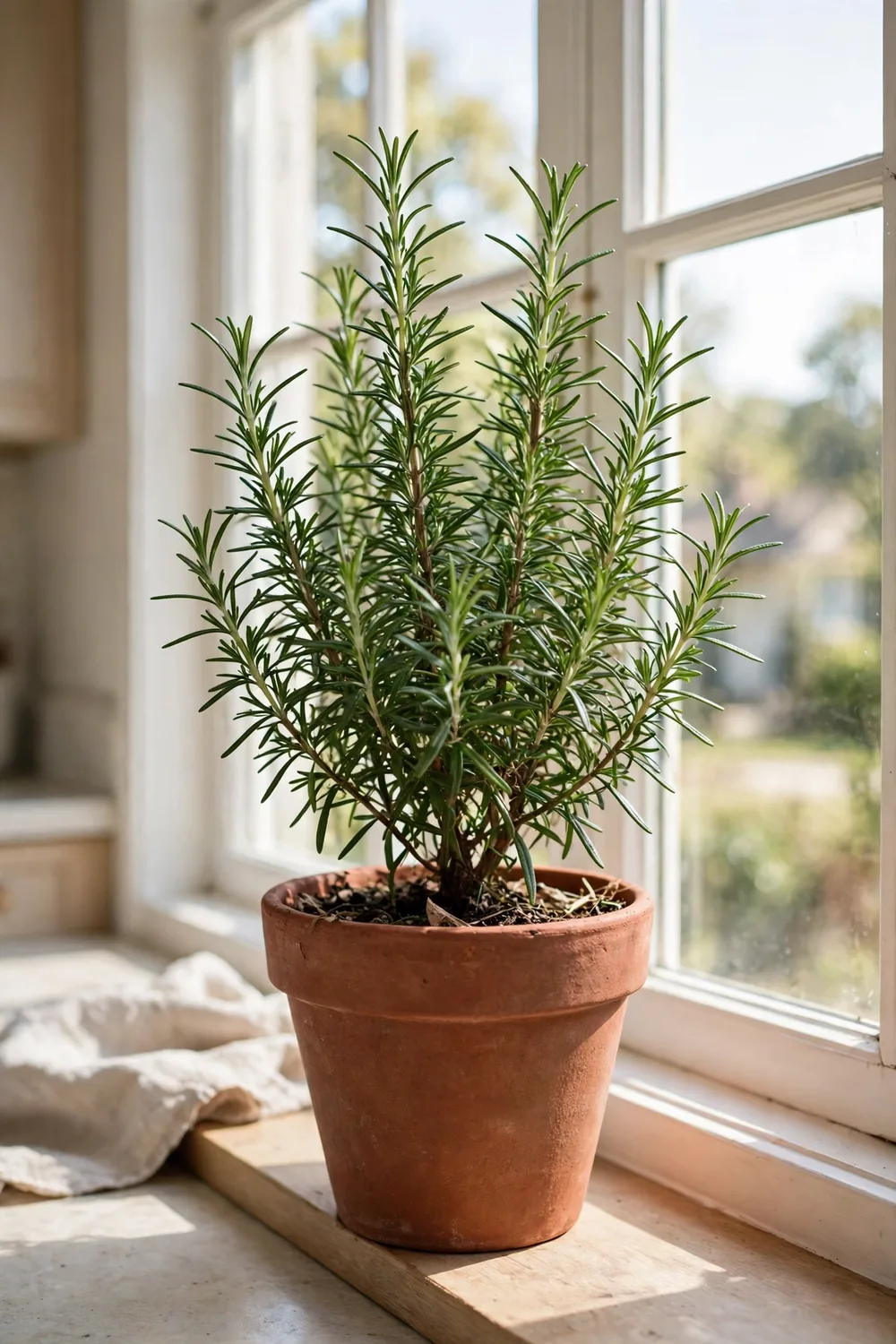
Rosemary is the hardest herb to grow indoors, and it needs the most light of any herb on this list. Give it 8 or more hours of bright light, dry soil, and good airflow, or it will drop its needles and fade. Water only when the soil is fully dry, and never let it sit in water. A terracotta pot helps, since it dries out faster than plastic. Buy rosemary as a young plant, since it is slow from seed, and give it a 20 to 30 cm pot once it matures.
Rosemary suits roast dinners, focaccia, potatoes, and bread, and one sprig perfumes a whole dish. I keep my rosemary in a terracotta pot by the brightest window, and I water it only when the soil is fully dry. Be honest with yourself: in a hot, dry winter apartment rosemary is often more trouble than it is worth, with brown tips and die-back. If yours sulks, move it to your brightest window and add a grow light, since it wants light and airflow, not a humid cabinet. Try rosemary last, after the easy herbs are thriving.
Which Herbs Grow Well Together
Herbs grow best with neighbours that want the same light and water. Group them by water first, since one watering routine per pot keeps every plant happy. The groups below never share a pot, and mint and lemon balm always get a pot of their own, since both spread by runners.
- Leafy herbs that like steady moisture: basil, parsley, cilantro, chives, dill, tarragon, and green onions. Water them when the top inch feels dry, and keep them in rich soil.
- Mediterranean herbs that want dry soil: rosemary, thyme, oregano, sage, marjoram, and bay. Let the soil dry between waterings, and grow them in gritty mix with drainage.
- Light groups: basil, rosemary, thyme, and oregano want the brightest window, 6 to 8 hours of sun, while mint, parsley, chives, and cilantro tolerate 4 to 6 hours.
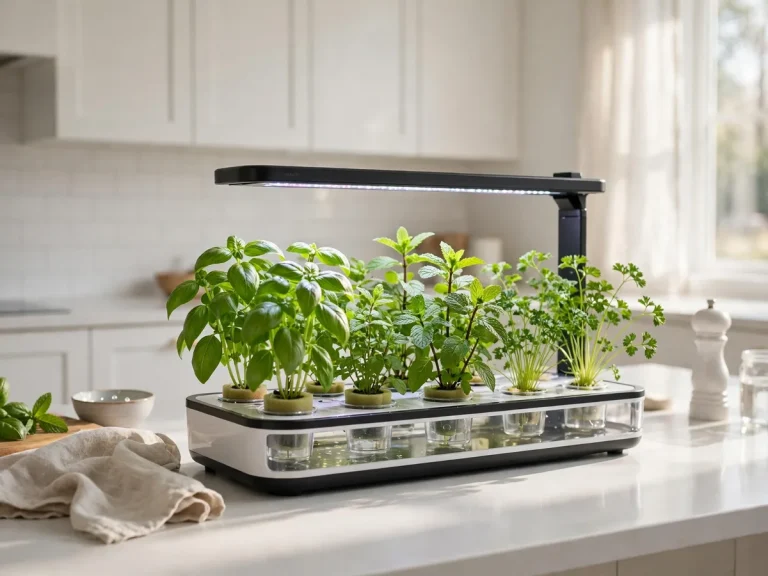
Grow lights help in winter, so run them 14 to 16 hours a day when daylight runs short. Place the light 6 to 12 inches above the leaves. Raise it as the plants grow, and put it on a timer so the routine runs itself.
Lavender is the one herb missing from this list: it suits a sunny sill in the Mediterranean group, but it wants the driest soil of all, so treat it as a bonus, not a first pick.
Conclusion
Start with three herbs you cook with every week. Chives, mint, and parsley will teach you light, water, and harvest in one season, and they will feed your cooking while you learn. Add the Mediterranean herbs once you know your sunniest window, and try rosemary only when you are ready for a challenge. Your kitchen will smell better, your food will taste fresher, and the sill will never look bare again.
If you want to grow these herbs in water instead of soil, these hydroponic ideas for small spaces show 15 countertop, bucket and jar setups.