17 Artificial Plants Decoration Ideas That Look Real
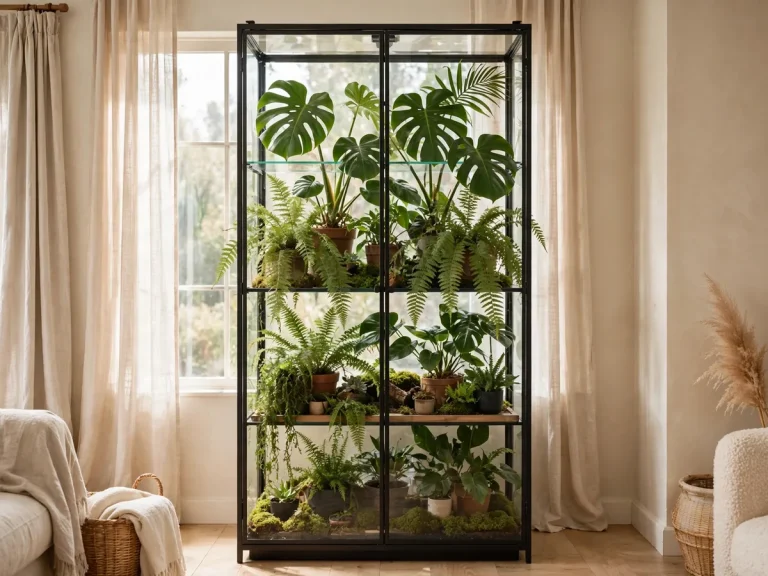
You have a dark corner where every real plant dies. The window faces north, the bathroom has no light, and your schedule leaves no room for watering. That is exactly where artificial plants decoration ideas earn their place. A good faux plant gives you the green without the care, and nobody needs to know it is not alive. The trick is not buying more plants. The trick is buying the right ones and styling them like they grew there. But if you would rather keep the real thing alive, these indoor greenhouse ideas that fit small spaces show how a glass cabinet or tabletop greenhouse can keep tropicals alive in that same dark corner.
Most faux plants fail for the same reason. They sit in the wrong spot, at the wrong scale, in a shiny plastic pot. A tall tree squeezed behind a door looks like a prop. Five tiny pots scattered across a shelf look like clutter. Real plants grow where the light is, so your faux plant has to sit where a real one could live. Get the spot right first, and half the realism is already done.
This guide gives you 17 artificial plants decoration ideas that work in real homes, especially small apartments and rentals. Each idea pairs one spot with one plant and one styling trick, so you can copy it exactly. You will also learn how to pick a faux plant that looks real. You will see the five mistakes that give the game away, and how to care for plants that never need water.
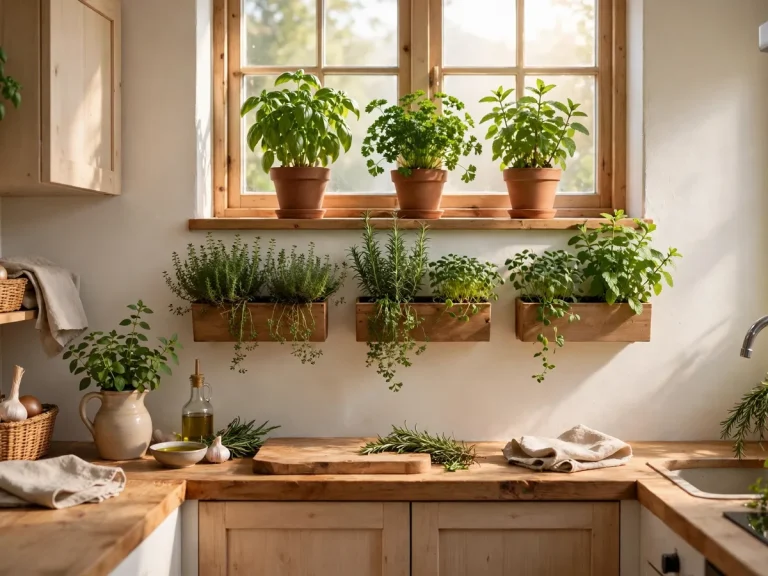
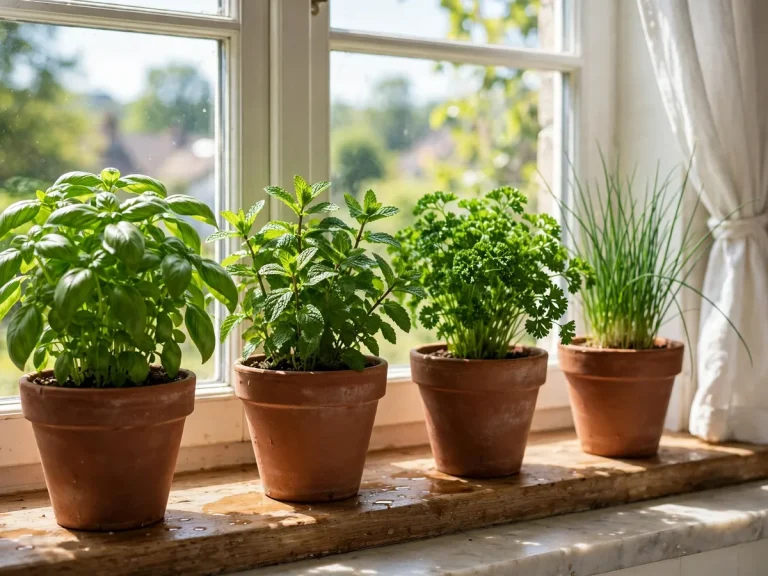
Where one sunny spot does get enough light for real plants, real herbs for cooking are the one place fresh beats faux, with basil and mint you can snip straight into dinner.
1. One Tall Faux Tree Fills the Dead Corner
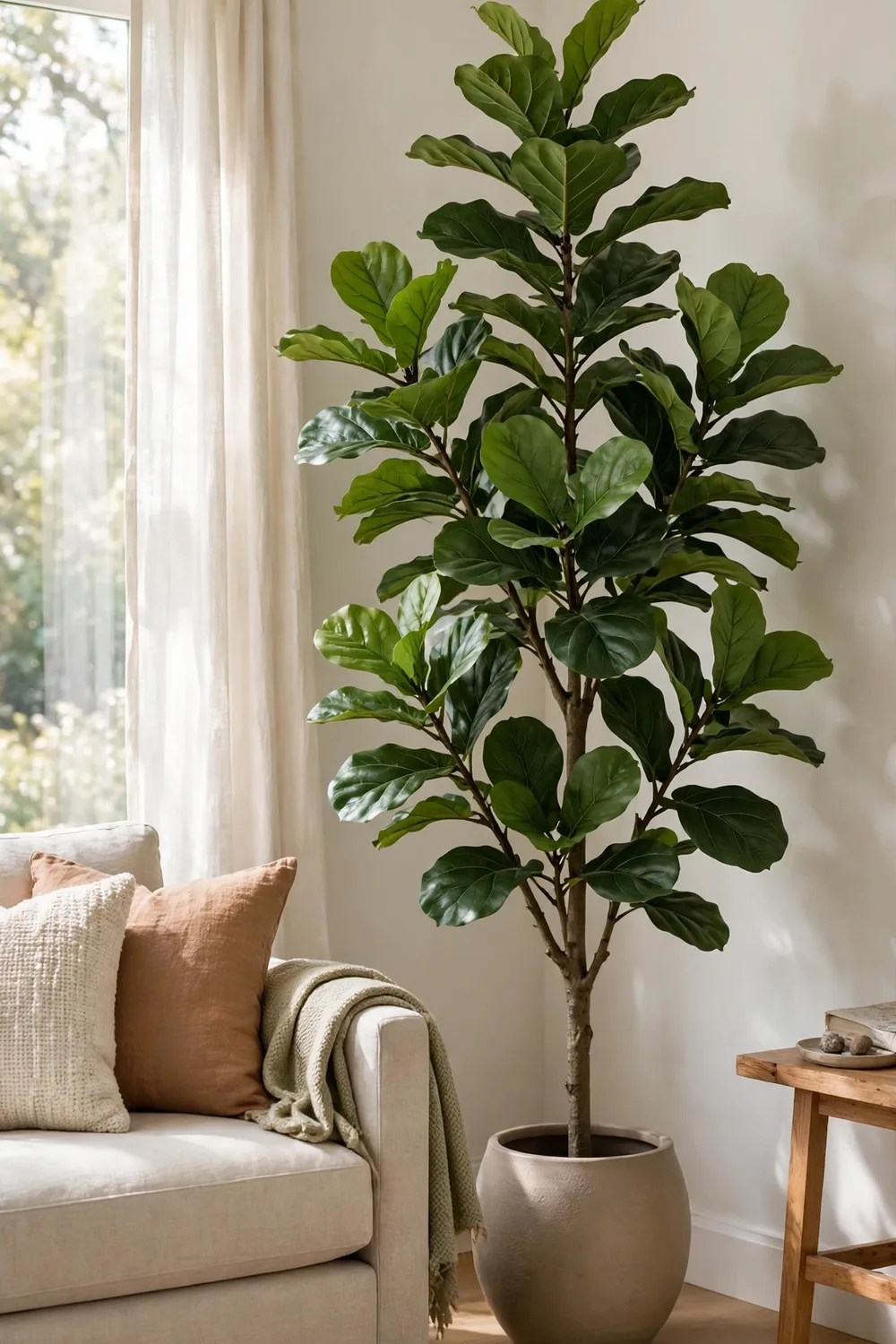
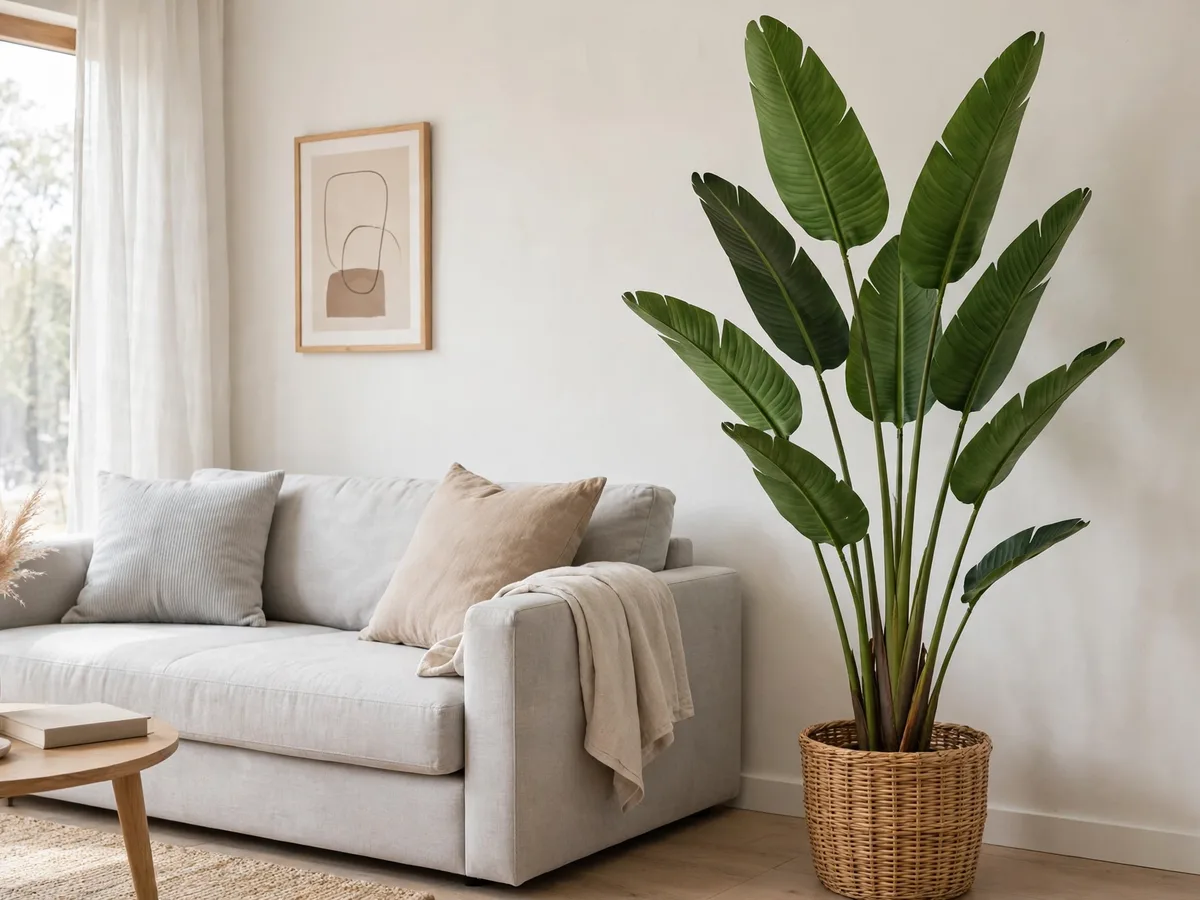
Every living room has one corner that nothing fits. The sofa ends, the wall turns, and the space sits empty. A single tall faux tree solves it in one move. Bird of paradise, fiddle leaf fig, or olive tree all work. Pick a tree that stands 5 to 7 feet tall in a room with a standard ceiling. Shorter trees look lost beside a sofa, so measure the corner before you buy.
Put the pot on the floor, not on a stand, and let the leaves rise above the sofa arm. That height frames the seating and pulls the eye upward, which makes the room feel taller. A tree that clears the sofa arm changes the whole wall.
Choose a woven basket or a matte ceramic pot in a neutral tone. The pot matters as much as the tree, because a shiny plastic pot is the first thing guests notice. If you already style that corner with a corner plant stand, swap the stand for the tree and let one tall piece do the work.
2. Trailing Faux Pothos Spills Off the Top Shelf
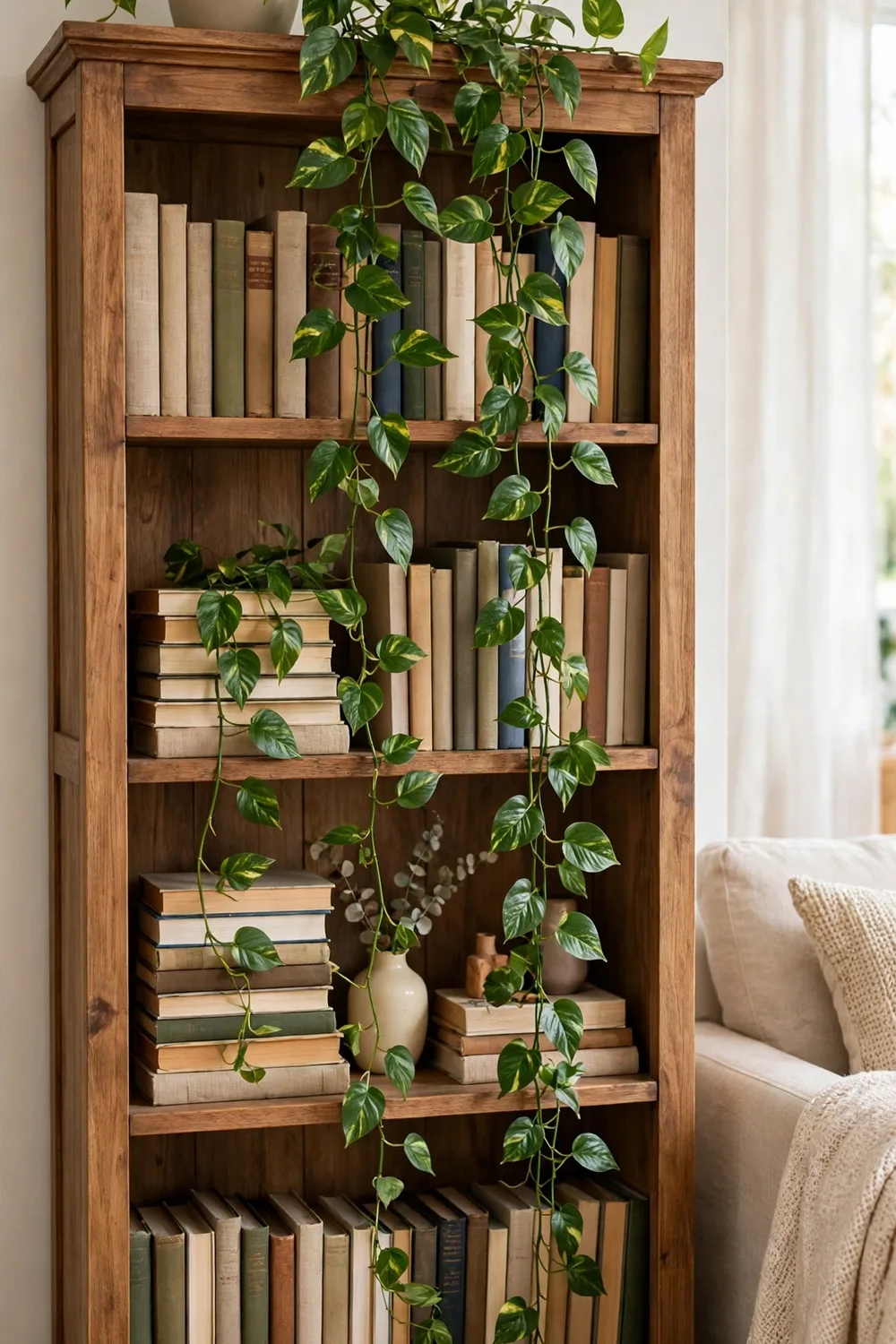
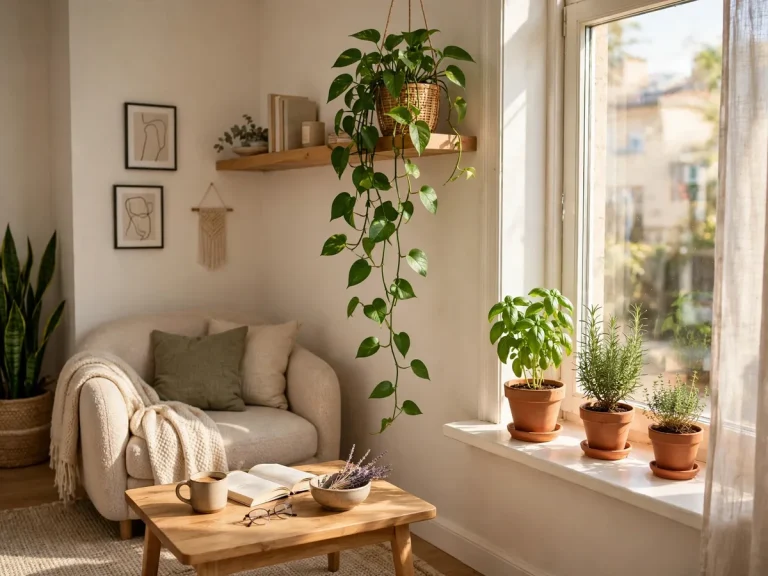
High shelves are the hardest spot for real plants, because nobody wants to climb up to water them. A trailing faux pothos turns that problem into the feature. Set the pot on the top shelf and let the vines fall down the side of the bookcase. The leaves break up the straight lines of the shelves and soften the whole wall.
Keep the vines to one side of the shelf, not spread across the whole length. A single cascade looks deliberate, while vines everywhere look messy. Mix the pothos with two or three books standing upright, and leave breathing room between objects. The empty space is what makes the trailing leaves stand out. This is the same one-anchor rule that makes plant shelf ideas work, one plant per surface, chosen for scale.
3. A Faux Boston Fern Hangs by the Window
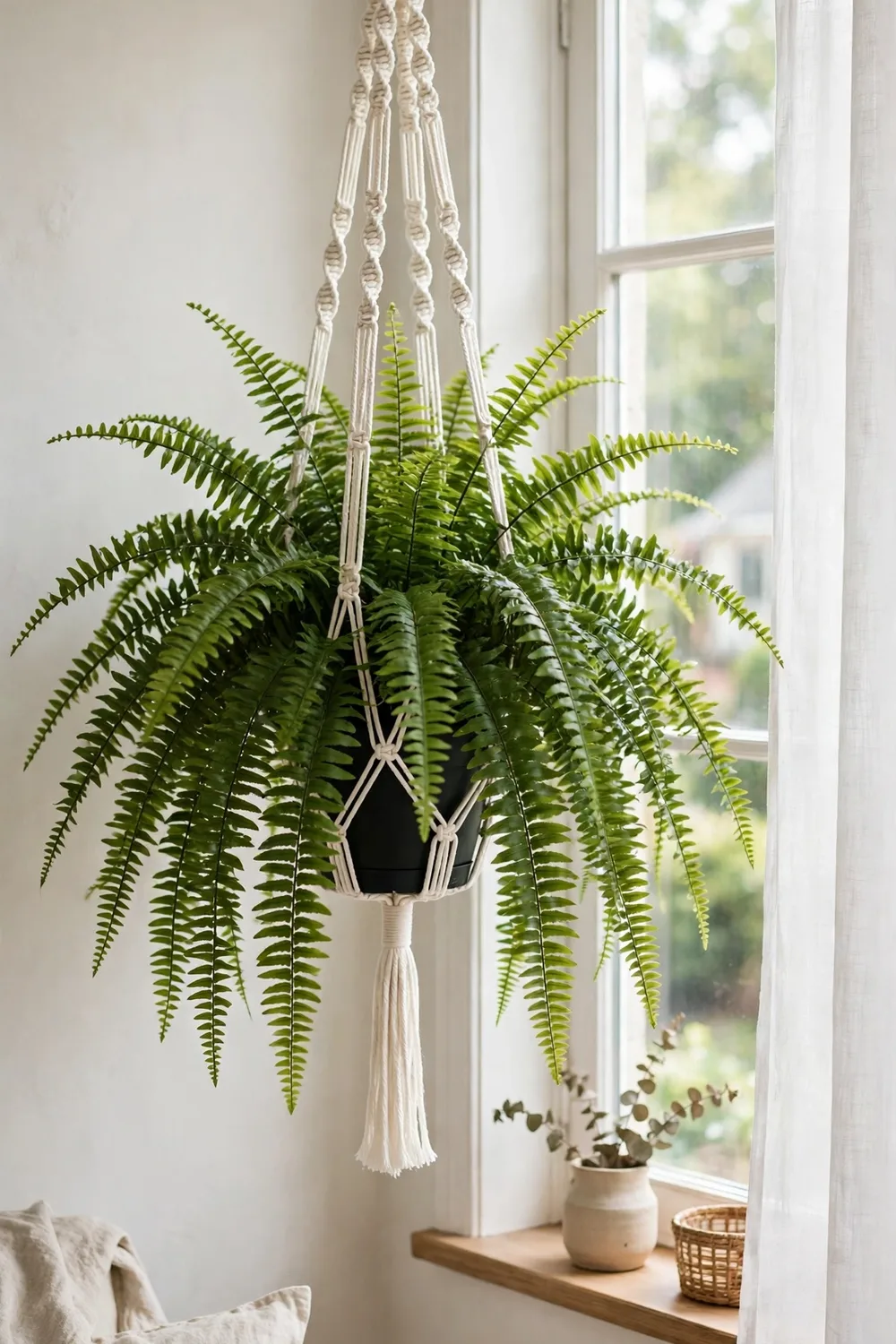
A hanging fern is the fastest way to add green without using any floor or shelf space. Hang it from a ceiling hook near the window, where a real fern would love the light. The fronds fall in a full circle, so the plant looks lush from every angle in the room. Pick a fern with layered fronds in more than one shade of green.
Hang it low enough to see the fronds at eye level, not up against the ceiling. If the pot hides above your sight line, the plant reads as a green blob instead of a fern. A simple macrame hanger or a plain white pot keeps the focus on the leaves. Dust the fronds once a month, because dust is what makes a hanging fern look fake.
4. A Faux Olive Tree Stands Beside the Sofa
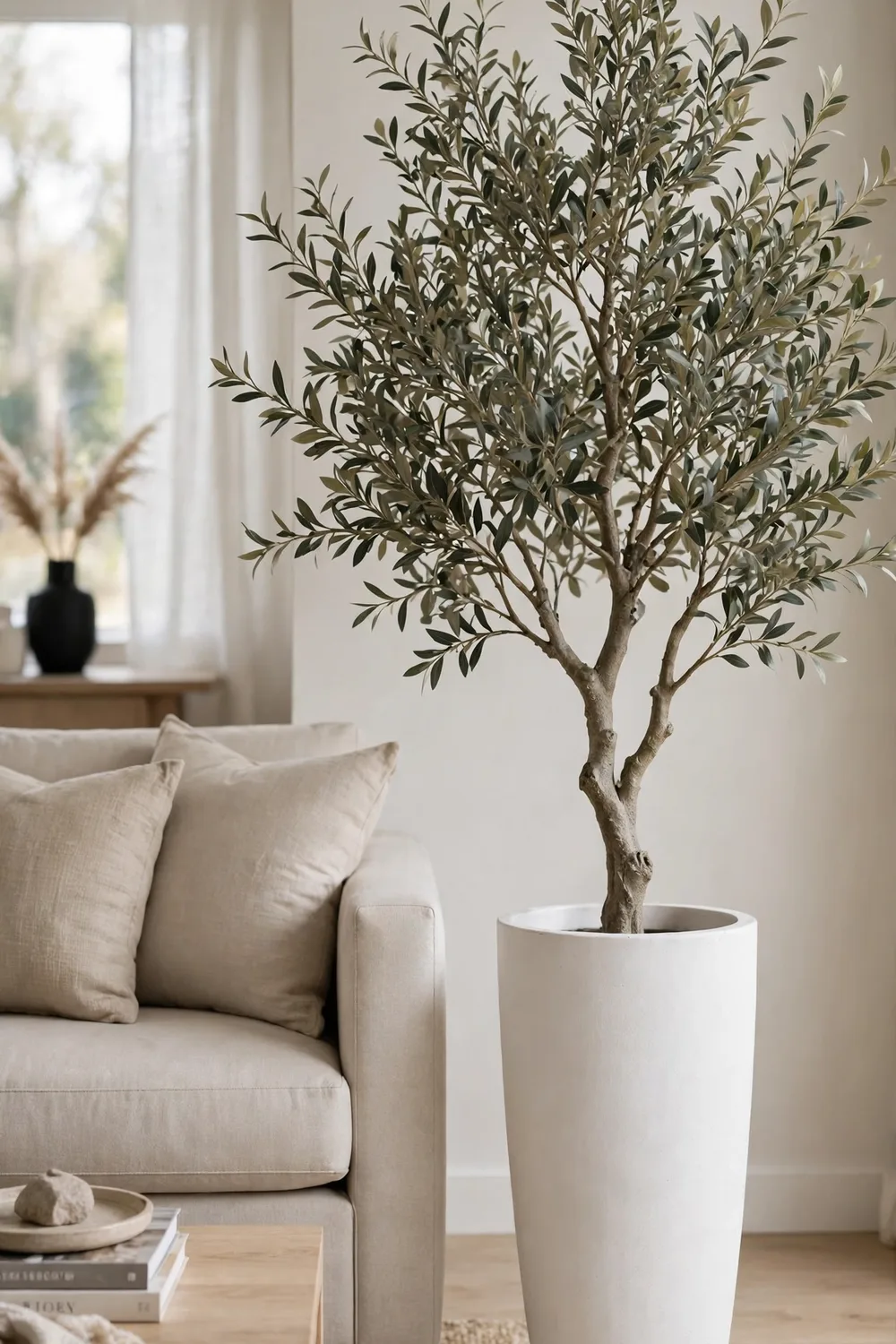
An olive tree brings a calm, Mediterranean feel that a big leafy palm cannot match. Its small grey-green leaves and slim trunk suit a quiet living room, and it never overpowers the sofa. Place it on the side away from the television, so the tree gets its own patch of wall. A tall white planter lifts the trunk to the right height.
Fluff the branches before you put the tree in place. Spread the stems gently, bend a few outward, and turn some leaves so they catch the light at different angles. A tree that arrives in a tight bundle looks like a stick with leaves glued on. Five minutes of fluffing is the difference between fake and almost real. In small living room ideas, one tall slim tree beats three small pots every time.
5. A Faux Snake Plant Sits on the Nightstand
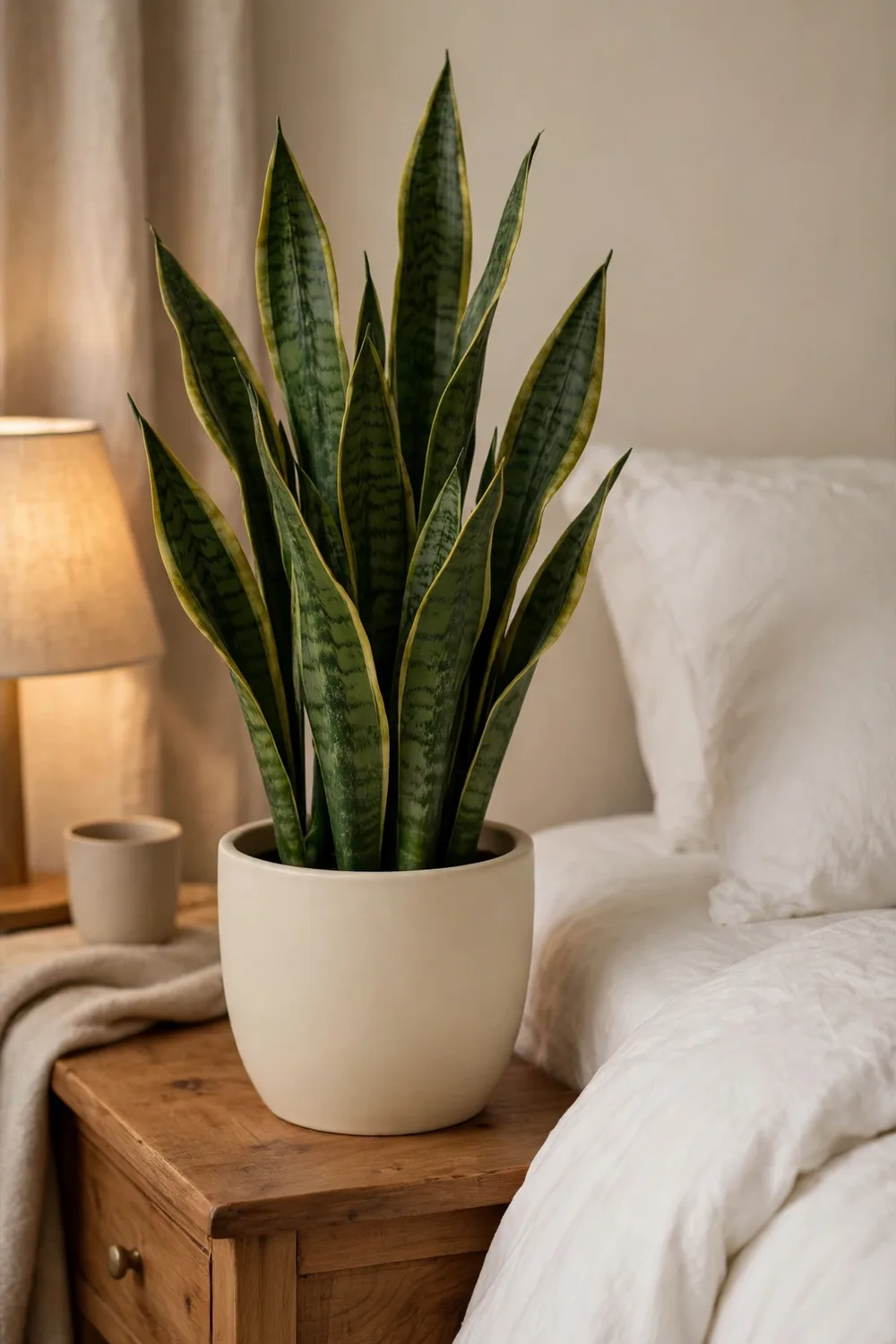
Bedrooms need calm, not drama, and a snake plant gives you exactly that. Its upright leaves take up almost no space on a nightstand, and the shape stays tidy even in a small room. One plant is enough. A second one on the dresser would fight for attention, so let the nightstand plant own the room.
Choose a pot that matches your bedding in tone, not in pattern. A plain ceramic pot in cream, grey, or terracotta keeps the nightstand quiet. Put the plant on the far side of the lamp, so the lamp light falls across the leaves in the evening.
That soft light is what makes the leaves look alive at night. For the rest of the room, keep the same quiet rule from our small bedroom ideas. One low plant per surface and nothing on the floor. The calm comes from the empty space, not from more plants.
6. Faux Succulents Line the Windowsill
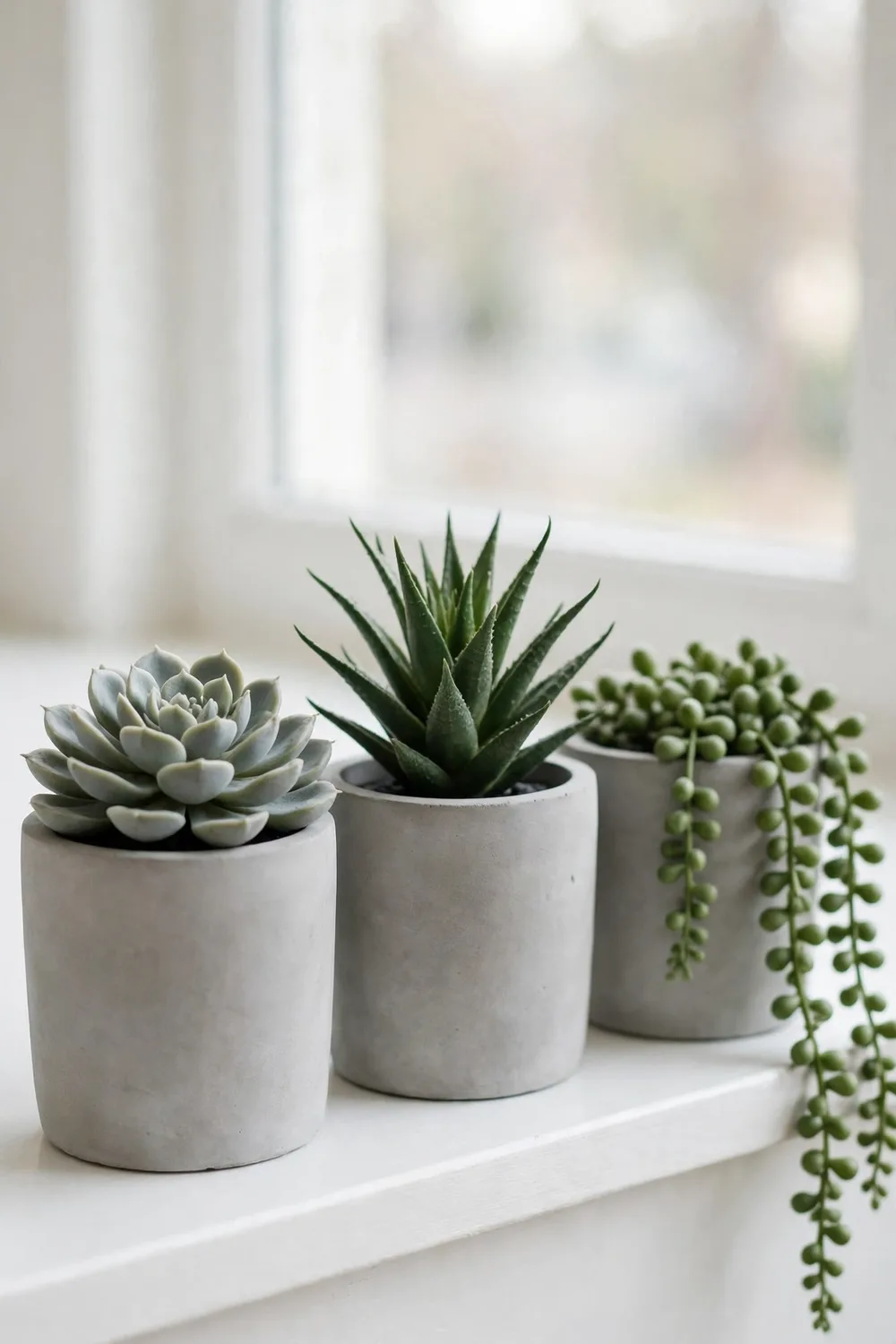
A windowsill is the classic succulent spot, and faux succulents work there for the same reason real ones do. They are small, they love the light, and they never outgrow the sill. Line up three small pots in a row, each with a different succulent shape. One rosette, one spiky, and one trailing gives you variety without clutter.
Use matching pots in one material, like concrete or matte ceramic, so the row reads as a set. Different pot colors would split the row into three separate objects. Keep the pots small, under six inches tall, so they never block the light coming through the window. The light behind the leaves is half the charm.
7. A Faux Monstera Claims the Plant Stand
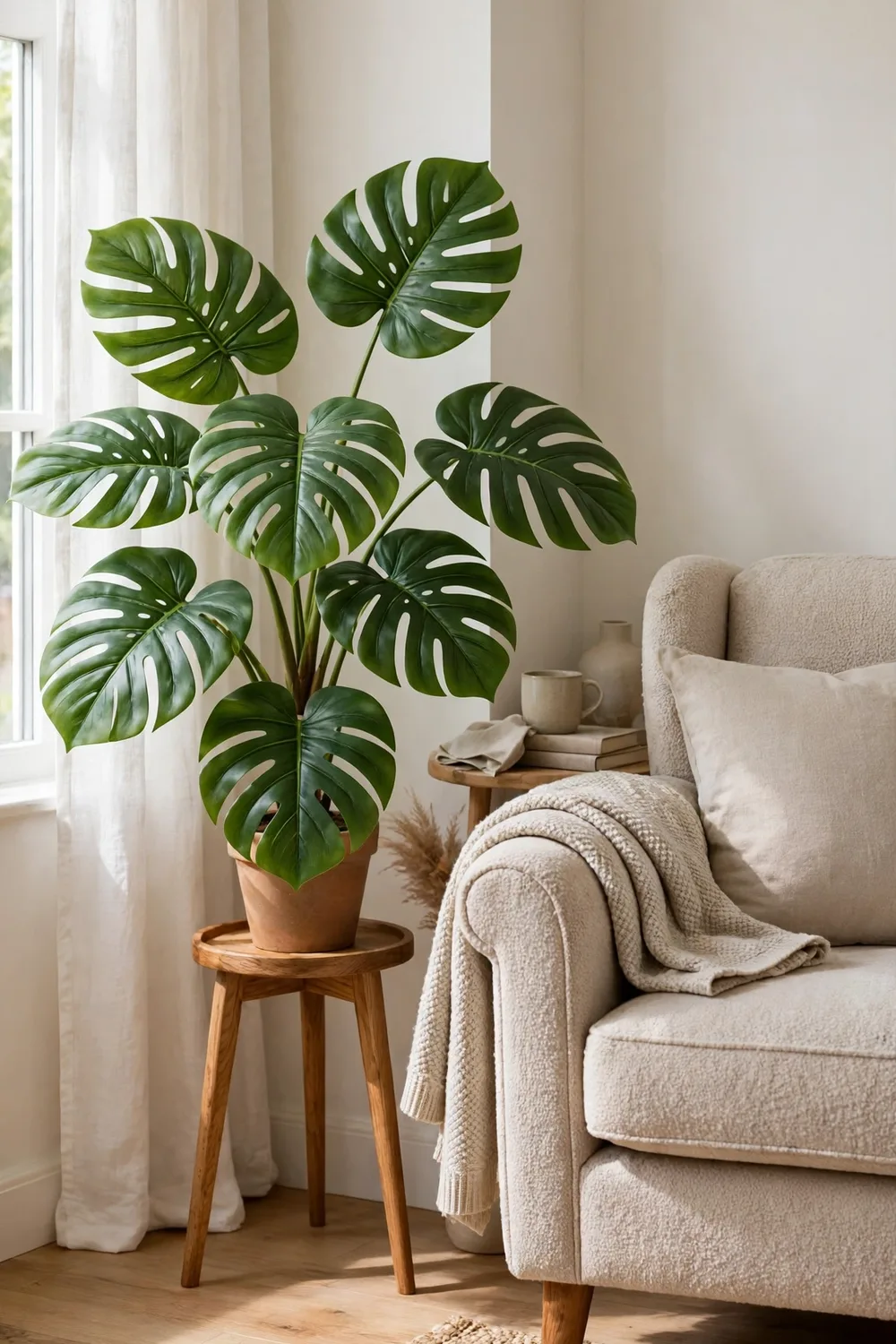
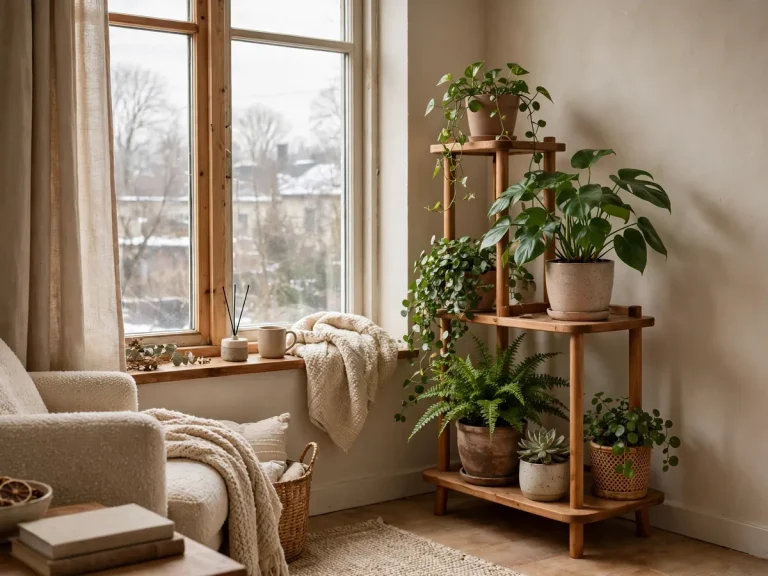
A monstera is the most sculptural leaf you can put in a room, and the faux version keeps its shape all year. Set one on a plant stand in the corner by the reading chair, where the big split leaves can spread without touching the wall. The stand lifts the pot to knee height, so the leaves sit right where your eye lands when you walk in.
Pick a monstera with leaves in different sizes, not one repeated shape. Real monsteras grow new leaves at different stages, so a mix of large and small looks natural. Turn the pot once a week, even though the plant never grows, because the leaves settle and flatten over time. A quick turn keeps the shape full from every side.
8. Faux Eucalyptus Stems Fill a Vase on the Coffee Table
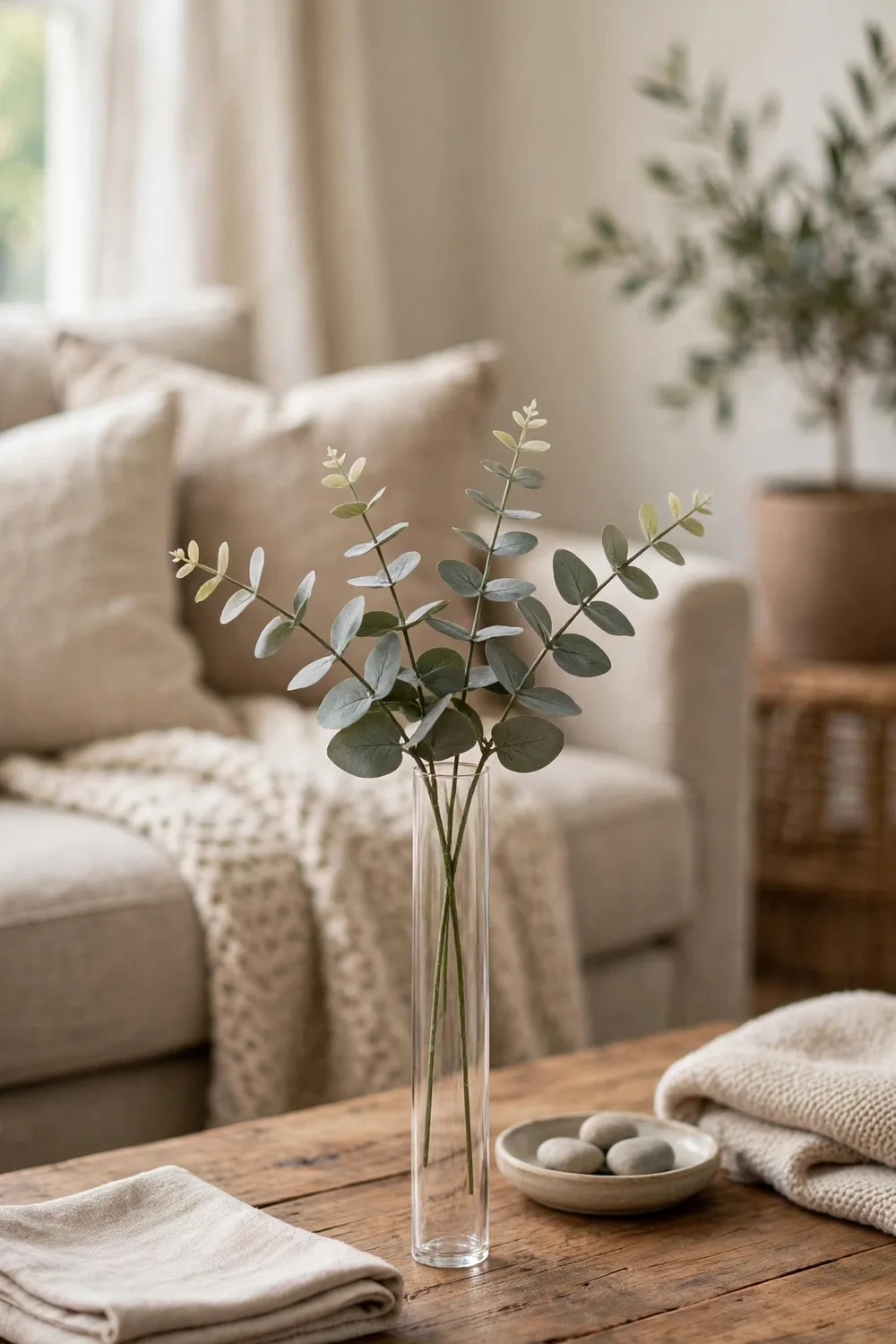
A coffee table needs something low, so it never blocks the view across the room. A few faux eucalyptus stems in a slim vase do exactly that. The soft grey-green leaves add color without height, and the stems bend naturally over the rim. Three stems look full enough, while five start to crowd the table.
Cut the stems to different lengths before you arrange them, so the tallest sits in the middle and the shorter ones lean outward. A vase in clear glass shows the stems and adds a light, airy feel. Change the stems with the seasons if you like, but keep the same vase, because the vase is what ties the table together.
9. Faux Ivy Softens the Bookshelf
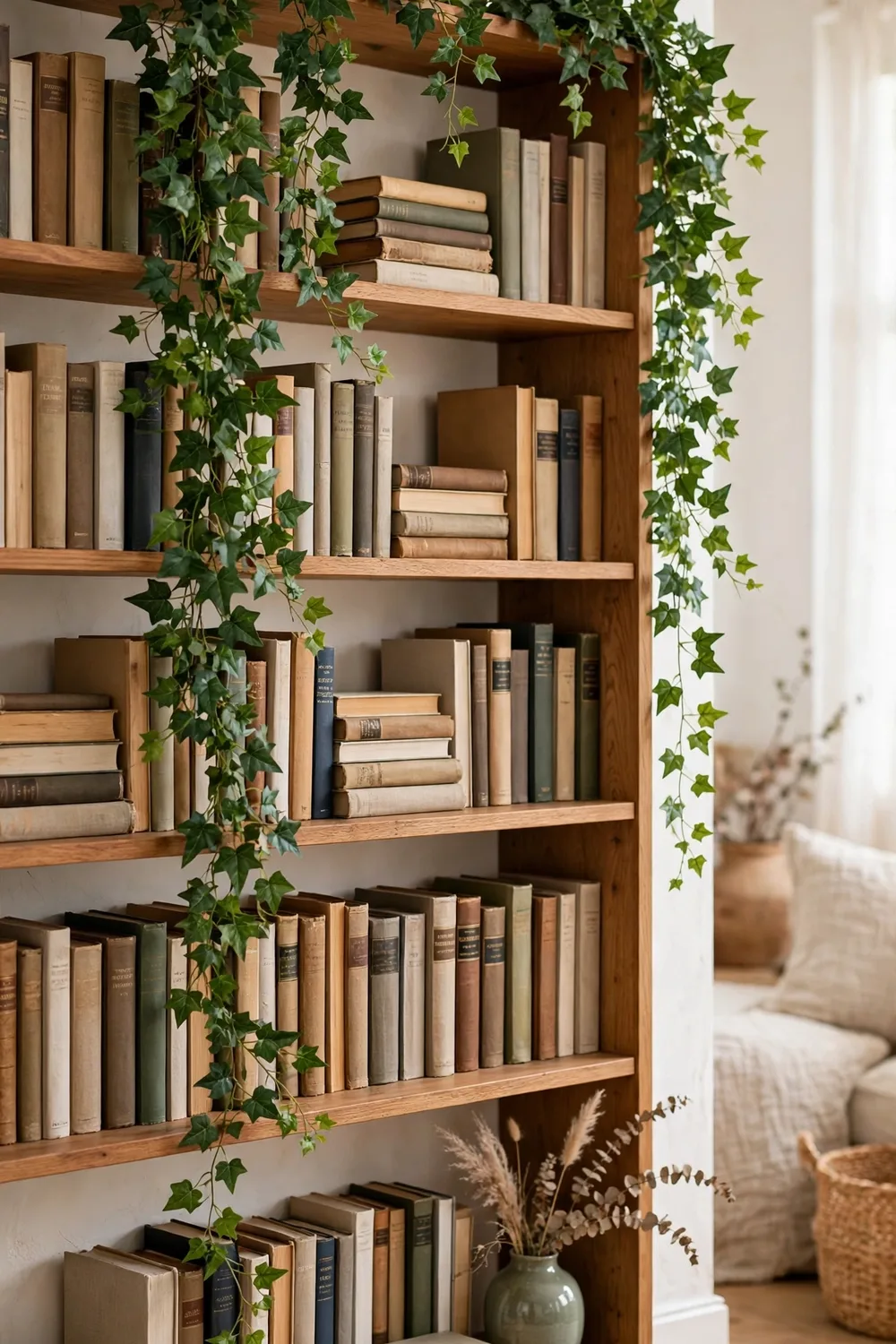
Bookshelves look hard and straight until something soft breaks the lines. A faux ivy plant does that job better than any object on the shelf. Set the pot at one end of a shelf and let the vines trail down over the edge. The leaves soften the corners of the books and fill the gaps between tall and short spines.
Do not put ivy on every shelf. One trailing plant per bookcase is enough, and the rest of the shelves stay clean. If the vines reach the shelf below, trim them back or tuck the ends behind a book. A vine that pools on the shelf looks like it was forgotten, while a vine that ends mid-air looks styled.
10. A Faux Palm Welcomes You in the Entryway
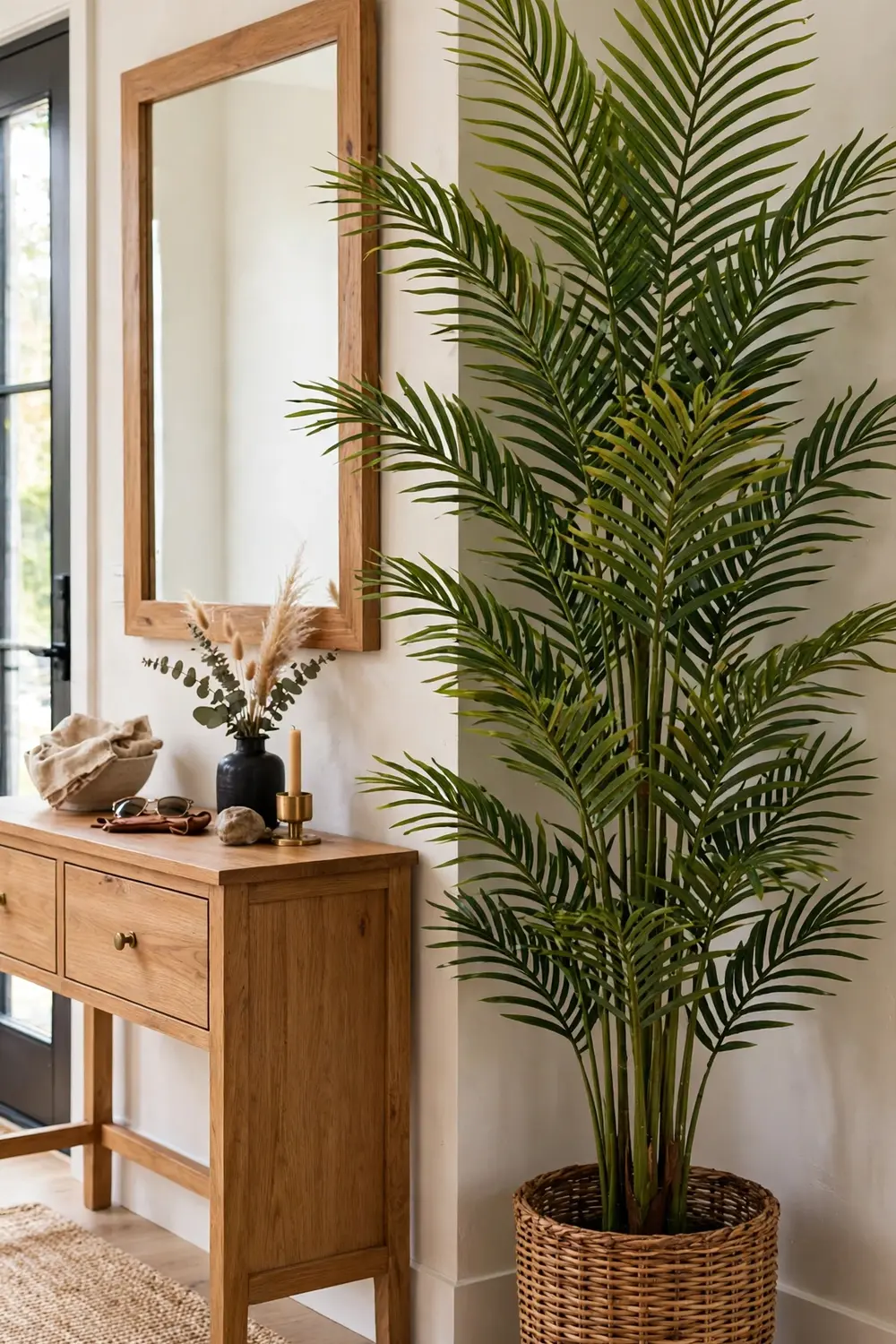
The entryway is the first thing guests see, and a faux palm makes it feel like a home, not a hallway. Place a tall palm in the corner opposite the door, so it frames the entrance without blocking the path. The wide leaves fill the vertical space that coat hooks and mirrors leave empty.
Choose a palm with a natural trunk, not a straight plastic pole. A trunk with texture and a slight bend reads as a real tree, while a perfect pole gives the game away. Put a small tray or a woven basket under the pot to catch dust, and wipe the leaves when you wipe the mirror. The entryway plant gets dusty first, because the door brings in dirt.
11. Faux Flowers Brighten the Dining Table
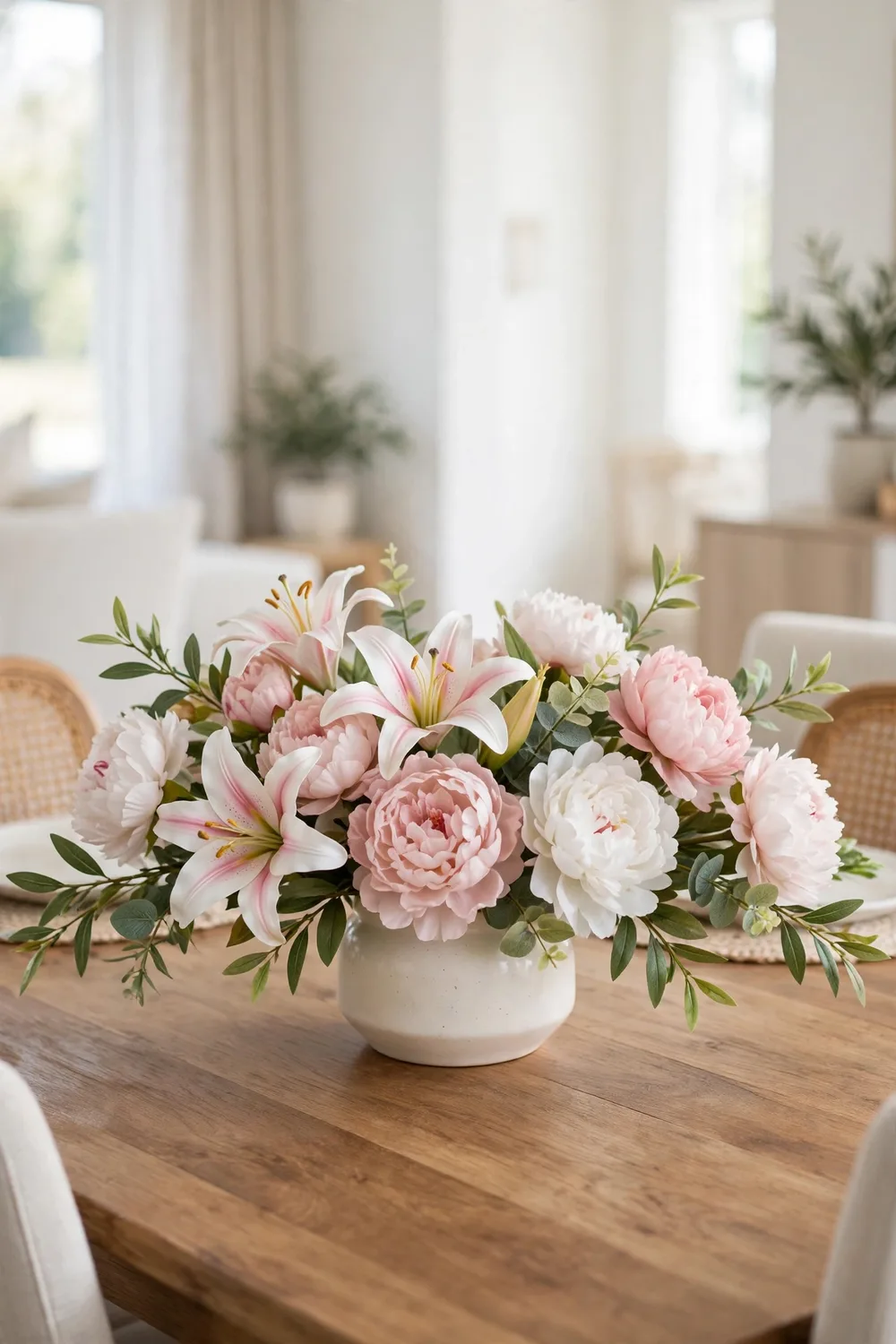
A dining table needs color, and faux flowers give it without the weekly bunch that wilts by Friday. A low arrangement in the middle of the table works best, so everyone can still see across it. Peonies, lilies, or roses in soft colors suit a dining room, while bright colors suit a kitchen table.
Keep the arrangement low and wide, not tall and narrow. A tall vase forces people to talk around it, and the meal feels divided. Use a bowl or a short vase, and let the blooms spread sideways. Change the flowers when the season changes, and the table feels new without buying anything else.
12. A Faux Green Wall Panel Covers the Dark Hallway
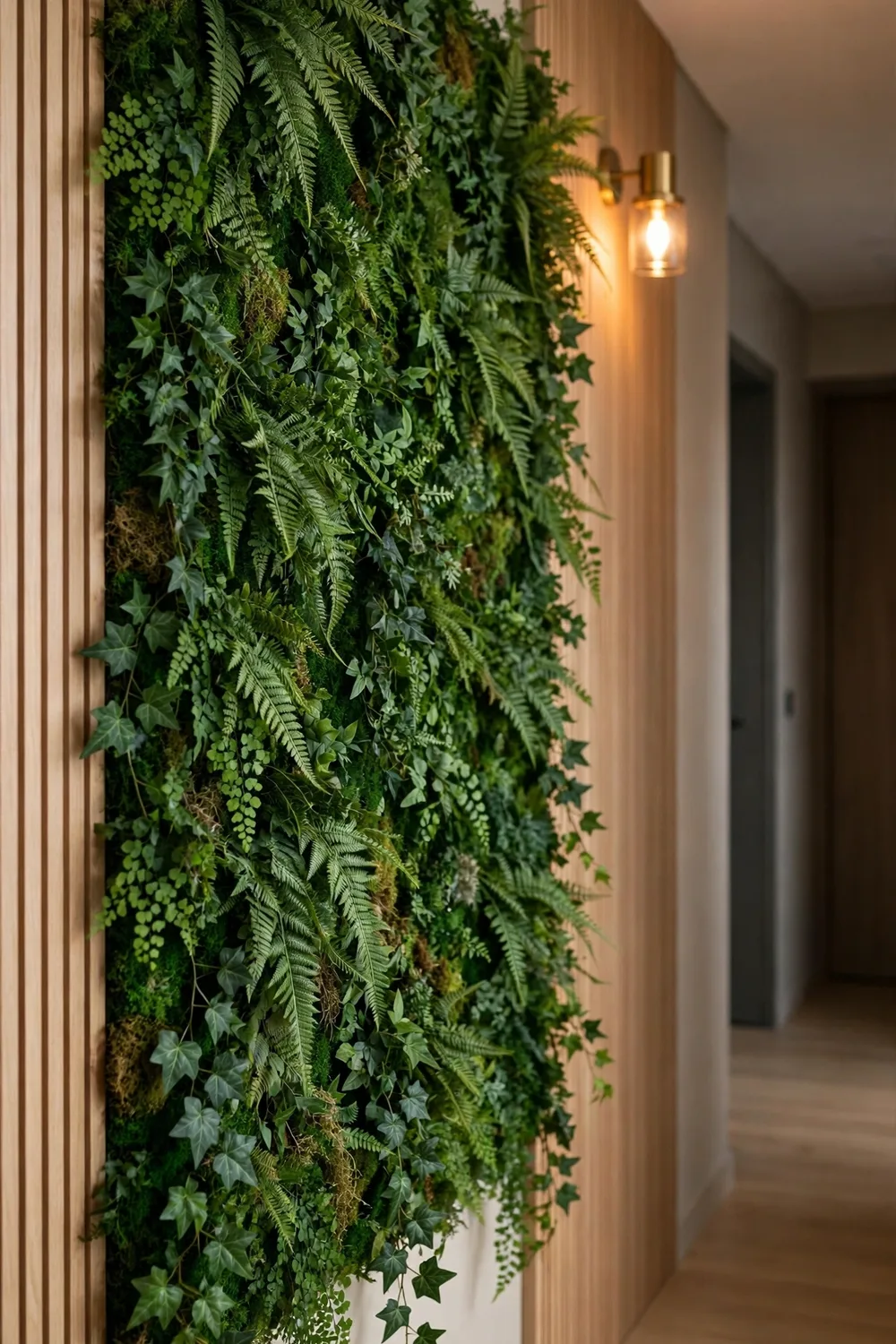
Some walls never get light, and no real plant survives there. A faux green wall panel turns that dead wall into the greenest spot in the home. Mount one panel on the hallway wall, or cover a narrow section beside the door. The dense leaves add texture and depth to a space that usually gets nothing.
Pick a panel with mixed leaf shapes, not one repeated leaf. A panel of identical leaves looks like wallpaper, while a mix of ferns, ivy, and small leaves looks like a living wall. Hang it at eye level, not near the ceiling, so the texture reads clearly. Wipe it with a damp cloth every few weeks, because flat panels collect dust faster than potted plants.
13. A Faux Plant Survives the Bathroom
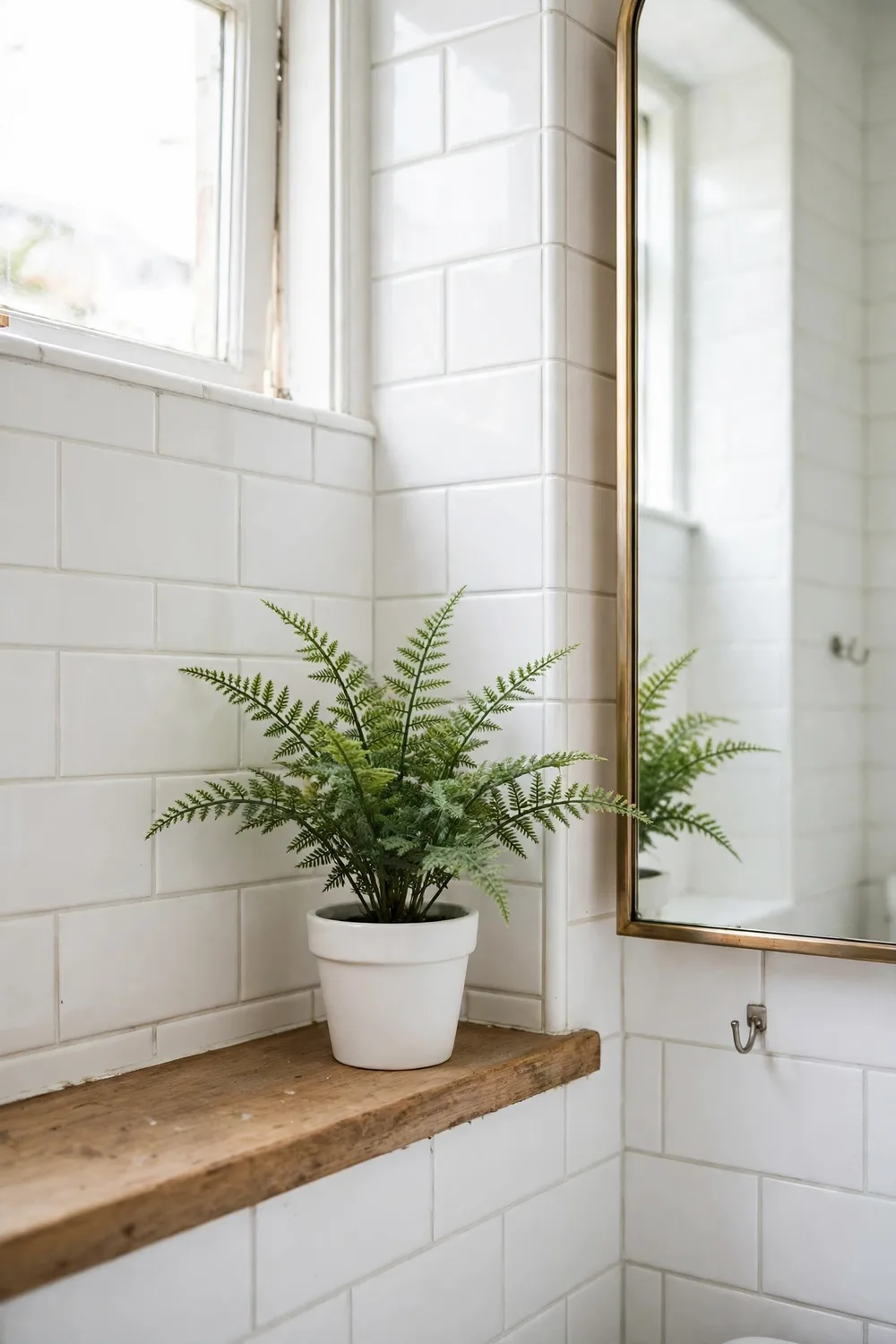
Bathrooms kill real plants in two ways. Some have no window at all, and some get so steamy that the leaves rot. A faux plant ignores both problems. Put a small faux fern on the windowsill, or a trailing plant on top of the cabinet. It stays green in the dark and the steam. The bathroom is one of the best rooms for faux plants, because nobody expects a real plant to thrive there.
Keep the plant away from the shower spray, so the leaves never sit wet. A wet faux plant grows no mold, but water spots dry into white marks that look dirty. Pick a plant with thick leaves, like a faux pothos or a small fern, because thin leaves curl in the steam. Wipe it down when you clean the bathroom, and it will look new for years.
14. Faux Topiary Frames the TV Unit
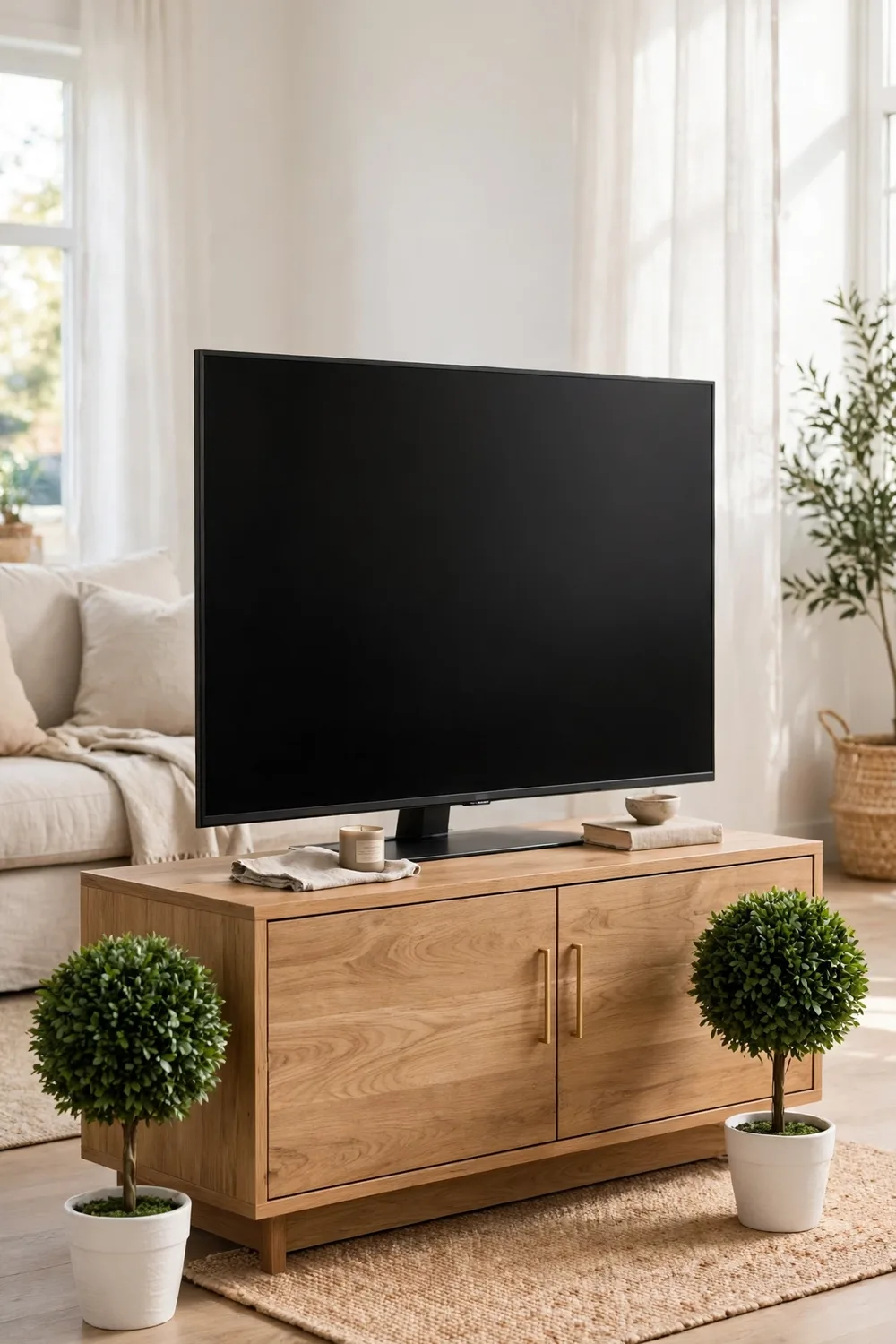
A television unit is a long, flat wall of black glass, and it needs something on each side to balance it. Two matching faux topiary trees do that job perfectly. Place one on each side of the unit, at the same height, in matching pots. The symmetry calms the whole wall and makes the television feel like part of the room.
Keep the topiary small, under three feet tall, so it never competes with the screen. A ball topiary or a small cone shape works best, because the tidy shape echoes the clean lines of the unit. Dust the leaves when you dust the television, because the screen light shows every speck on the leaves beside it.
15. A Faux Garland Frames the Doorway
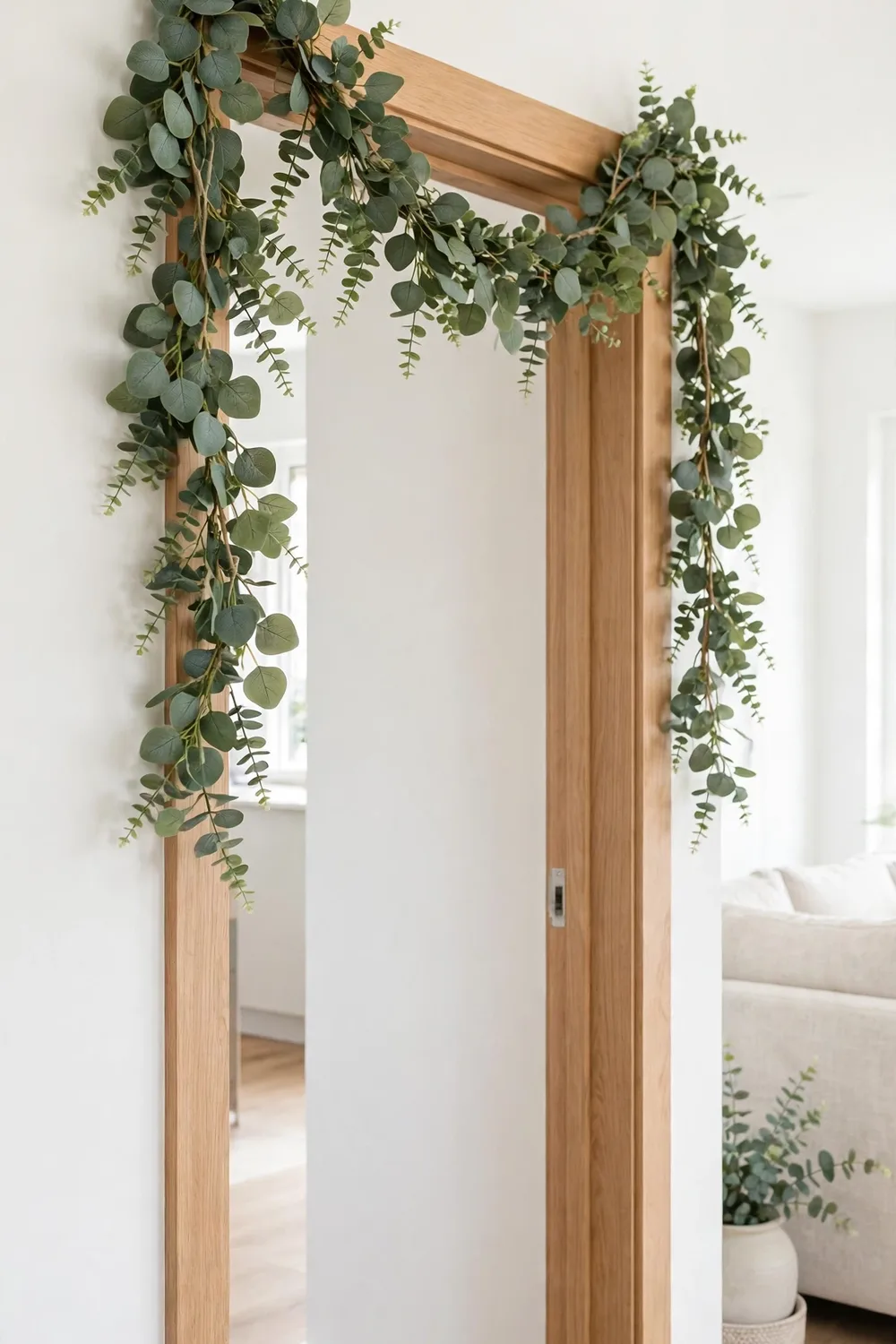
A doorway is a frame, and a faux garland turns it into a feature. Drape a leafy garland across the top of the doorway, or let it fall down one side. The green softens the hard edge of the frame and draws the eye through to the next room. Eucalyptus and ivy garlands work best, because their leaves are small and light.
Fix the garland with removable hooks, so you never damage the paint. Renters can use the same hooks, which is why this idea suits apartments so well. Let the garland hang a little loose, not pulled tight, because a slight sag looks natural. Tight garlands look like plastic rope, while a loose drape looks like a real vine.
16. Faux Cedar Stands on the Balcony
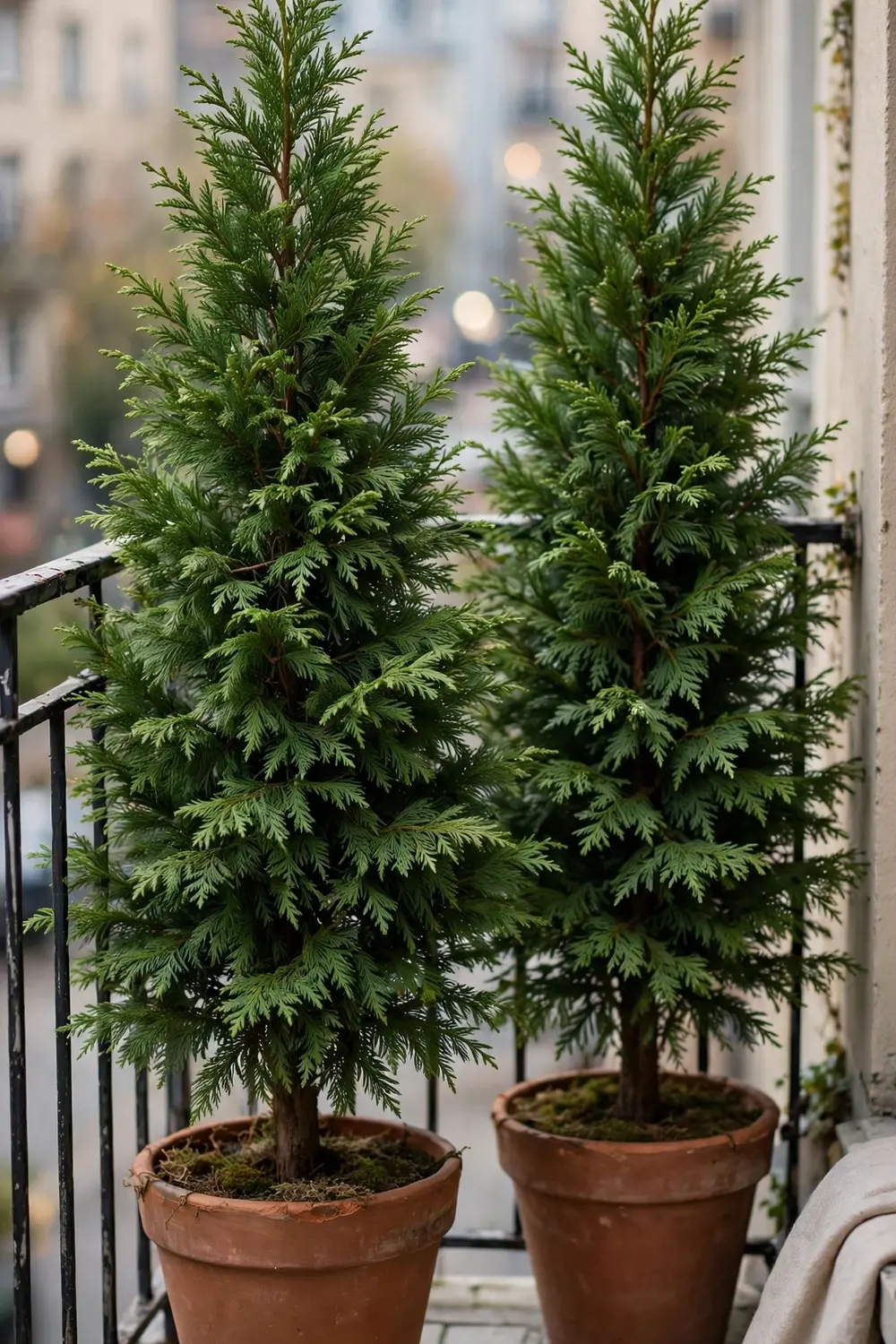
Balconies are brutal for real plants. The sun burns them in summer, the wind dries them out, and nobody remembers to water them. A faux cedar tree ignores all of that. Put one in each corner of the balcony, or flank the door with a pair. The green softens the concrete and makes the balcony feel like a room.
Choose a UV-resistant cedar, so the sun never fades the leaves to a pale green. Cheap faux plants turn yellow in direct sun within one season, while a UV-resistant one holds its color for years. Bring the cedar inside during a storm, because the wind can tip a light pot. A heavy ceramic pot or a stone-filled base keeps it standing.
17. The Five Rules That Make Any Faux Plant Look Real
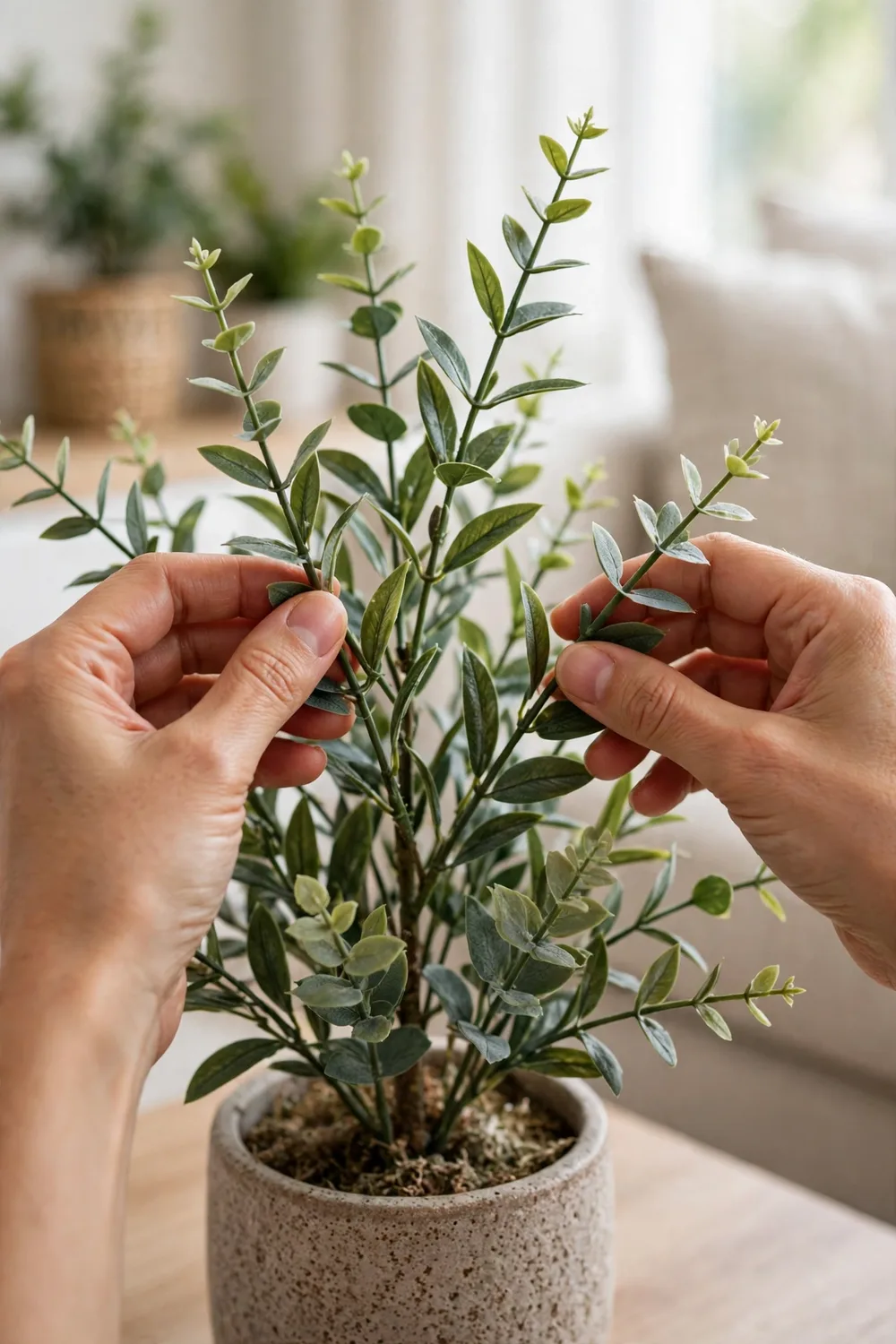
This last idea is not a plant, it is the system that makes the other sixteen work. First, fluff every plant when it arrives, because factories ship them flat and tight. Second, pick matte leaves, never shiny plastic, because real leaves never shine like that. Third, mix shades of green in every arrangement, because one flat green is the biggest giveaway.
Fourth, place every faux plant where a real plant could live. A palm in a dark closet looks fake no matter how good it is, while the same palm by a window fools everyone. Fifth, dust your plants once a month. Dust is the quiet killer of realism, and a dusty leaf looks plastic even when the plant itself is excellent. Follow these five rules, and your guests will ask how you keep your plants alive.
How to Pick a Faux Plant That Looks Real
Before you buy any of these artificial plants decoration ideas, check five things in the store. These are the same checks the best styling guides use, and they take two minutes. Two minutes now saves you from a plant that looks fake for years.
- Matte leaves with color variation, not one flat shiny green
- A natural-looking trunk or stem, with texture and a slight bend
- Bendable stems you can spread and shape, not stiff plastic rods
- Leaves in different sizes on the same plant, like a real plant grows
- A pot that fits the plant, heavy enough to hold it upright
If a plant fails two of these checks, leave it on the shelf. A good faux plant costs more than a cheap one, but it lasts for years, so the price per year is low. Buy one good plant instead of three cheap ones.
A tall bird of paradise in a white pot was listed at $89.99 at Walmart in November 2026. A similar indoor tree was listed at $99.99 at Rooms To Go the same month. Those prices are for one statement piece, not for every plant in the home.
5 Mistakes That Make Faux Plants Look Cheap
- Shiny plastic leaves. Real leaves are matte, so shine is the first giveaway.
- Wrong scale. A tiny plant beside a wide sofa looks lost, and a huge tree in a small room looks like a prop.
- Too many small pots. Five little pots on one shelf read as clutter, while one plant per surface reads as styled.
- Dusty leaves. Dust turns even a good faux plant into plastic, so wipe the leaves monthly.
- Impossible spots. A plant in a pitch-dark closet or above a hot stove looks fake, because no real plant could live there.
What Faux Plants Cost
Faux plants cost more upfront than real ones, and that stops many people. A small succulent costs a few dollars, a hanging fern costs a little more, and a tall statement tree costs around $90 to $100. The difference is time. A real plant needs replacing when it dies, and most people replace at least one plant a year. A faux plant lasts five years or longer with nothing but dusting, so the cost spreads out.
Start with one statement piece, like the tall tree in the dead corner, and add small plants one at a time. You do not need to buy all seventeen ideas at once. One good plant in the right spot changes a room more than ten cheap ones scattered around it.
Frequently Asked Questions
Do faux plants look cheap?
Cheap ones do, good ones do not. The difference is matte leaves, color variation, a natural trunk, and placement where a real plant could live. A $10 shiny plant in a plastic pot looks cheap. The same money spent on one good small plant in a ceramic pot looks real.
Can you put faux plants outside?
Yes, if they are UV-resistant. A UV-resistant cedar or fern holds its color in the sun, while a regular indoor faux plant fades to yellow within one season. Bring outdoor faux plants inside during storms, because a light pot tips over in strong wind.
How do you clean faux plants?
Dust them once a month with a dry cloth or a feather duster. For sticky dirt, wipe the leaves with a damp cloth and let them dry. Never use harsh cleaners, because they strip the matte finish and leave the leaves shiny.
Are faux plants safe for pets?
Yes, and that is one of their biggest advantages. Real plants like pothos, monstera, and snake plants are toxic to cats and dogs, so many pet owners cannot keep them. A faux version gives you the same look with no risk to your pet.
Do faux plants purify the air or help you sleep?
No, and you should not buy them for that reason. Faux plants are decoration only. They do not clean the air, they do not add oxygen, and they do not help you sleep. If you want those benefits, you need real plants. Faux plants win on looks and zero care, not on health.
Final Thought
A home does not need seventeen plants to feel green. It needs one good plant in the right spot, styled like it grew there. Start with the dead corner, fluff the branches, pick a matte pot, and dust it once a month. The rest of the ideas can wait until the first one fools someone. When a guest asks how you keep your plants alive, you will know the system worked.