Bedroom Wall Decor: 6 Decisions, One Wall System
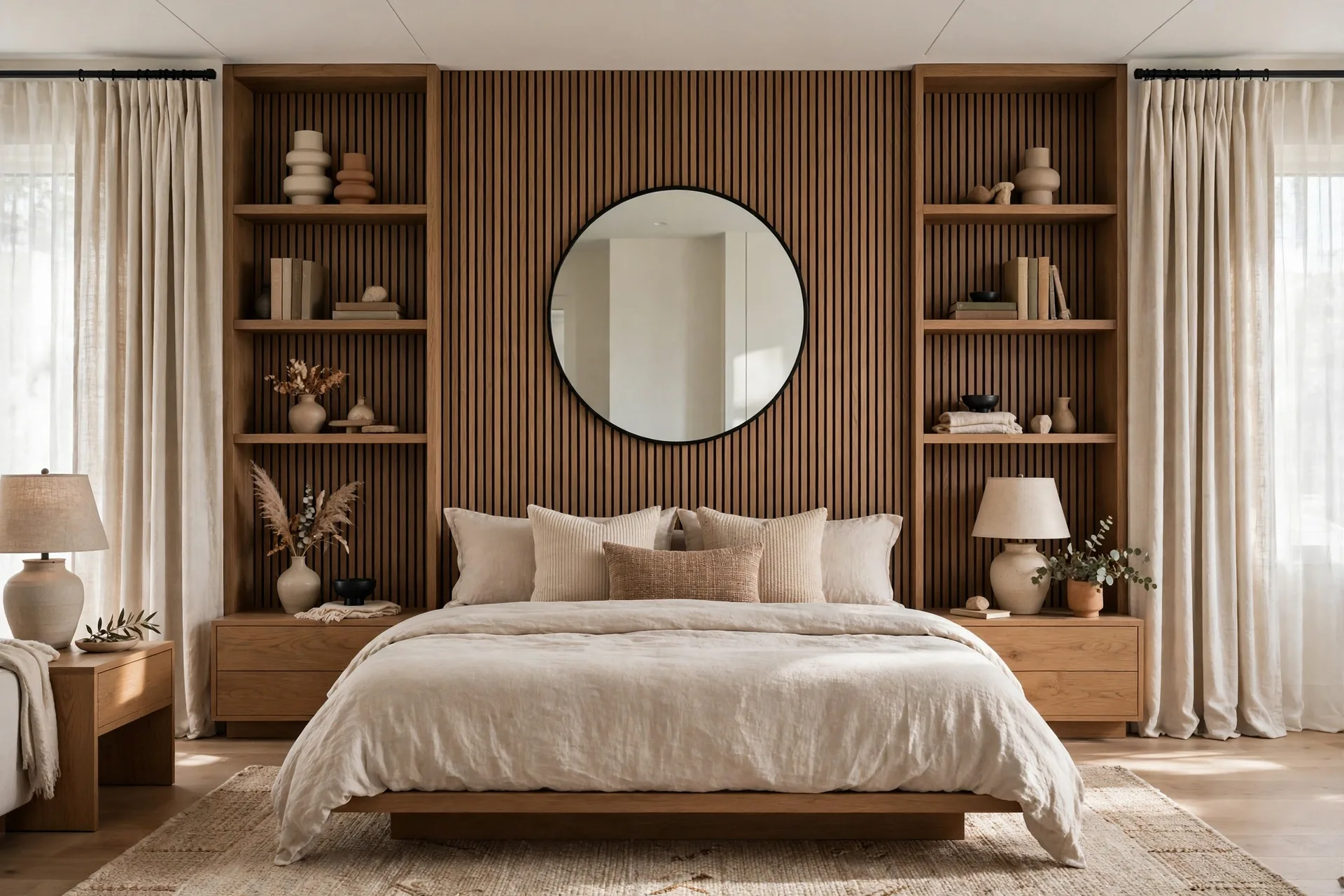
Most bedroom walls are decorated one piece at a time: a shelf here, a mirror there, curtains chosen months later in a different color story. The room ends up with four separate decisions that never meet. Bedroom wall decor works better as one system. Pick one focal wall, then coordinate its accent finish, shelf placement and styling, mirror placement, and curtain length, fabric, and color as a single plan. This guide builds that system in six decisions, and it builds on our wider bedroom decor ideas, which covers every style and room size if you are still choosing the room’s overall direction.
Choose the Focal Wall First
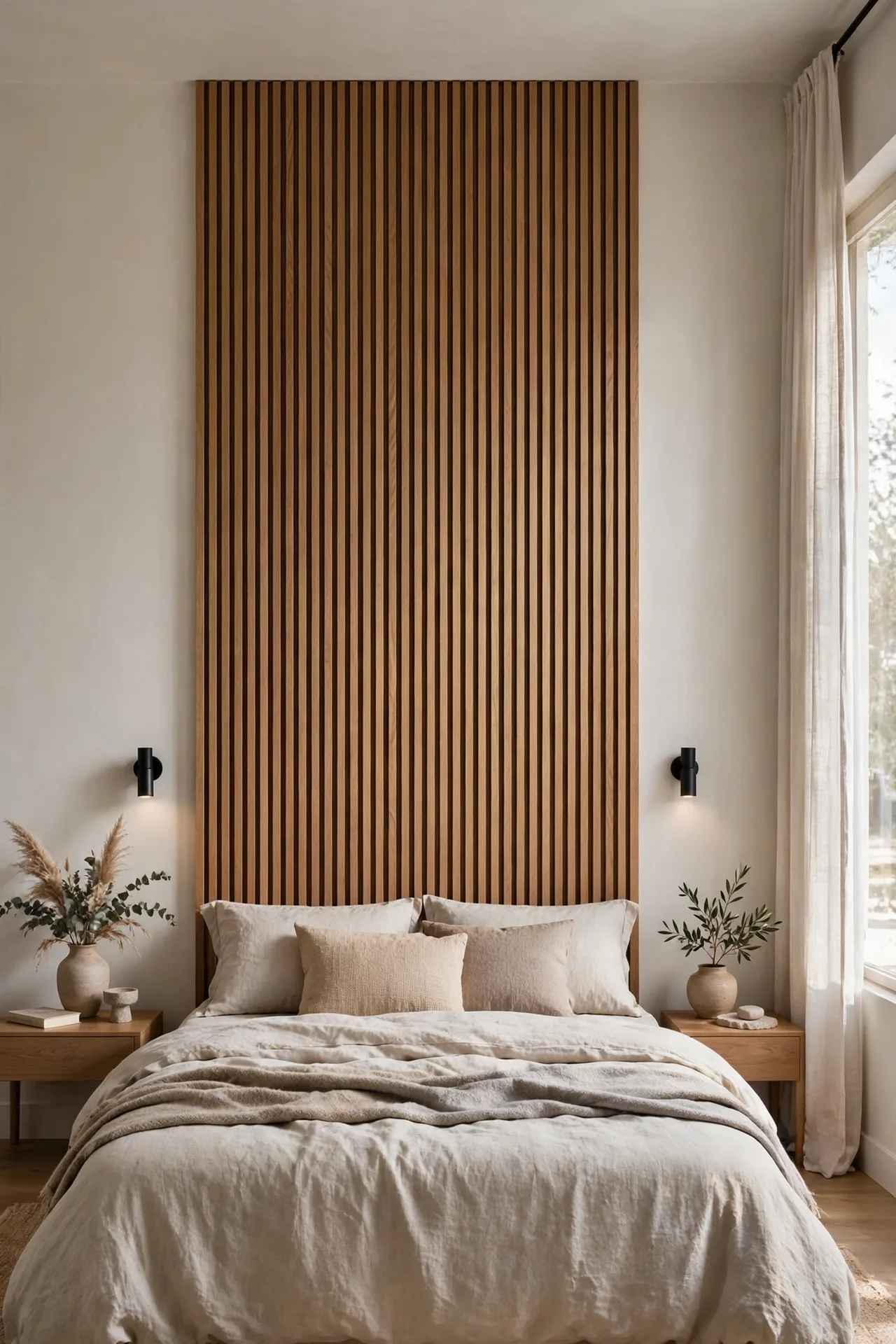
One wall carries the system, not all four. The focal wall is usually the wall above the bed or the window wall, and the test is simple: stand in the doorway and notice which wall your eyes land on first. That wall gets the accent finish, the shelves, and the mirror. The other walls stay quiet, with paint and one simple piece at most, so the room has a clear center instead of four competing displays.
Choosing first matters because every later decision refers back to this wall. Shelf length is measured against the furniture below it on this wall. Mirror placement is judged by the light this wall receives. Curtain color is chosen to sit with this wall’s finish, not against it. If you skip this step, each piece gets bought for a different wall in your head, and the room never comes together.
The Accent Finish: A Choice Inside the System
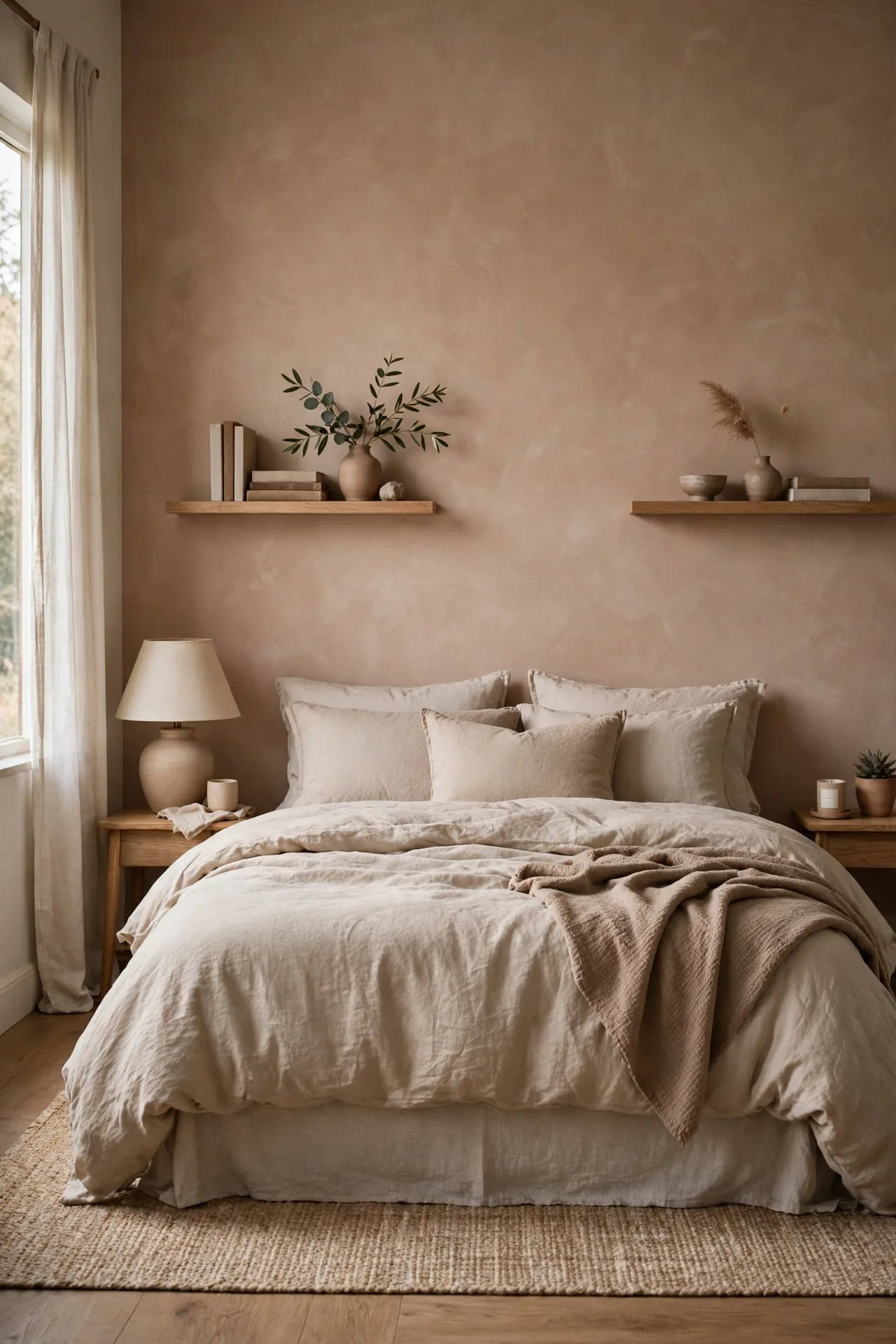
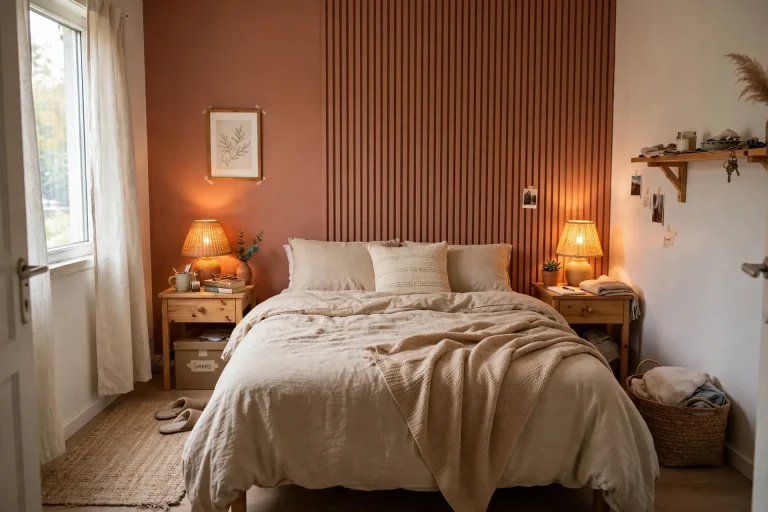
The accent finish is a choice inside the wall system, not a separate decorating project. Your options are a painted accent, wood slats or paneling, a textured limewash-style finish, or wallpaper, and the decision rule is short: pick the finish that echoes something already in the room, a wood tone from the furniture, a soft tone from the bedding, or the wall color deepened a few shades. The finish should make the shelves and mirror read as part of the wall, not as objects stuck onto it.
Keep the finish to the focal wall only. Carrying it around the room turns an accent into a theme, and the focal wall loses the job it was chosen for. If you want a deeper dive into warm, nature-led color for the room, our earthy bedroom warmth coverage explores that direction in full, while this guide stays on the finish as one decision inside the system.
Bedroom Shelves: Placement Rules That Work
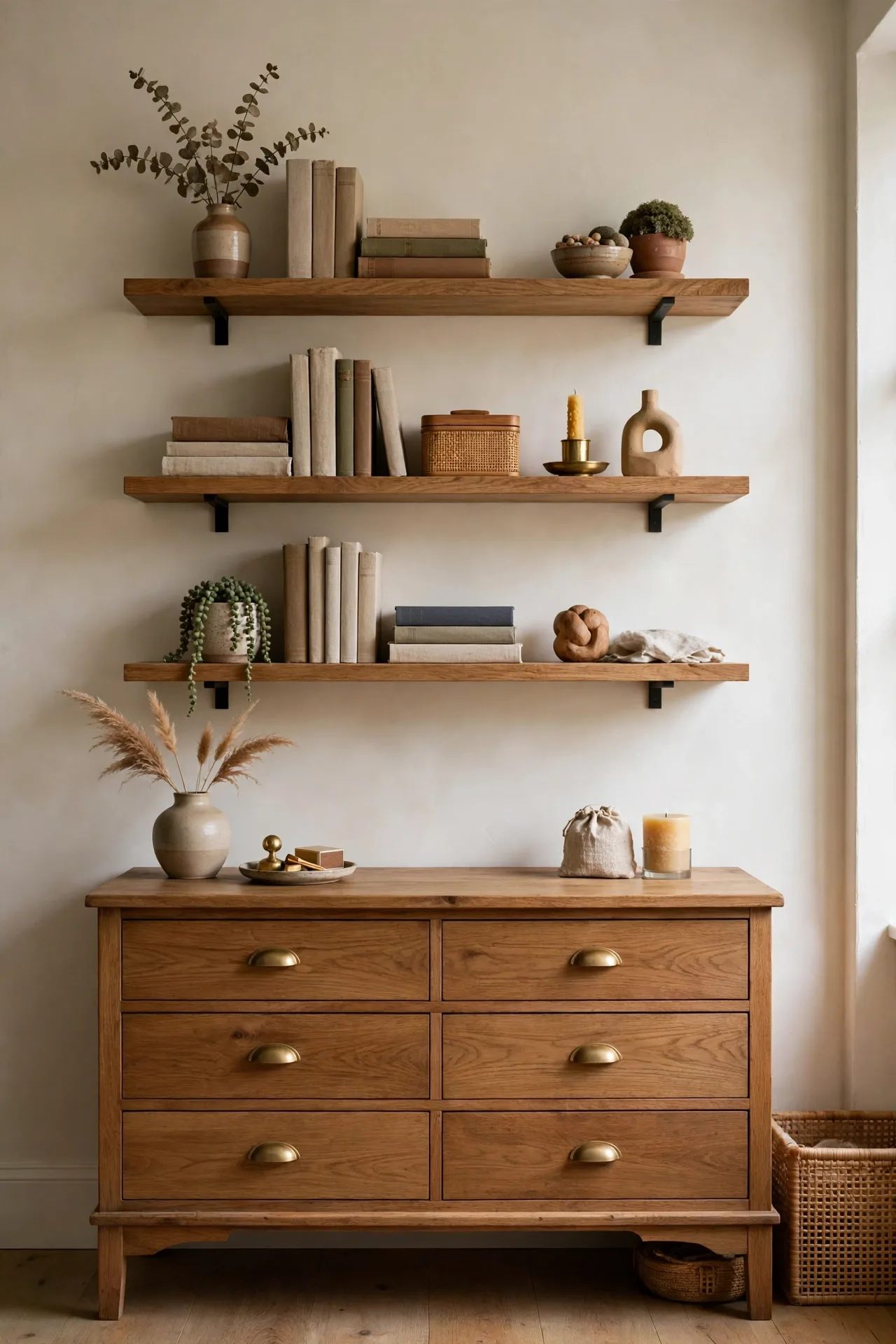
Bedroom shelves fail on placement more than on style. Three rules fix most rooms. First, a shelf above furniture should sit shorter than the piece below it, so the shelf reads as part of that furniture’s zone rather than floating past its edges. Second, leave a clear gap between the furniture top and the lowest shelf, enough for a lamp or a stack of books without crowding. Third, space shelves evenly, with room between them for the tallest object you plan to display, not the shortest.
Above the bed, add one safety rule: hang shelves high enough that you cannot hit your head sitting up, and fix them into studs or proper wall anchors, never adhesive alone, because a shelf above a pillow must never be a falling risk. Shelves beside the bed, at nightstand height or above it, are the easier alternative when the bed wall is already carrying the accent finish and a mirror.
Styling the Shelves: Display, Not Storage
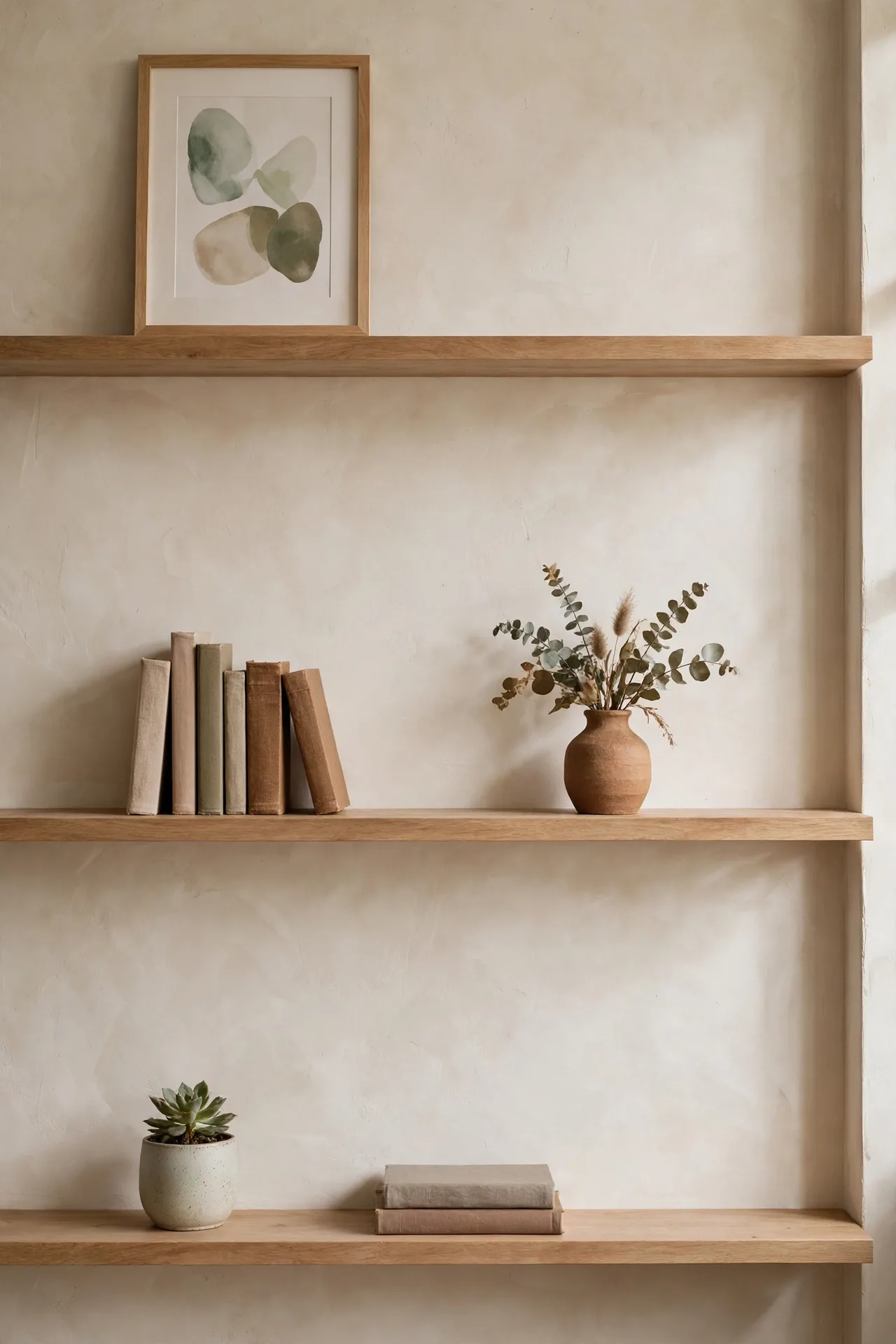
These shelves are display-led, not storage systems. Their job is to show a few chosen things, not to hold everything the room cannot fit elsewhere. Style in small groups: a stack of books laid flat, one vase, one framed print leaning against the wall, and one living element. Leave empty space between groups, because the empty stretch is what makes each group read as styled rather than crowded.
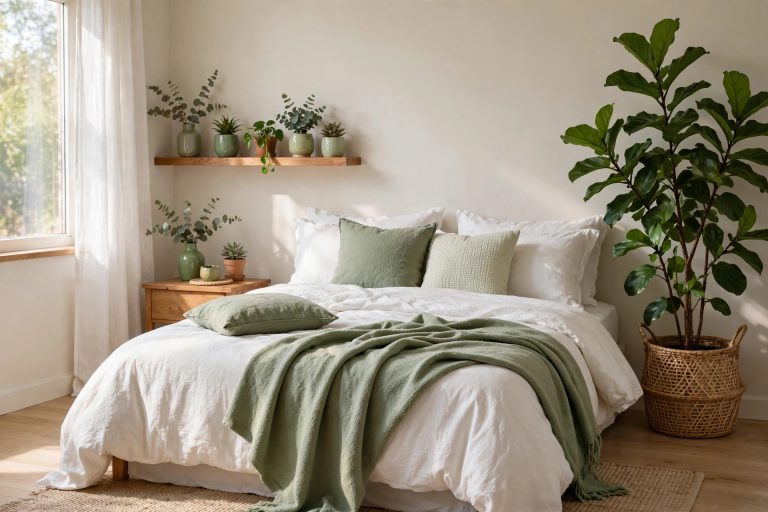
Plants here are accents, not the subject. One trailing plant or one small potted plant per shelf run is enough, and it earns its place by softening the shelf edge. For rooms where plants take the lead, our greenery bedroom accents coverage shows the plant-forward version, and the plant shelf styling page covers shelves built around plants first. Here, the plant serves the wall system, and the system stays in charge.
Bedroom Mirrors on the Wall: Place Them for Light
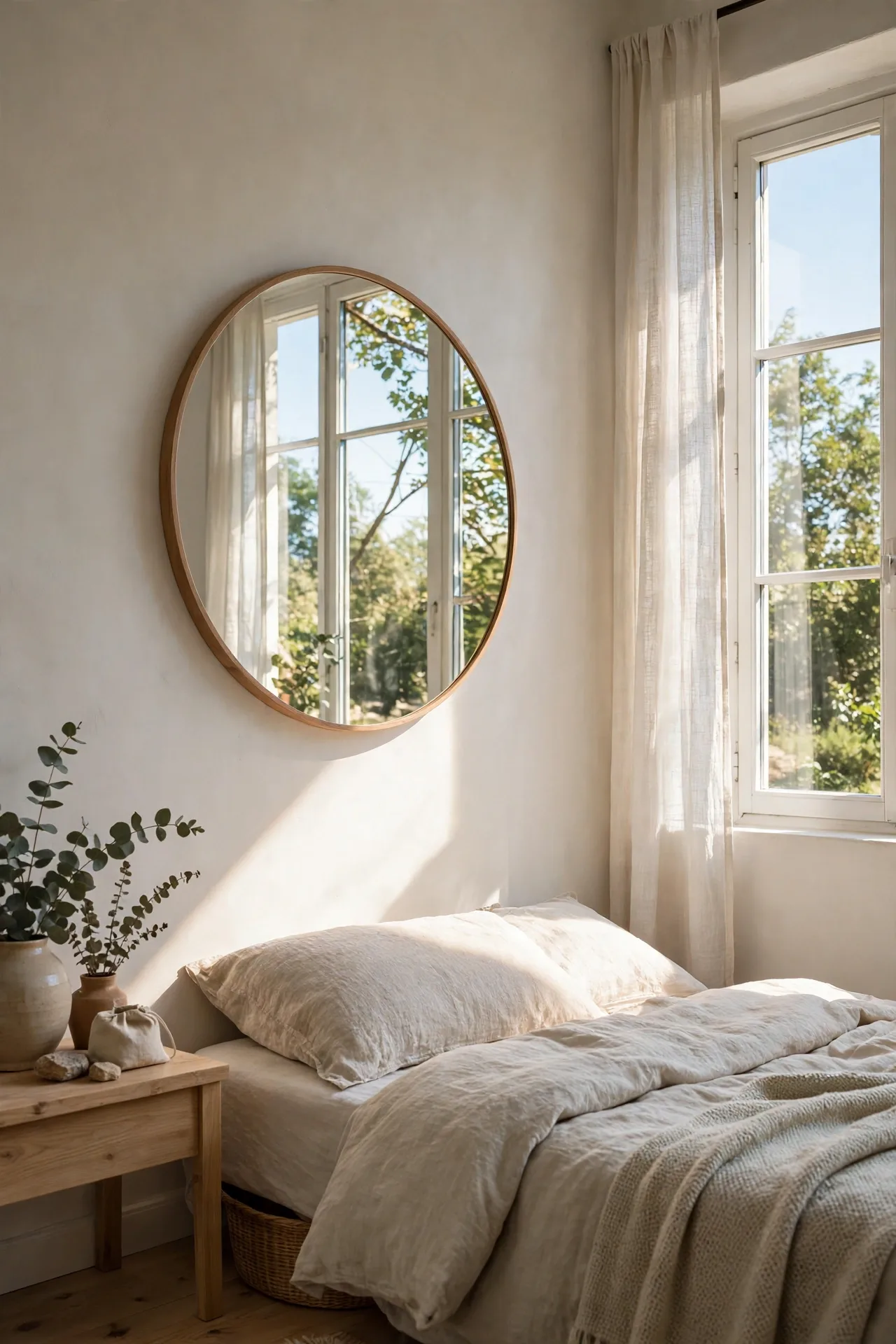
A wall mirror in this system has two jobs, decoration and light, and placement decides both. Hang the mirror where it catches the window, opposite or beside it, so daylight bounces deeper into the room instead of stopping at the glass. A mirror on the same wall as the window reflects the wall back at you and adds almost nothing. Size follows the wall: a mirror above a dresser should sit narrower than the dresser, while a mirror on an open stretch of focal wall can run larger, as long as it does not crowd the shelves.
Keep the mirror off the direct bed-facing position if morning light would bounce into your eyes from it. The mirror-by-furniture calls, including mirror height above a dresser and full-length placement by the door, are covered in our bedroom furniture and lighting decisions, which pair with this guide when the mirror also serves getting ready. Here, the question is simpler: does this mirror bring light onto the focal wall, or does it just fill space?
Bedroom Curtains: Length, Fabric, and Color Decisions
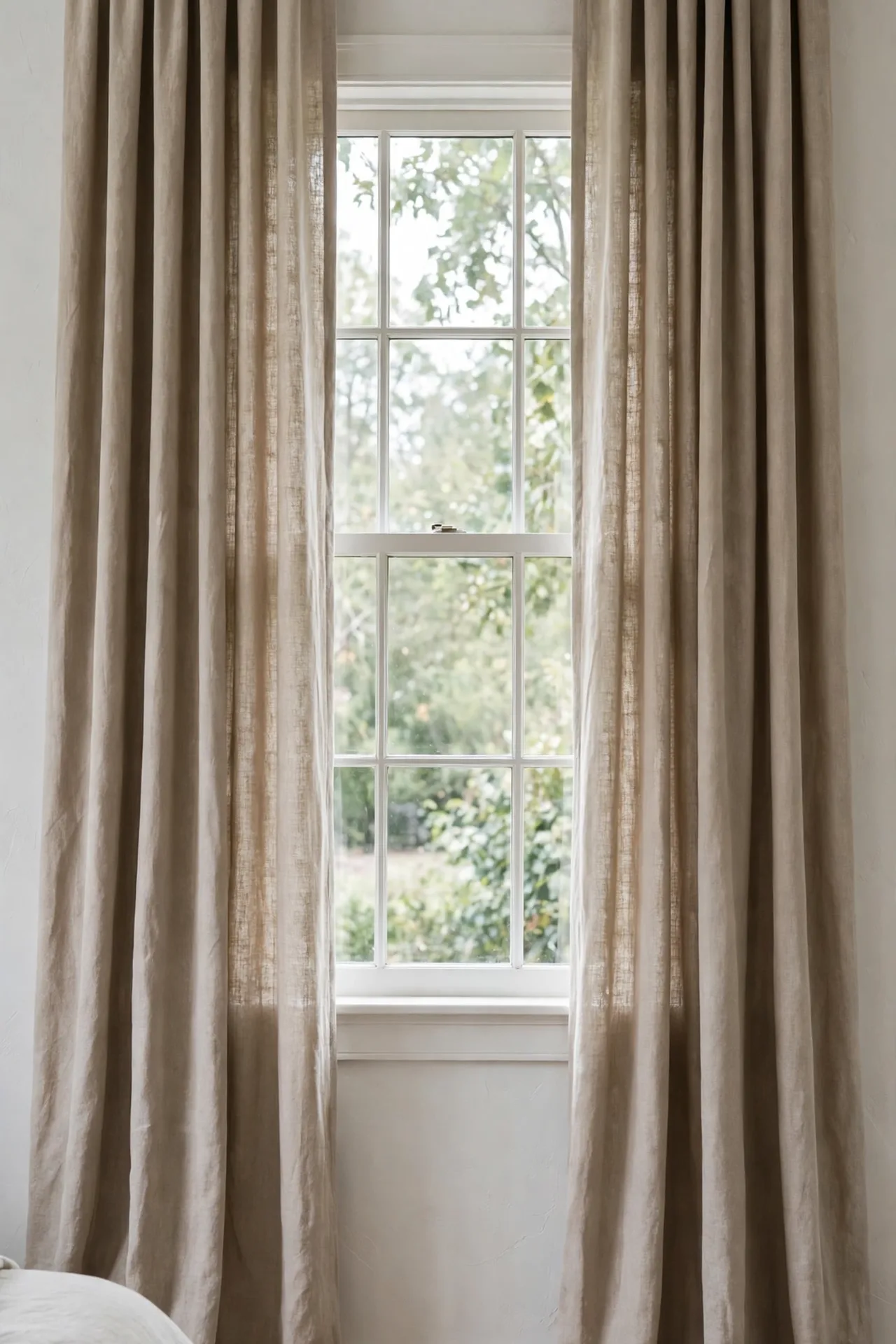
Bedroom curtains are part of the wall system, not a separate window treatment, and three decisions settle them. Length first: floor-length curtains suit most bedrooms, ending just at the floor so they frame the window without pooling dust, while sill-length curtains fit only where furniture sits under the window. Fabric second: a linen-look drape with a blackout lining gives the soft look in the day and the dark room at night, which matters more in a bedroom than in any other room. Color third: match the curtain to the wall finish or to the bedding tone, so the window reads as part of the focal wall system instead of introducing a new color story.
Hang the rod high and wide, near the ceiling and past the window frame on both sides, so the window looks larger and the curtains stack clear of the glass when open. A rod hung just above the frame, exactly as wide as the window, makes even good curtains look small. This one hanging choice does more for the wall than the curtain fabric itself.
Putting the System Together on One Wall
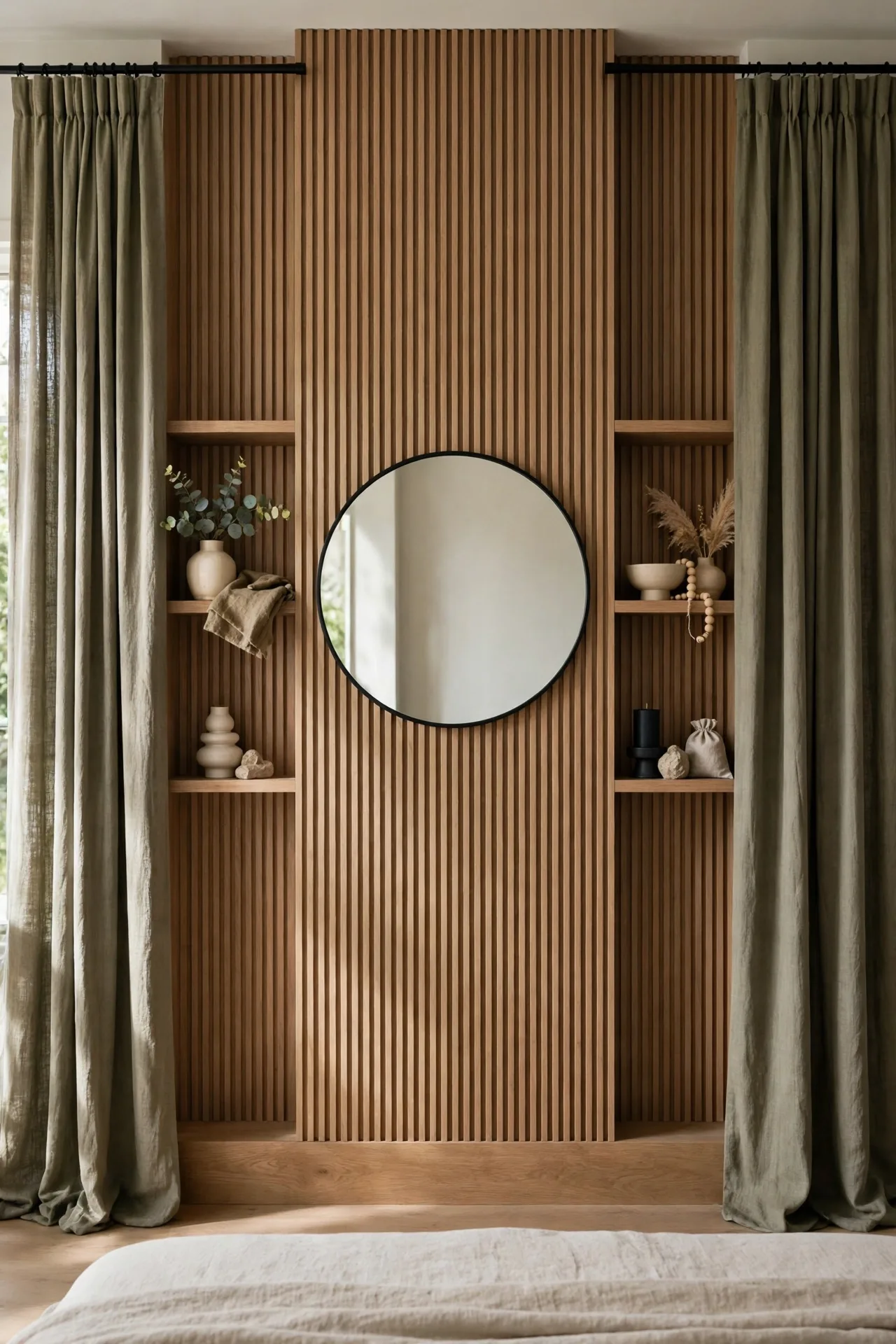
Work the decisions in order and the wall assembles itself. Start with the focal wall, then the accent finish that echoes the room. Place the shelves next, shorter than the furniture below and spaced for what they will hold. Add the mirror where it catches window light without crowding the shelves. Finish with curtains hung high and wide in a color that sits with the wall finish. Each step answers to the wall, not to a separate idea, so the finished wall reads as one composition.
Take the bed wall as the worked example. A muted accent finish behind the bed, two shelves above the nightstand side rather than over the pillow, a round mirror on the window side of the wall catching daylight, and floor-length curtains in the bedding tone on the window wall beside it. Nothing on that wall was chosen alone, and that is why the room feels finished instead of furnished.
The Small-Room Version
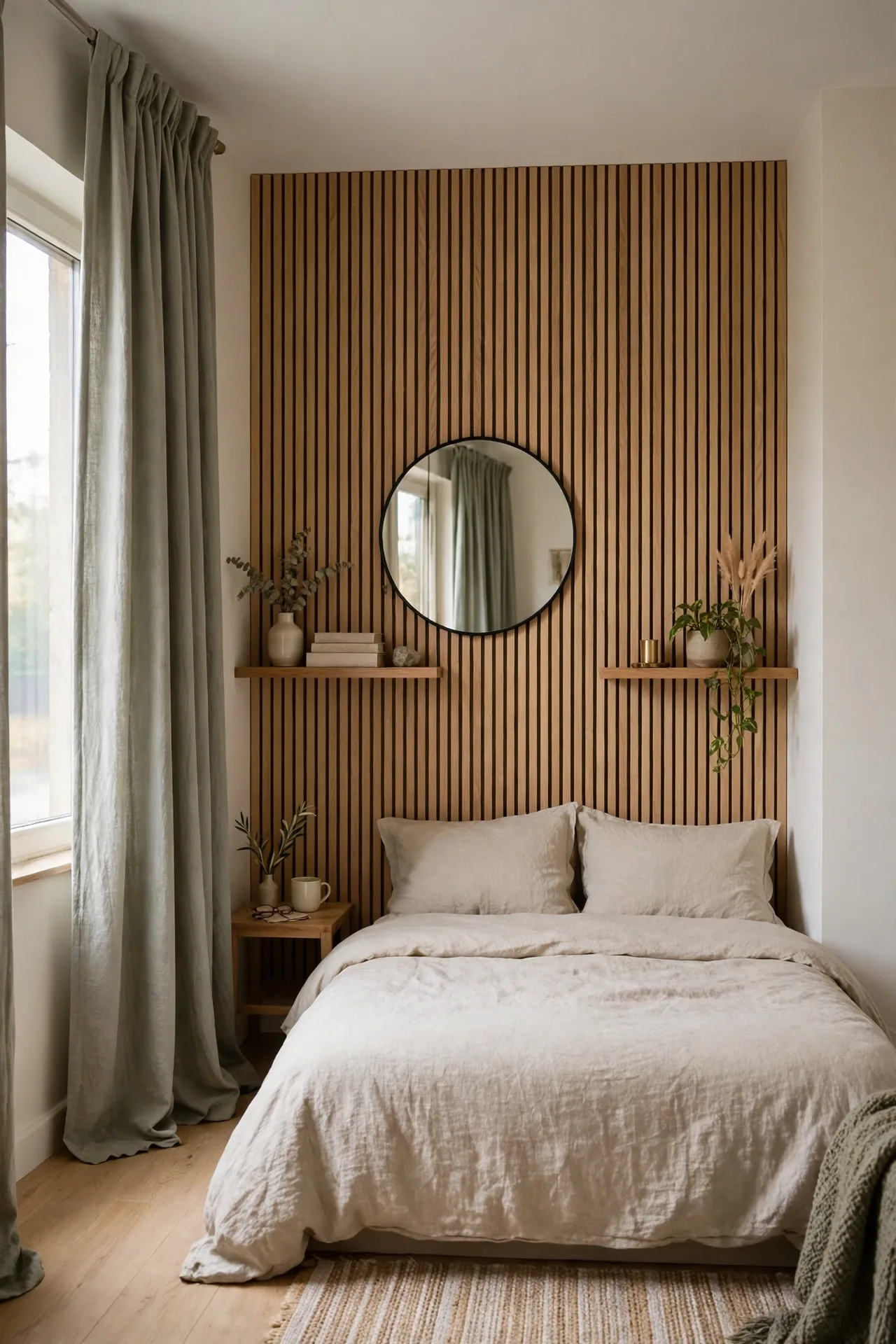
Small rooms need the system more, not less, because every wall must work harder and there is no spare wall to absorb a wrong decision. Keep one focal wall only, and let the other walls stay plain. Use narrower shelves, one run instead of two, and let the mirror do double duty for depth, placed to catch the window light. Hang curtains high and wide even in a small room, because a taller, wider curtain line makes the window and the wall behind it read larger.
Choose a lighter accent finish in a small room, so the focal wall adds interest without closing the room in, and keep shelf styling to one group per shelf instead of three. For rooms where every wall must work harder, the small-space bedroom walls page shows how the same system shrinks without losing its logic, including layout calls that sit outside this guide’s wall focus.
Frequently Asked Questions
How high should bedroom shelves be above the bed?
High enough that you cannot hit your head sitting up in bed, with a clear gap above the pillow, and fixed into studs or proper wall anchors. If the bed wall is already carrying the accent finish and a mirror, shelves beside the bed are the easier and safer alternative.
Where should a bedroom mirror go for more light?
Opposite or beside the window, where it catches daylight and bounces it deeper into the room. A mirror on the same wall as the window adds almost nothing, and a mirror facing the bed directly can bounce morning light into your eyes.
How long should bedroom curtains be?
Floor-length suits most bedrooms, ending just at the floor so the window reads tall without pooling fabric. Sill-length works only where furniture sits under the window. Hang the rod near the ceiling and past the frame on both sides, so the curtains stack clear of the glass when open.
Can shelves and a mirror share one wall?
Yes, when the wall is planned as one system. Keep the mirror narrower than the furniture below it, give the shelves their own zone with space between groups, and let the mirror sit where it catches window light without crowding the shelf run.
What if my room has only one usable wall?
Then that wall is the focal wall by default, and the system still applies: one accent finish, one shelf run, one mirror placed for light, and curtains hung high and wide. The other walls stay plain, which is what makes the single worked wall read as intentional rather than crowded.