17 Small Apartment Plant Decor Ideas That Actually Fit
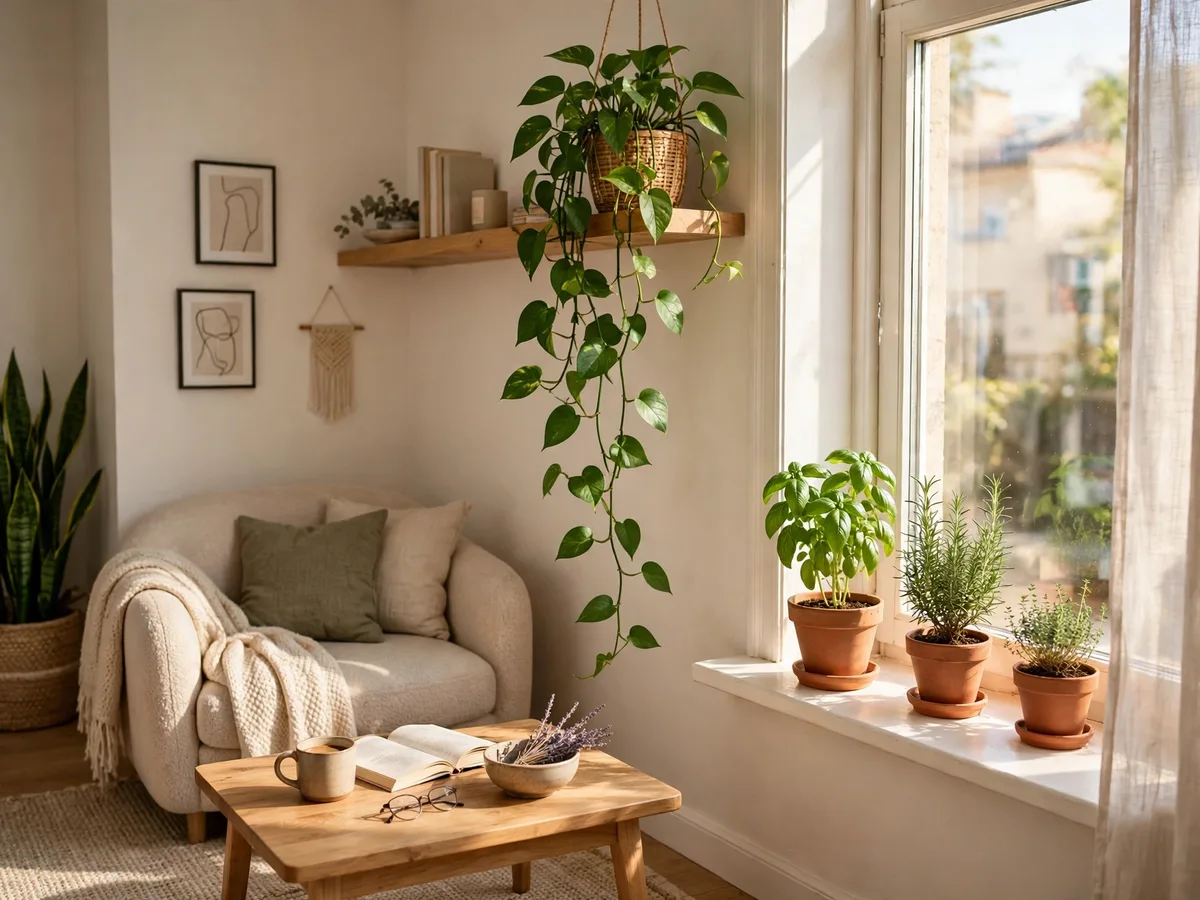
Small apartment plant decor works when the plant matches the spot. Most small-space plant deaths come from the same mistake: a sun lover stuck in a dark corner, or a trailing plant with nowhere to trail. The plant was fine. The spot was wrong.
This guide fixes that. Each idea pairs one display method with the exact plants that survive there, plus the light level, the pot size, and the renter-friendly setup. No drilling unless you want it. No big budget either. Every idea costs little, and none needs special tools.
Start with your light, then pick your spots. A studio can hold twelve plants easily when every plant has a job and a place. Work through the ideas in order, or jump to the room you care about most. Skip any idea that does not fit your rooms, and keep the ones that do.
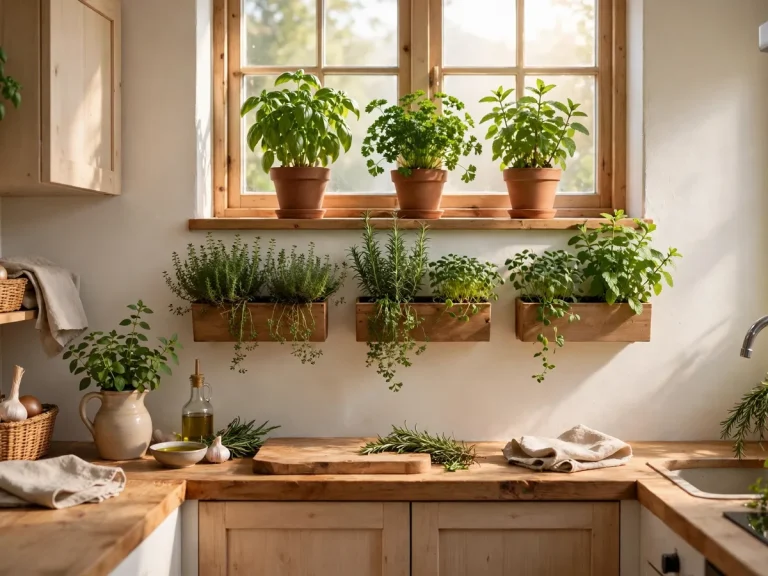
If your kitchen is where greenery should do real work, fresh herbs in small spaces are the easiest win, with basil, mint and rosemary within reach while you cook. To choose varieties that suit a small kitchen, start with the best indoor herbs.
1. Map Your 3 Light Zones First
Every idea below uses three light zones, so learn them once and the rest gets easy. Bright indirect light sits within a few feet of a window with no direct sun on the leaves. Medium light lives a few feet further in. Low light is the far corner that still gets some daylight.
Test a spot with the read-a-book check. If you can read there comfortably in daylight without a lamp, most tolerant plants will cope. If you need a lamp to see the page, only the toughest plants belong there, or you need a grow light.
Low light does not mean no light. No plant lives in a room with no window and no lamp. That is the one honest rule in this whole guide, and it saves more plants than any watering schedule. Remember it before you buy anything. If a spot has no window at all, see artificial plants decoration ideas to fill it with greenery that needs no light or watering.
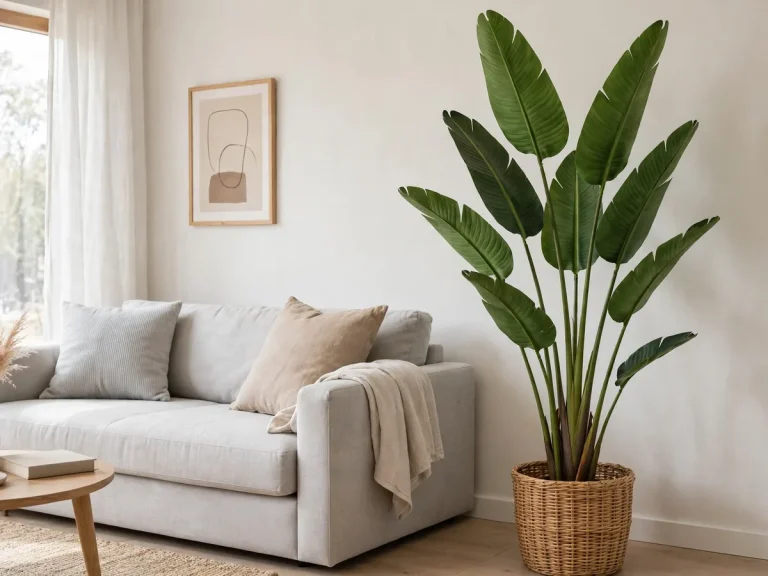
2. One Tall Plant in the Dead Corner
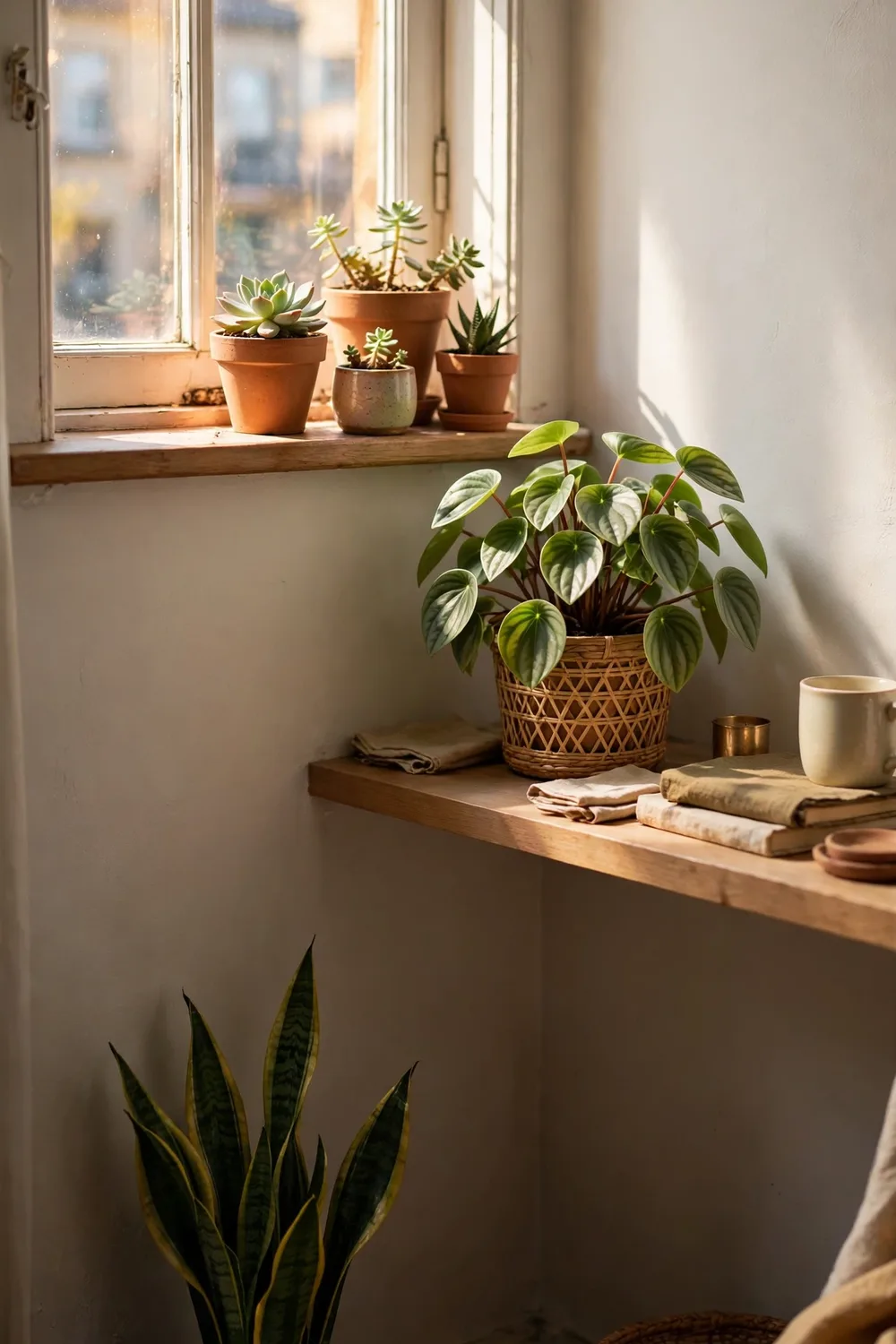
Every small apartment has a dead corner, the one spot where nothing fits and nothing looks right. That corner is the best home for one tall, narrow plant. A snake plant or ZZ plant grows straight up, so it fills vertical space without eating floor space.
Pick a plant that stays slim at the base. Snake plants, ZZ plants, and dracaena all work, and they forgive missed waterings. Put it in a tall, narrow pot so the pot itself adds height. A 10-inch pot is plenty for most corners. When the corner has room for a small piece of furniture, try a stand. Corner plant stand ideas show how one stand can hold the tall plant plus two small ones.
Keep the corner honest about light. A snake plant survives low light, but it will not grow there. If your corner is truly dark, move the plant closer to the window for a few weeks each month. Or pick a cast iron plant instead, since it tolerates deep shade.
3. Trailing Plants Off the Top Shelf
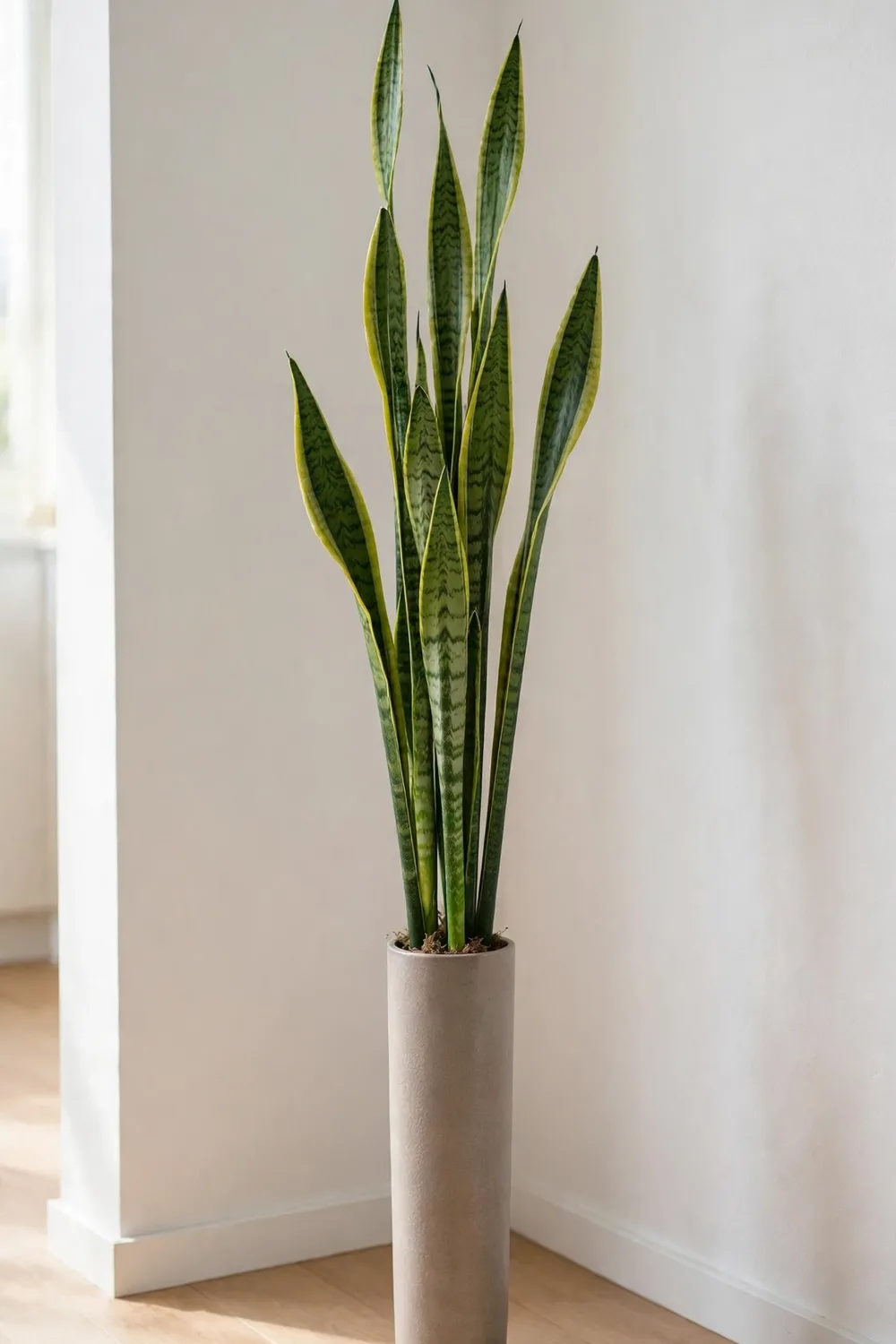
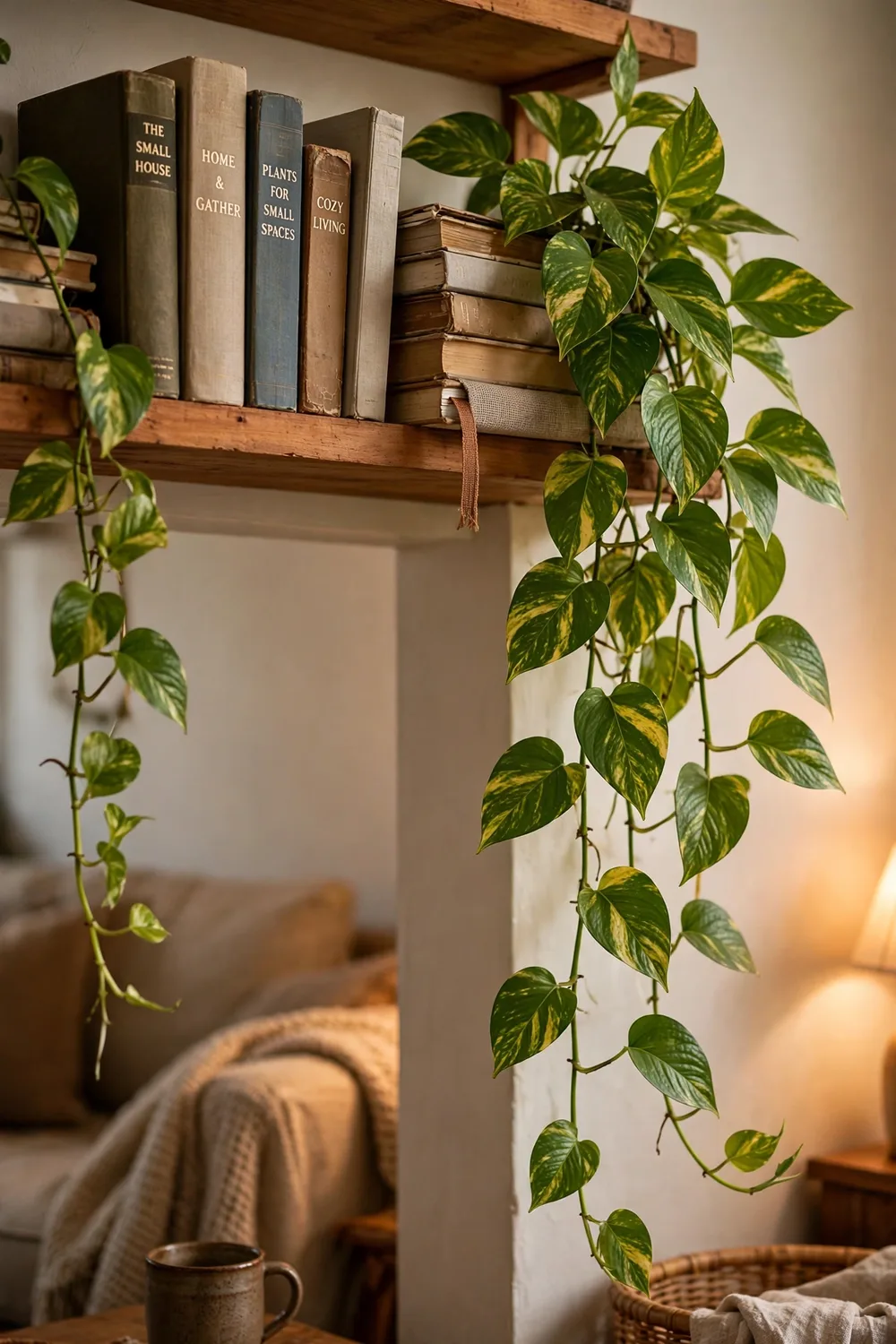
Trailing plants are the small-apartment secret. A pothos on a top shelf sends vines down the wall, and the greenery costs zero floor space. One plant can cover three feet of blank wall in a single season. That is more green per dollar than any other idea here.
Golden pothos is the easiest start. It tolerates low light, it tells you when it needs water by drooping a little, and it grows fast enough to feel rewarding. String of hearts and hoya work the same way when you want finer leaves.
Give the vines a path. A small hook or a bit of twine guides them along a shelf edge or around a door frame. Trim the ends when they reach the floor, and the cuttings root in water for your next pot.
4. Windowsill Herb and Succulent Row
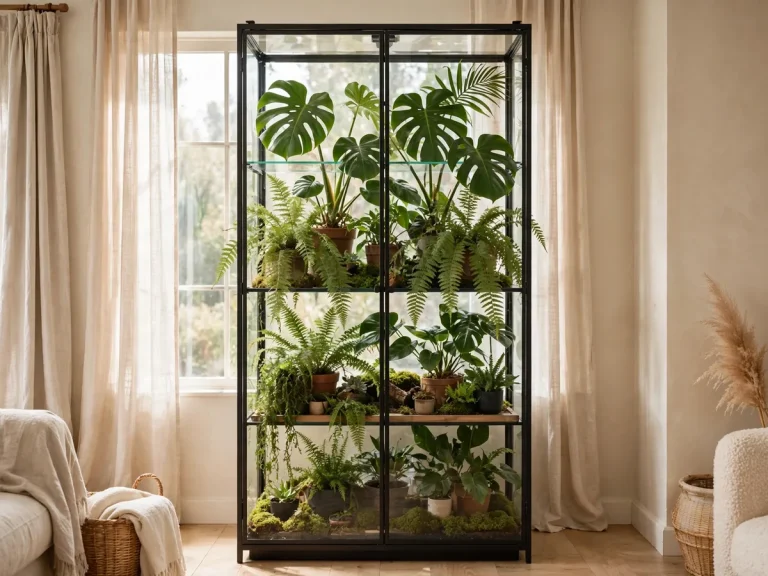
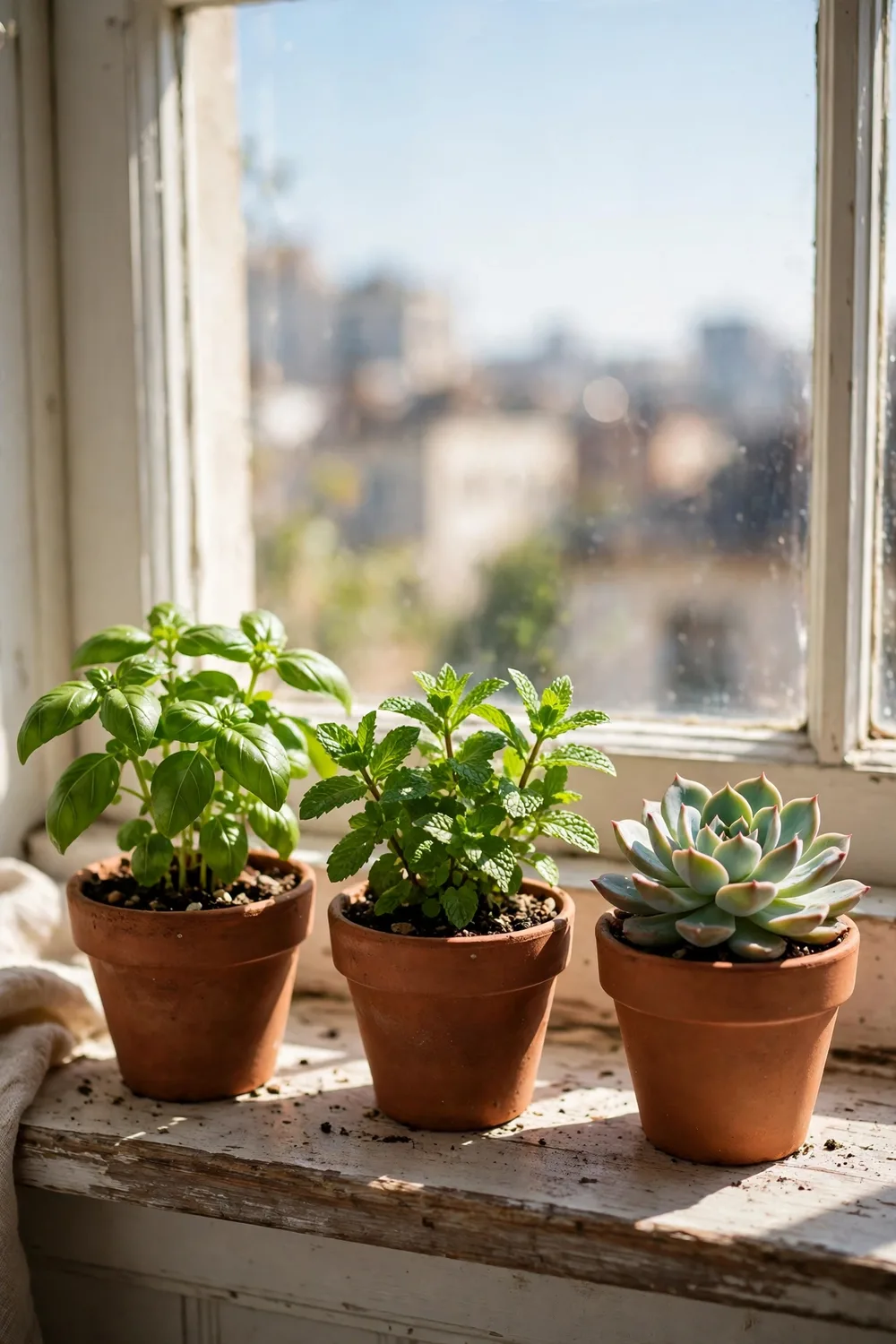
A windowsill is the most underused plant shelf in any apartment. It already gets the best light in the room, and it holds a neat row of small pots without taking any floor or table space. Herbs and succulents both love it there. If you want that windowsill to double as a tiny greenhouse, indoor greenhouse ideas for small apartments show glass cabinets, DIY mini greenhouses and grow-light setups that fit a sill or a shelf.
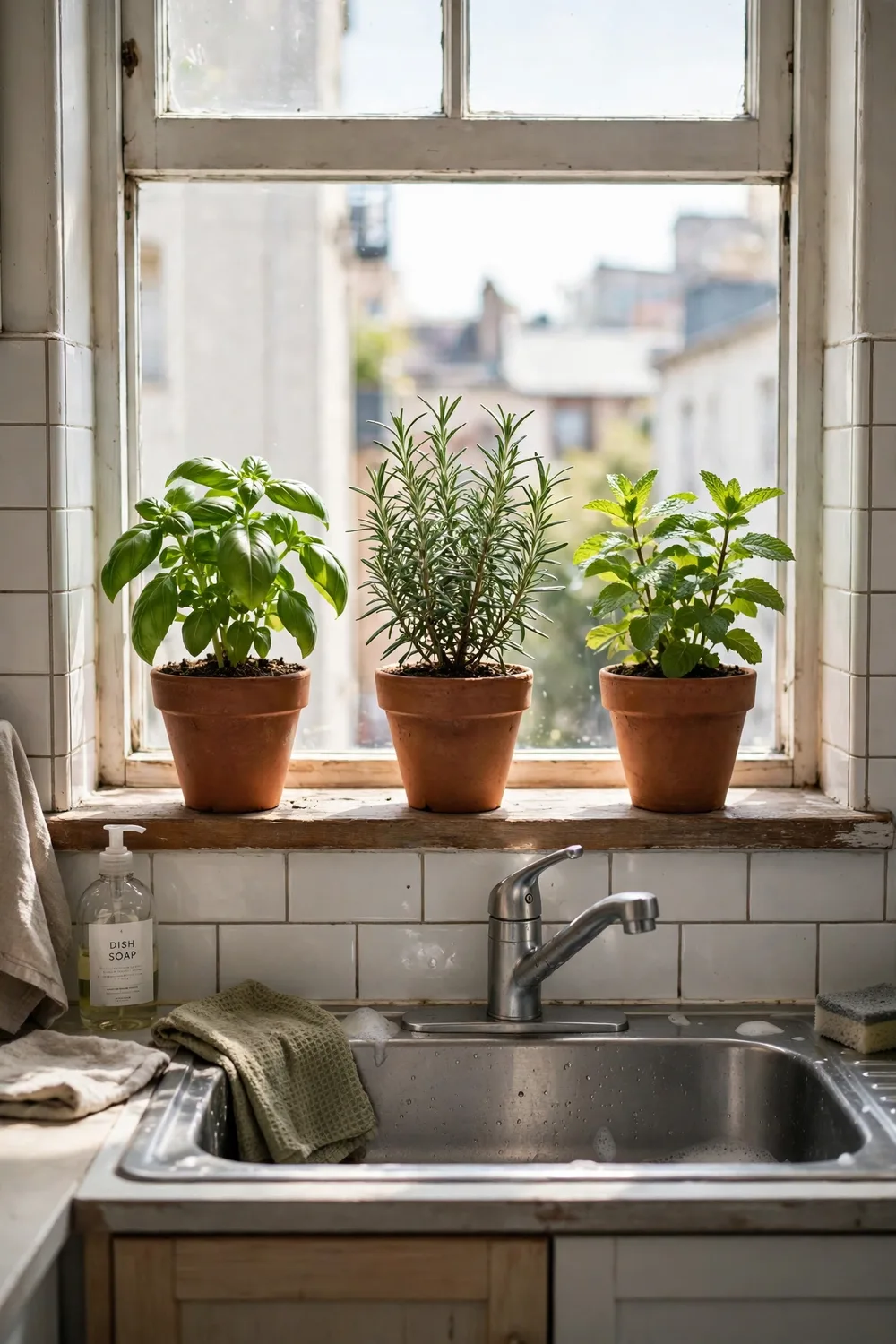
Line up three to five small pots, not ten. Basil, mint, and rosemary cover the kitchen, while echeveria and haworthia cover the sunny living room sill. Small pots dry out fast, so check the soil with a finger twice a week.
Keep the row shallow. Pots deeper than the sill will tip, and a tray underneath catches every drip. A simple baking tray works, and it keeps the sill clean when you water. Wipe the tray once a week so it never grows mold.
5. Hanging Planters at the Window
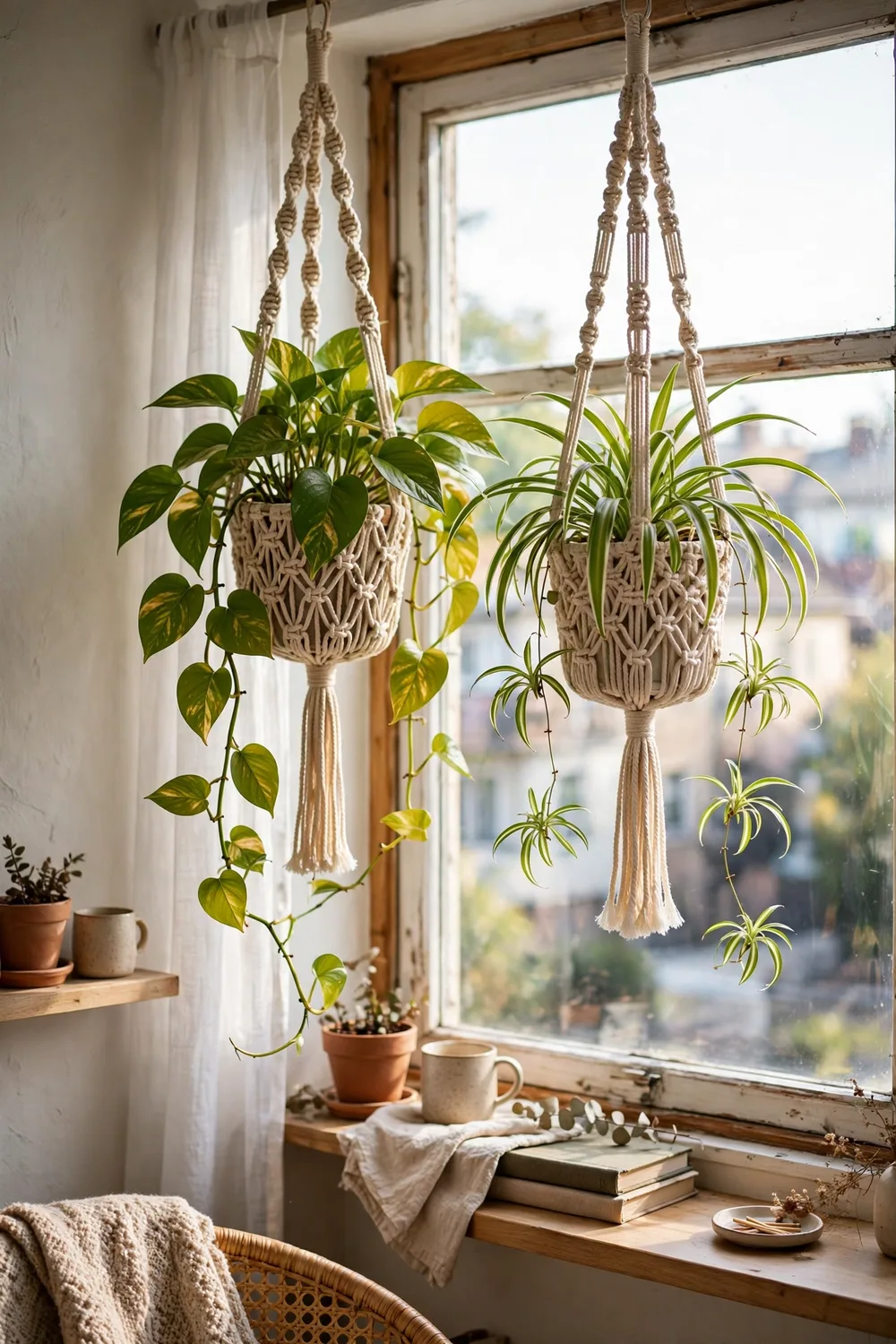
Hanging planters turn window light into a green curtain. A pothos or spider plant in a macrame hanger sits right where the light is best. The pot hangs in air that a floor plant never reaches, so the leaves stay clean and dry. The effect is bigger than the plant.
Use no-drill hooks when you rent. Adhesive ceiling hooks hold light pots well, and a tension rod across a window frame holds two or three small hangers. Check the weight rating before you hang anything heavy. Never hang a pot heavier than the hook rating.
Hang at eye level or just above it. A planter hung too high is hard to water and easy to forget. Keep a small watering can nearby, and water slowly so nothing drips on the floor below. A long-spout can reaches high planters without a stool.
6. Suction-Cup Window Shelf for Tiny Sills
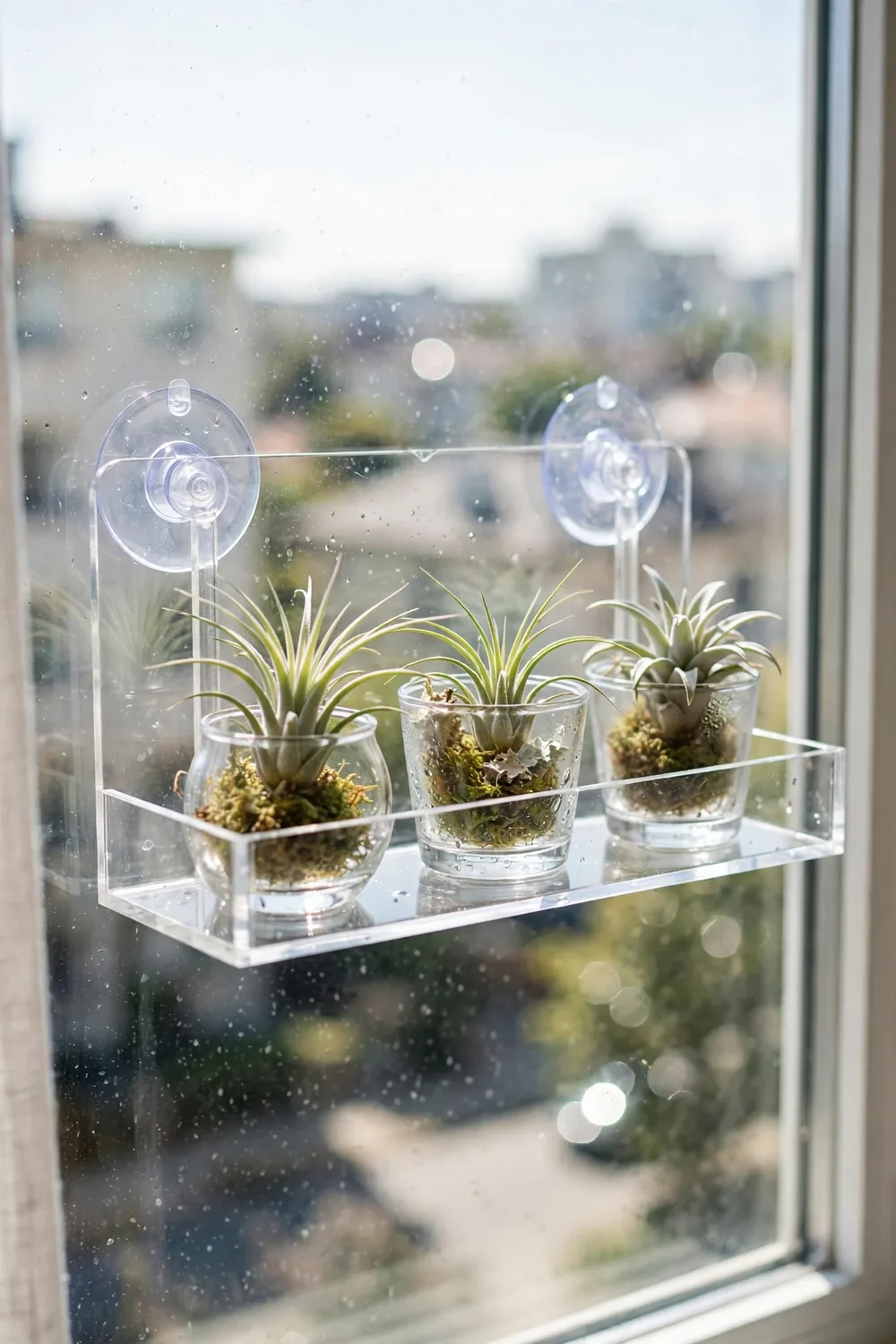
Some windowsills are barely two inches deep, too narrow for any pot. A suction-cup window shelf fixes that in a minute. It sticks to the glass, holds two or three tiny pots, and gives your smallest plants the brightest spot in the apartment.
Air plants are the natural pick here. They need no soil, so a tiny glass cup is enough, and they love the humidity near a window. Small succulents in 2-inch pots work too, as long as the shelf is rated for the weight.
Test the suction before you load it. Press each cup firmly, wait a day, then add the plants one at a time. A shelf that falls once will make you nervous forever, so start light and build trust slowly. Re-press the cups once a month to keep the seal strong.
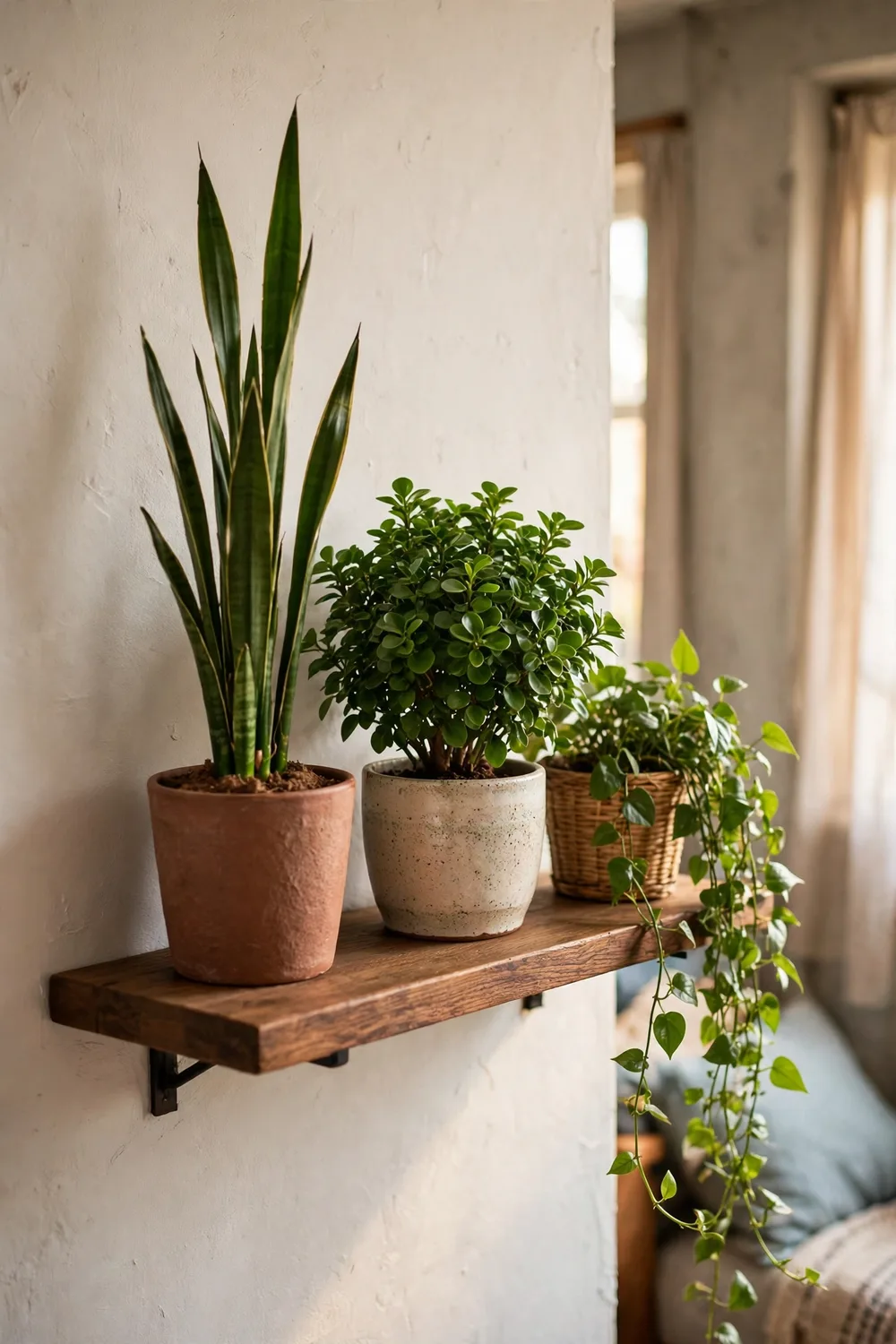
7. Floating Shelf Trio in Odd Numbers
Three plants on one floating shelf look intentional in a way that two never do. Odd numbers feel natural to the eye, and a trio lets you mix heights: one tall, one full, one trailing. That mix is the whole trick.
Build the trio from one tall plant, one bushy plant, and one trailer. A small snake plant or parlor palm gives height, a peperomia or pilea gives fullness, and a pothos gives the spill over the edge. Keep the pots in the same color family but not identical.
Mount the shelf at eye level, not above the door. You want to see the plants every day, not forget them. A shelf you cannot reach easily is a shelf you will not water. The layouts in plant shelf ideas show the same trio spacing on deeper shelves. Scale this idea up when you have the wall to spare.
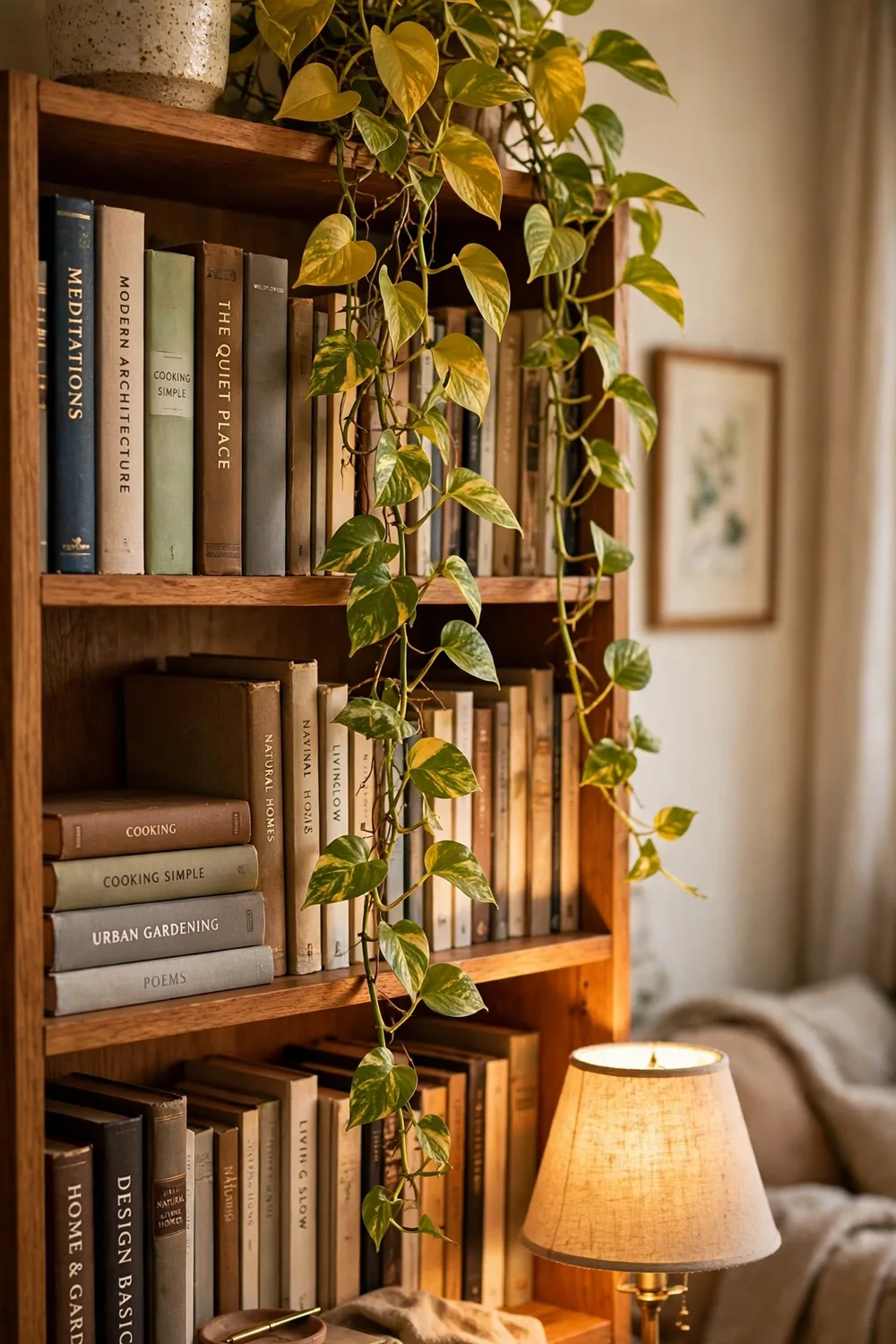
8. Bookshelf Plant Cascade
A bookshelf is already a display, so let the plants join it. A trailing pothos or philodendron on the top shelf will cascade down past the books, and the green softens every straight line on the shelf. The books hold the pots steady, and the plants make the shelf look alive.
Place trailers on the top two shelves only. Vines need room to fall, and a plant on a low shelf will tangle with everything below it. Tuck small pots between book stacks on the middle shelves for color at eye level.
Leave breathing room between the pots. Plants packed tight trap moisture and invite mold, even on a dry shelf. A hand-width gap between pots keeps the air moving and the leaves dry. That gap also makes watering easier, since you can reach every pot.
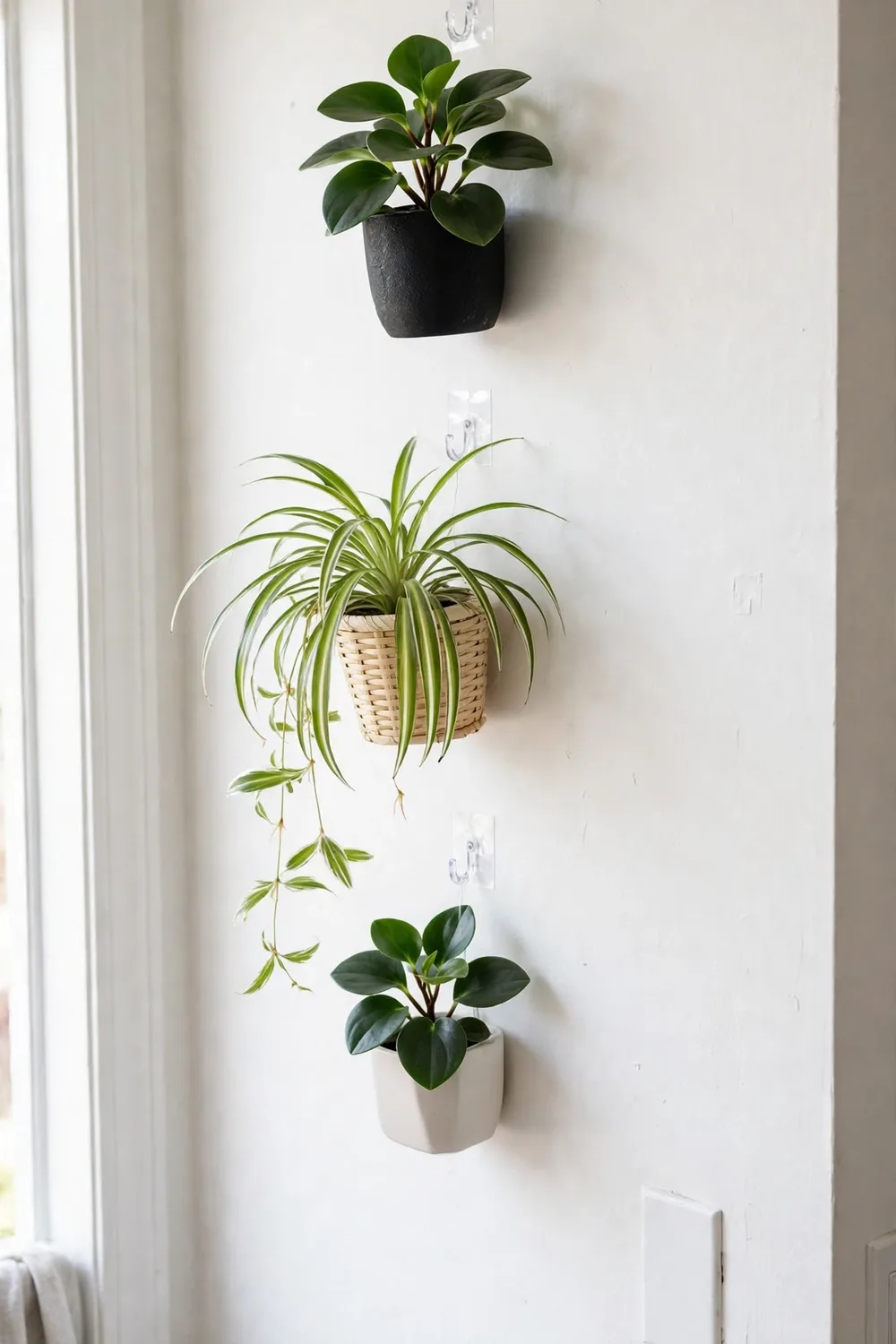
9. Wall-Mounted Planters, No Drilling
Wall planters feel permanent, but renters can use them too. Adhesive hooks and strips hold light planters on most walls, and a tension rod with S-hooks turns a blank wall into a hanging garden. Nothing here needs a drill or a landlord’s permission.
Keep each planter light. Small pots with a peperomia, a spider plant baby, or a few air plants weigh almost nothing. Heavy ceramic pots belong on shelves, not on adhesive hooks, and that rule keeps your deposit safe. Weigh the full pot, soil and water included, before you hang it.
Check the wall first. Smooth painted walls hold adhesive well, but textured walls and fresh paint do not. Test one hook with a light pot for a week before you hang the whole row. Peel the strip slowly on moving day so the paint stays put.
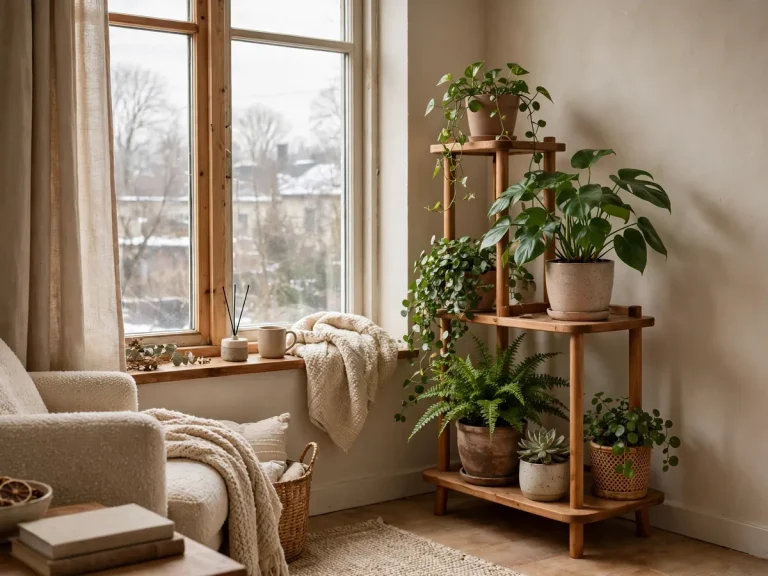
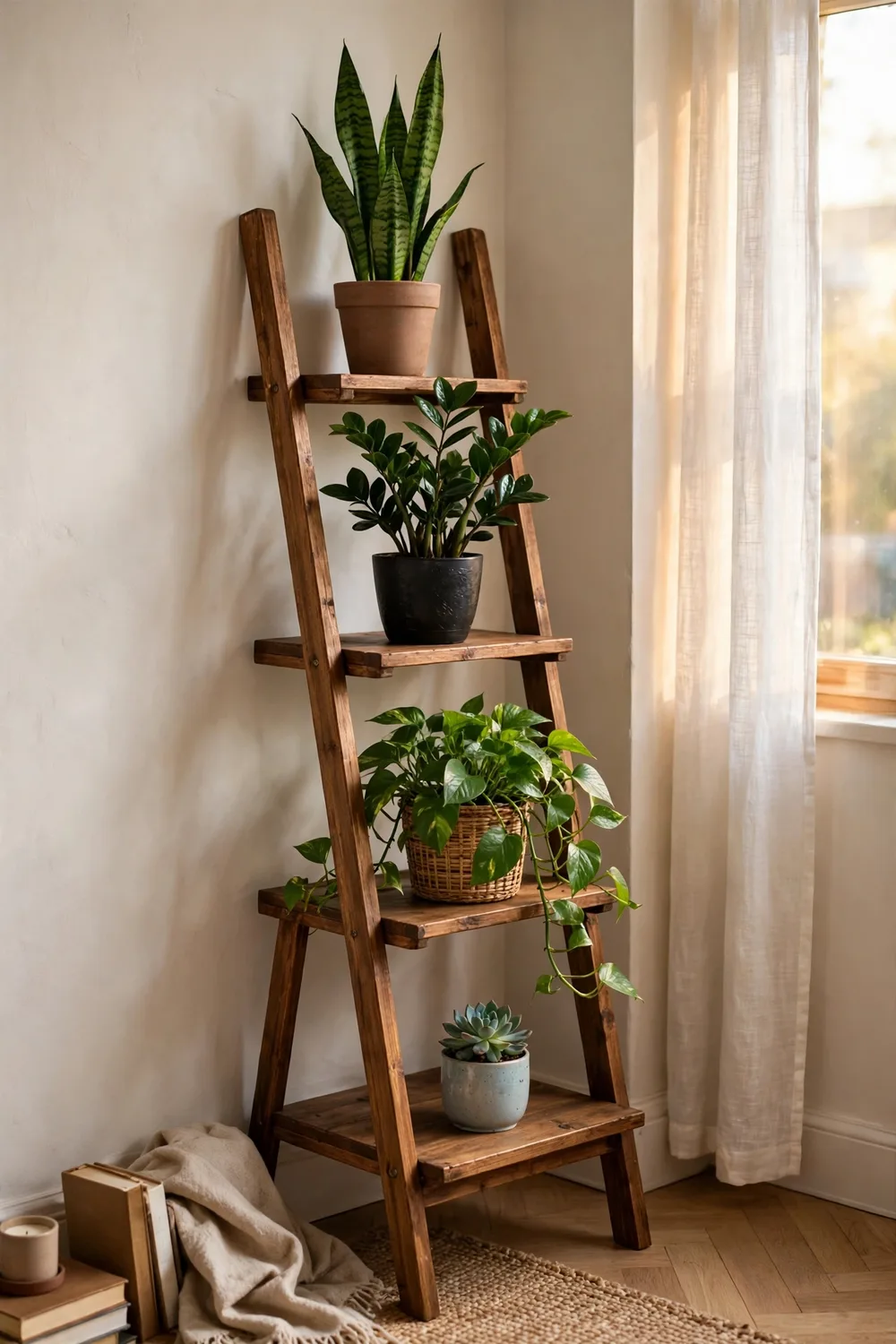
10. Ladder Shelf and Tiered Stand in One Corner
A ladder shelf or tiered stand turns one corner into a whole plant display. Each tier gets its own light and its own plant, so a small footprint holds five or six pots. The corner that held nothing now holds the whole collection.
Put light lovers on top and shade-tolerant plants below. The top tier sits closest to the window light, while the bottom tier suits a ZZ plant or cast iron plant. That order matches how light actually falls in a room.
Use the stand for plants you already own before buying more. A tiered stand organizes a scattered collection into one intentional display, and it shows you exactly which spots are still empty. Then buy one plant per empty tier, not five at once.
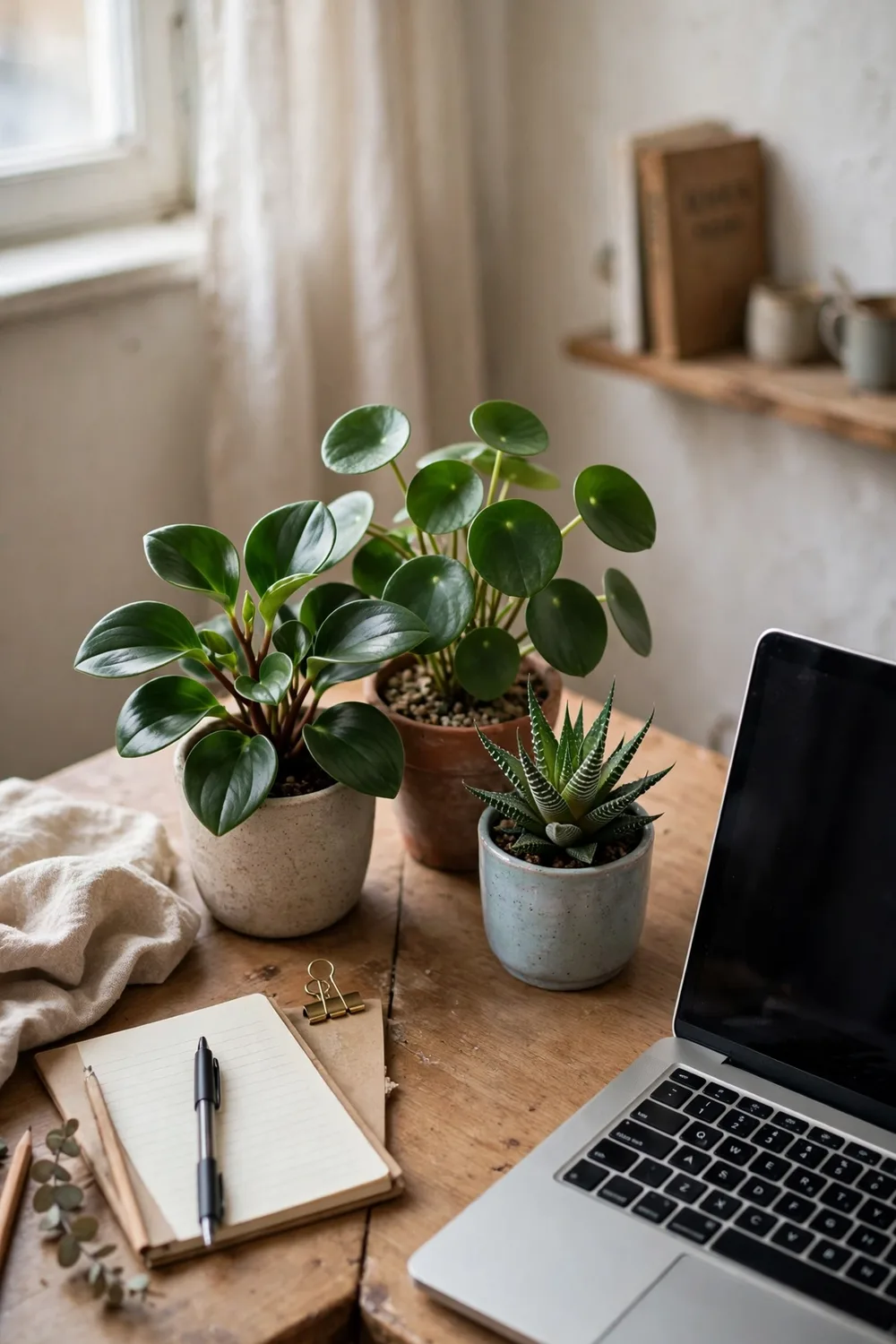
11. Desk Corner Cluster
A desk needs one green corner, not a jungle. Three small plants on the far corner of a desk make work feel calmer. They stay out of the way of the keyboard and the coffee. The cluster works because it is small and deliberate.
Pick compact plants that stay under twelve inches. Peperomia, pilea, haworthia, and nerve plants all fit a desk corner, and none of them will outgrow the space in a season. A single small pot looks lost, but three together look planned.
Keep the cluster off the work zone. Pots belong at the back corner, not beside the mouse. A tray under the pots catches water and keeps papers dry, and it makes the whole cluster easy to move when you clean.
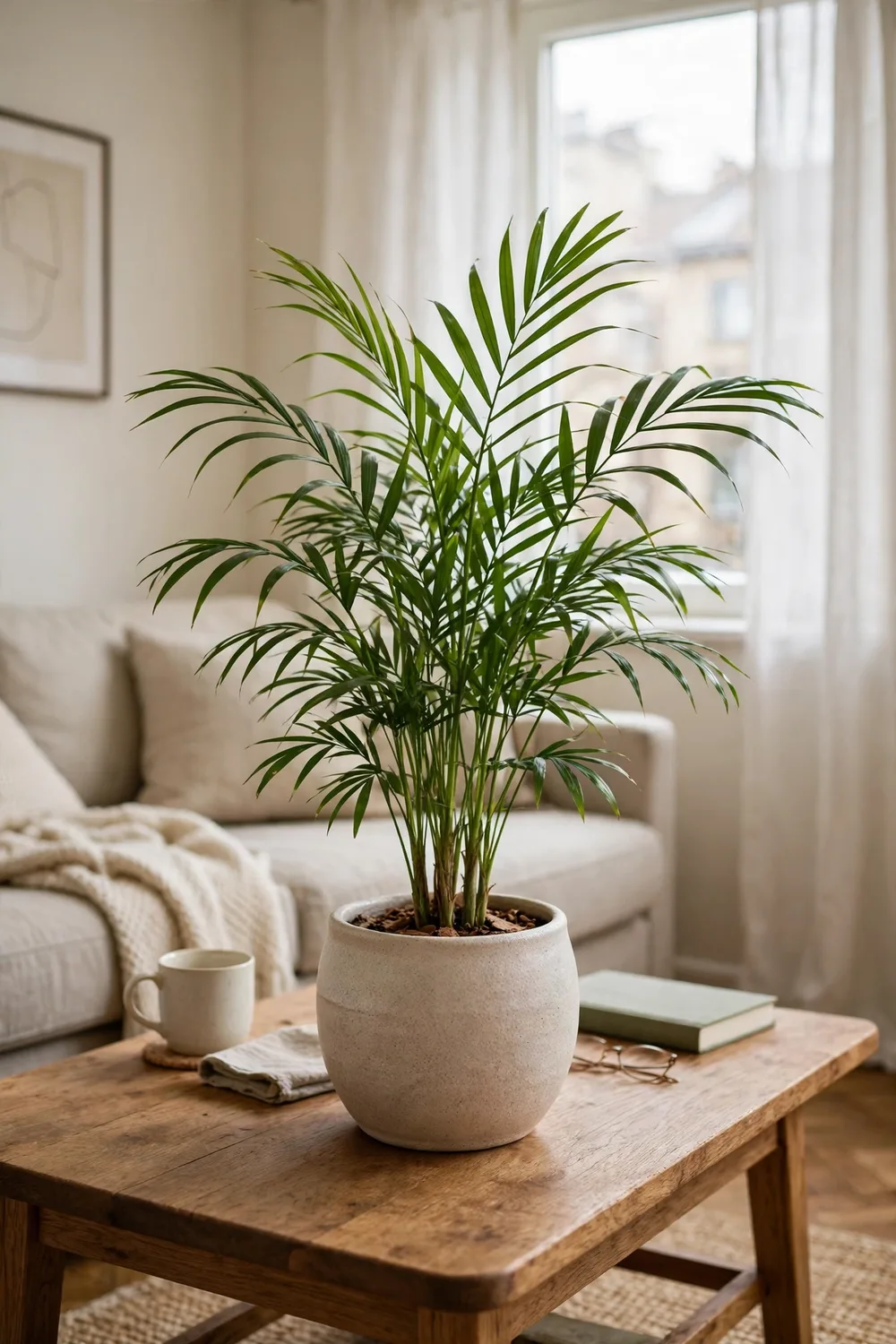
12. Coffee Table Single Statement
A coffee table needs one plant, not five. One statement plant in a good pot does more than a crowd of small pots, because the table is where eyes land first. A parlor palm, a small monstera, or a moth orchid all work at this scale.
Choose a plant with a shape you can see from the sofa. A parlor palm gives soft height, a small monstera gives bold leaves, and an orchid gives flowers for months. The pot matters as much as the plant, so pick one you actually like looking at.
Keep the plant low enough to see over. A coffee table plant should sit below eye level when you are seated. If it blocks the television or the conversation, move it to a side table instead. The same one-statement rule shapes small living room ideas, where a single bold plant anchors the whole seating area.
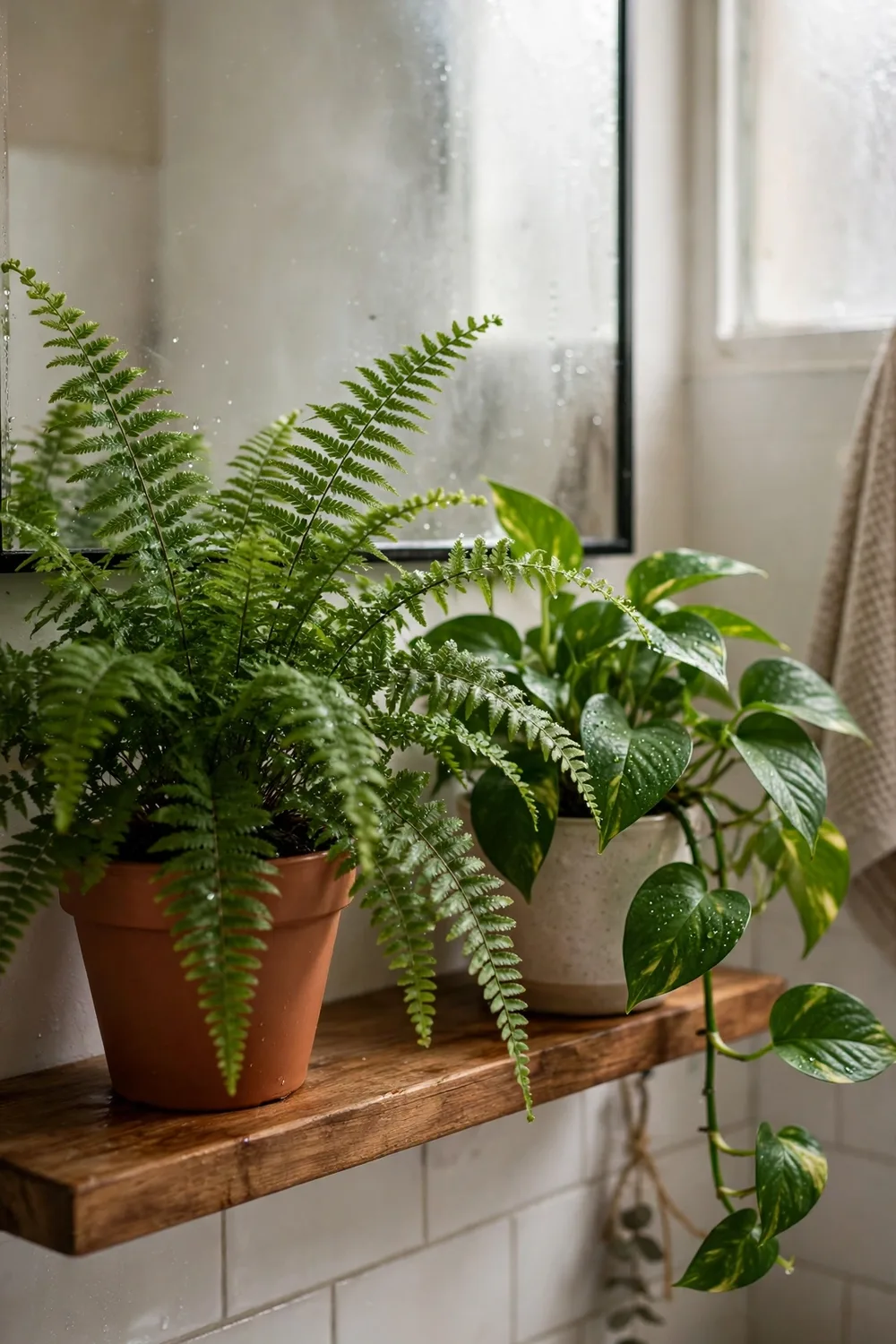
13. Bathroom Shelf Humidity Lovers
A bathroom is the easiest room for humidity-loving plants. Every shower fills the air with moisture, and ferns, orchids, and pothos all thrive in it. A small shelf above the sink or beside the mirror is often the best-lit spot in the whole bathroom.
Boston fern is the classic pick here. It loves humidity, it forgives low light, and it fills a shelf fast. Pothos and moth orchids are good seconds, and they need even less attention than the fern. Mist the fern twice a week if your shower runs short.
Mind the light, not just the humidity. A windowless bathroom will not keep any plant alive for long, no matter how humid it gets. If your bathroom has no window, keep the plants in a bright room and bring a fern in only for a shower-day visit.
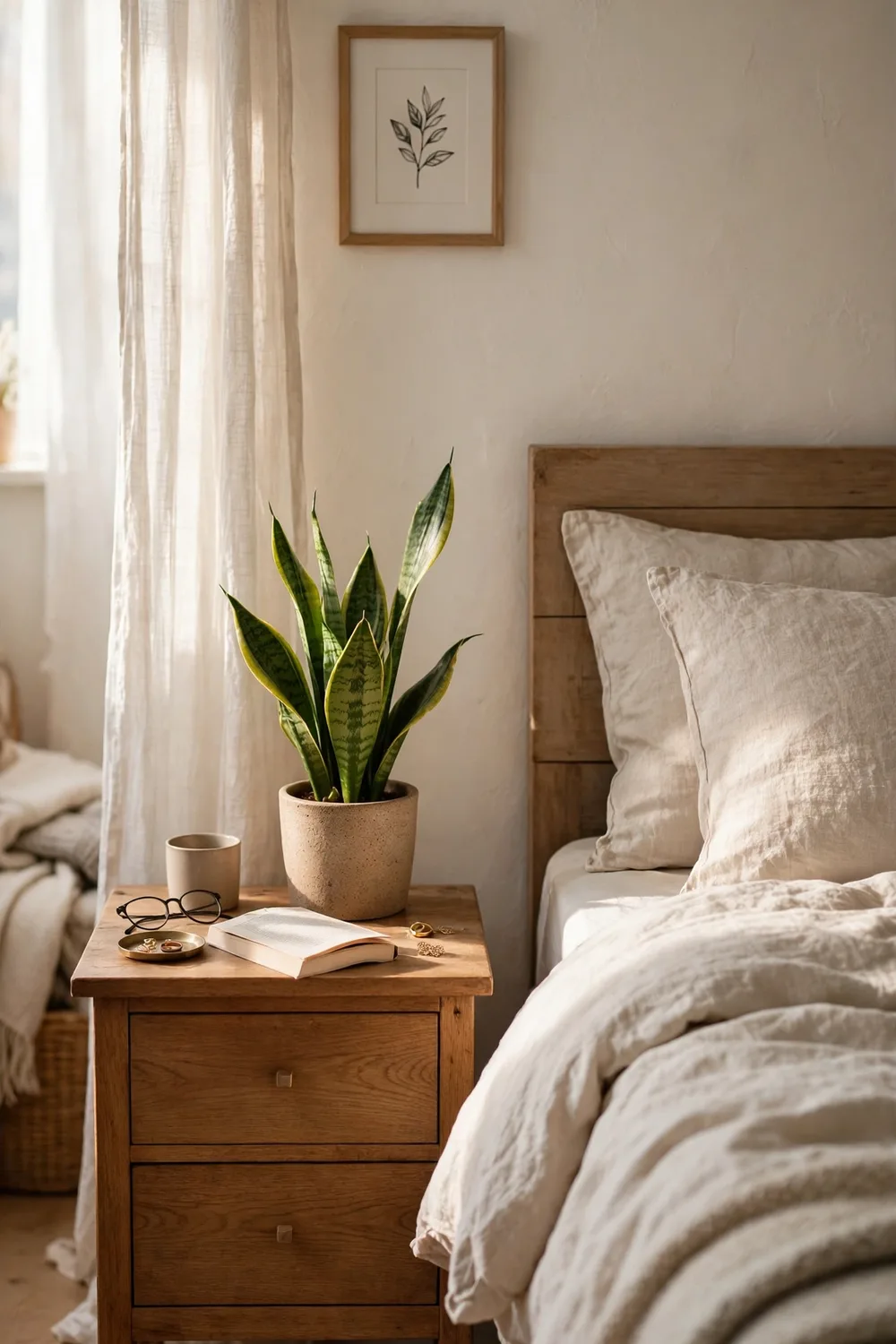
14. Nightstand Plant for Better Sleep
A nightstand is a small stage, and one plant makes it feel finished. A snake plant or a peace lily fits a nightstand perfectly, and both tolerate the low light of a bedroom corner. The plant is the last thing you see at night and the first thing you see in the morning.
Snake plants are the safer pick for a bedroom. They are nearly impossible to kill, they need water only every few weeks, and they grow straight up instead of spreading across the nightstand. Peace lilies flower in low light, but they need weekly water and they are toxic to pets.
Keep pets in mind before you choose. If a cat sleeps on the bed, skip the peace lily and the snake plant, both toxic when chewed. A spider plant or a parlor palm is pet-safe and looks just as good on a nightstand. A nightstand plant is one of the easiest small bedroom ideas, since it adds green without taking any floor space.
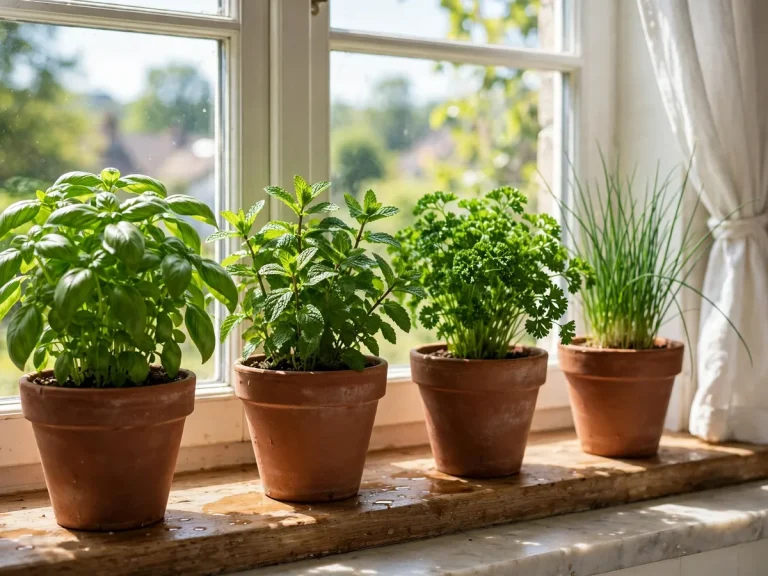
15. Kitchen Herb Corner
A kitchen herb corner is the most useful plant display in any apartment. Basil, rosemary, and mint grow on a windowsill above the sink, and you snip them straight into dinner. The plants earn their space every single day. No other plant in this guide pays rent as directly as herbs do.
Give herbs the brightest sill you have. Basil and rosemary want several hours of sun, while mint tolerates a little less. Three small terracotta pots fit most sills, and terracotta dries out fast enough to prevent root rot. Mint spreads fast, so give it a pot of its own.
Water herbs more often than houseplants. A small pot on a sunny sill dries out in two days in summer, so check the soil every morning while the coffee brews. Snip from the top to keep the plants bushy instead of leggy.
16. Entryway Hook and Trailing Plant
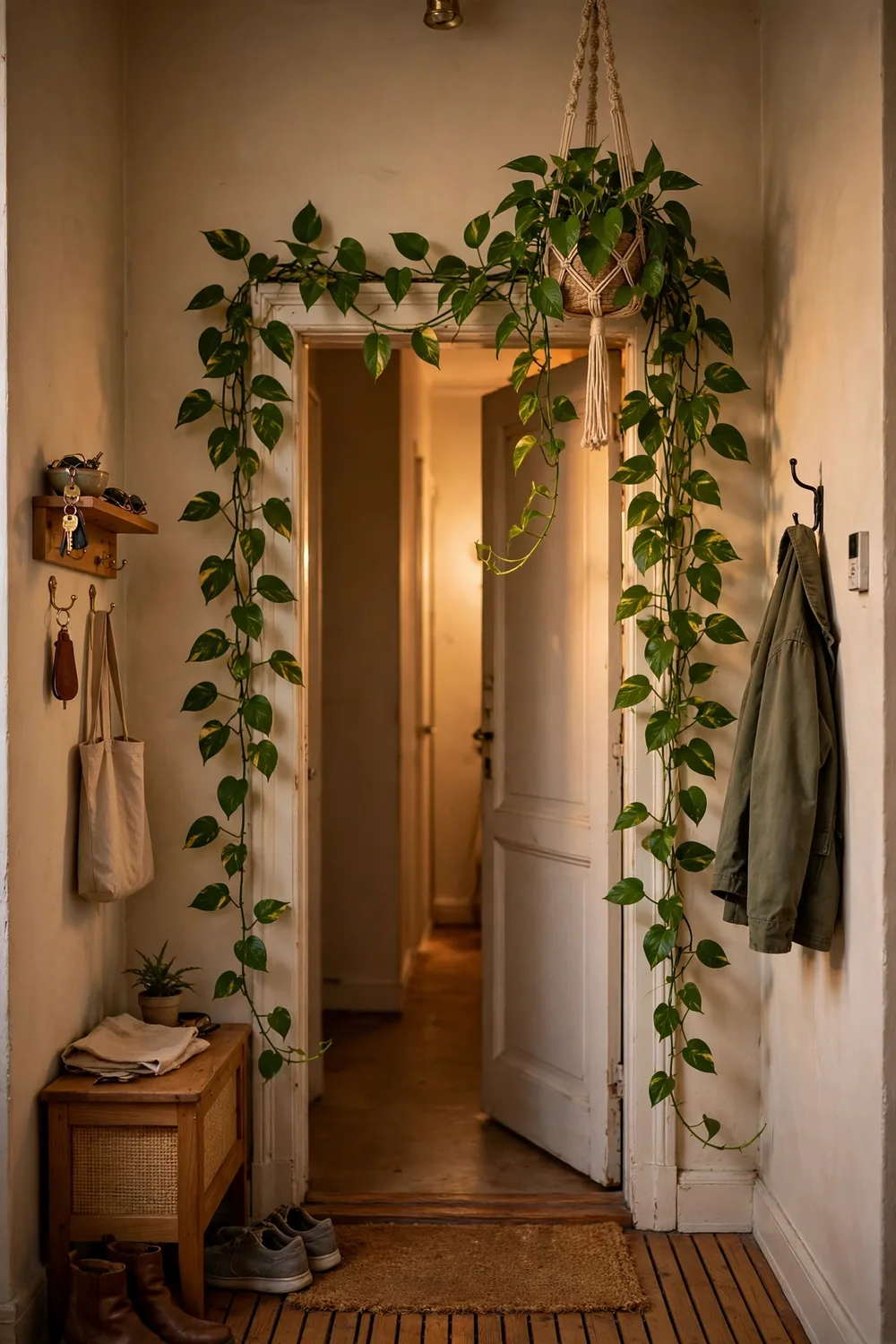
An entryway sets the tone for the whole apartment. One trailing plant over the door does more than a row of small pots ever could. A pothos on a hook above the door frames the entrance with green, and it uses space that nothing else can use.
Hang the plant high and let it trail down one side. A single hook above the doorframe holds a light pot easily, and the vines soften the hardest edge in the room. Keep the trail on one side so it never blocks the door.
Water it with a plan. A plant over a door is easy to forget, so tie watering to something you already do, like the weekend clean. A long-spout watering can reaches it without a step stool. Set a weekly phone reminder until the habit sticks.
17. The Weekly 10-Minute Care Routine
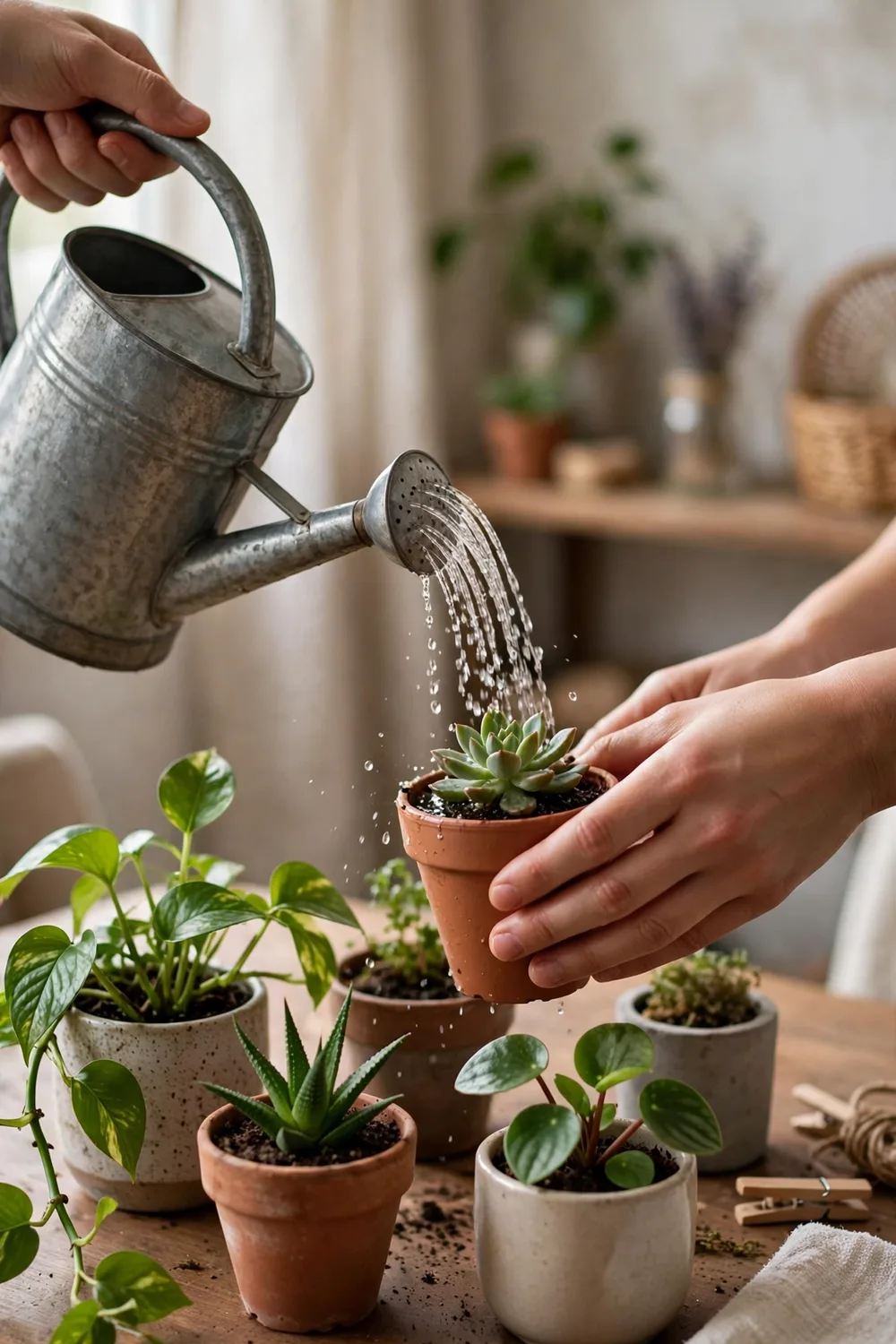
The best display in this guide is not a plant or a shelf. It is a routine. Ten minutes once a week keeps every plant in this post alive. Water what is dry, dust the leaves, and rotate each pot a quarter turn toward the light.
Water only when the soil is dry an inch down. Stick a finger in the soil before you water, and skip any pot that still feels damp. Overwatering kills more apartment plants than darkness, and it kills fastest in low light.
Dust the leaves while you are there. A quick wipe with a damp cloth lets the leaves catch more light, and it shows you pests early, before they spread. A plant you touch every week is a plant you will notice changing.
3 Ready-Made Setups for Real Apartments
A studio setup starts with one tall plant in the corner, three trailers on the top shelf, and a herb row on the sill. That is seven plants, three spots, and zero floor space lost. Add a desk cluster only when the first seven are thriving.
A one-bedroom setup adds a living room layer and a bedroom layer. The living room gets a ladder shelf and a coffee table statement, while the bedroom gets one nightstand plant. Twelve plants total is plenty, and every plant has a named spot.
A renter no-drill setup uses only hooks, strips, and tension rods. Adhesive ceiling hooks hold the hanging planters, command strips hold the wall planters, and a tension rod holds the window hangers. Nothing here risks the deposit, and everything comes down cleanly on moving day.
5 Mistakes That Kill Small Apartment Plants
- Watering on a schedule instead of checking the soil. A plant in low light dries out slowly, so weekly watering drowns it. Check with a finger first, every time.
- Believing low light means no light. A plant in a windowless corner dies slowly, no matter how tough the label says it is. Move it closer to a window or add a grow light.
- Buying matching pots for every plant. Matching sets flatten a collection into one object. Mixed pots in one color family look collected, not staged.
- Filling every surface with tiny plants. Ten tiny pots look cluttered, while three grouped plants look intentional. Fewer, bigger moments beat more, smaller ones.
- Skipping drainage. A pot with no hole holds water at the roots, and root rot follows. Drill a hole, or use a nursery pot inside the pretty pot.
What It Costs
Most ideas in this guide cost less than a takeaway dinner. A pothos cutting is often free from a friend, a small terracotta pot costs a few dollars, and a thrifted ceramic pot costs even less. The hanging hardware is the only real expense, and adhesive hooks cost a few dollars for a pack.
Start with three plants and three pots, not seventeen of each. Buy the next plant only when the first three are alive after a month. That rule keeps the budget small and the collection healthy at the same time. Patience is the cheapest plant care tool you own.
Frequently Asked Questions
How many plants fit in a small apartment?
Small apartment plant decor works with 8 to 12 plants in a studio and 12 to 15 in a one-bedroom. Count spots, not plants: a corner, a shelf, a sill, and a hook are four spots. One plant per spot looks intentional, while three plants per spot looks crowded.
Which plants are safe for cats and dogs?
Spider plants, cast iron plants, parlor palms, Boston ferns, calatheas, and peperomias are safe for cats and dogs. Pothos, snake plants, ZZ plants, peace lilies, and philodendrons are toxic when chewed, so keep them high or behind a door pets cannot open.
Can plants live in a low-light apartment?
Yes, but only the tolerant ones, and only with honest light. Snake plants, ZZ plants, cast iron plants, and pothos survive low light, yet they still need some daylight. A room with no window needs a grow light, not a tougher plant.
Can renters hang plants without drilling?
Yes. Adhesive ceiling hooks hold light pots, command strips hold small wall planters, and tension rods hold hangers across a window frame. Check the weight rating first, test one hook for a week, and keep heavy ceramic pots on shelves instead.
How often should I water apartment plants?
Water when the top inch of soil is dry, not on a fixed day. Most apartment plants need water every one to two weeks, while herbs on a sunny sill need it twice a week. Overwatering kills faster than underwatering, especially in low light.
What is the easiest plant for a small apartment?
A pothos is the easiest start. It tolerates low light, forgives missed waterings, and shows you when it is thirsty by drooping a little. A snake plant is the easiest for people who forget plants exist, since it needs water only every few weeks.
Final Thought
Small apartment plant decor is a matching game, not a shopping list. Match the plant to the light, match the display to the spot, and let one statement plant do the heavy lifting. Start with three spots this weekend, keep them alive for a month, and then add the next three. The jungle builds itself, one good match at a time.