
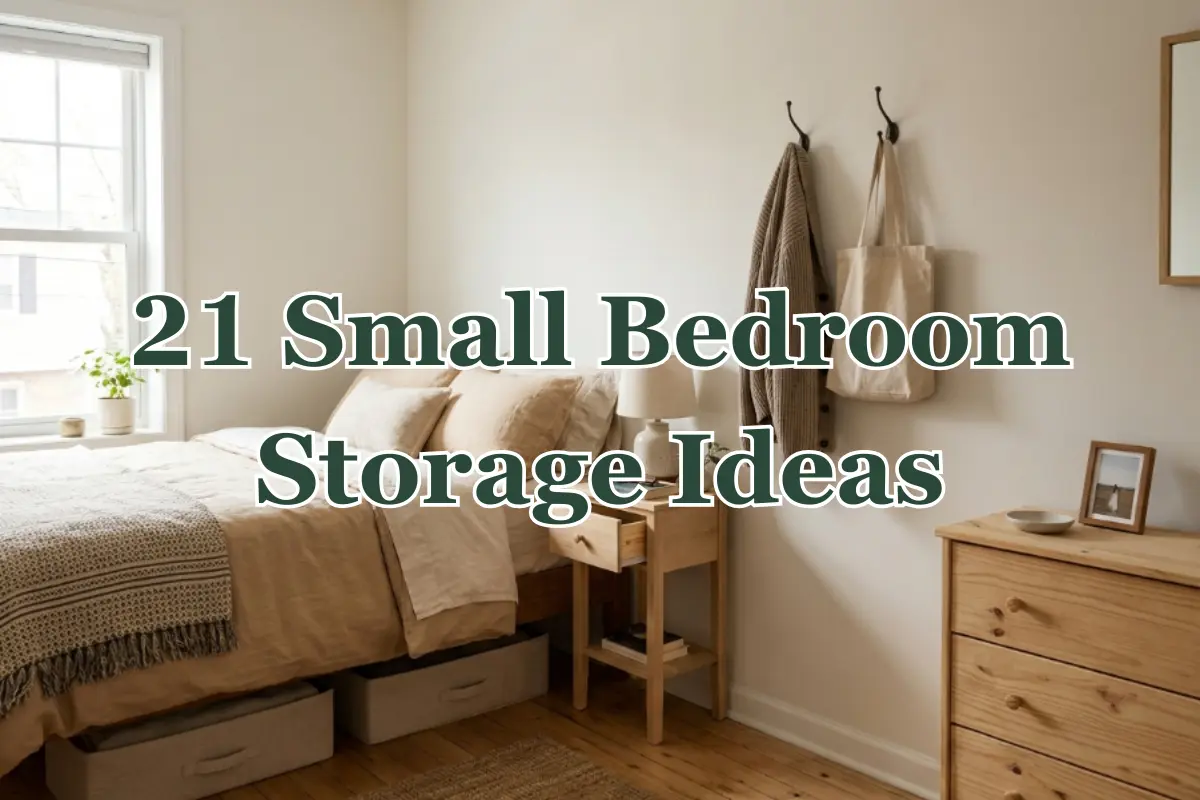
Small bedroom storage ideas work best when every category has one clear home, and the things you use every day are the easiest to reach. Start with a storage map, not a shopping list. Use the space you already have under the bed, inside the closet, up the wall, and behind the door before you buy another piece of furniture. That order keeps the room usable, and it stops storage from turning into more clutter.
This guide is about capacity: where things go, under-bed, closet, wall, and door storage. For layout, see small bedroom ideas. For daily upkeep, see organization.
Start With a Storage Map, Not a Shopping List
Before you buy a bin, a shelf, or a cart, list what actually lives in your bedroom. Group it by category, then give each category one starting location. This is the most useful order to work in: name the categories first, place the everyday ones first, and only then buy what is missing. For example, if your everyday clothes still live in a pile on a chair, fix that home before you buy a box for seasonal clothes you touch twice a year.
Measure before you buy anything. Measure the gap beside the dresser, the height under the bed, the depth inside the closet, and the clearance for doors and drawers. For the full measure-first method, including bed placement and walking paths, see the layout guide.
Use one simple frequency rule while you map: daily items stay at arm height and close to where you use them, weekly items can sit a little farther away, and rare items go up high or under the bed. For the full three-level frequency system and the reset routine that keeps it working, see small bedroom organization ideas. That one rule also means fewer decisions at the end of the day, because each category has one home and you do not decide where it goes every night.
| Category | Where it lives first | Starting location |
|---|---|---|
| Everyday clothes | Closet or dresser, at arm height | The rod, shelf, or drawer you reach without stretching |
| Sleep and bedside | Nightstand with drawers | Top drawer for nightly items, lower drawer for spares |
| Daily carry and chargers | One tray or one drawer near the door or bed | A single landing spot, not three scattered spots |
| Papers and small essentials | Closed storage | One lidded box or one drawer, not an open pile |
| Seasonal and rarely used | Under the bed or up high | Labeled bins you can pull out without moving daily items |
| Shoes | One defined row or rack | Beside the closet or under a rail, with a clear limit |
| Laundry | One hamper where clothes come off | Beside the closet or near the bed, not behind the door |
Renters can use the same map. Choose storage that does not need new holes when you can, such as an over-door hook, a freestanding rail, or a cart that rolls away. For renter limits, removable changes, and decor that moves with you, see small apartment bedroom ideas.
1 Claim the Space Under the Bed
Under-bed storage is the largest hidden zone in most small bedrooms, and this guide owns it in full. The rule is simple: under the bed holds low-frequency and seasonal items, not the things you need every morning. When daily items live under the bed, you end up pulling bins out every day, and the system falls apart.
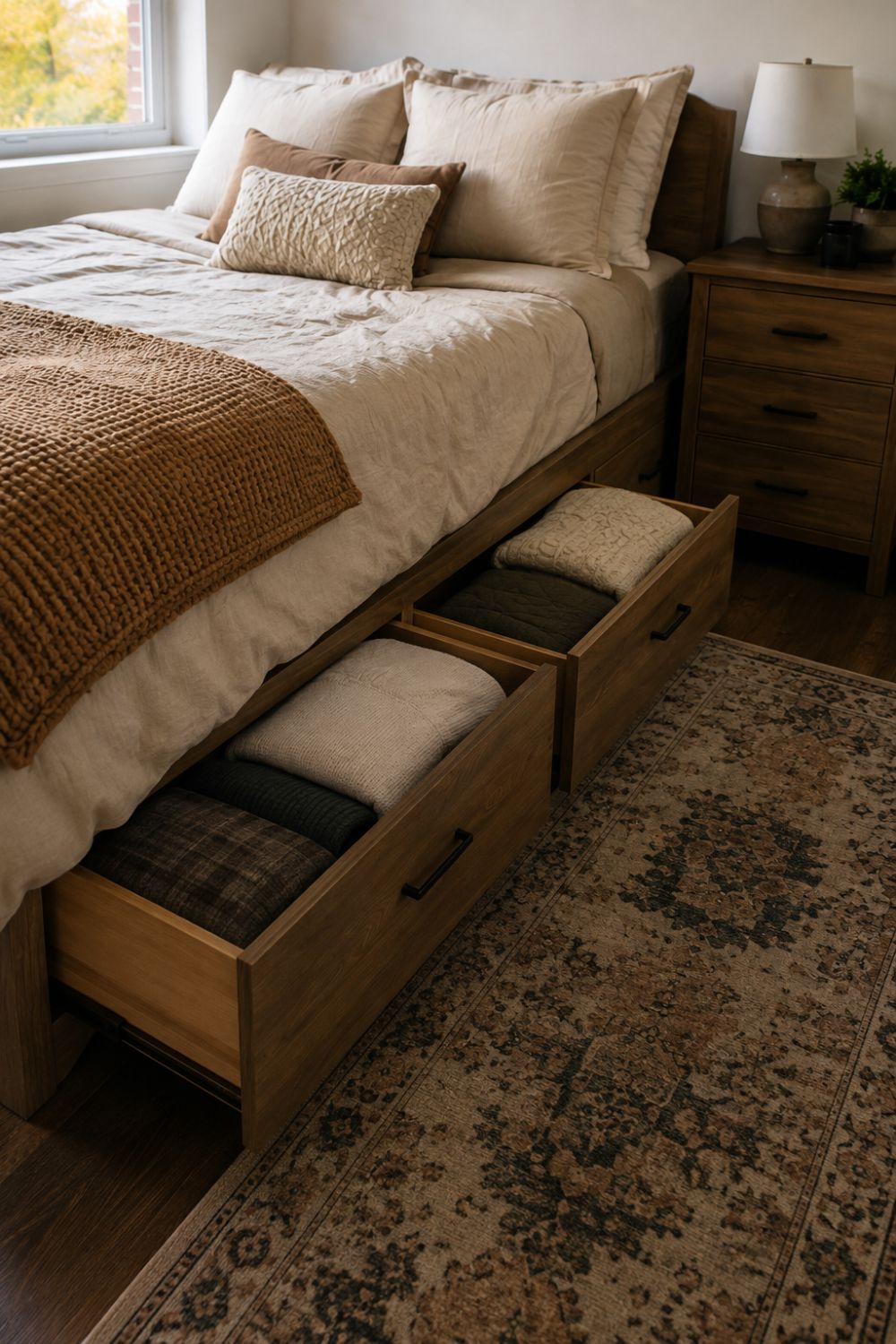
What goes under the bed:
- Seasonal clothes in one or two flat bins, labeled by season
- Spare bedding in one bin, so you are not stacking quilts on a chair
- Travel bags, gift wrap, or keepsakes you reach a few times a year
- Off-season shoes in one bin, not loose pairs sliding around
What stays out from under the bed: everyday clothes, chargers, papers, and anything you need before your first coffee. Those belong at arm height in the closet, nightstand, or dresser.
Choose bins that fit the real height under your bed, with lids that close flat and handles you can grip. Measure the height, width, and depth first, and leave room to slide a bin out without lifting the mattress. If the bed sits too low for a bin, bed risers can add clearance, but only if the bed still feels safe and comfortable to get in and out of. Check that drawers or doors nearby still open once the bins are in place.
Frequency check: if you open an under-bed bin more than twice a week, that category does not belong there. Move it to the closet or dresser, and move something rarer down into the under-bed spot.
2 Replace a Decorative Nightstand With Real Storage
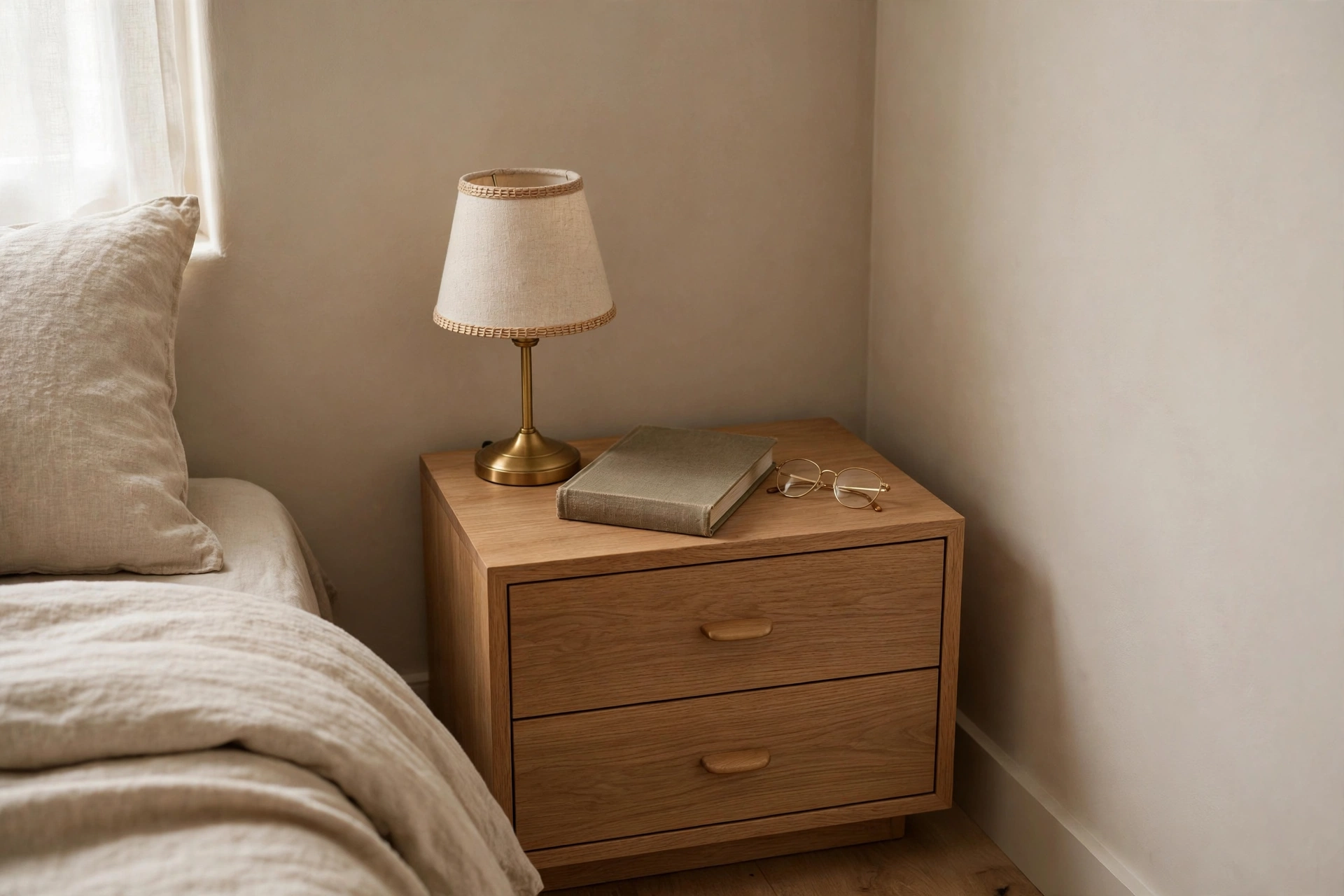
A nightstand that is only a table wastes the most useful storage zone beside the bed. A nightstand with drawers gives you a home for the small items that otherwise spread across the top, the floor, and the bed. This guide owns the storage nightstand: what fits, and how to keep it working.
What fits in a storage nightstand:
- Top drawer: phone charger, lip balm, hand cream, tissues, a book you are reading now
- Lower drawer: spare chargers, spare tissues, small first-aid items, a notebook
- Top surface: one lamp or wall light switch, one glass of water, one book at most
If the top surface keeps collecting clutter, the drawers are doing the wrong job. Move one category out, and give the surface a clear rule: only the items you use tonight stay on top. For the nightly habit that keeps the surface clear, see small bedroom organization ideas.
If a full nightstand does not fit, use a small drawer unit, a wall-mounted shelf with a drawer, or a narrow cart beside the bed. The test is the same: does it hold the nightly items in drawers, and does it leave floor space clear?
3 Let One Piece of Furniture Do Two Jobs
In a small bedroom, every large piece should earn its floor space twice. A storage bed holds bins or drawers and sleeps you. An ottoman with a lid holds spare bedding and gives you a seat. A dresser with a mirror on top replaces a separate dressing table. A bench at the foot of the bed holds shoes inside and gives you a place to sit while you put them on.
Before you buy a double-duty piece, run this test: does it replace something you already own, free floor space, or give a category a home it did not have? If it does none of those three, it is extra furniture, not extra storage. Replace, do not just add. For example, a storage bench only helps if it replaces the open chair that was collecting clothes, not if it sits next to that chair and collects a second pile.
Keep double-duty furniture simple. One lid, one drawer, or one clear compartment beats a clever piece with five hidden sections you never open. If you cannot remember what is inside it, the storage is too complicated.
4 Turn Narrow Gaps Into Useful Storage
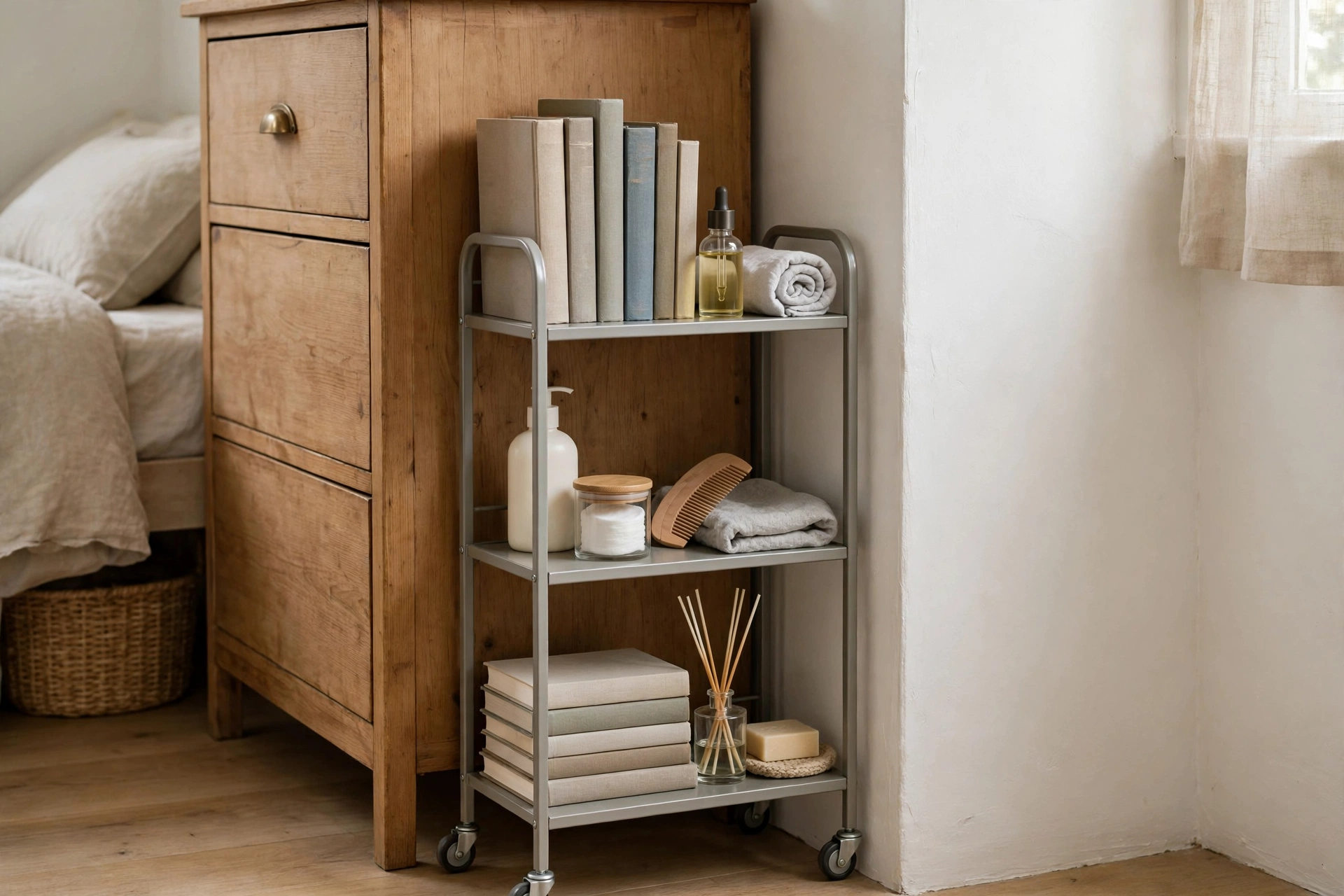
The gap between the dresser and the wall, or between the bed and the wardrobe, can hold a slim rolling cart. The key is to measure the gap before you shop, because a cart that is even a little too wide will jam, scratch paint, or block a drawer.
Measure three numbers: the width of the gap, the depth from the wall to the front of the furniture, and the height of the lowest obstacle, such as a baseboard or a drawer handle. Then compare those numbers to the cart, not to a photo of a cart.
What fits, and what does not:
- A gap about 15 to 25 cm wide can fit a slim rolling cart with two or three tiers. Use it for one category, such as skincare, chargers and cables, or bedtime items.
- A gap under about 10 cm wide does not fit a cart. Leave it empty, or use a slim tray on top of nearby furniture instead of forcing storage into it.
- A gap beside a door or drawer needs extra clearance. If the cart blocks a drawer from opening fully, the gap is not usable storage, even if the cart fits.
Keep narrow-gap storage light and narrow. A cart packed with heavy books tips, sticks, and becomes a chore to pull out. Keep one category per tier, and keep the heaviest items on the lowest tier.
5 Move Storage Up the Wall Before Adding Another Floor Unit
When the floor is full, the wall is the next place to look. Shelves, hooks, and peg rails add capacity without adding another wide piece of furniture. This guide owns capacity up the wall: shelves, hooks, and high storage that hold real categories, not just decor.
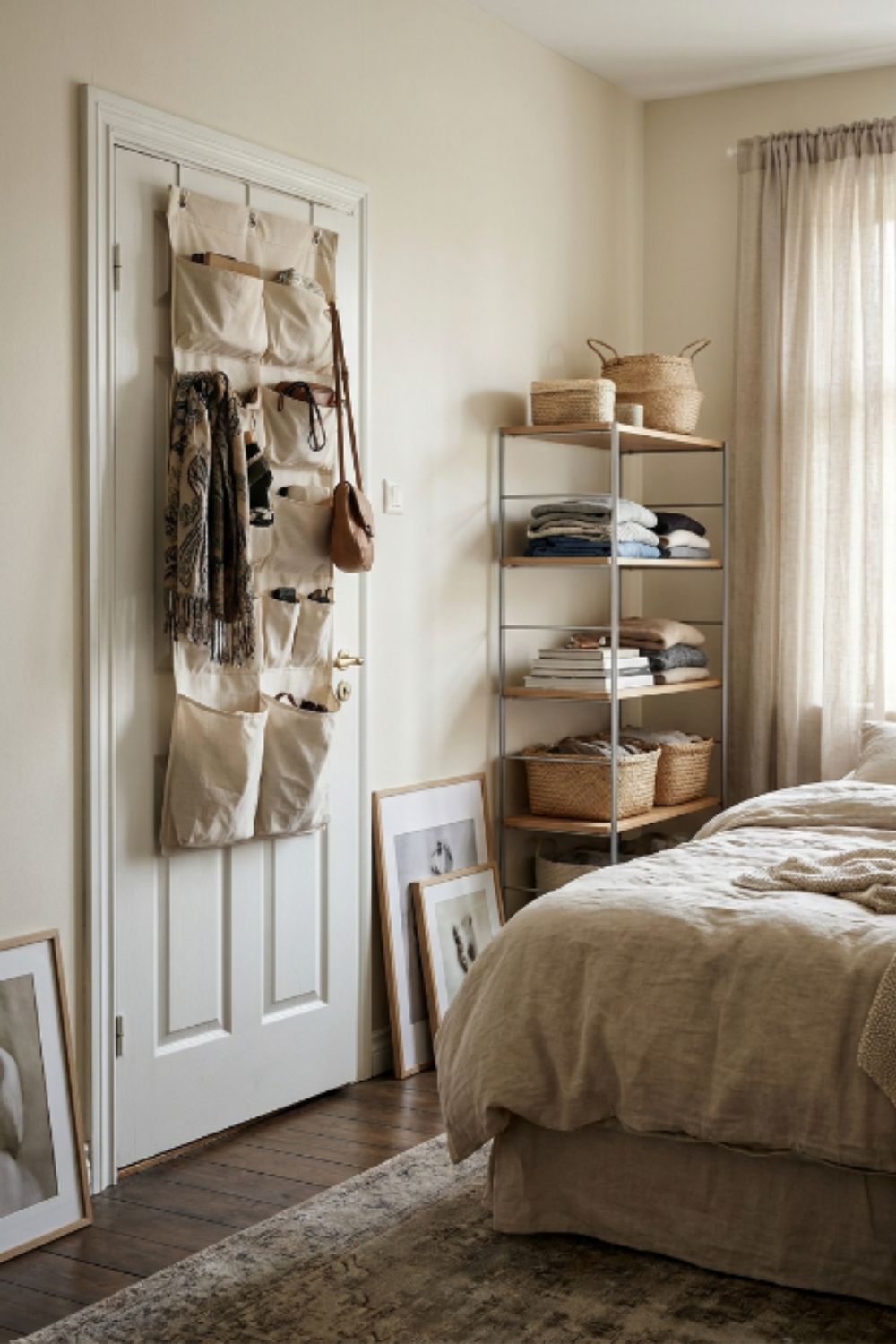
Start with one wall, not every wall. A shelf above the dresser, a row of hooks beside the closet, or a peg rail near the door can hold bags, hats, tomorrow’s outfit, or a few books. Then stop and live with it for a week before you add more.
Leave one stretch of wall open on purpose. Leaving wall area open keeps the room from feeling boxed in. For example, if you add shelves above the dresser, keep the wall beside the bed clear, so your eye has one calm stretch and the room still feels like a bedroom, not a storage room.
Mount shelves into studs or use fixings rated for the weight you plan to hold. Books are heavy, so keep book shelves short and well supported. Hooks hold bags, robes, and tomorrow’s clothes well, but they are not a second wardrobe. If a hook holds more than two items, that category needs a real home, not another hook. Renters should check lease limits and use removable hooks where drilling is not allowed. For renter-safe storage and decor, see the apartment guide.
6 Use the Back of the Door for Shallow Storage
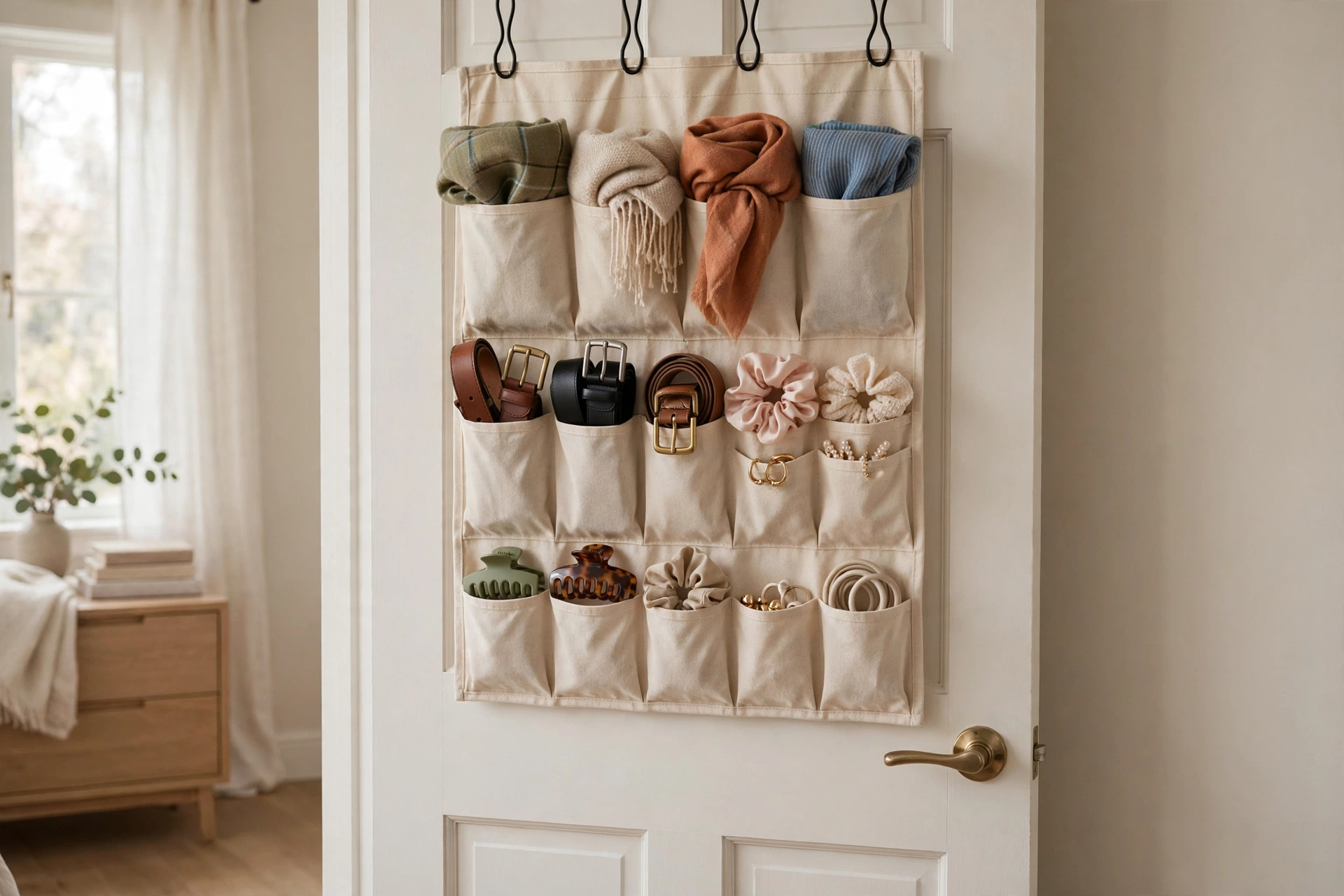
The back of the bedroom door holds shallow, light storage that would otherwise eat shelf or drawer space. It works for items you grab on the way in or out, not for heavy or bulky categories.
Follow two rules: the weight rule and the shallow-depth rule.
Weight rule: keep door storage light. A few scarves, a robe, a bag, or a row of small pockets is fine. Heavy books, full toiletry bottles, or a loaded shoe organizer can strain hinges, pull screws loose, and make the door hard to close. If the door sags, creaks, or will not latch, the organizer is too heavy. Take weight off before the door is damaged.
Shallow-depth rule: keep items shallow enough that the door still opens fully and nothing hits the frame, the wall, or furniture behind it. Flat pockets, slim hooks, and a thin mirror work. Deep baskets and bulky hooks do not. Test the full swing of the door after you install anything, including the swing past a dresser or a bed corner.
Good door storage: tomorrow’s outfit on one hook, a robe on another, a slim pocket organizer for small essentials. Poor door storage: a deep shoe organizer packed with shoes, a heavy bag on every hook, or anything that stops the door from closing.
7 Give Worn but Not Dirty Clothing Its Own Home
Clothes you have worn once, and will wear again before washing, need one home. Without that home, they land on the chair, and the chair becomes a second wardrobe. That chair pile is not a storage failure. It is a missing home for one category.
Give re-wear clothes one storage home, and only one:
- One hook or one peg for tomorrow’s outfit or a jacket you will wear again
- One bin or one basket for re-wear tops and bottoms, kept separate from clean clothes and laundry
- One shelf or one section of the rail for re-wear items, if you have rail space to spare
Pick one of those homes, not all three. If re-wear clothes live in three places, you have three piles instead of one home. When the bin or hook is full, that is your signal to wash, put away, or wear those items, not to start a second pile on the chair.
For the full habit behind this home, including the transition zone routine and the chair landing zone, see the organization guide. This post owns the storage home. That post owns the daily habit that keeps it working.
8 Make the Headboard Zone Work Harder
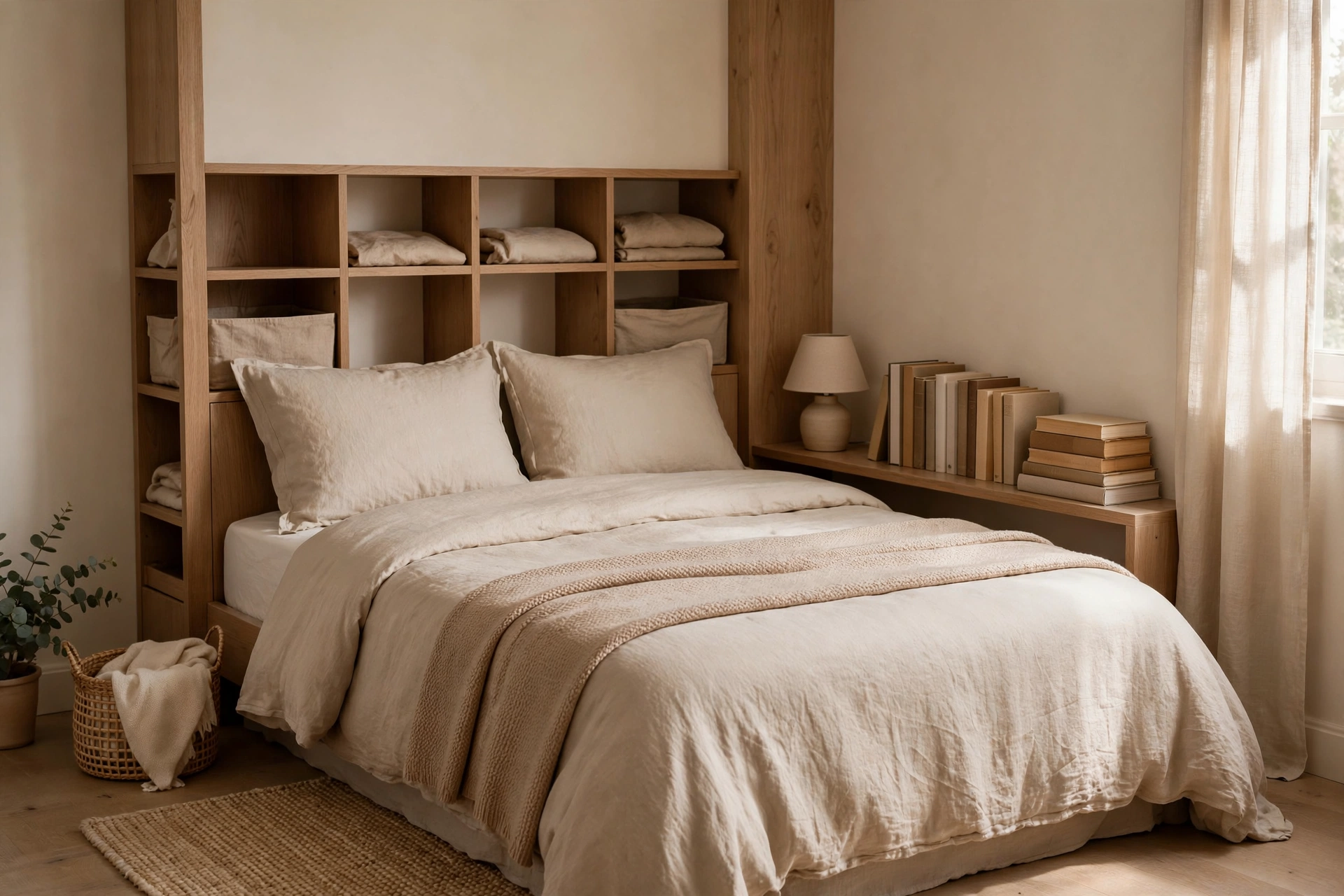
The wall above and beside the headboard is prime storage space that many bedrooms leave empty. A shallow shelf above the headboard, a small wall pocket, or a headboard with built-in shelves can hold the items you want within reach at night, without adding a floor unit.
Keep headboard storage shallow and calm. A shelf that holds one book, one glass of water, and a small alarm clock works. A shelf packed with boxes, bottles, and chargers becomes visual clutter right where you try to sleep. If you need more than a shallow shelf, move the extra categories to the closet or dresser instead of stacking them over the bed.
For plant shelf storage that does not eat floor space, see greenery bedroom ideas, plant shelf section (three layers, one third empty). For color on storage (bedding, boxes, art), see earthy bedroom ideas, get color without repainting.
Check safety before you mount anything above the bed. Use fixings rated for the weight, keep heavy items off the shelf above your pillow, and leave enough clearance that you do not bump your head when you sit up.
9 Hide the Categories That Naturally Look Messy
Some categories look messy even when they are tidy, because they have many small parts, mixed colors, or tangled shapes. Those categories belong in closed storage. Other categories look good on display, because they have one clear shape or color. Those can stay open.
Closed storage absorbs complexity, and open storage puts it on display. A concrete example: a tangle of chargers, loose papers, and small medical items looks messy on an open shelf, even in neat rows, so those belong in a lidded box or a drawer. A row of books or a single vase looks calm on the same shelf, so those can stay open.
Use this open vs closed rule, with one example per category:
| Category | Closed or open | Example |
|---|---|---|
| Chargers and cables | Closed | One lidded box or one drawer, so cables do not tangle in view |
| Papers and bills | Closed | One folder or one drawer, not a stack on the dresser |
| Medicines and small essentials | Closed | One small lidded box inside a drawer, out of sight |
| Everyday clothes | Closed | Dresser drawers or closet with doors, so mixed colors stay hidden |
| Books you are reading | Open | One short row on a shelf, with space left around it |
| Display objects | Open | One vase, one framed photo, or one plant on a shelf |
| Bags and hats | Open, with a limit | Two hooks by the door, not a wall covered in hooks |
If an open shelf starts to look busy, move one category into closed storage instead of buying a prettier basket. The fix is usually fewer categories on display, not a better container.
10 Put Low-Frequency Belongings Up High
The top shelf of the closet, and the high shelf above a rail, hold the items you reach a few times a year. That is the right home for seasonal clothes, spare luggage, gift supplies, and keepsake boxes. It is the wrong home for anything you need this week.
Keep high storage safe and reachable. Use a stable step stool, not a chair, to reach the top shelf. Keep the heaviest box at waist height if you can, not on the top shelf, so you are not lifting weight over your head. Label each high box on the side you can see, so you do not pull down three boxes to find one.
Leave the front edge of a high shelf clear. If the top shelf is packed to the front edge, items fall when you reach for them, and you stop using the shelf. One row of labeled boxes, with a little space at the front, works better than two crowded rows.
11 Improve the Closet Before Buying Another Dresser
Most small bedrooms do not need more furniture. They need a closet that works harder. Run the closet-first decision tree before you buy a dresser, a second wardrobe, or another set of drawers.
Closet-first decision tree:
- Is there empty rod or shelf space in the closet? If yes, use it first. Move everyday clothes to the empty rod before you buy anything.
- Is the closet full because categories are mixed? If yes, sort by category first. Pull everything out, group it, and put back only what belongs in the bedroom. Move the rest to its real home.
- Is the closet full after sorting, but the rod is wasted? If yes, add a second rod, a shelf, or a hanging organizer inside the closet before you buy furniture. A second rod at a lower height doubles hanging space for shirts and folded trousers.
- Is the closet truly full after those three steps? Only now, buy one more piece, and make it replace something. A narrow dresser that replaces a pile on the floor helps. A dresser that sits next to a full closet and a full chair does not.
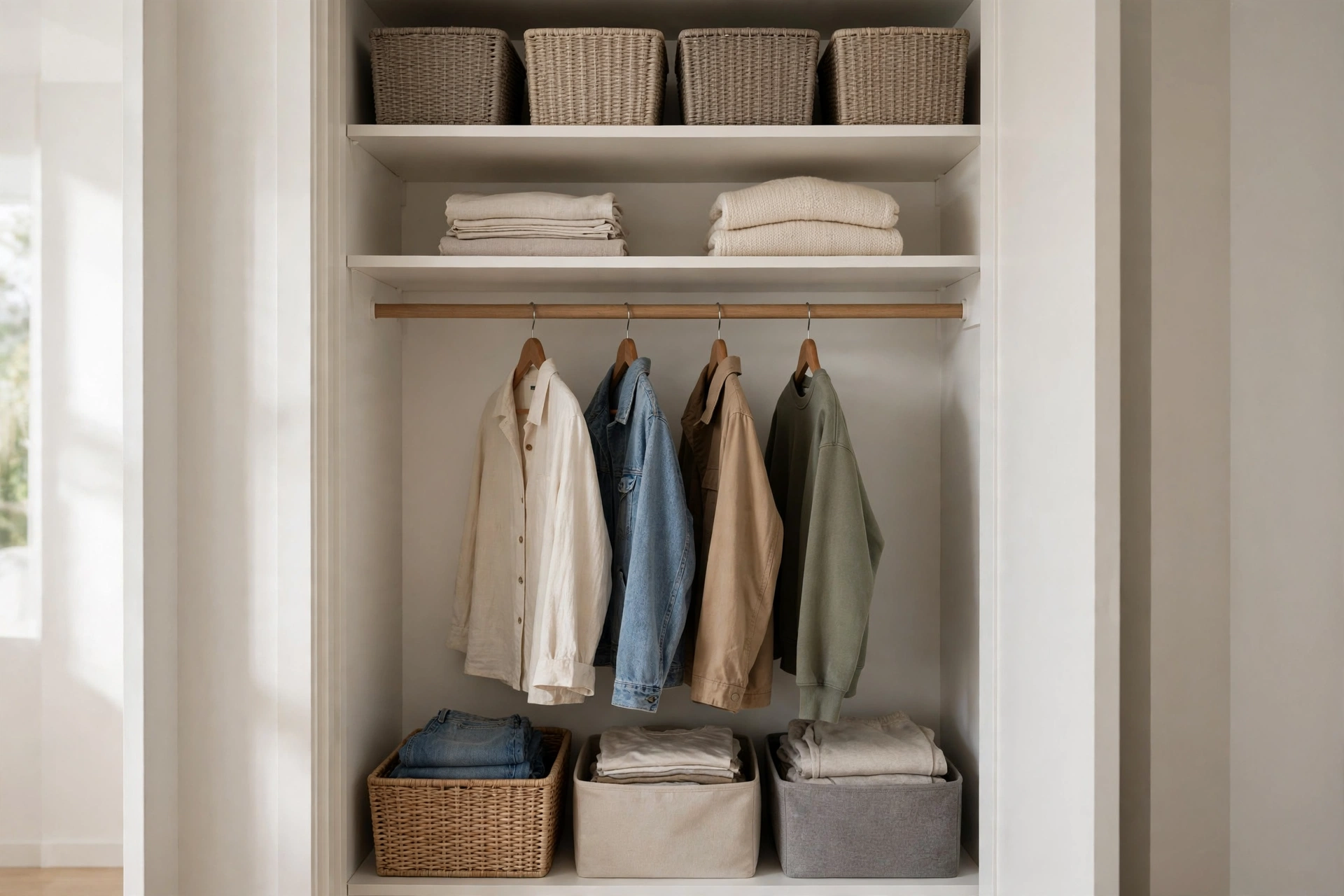
Inside the closet, give each category one zone. Hang what wrinkles, fold what stretches, and keep daily items at arm height. Put rarely used items up high, and keep the floor of the closet clear enough that you can see what is there. A closet floor packed with bags and boxes hides the very items you need.
Pairing drawer storage with a clothes rail creates wardrobe capacity without a built-in closet. A small dresser beside a rail, with one home per category, works as a closet for a bedroom that has none, or as extra capacity for a closet that is too small. For the full no-closet plan, see the next section.
12 If You Have No Closet, Build One Clear Clothing Zone
A bedroom without a built-in closet needs one clear clothing zone, not clothes spread across three spots. Build the zone from three parts: a rail, a dresser, and one home per category.
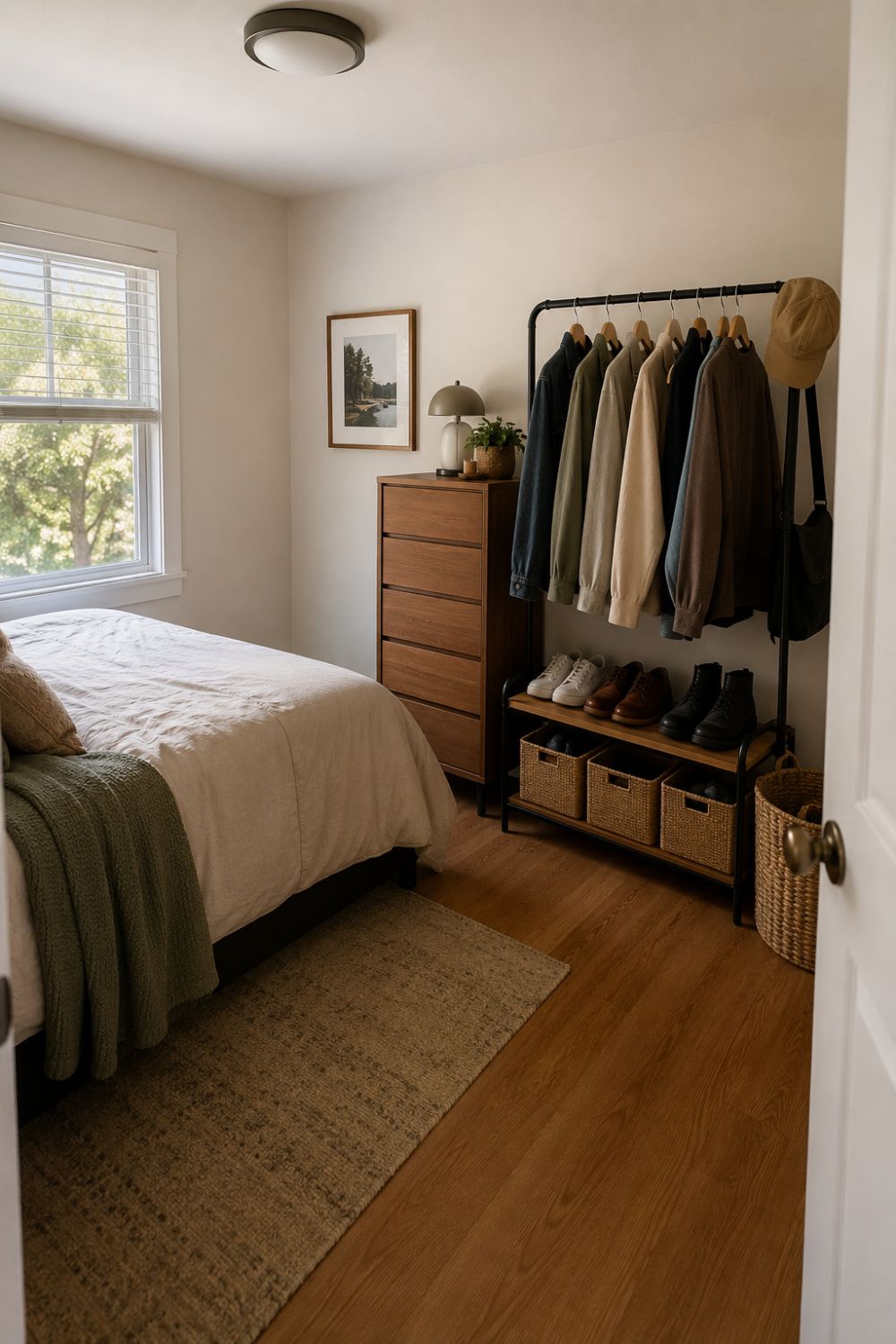
Build it in this order:
- Rail: One freestanding rail for hanging clothes. Hang what wrinkles and what you wear most. Keep the rail to one row of clothes, so you can see everything without pushing through layers.
- Dresser: One dresser for folded clothes, underwear, and small items. Give each drawer one job, such as tops, bottoms, or sleepwear, so you do not dig through mixed drawers.
- One home per category: Shoes get one row under the rail or beside the dresser. Bags get two hooks. Re-wear clothes get one hook or one bin, as in section 7. Laundry gets one hamper, not a pile on the floor.
Keep the clothing zone together in one part of the room. When the rail sits on one wall, the dresser on another, and the shoes by the door, getting dressed means crossing the room three times, and the system feels harder than it is. One zone, close together, is easier to use and easier to keep tidy.
If you rent, choose a freestanding rail and a dresser that move with you, and avoid drilling into walls unless your lease allows it. For renter storage, lease limits, and removable changes, see the apartment post.
13 Treat Open Storage as Display Space, Not Maximum Capacity
Open shelves, open rails, and open baskets look best when they hold less than they can. When every shelf is packed to the edge, the room looks crowded, dust collects faster, and finding one item means moving five others.
Treat open storage as display space. Leave breathing room around each group, keep one category per shelf or basket, and leave at least one shelf partly empty. A shelf with five books and one object looks calm. The same shelf packed with twenty books, three boxes, and a stack of papers looks like storage, even if it is tidy.
Rotate open storage with the seasons if it helps. Swap a heavy blanket for a lighter one, or swap winter books for summer ones, instead of adding a second shelf for the overflow. If open storage keeps overflowing, the fix is usually to move one category into closed storage, not to add more open shelves.
5 Small Bedroom Storage Mistakes to Avoid
- Buying organizers before you name the categories. Organizers do not create order. Categories do. Map the categories first, then buy one container per category. If you buy a set of matching boxes before you know what goes in them, you will fill them with mixed items and lose the system.
- Adding instead of replacing. Every new storage piece should replace something, free floor space, or give a category a home it did not have. If you add a shelf, a cart, and a basket without removing anything, you have more storage and the same clutter, plus less floor space.
- Putting daily items where they are hard to reach. Daily clothes belong at arm height, not on the top shelf or under the bed. If you have to stretch, kneel, or move two bins to reach your everyday items, those items are in the wrong home. Move daily items down and rare items up.
- Filling every vertical surface. Wall storage helps, but a wall covered in shelves feels crowded and makes the room feel smaller. Leave one stretch of wall open, and stop adding shelves once each category has one home.
- Ignoring the maintenance habit. Storage only works if you put things back. If the system keeps slipping, the fix is usually a short reset routine, not another container. For the daily reset and the habit that keeps storage working, see small bedroom organization ideas.
What to do when storage is full
When every home is full, do not add another container. Remove, relocate, or replace, in that order.
- Remove: Take out what you no longer use, what is broken, or what belongs in another room. One bag out is often worth more than one bin in.
- Relocate: Move a category to its real home. If hobby supplies live in the bedroom but you use them in the living room, move them to the living room.
- Replace: Only after those two steps, replace a piece that is not working with one that fits better. Swap a decorative table for a drawer nightstand, or swap a deep basket for a shallow bin that fits the shelf.
If storage is still full after those three steps, the room is holding more than it can hold comfortably. That is a sign to own less in the bedroom, not to add more storage to the bedroom.

6 Comments
[…] Then declutter by category, not by corner. Start with the easiest category: items that belong in another room, trash, and clothes you no longer wear. Move those out first. Do not try to organize what you do not need. For capacity, such as where each category should go, see small bedroom storage ideas. […]
[…] curtains, and decor that moves. For layout method, see small bedroom ideas. For capacity, see storage. For upkeep, see […]
[…] habits and upkeep: frequency rules, reset routines, and giving categories a home. For capacity, see storage. For layout, see small bedroom […]
[…] first: measuring, bed placement, walking path, and furniture that fits. For where things go, see storage. For keeping it tidy, see organization. For rental limits and decor, see […]
[…] and one surface clear. For layouts for two people, see small bedroom ideas. For storage, see small bedroom storage ideas. For clear surfaces, see small bedroom organization […]
[…] basket, so it is both decor and storage. For more storage ideas that leave room for plants, see small bedroom storage ideas. If surfaces keep getting cluttered, our guide to small bedroom organization ideas shows how to […]