

Moody bedroom ideas are not about making a room as dark as possible. They are about choosing one deep palette, controlling the light, and layering texture so the room feels calm, romantic, and deliberate instead of gloomy. A dark moody bedroom works when the darkness has a system behind it. Without a system, it just looks unfinished.
This guide gives you that system in 9 ideas. The first 3 are palettes: charcoal, inky navy, and a forest and brown family. The next 3 are light and texture moves. The last 3 are paths: paint, no-paint, and a renter path for white walls with zero paint. Pick one palette and one path. That is your whole plan.
If you are still choosing a direction, the wider bedroom decor ideas guide routes every style before you commit to one palette. If you want depth, drama, and low warm light, work through the 9 ideas in order.
Before You Start: The Moody Test
A moody room needs two things bright rooms can get away without: warm light and clear surfaces. Deep colour absorbs light, so a room that felt fine with one ceiling light can feel murky once bedding goes dark. It also shows clutter faster, because pale objects stand out against it. Before you buy anything, stand in your doorway at night with only your bedside light on. Note where the light reaches and where it dies.
Test colour the same way. Put your darkest candidate on the largest textile you own and live with it for two nights. If the room feels calm at night and not heavy in the morning, the palette fits your light. If it feels heavy, go one step lighter instead of forcing it.
Idea 1: Charcoal Palette, the Easiest Dark Start
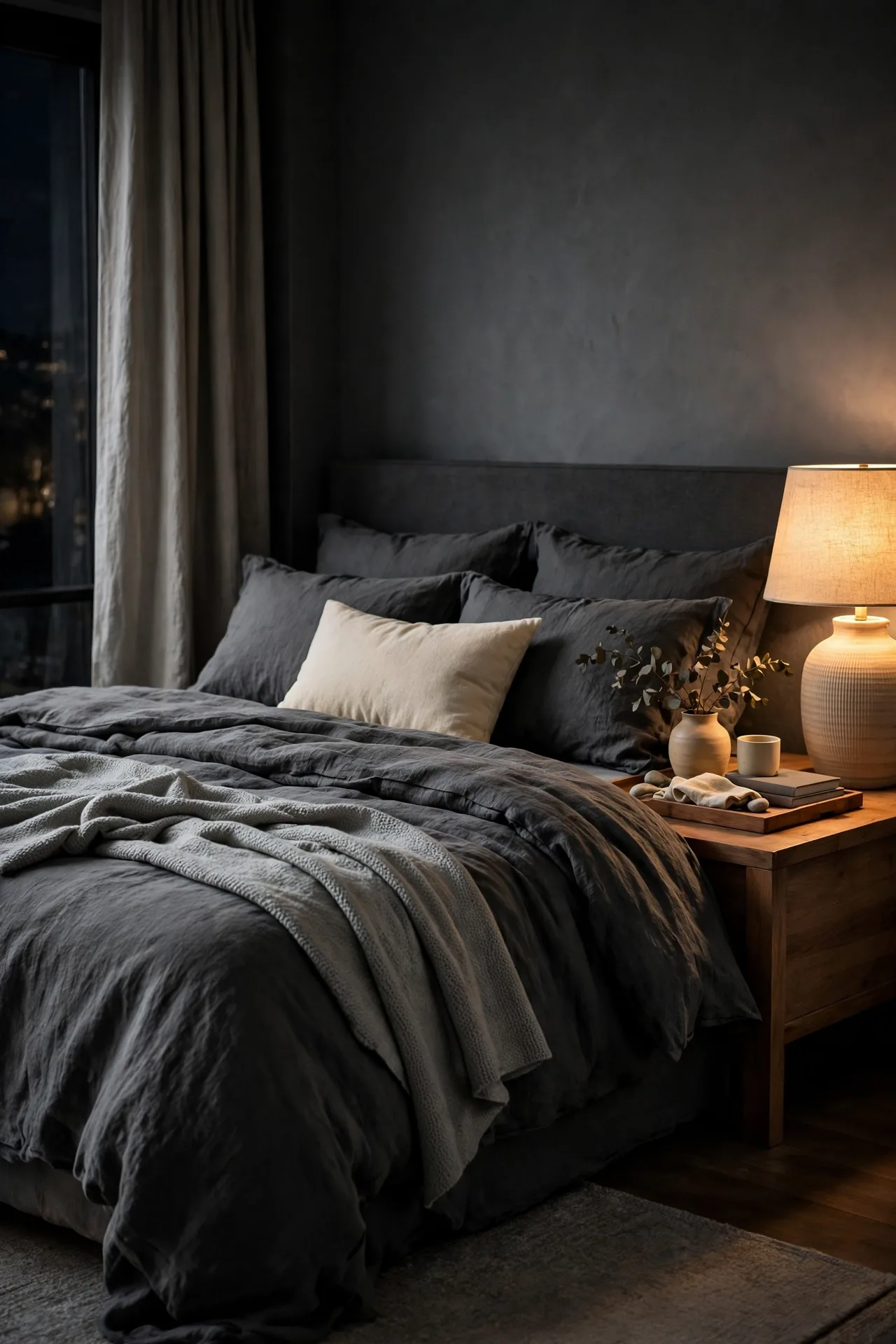
Charcoal is the most forgiving dark palette because it is a neutral, not a colour commitment. Build it in layers: charcoal bedding as the base, a lighter grey throw or rug so the bed is not one flat block, and one warm accent, wood, brass, or a warm cream textile. Keep walls charcoal only if your light passed the test above. Otherwise let bedding carry it.
The mistake with charcoal is adding black everywhere on top of it. Charcoal plus black plus grey leaves no contrast and no warmth, and the room turns flat. You need one lighter tone and one warm tone in every view. From the doorway, you should spot both in seconds. If you cannot, add a warm wood tray or a cream cushion before anything else dark.
Idea 2: Inky Navy Palette for a Romantic Moody Bedroom
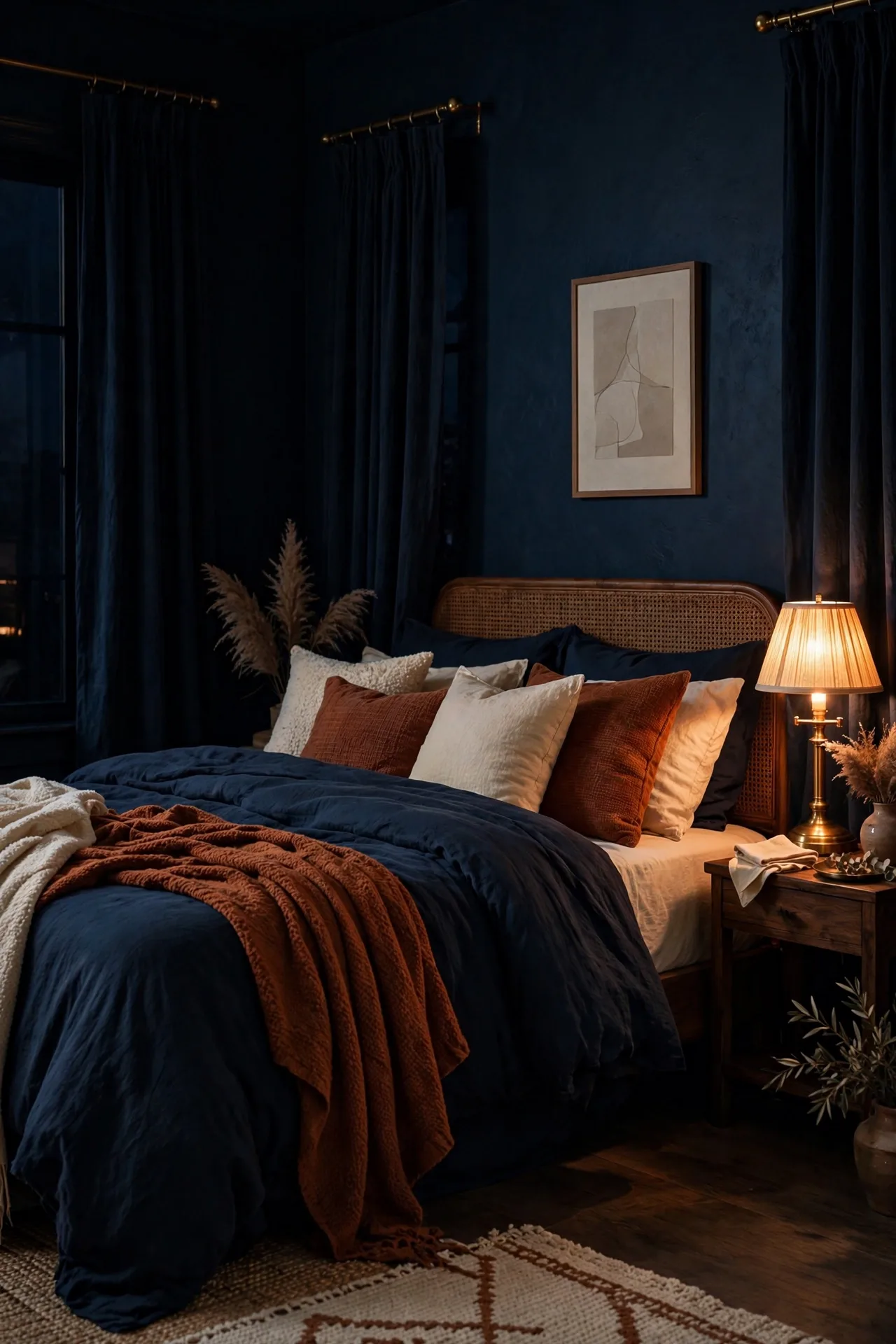
Inky navy is the palette behind most romantic moody bedroom ideas, because deep blue reads calm at night and pairs naturally with warm light. Use navy on the biggest surface you are willing to change, bedding or one wall, then repeat it once in a smaller piece, such as curtains or a cushion. Twice is a palette. Three or more pieces start to feel themed.
Navy needs warmth beside it or it turns cold. Pair it with warm wood, warm bulbs, and one soft textile in cream, blush, or rust. Keep finishes warm too: brass supports navy, bright chrome pushes it colder. If your room faces north, test navy on bedding first and keep walls light until you have lived with it through a grey day.
Idea 3: Forest and Brown Palette, the Warm Dark Family
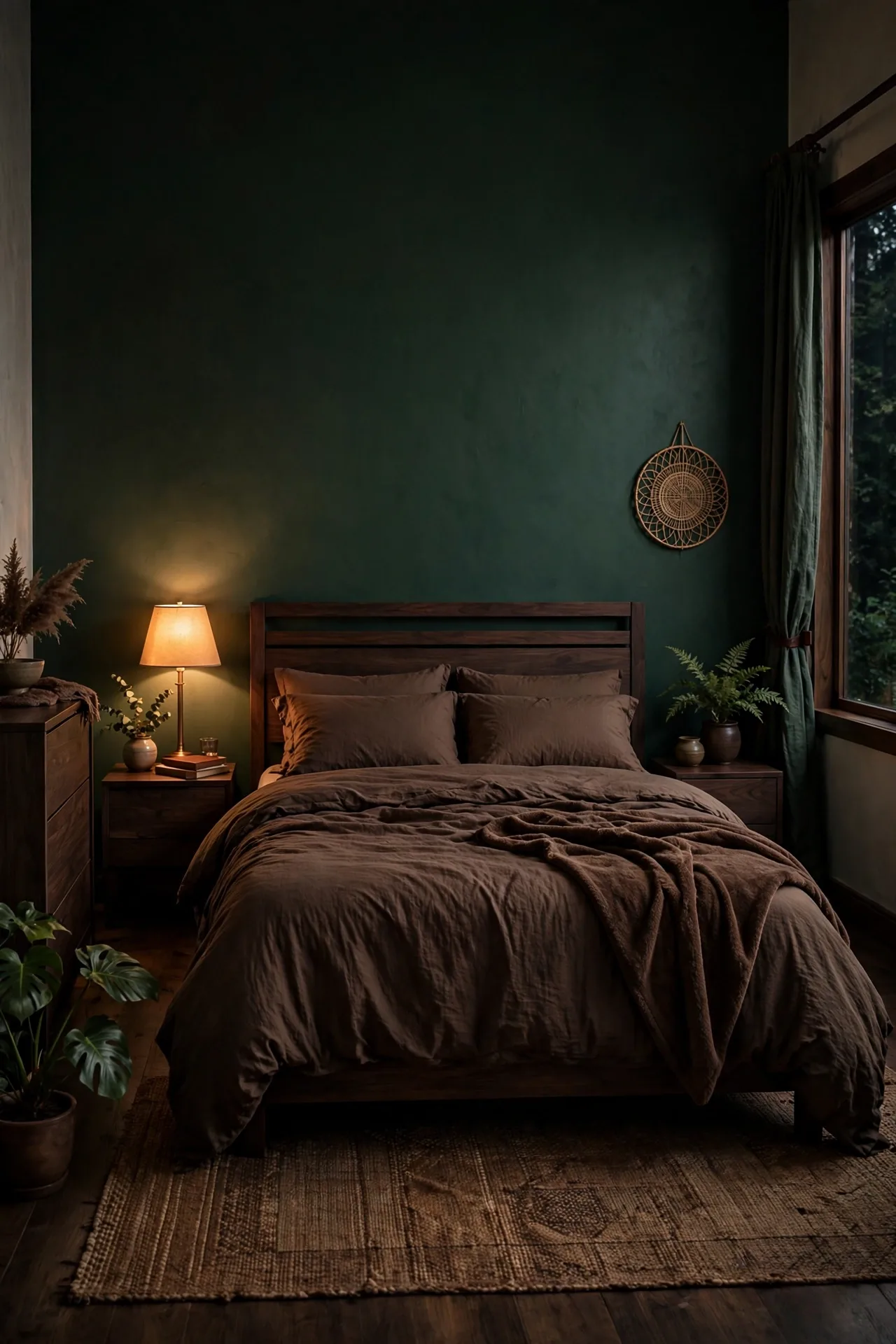
The third palette mixes deep forest green with the brown family: espresso, walnut, chocolate, and cognac. This is where brown bedroom ideas belong in a moody room, as the warm base that stops green or charcoal feeling cold. Use brown in wood furniture or chocolate bedding, and let forest sit on one surface only, such as the wall behind the bed or a set of curtains.
This palette suits rooms with decent daylight, because forest and dark brown need natural light to show their colour instead of reading as black. In a low-light room, shift the balance: more warm brown, less forest, and keep the forest piece closest to the window or the warmest lamp.
Palette boundary: Readers who want warmth without darkness get the lighter system in the earthy bedroom palettes guide, while this post stays with deep tones. Earthy uses pale wood, clay, and sage in daylight. Moody uses deep tones, low light, and contrast. Do not mix the two systems in one room, or both lose their effect.
Small Moody Rooms: Dark Colour Magnifies Layout
Dark colour does not automatically make a small room feel smaller, but it makes a bad layout more obvious, because the eye goes to the darkest, biggest block, usually the bed. In a tight room, fix the layout with the small bedroom layout hub first, because dark colour magnifies a bad layout. Set the bed, keep one clear path, then add your palette, starting with bedding.
For a small moody room, use one dark surface, not four. Bedding plus curtains in your palette, with walls left lighter, gives depth without closing the room in. If you paint, paint the wall behind the bed only. One dark wall reads as a backdrop. Four dark walls in a tiny room with weak light read as a cave.
Idea 4: Light at 3 Heights, the Move That Makes Dark Work
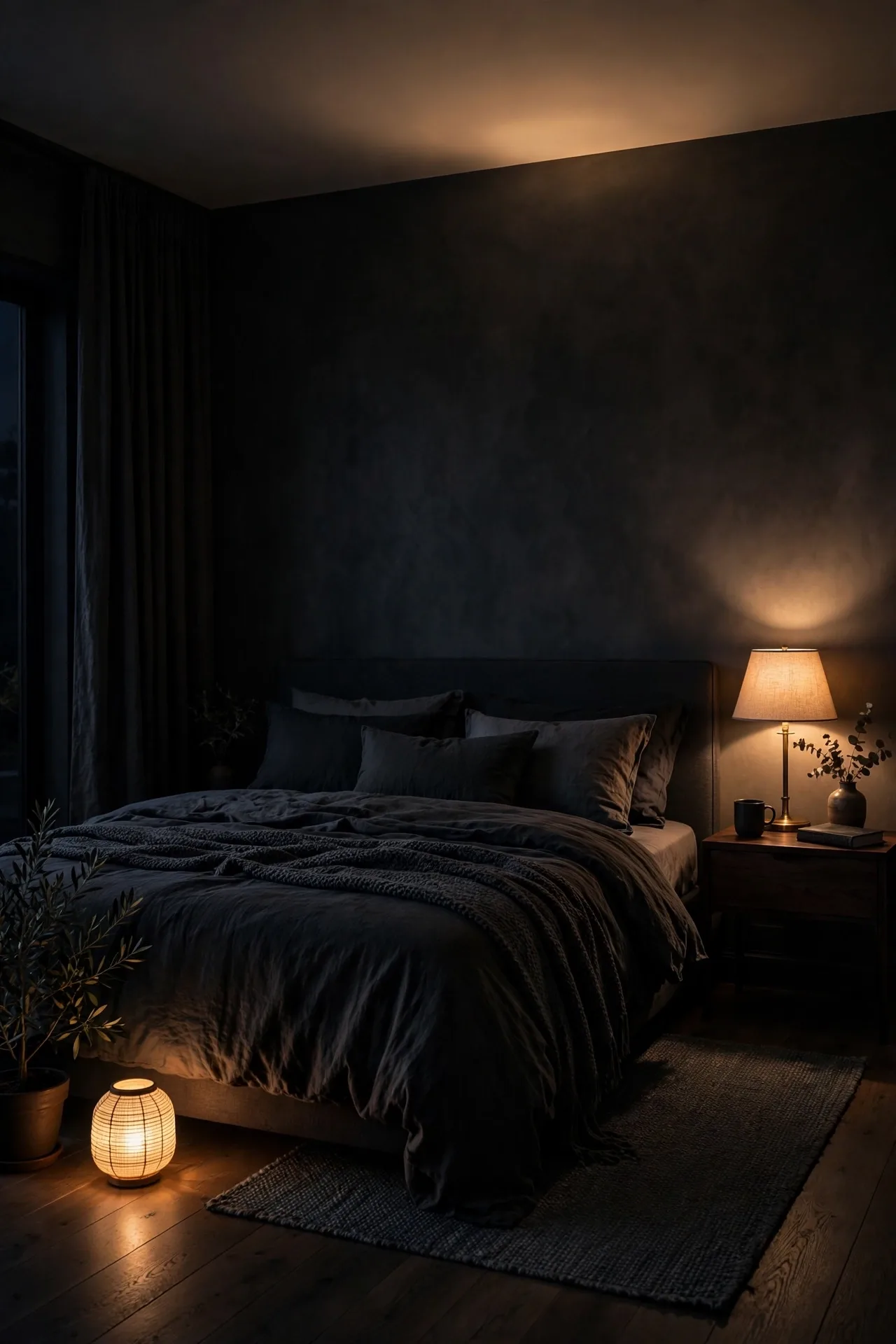
Every dark moody bedroom lives or dies on this idea. Place warm light at 3 heights: low, a small lamp near the floor or under a shelf; mid, at bedside height, your main reading light; and high, a soft overhead light you use for dressing and cleaning, then turn off at night. Three heights stop the room splitting into one bright pool and darkness everywhere else.
Use warm bulbs throughout, with a consistent temperature across all three heights. One cold white bulb breaks the mood instantly, because the eye reads it as office light. If you change nothing else, change cold bulbs to warm ones. It is the cheapest moody move there is, and it makes every palette look intentional.
Idea 5: Texture Layering So Dark Does Not Read Flat
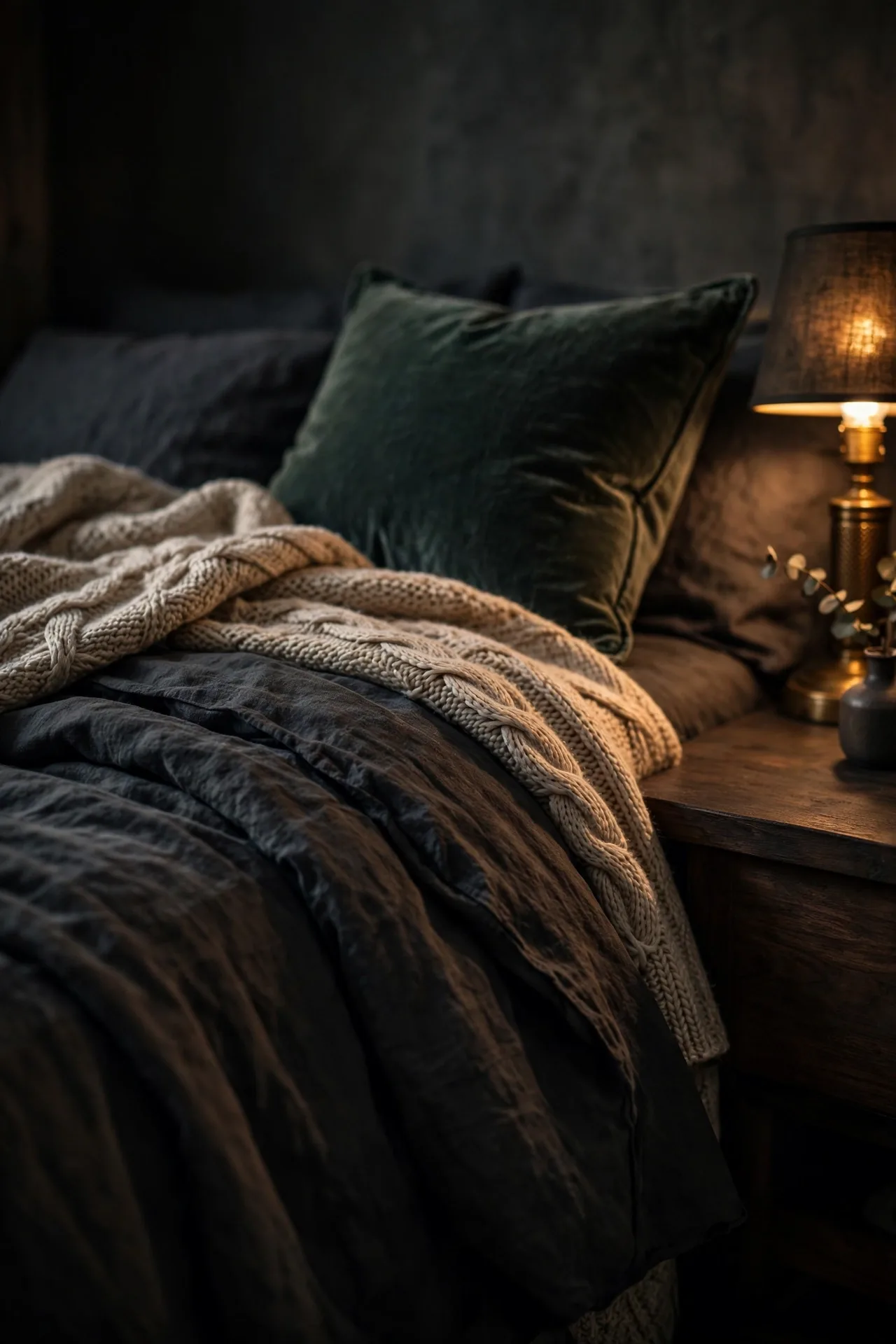
In a bright room, colour creates contrast. In a moody room, texture does that job. Layer three textures on the bed: one matte base, such as linen or cotton; one soft pile, such as velvet or a knit throw; and one natural surface, such as dark wood or rattan. Light catches each differently, so one dark colour gains depth instead of looking flat.
Keep layering on the bed and one other spot, not everywhere. If every surface carries texture, the room feels busy and the calm disappears. Add texture where your hand and eye land most: the bed, the bedside, and a chair if you have one. Leave the dresser top and floor as plain as you can.
Idea 6: One Anchor Piece Instead of Many Small Dark Objects

Choose one anchor piece to carry the mood: a dark headboard, full dark curtains, one large textile above the bed, or a deep-toned rug. One anchor gives the room a focal point and lets everything else stay simpler. Many small dark objects do the opposite. They read as clutter with a colour theme.
Pick the anchor by path. Paint readers can use the painted wall itself. No-paint readers should use curtains or bedding, the largest textiles in the room. Renters should use bedding plus one large removable textile. Repeat its colour once, in one small item across the room, so the anchor feels connected.
Plants in Low Light: Green as an Accent, Not a Theme
A moody room can hold one plant, but it has to be chosen for the light the room actually gets, not the light in a product photo. Dark rooms need plants picked by light, so use the low-light bedroom plants guide before adding green to a moody corner. Place the plant where your mid-height light or window light already falls, not in the darkest corner where it will slowly fail.
If floor space is tight, keep the plant off the floor. For shelf placement that saves floor space in a small dark room, look at plant shelf ideas for bedrooms and put one plant at eye level near the warmest light. One healthy plant is an accent. Three struggling plants undo the calm.
Idea 7: The Paint Path, One Wall First
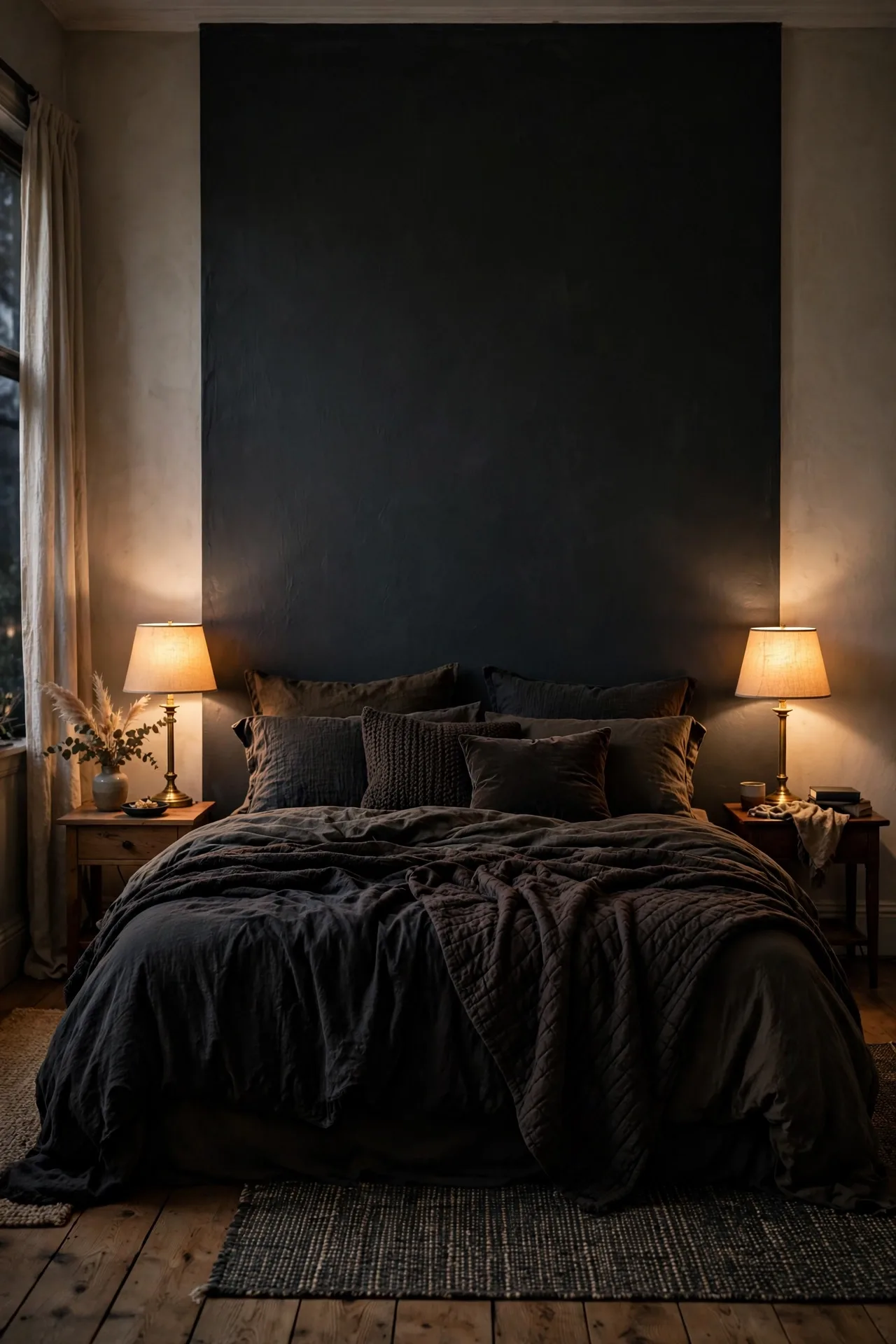
If you own your walls and your palette passed the test, paint one wall: the wall behind the bed. You see it most from the doorway and least while in bed, so it carries the mood without surrounding you while you sleep. Choose from the bedroom paint colors in your palette family, and buy a sample first. Dark colours dry darker and shift under warm bulbs, so test at night, not just in daylight.
Stop after one wall for at least a week. Most rooms need only that wall plus dark bedding to feel fully moody. Painting a second wall, and especially the ceiling, is a later decision. This order protects you from the most common moody regret: going fully dark in one push, then paying to undo it.
Idea 8: The No-Paint Path, Dark Without Touching a Wall

No paint does not mean no mood. Bedding, curtains, and light carry a full dark palette against light walls, because they fill most of what you see from the doorway and the bed. Go dark with bedding, hang the darkest curtains your palette allows, and run the 3-height light plan from Idea 4. Light walls become contrast, bouncing warm light back in.
Work in order: bedding first, curtains second, light third, anchor last. Test after each step and stop as soon as it feels moody enough. Many no-paint rooms are done after step two. Adding more dark pieces after the room works is how a calm room tips into a heavy one.
Idea 9: The Renter Path, Moody on White Walls With Zero Paint
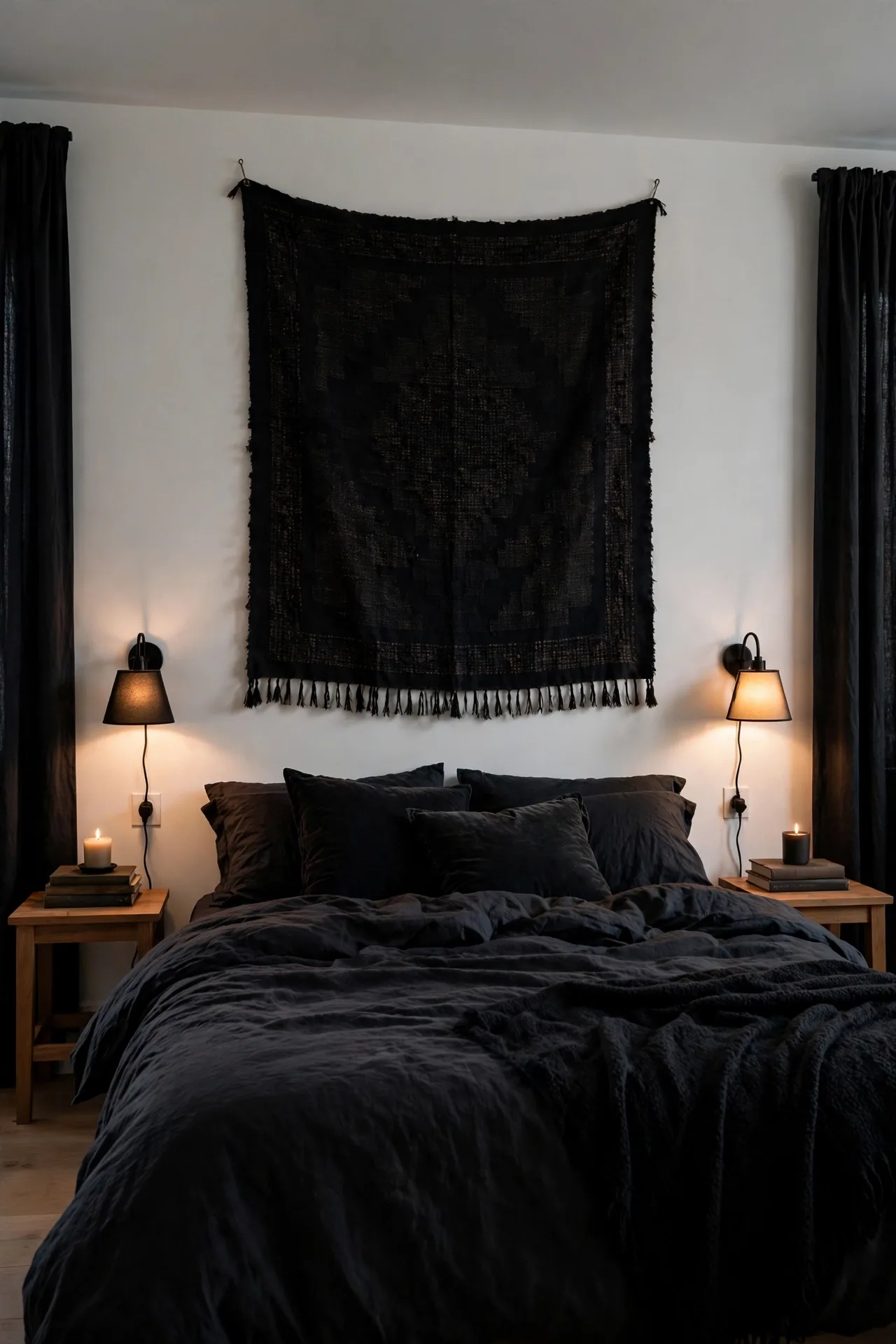
Renters get the full moody look without paint, drills, or damage, by treating everything dark as something that moves with you. Dark bedding and curtains do the colour work. Plug-in or battery lamps do the light work. One large textile does the anchor work. Nothing here touches the walls in a way you cannot reverse in an hour.
Renters can pair the no-paint path here with the renter-friendly bedroom ideas for swaps that leave no marks. Check your lease before using adhesive products, keep original fittings stored safely, and photograph the room before you start. When you move, your whole palette packs into boxes and goes with you.
Budget Order: Free and Cheap First, Dark Buys Last
Moody is one of the cheapest looks to start, because light and arrangement do half the work. Start with the free-first cozy bedroom upgrades you already own, then spend only on dark bedding and warm bulbs.
Spend in this order: warm bulbs first, dark bedding second, curtains third if the room still is not dark enough, and the anchor last. Skip new furniture until palette and light have settled. Furniture bought before the palette is set usually fights it later.
What to Skip
Skip all-black everything. Black on black with no warm tone and no texture contrast makes a moody room feel flat and cold. Skip cold white bulbs: one cold bulb undoes three warm lamps. Skip painting the ceiling before testing one wall, because it is the hardest to reverse and the least necessary. Skip matching dark furniture sets, many small black objects, and copying a hotel still exactly. Those rooms use professional lighting you do not have.
Keeping the Mood Calm
Deep colour makes every stray object louder. Moody rooms look dramatic only on clear surfaces, and the five-minute bedroom reset keeps that calm every night. Make the bed each morning, keep one tray as the only home for small bedside items, and return clothes to one spot. Five minutes protects the whole effect.
How to Make a Bedroom Moody in 5 Steps
- Pick one palette. Charcoal for the easiest start, inky navy for a romantic feel, or forest and brown for the warmest dark room. One palette only.
- Run the two-night test. Put the darkest colour on your largest textile, fix your warm bulbs, and check the room at night and in the morning before painting anything.
- Set light at 3 heights. Low, bedside, and high warm light, all the same warm temperature. Turn the high light off at night.
- Layer texture and set one anchor. Three textures on the bed, one anchor piece, clear surfaces everywhere else.
- Follow your path. Paint one wall, go no-paint with bedding and curtains, or run the renter path on white walls. Stop as soon as the room feels moody enough.
Moody Bedroom Ideas FAQs
How to make a bedroom more moody?
Pick one deep palette, set warm light at 3 heights, layer three textures, and choose one anchor. Then follow one path: paint one wall, use dark bedding and curtains with no paint, or run the renter path on white walls. Warm bulbs and clear surfaces matter as much as colour.
What are some good moody colors for a bedroom?
Charcoal, inky navy, forest green, and the warm brown family are the most reliable moody colours. Charcoal is the easiest start, navy reads the most romantic, and forest with brown is the warmest. Test on bedding for two nights before painting.
What are the 2026 bedroom trends?
Bedroom direction for 2026 leans toward warm, layered, personal rooms: deep colour used deliberately, natural texture, and warm low light instead of bright uniform light. Moody fits that direction when it is built on a palette system. Pick pieces that fit your path and skip the rest.
Are moody bedrooms in style?
Yes, when they are done as a system rather than a colour dump. One palette, warm layered light, and real texture stay in style because they are based on how the room feels at night. The versions that date quickly are all-black rooms with cold light and no texture.
Moody bedroom ideas work when darkness is a decision, not an accident. One palette, warm light at 3 heights, three textures, one anchor, and the path that fits your walls. Start with the free moves tonight, test your palette for two nights, and let the room tell you how dark it wants to go.

1 Comment
[…] deep tones pull you in, the moody bedroom ideas guide shows how dark palettes stay calm and romantic instead of […]