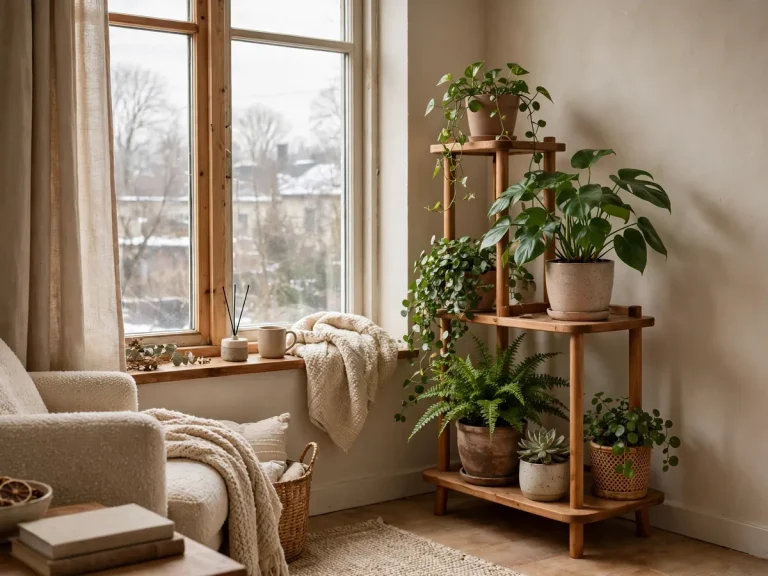
17 Indoor Greenhouse Ideas for Small Spaces
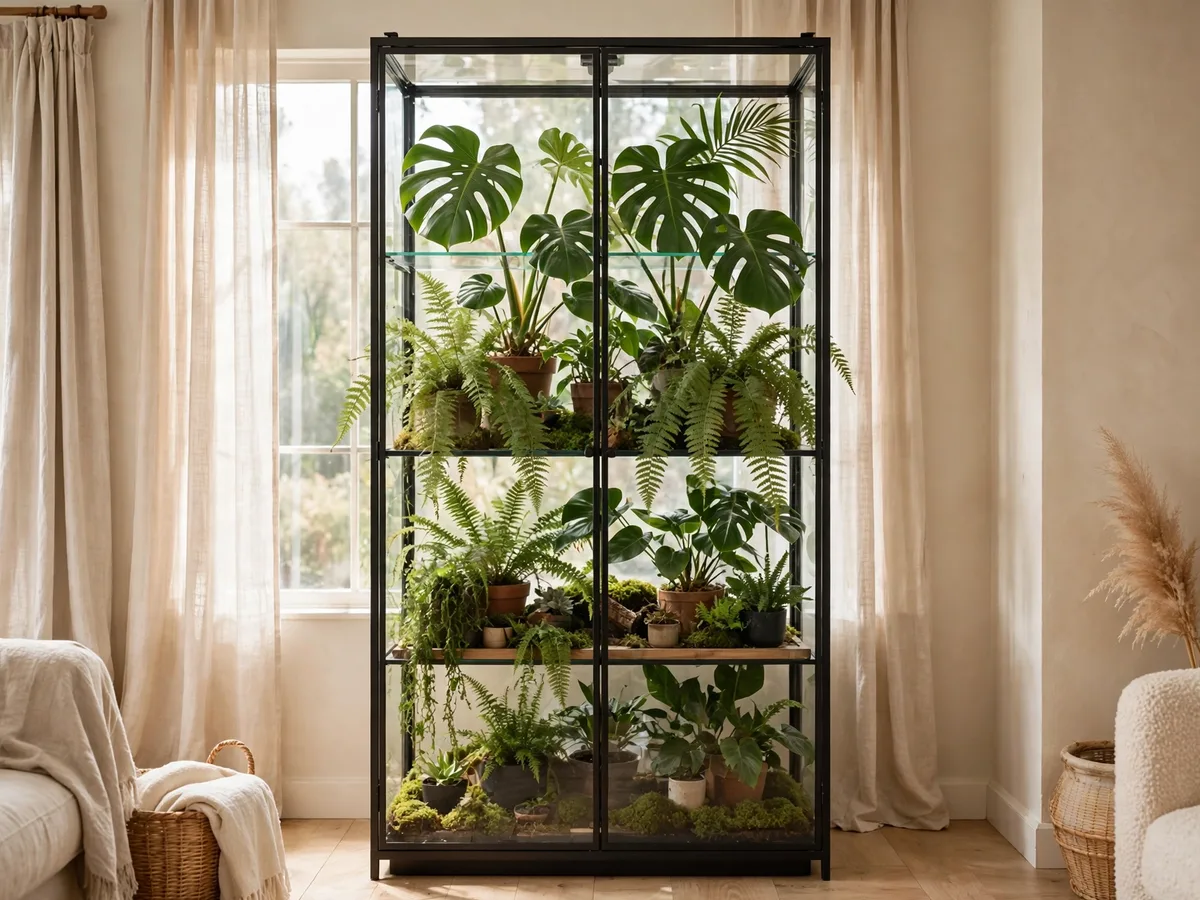
Intro
An indoor greenhouse is the simplest way to keep tropical plants alive in a small apartment. It traps warmth and humidity around your plants, so they grow through winter, dry air, and dark corners that would kill them on an open shelf. You do not need a spare room or a big budget. A glass cabinet, a windowsill dome, or a wrapped bookshelf can hold a whole jungle in one square foot.
This guide shows 17 indoor greenhouse ideas for small spaces, from IKEA cabinet hacks to DIY mini greenhouses you can build in an afternoon. Each idea names the setup, the plants that thrive in it, and the one detail that makes it work. Pick the one that fits your space, your light, and your budget, and start with the plants you already own. If you rent, every idea here is renter friendly. Nothing needs drilling, and every setup can move with you.
Before You Build: 5 Rules for a Small Indoor Greenhouse
A greenhouse only works if you control five things. Light comes first: give plants bright indirect light, or a full-spectrum grow light 12 to 16 hours a day, placed 6 to 12 inches above the leaves. Humidity comes second: tropical plants want 60 to 80 percent, so keep a small hygrometer inside and add a mini humidifier when the air runs dry.
Airflow is the rule most people skip. Open the door daily and add a tiny fan, or mold will follow the humidity. Temperature should stay between 65 and 75 degrees. Water less than you think, since closed air dries soil slowly, and always give pots drainage. Get these five right and almost any setup on this list will work.
1. Turn an IKEA Milsbo Into a Tall Greenhouse Cabinet
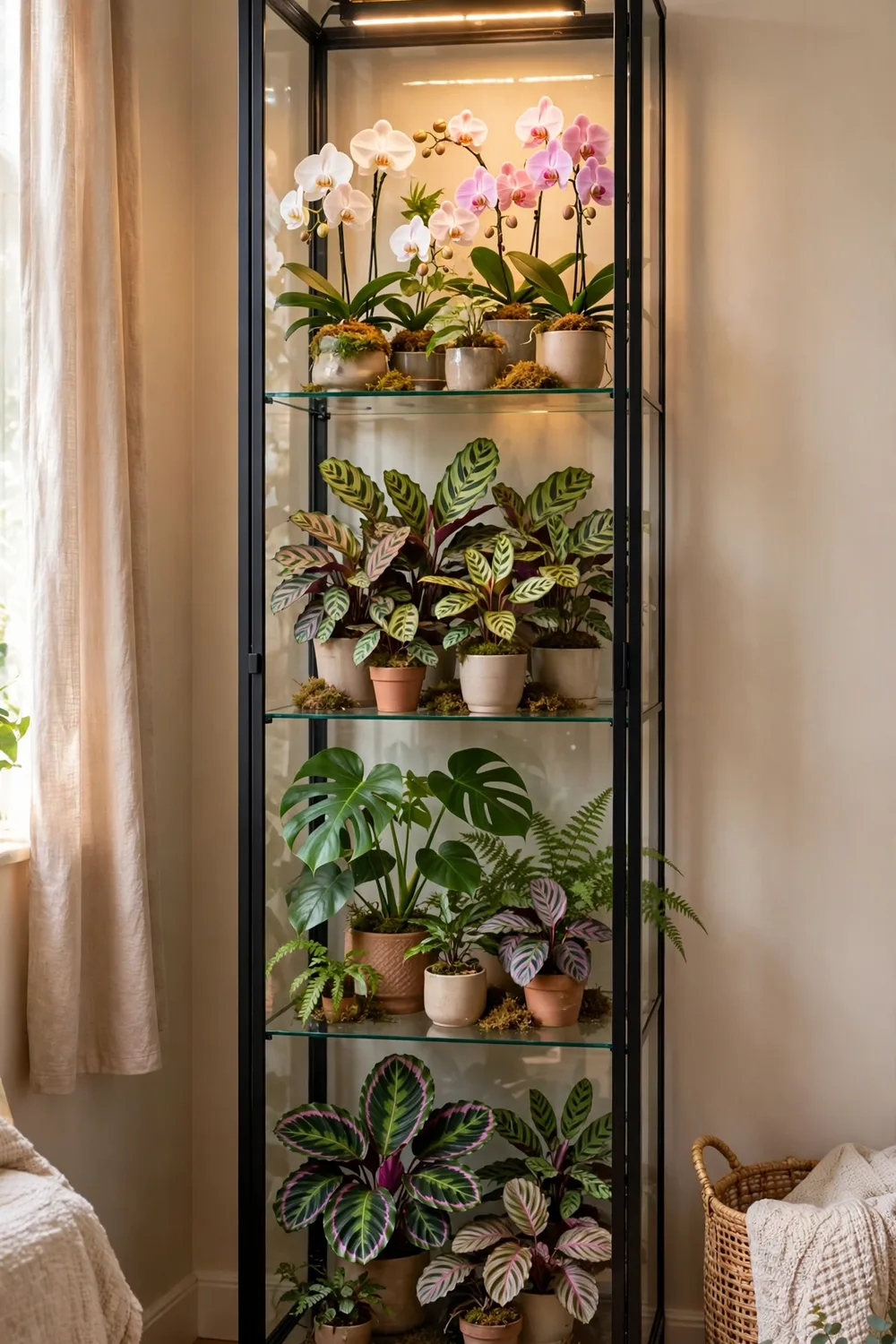
The IKEA Milsbo is the most popular greenhouse cabinet for a reason. The tall version measures about 73 cm wide, 42 cm deep, and 175 cm high, with three adjustable glass shelves, so it holds a whole collection in one corner. Add weather stripping to seal the door, a grow light at the top, and a small fan, and tropical plants will thrive inside all year.
Monsteras, calatheas, orchids, and begonias love the steady humidity in a Milsbo. Keep heavy ceramic pots off the top shelves, since each shelf holds about 5 kg. I keep my calathea on the middle shelf, where the light is softest, and it has not crisped once. Pair the cabinet with a corner plant stand for the plants that do not need humidity, and the corner becomes a full green wall.
2. Build a Wide IKEA Rudsta Greenhouse for the Living Room
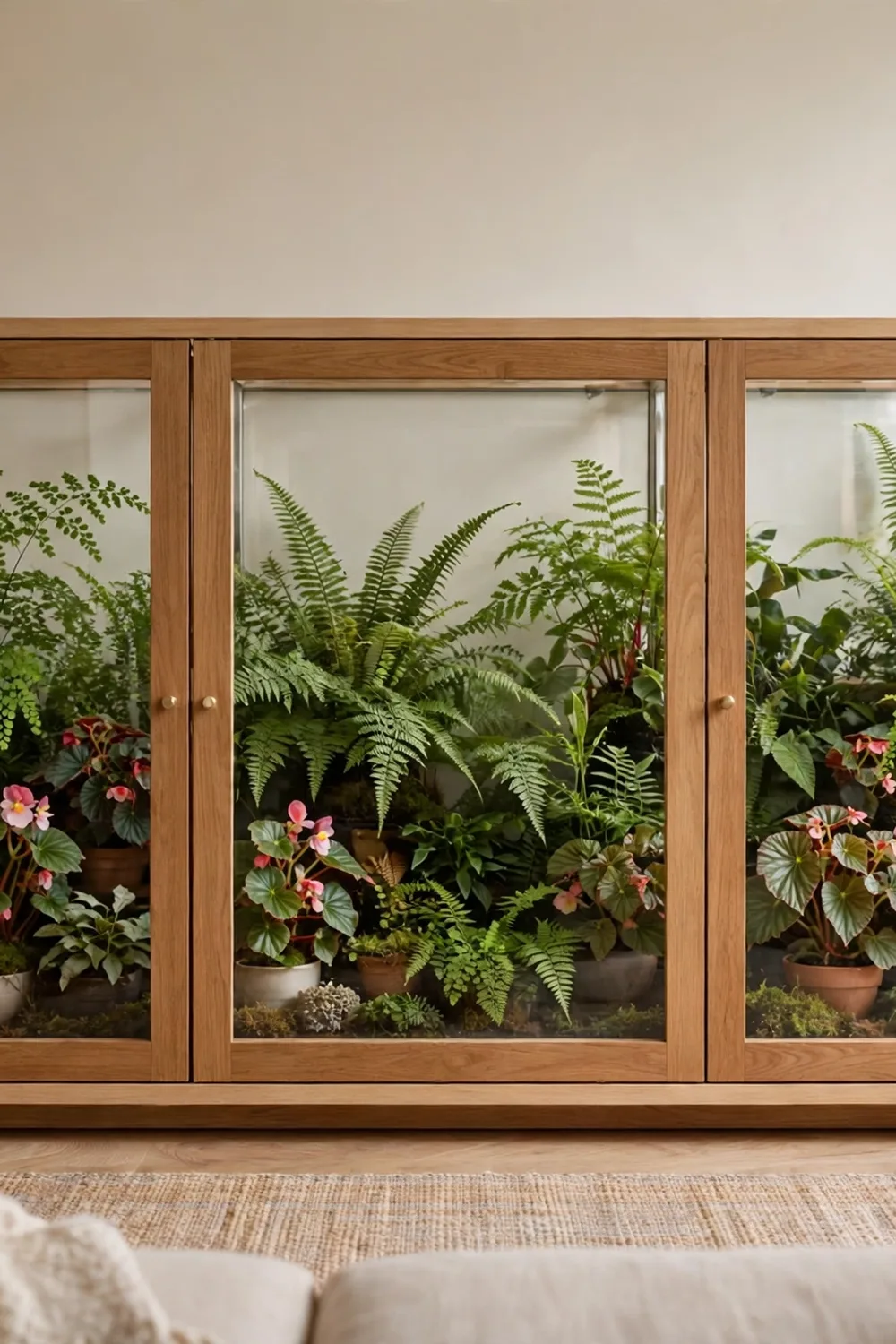
The Rudsta is the wide, low cabinet that works as a living room centerpiece. It costs under 200 dollars, which makes it the cheapest way into a real glass cabinet greenhouse. Assemble it as normal, then add a mini heater, a small humidifier, a thermometer, and a grow light. The wide shape gives you two full shelves of display space at eye level.
Ferns, begonias, and pilea fill a Rudsta fast, so leave gaps for airflow. I run a tiny fan on the lowest shelf and open the doors every morning while the coffee brews. The glass keeps the humidity in, and the plants stay green through the driest winter weeks. Put it where guests can see it, since a planted Rudsta looks like furniture, not equipment.
3. Squeeze an IKEA Fabrikor Into a Small Corner
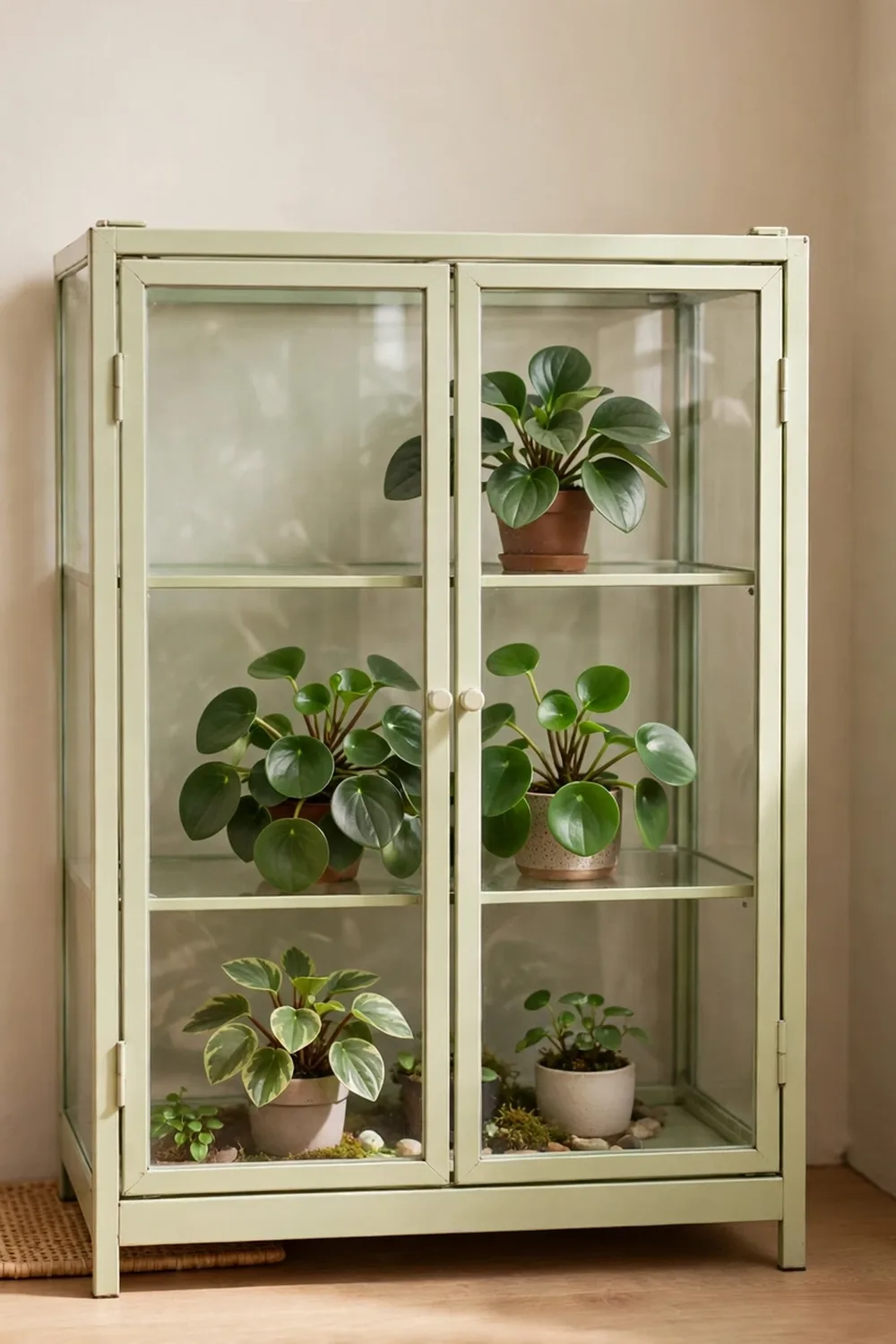
The Fabrikor is the small glass cabinet for corners that fit nothing else. It comes in narrow and wide sizes, and in pale green, light yellow, dark gray, and moody blue, so it can match the room instead of fighting it. The glass top lets grow light in without any cutting or drilling, which makes this the easiest cabinet conversion on this list.
Small tropicals suit it best: peperomia, pilea, small ferns, and young monsteras. Add one grow light bar and a mini humidifier, and the cabinet holds steady humidity with almost no effort. I use mine for cuttings, since the warm, damp air roots them in half the usual time. When a plant outgrows it, move it to a bigger cabinet and start a new cutting.
4. Stack an IKEA Detolf Into a Tall Plant Tower
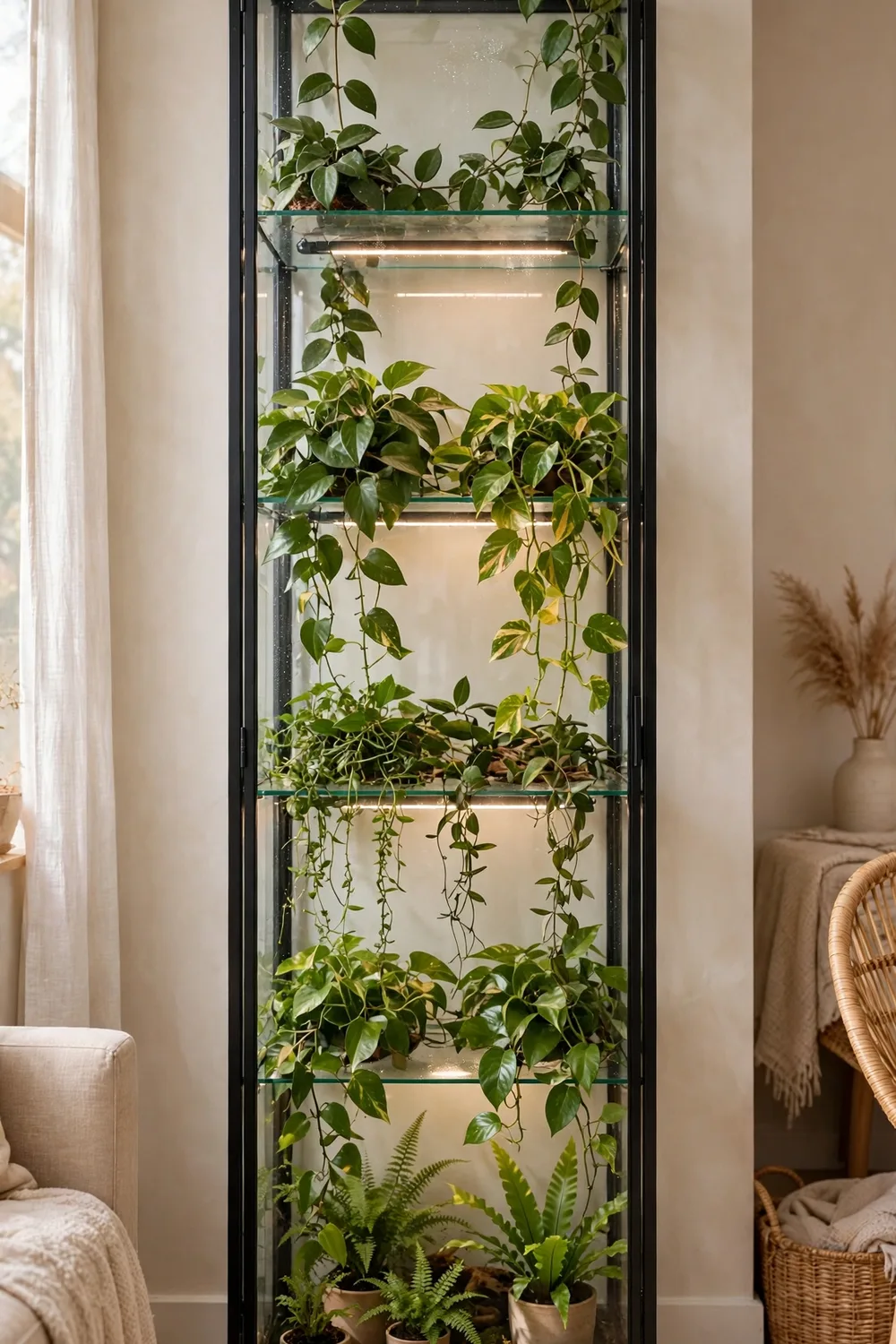
The Detolf is a tall, narrow glass tower that turns one square foot of floor into four shelves of plants. It suits climbers best, since hoyas and pothos can trail down from the top shelves while smaller plants fill the lower ones. Add a grow light strip on each shelf and a small fan at the base, and the tower stays bright from top to bottom.
Moss and small ferns love the damp lower shelves, while the top shelf stays drier and brighter for succulents that like light. I keep a spray bottle beside mine and mist the tower every second day. The Detolf looks best against a plain wall, where the glass and the green do all the talking.
5. Make a Picture Frame Mini Greenhouse
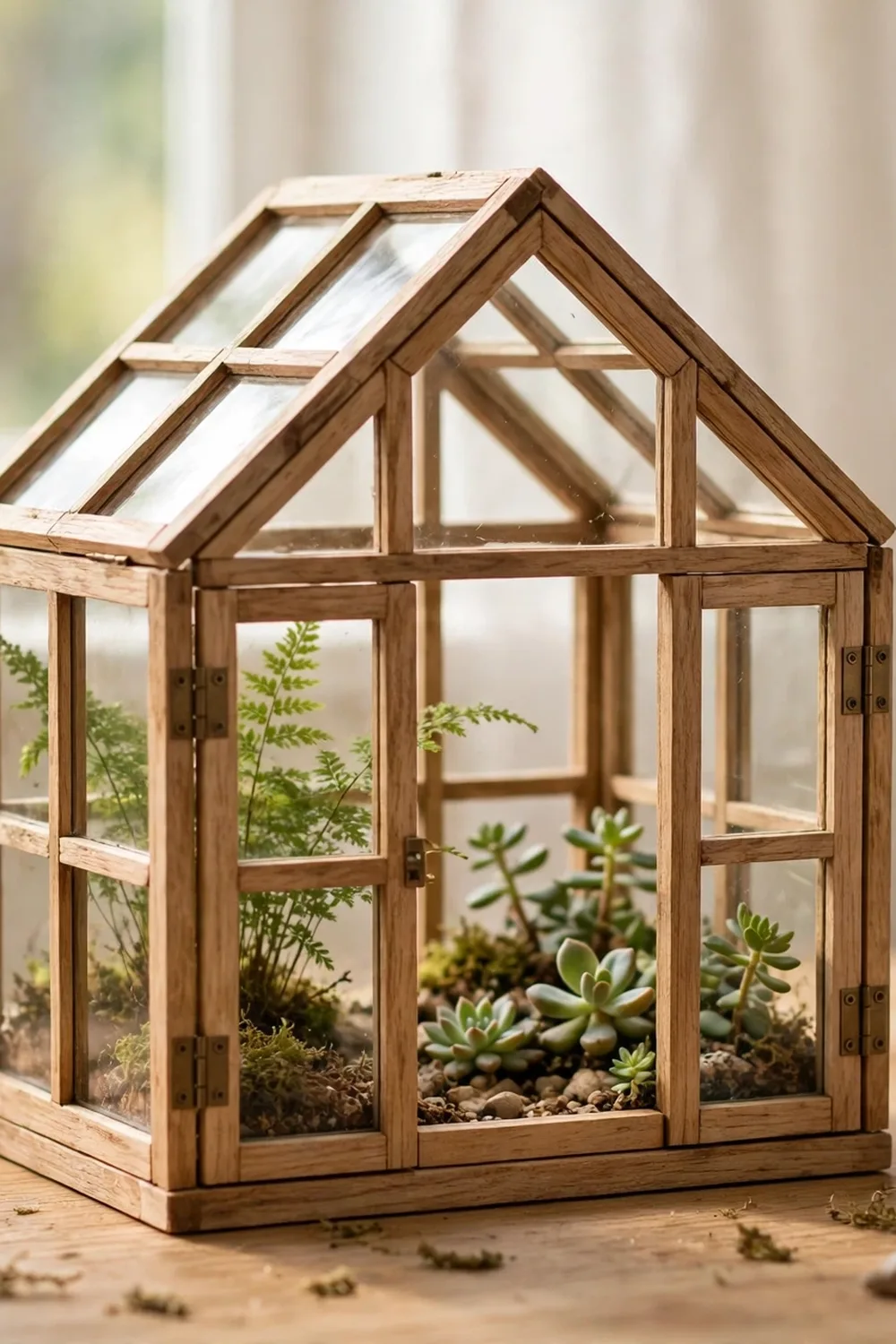
A picture frame mini greenhouse is the smallest idea on this list, and the cheapest to try. Spray paint four small frames, hot glue them into a little house shape, and set it over one or two small plants near a window. It holds only a plant or two, but it holds humidity far better than an open pot.
Tiny ferns, baby succulents, and small pilea fit perfectly inside. I built one in an afternoon from frames I already owned, and it now sits on my desk holding a fern that died twice on an open shelf. Keep it near bright light but out of harsh midday sun, since a tiny glass box heats up fast.
6. Start Seeds in a Windowsill Greenhouse Dome
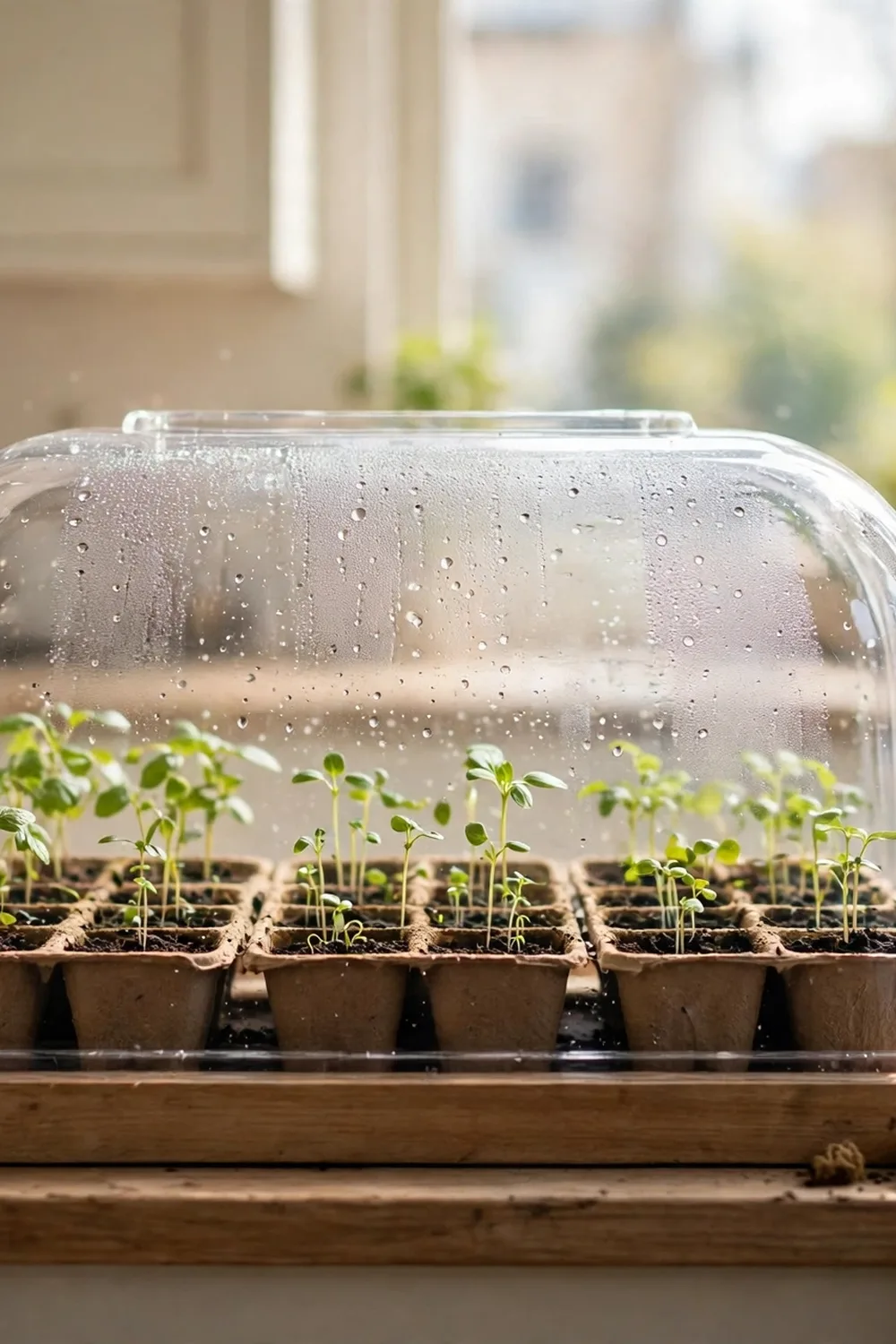
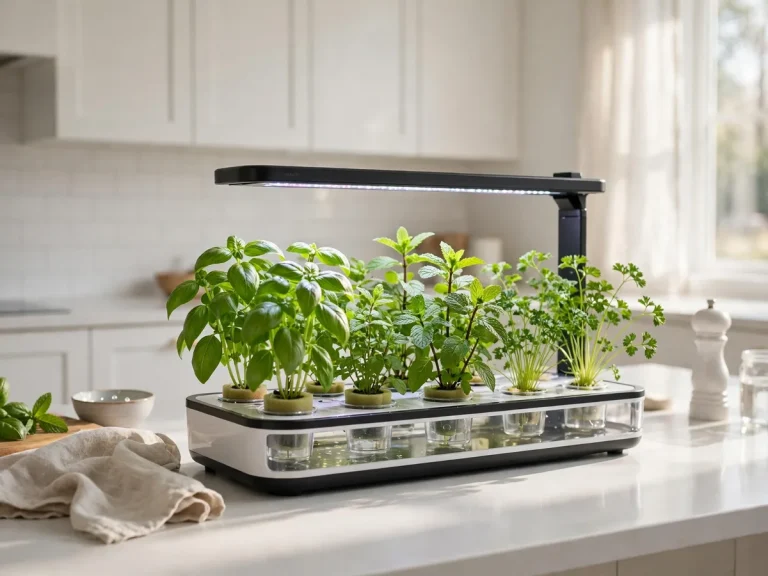
A windowsill greenhouse is a tray with a clear dome, and it is the best way to start seeds in an apartment. The dome holds moisture over the soil, so seeds germinate fast and evenly. Use a bright south, east, or west window, and add a small LED grow light in winter, when daylight runs short.
Herbs, microgreens, and leafy greens all start well under a dome. Vent the dome or lift it off once seedlings appear, since sealed, damp air invites disease. I start basil and lettuce on my kitchen sill every February, and the first leaves are ready before spring arrives. A tray, a mat, and a light are all you need.
7. Set an IKEA Socker on the Tabletop
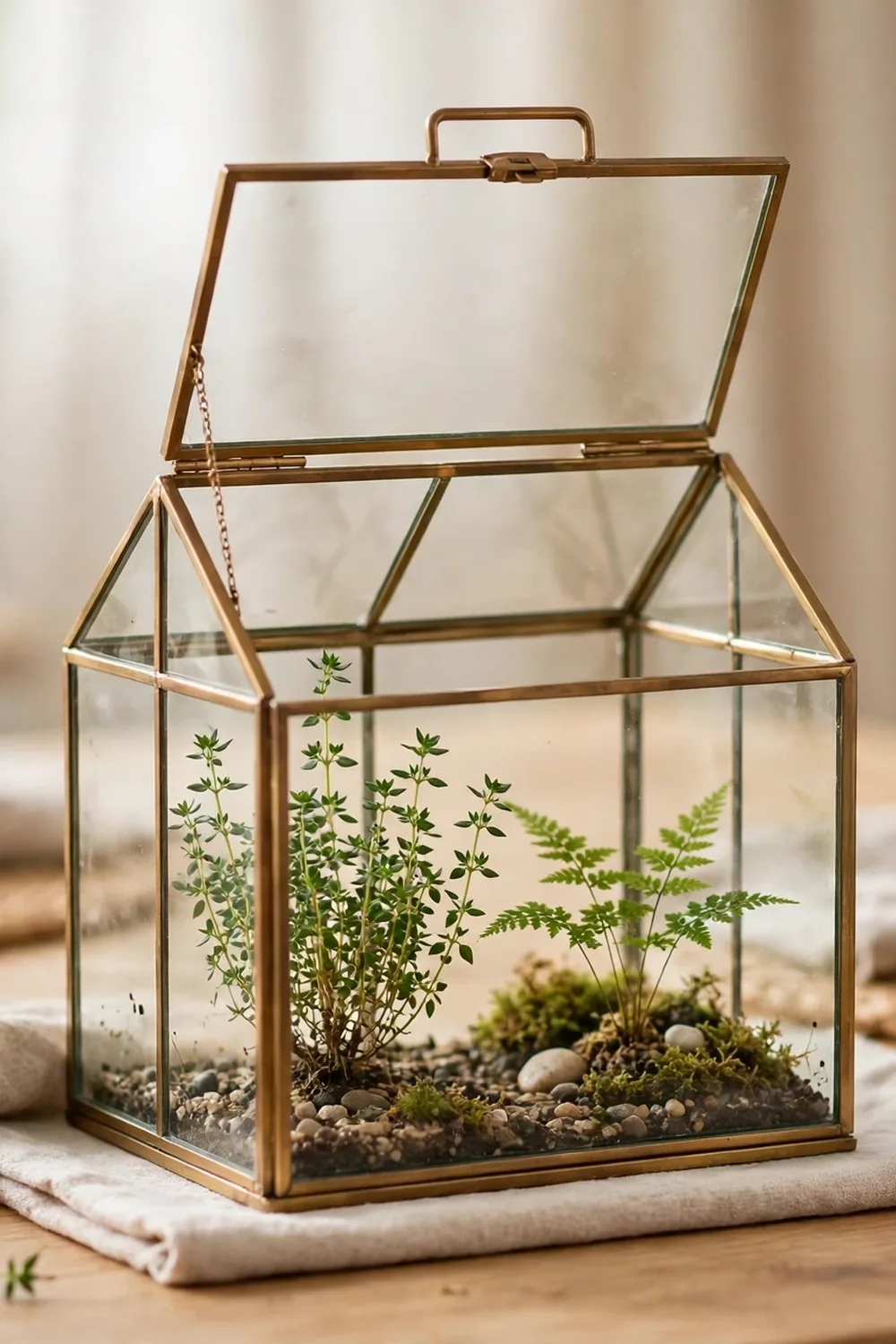
The IKEA Socker is a ready-made mini greenhouse that fits on a wide windowsill or a side table. It opens from the top, so you can reach in to water without moving the whole thing. It suits small herbs, succulents, and seed trays, and it looks neat enough to live in the living room.
Keep it in bright light and open the lid daily for fresh air. I keep one on my dining table with thyme and a tiny fern, and guests always ask about it first. The Socker proves a greenhouse does not need a project. Sometimes the right product is already on the shelf.
8. Wrap a Bookshelf in Clear Vinyl
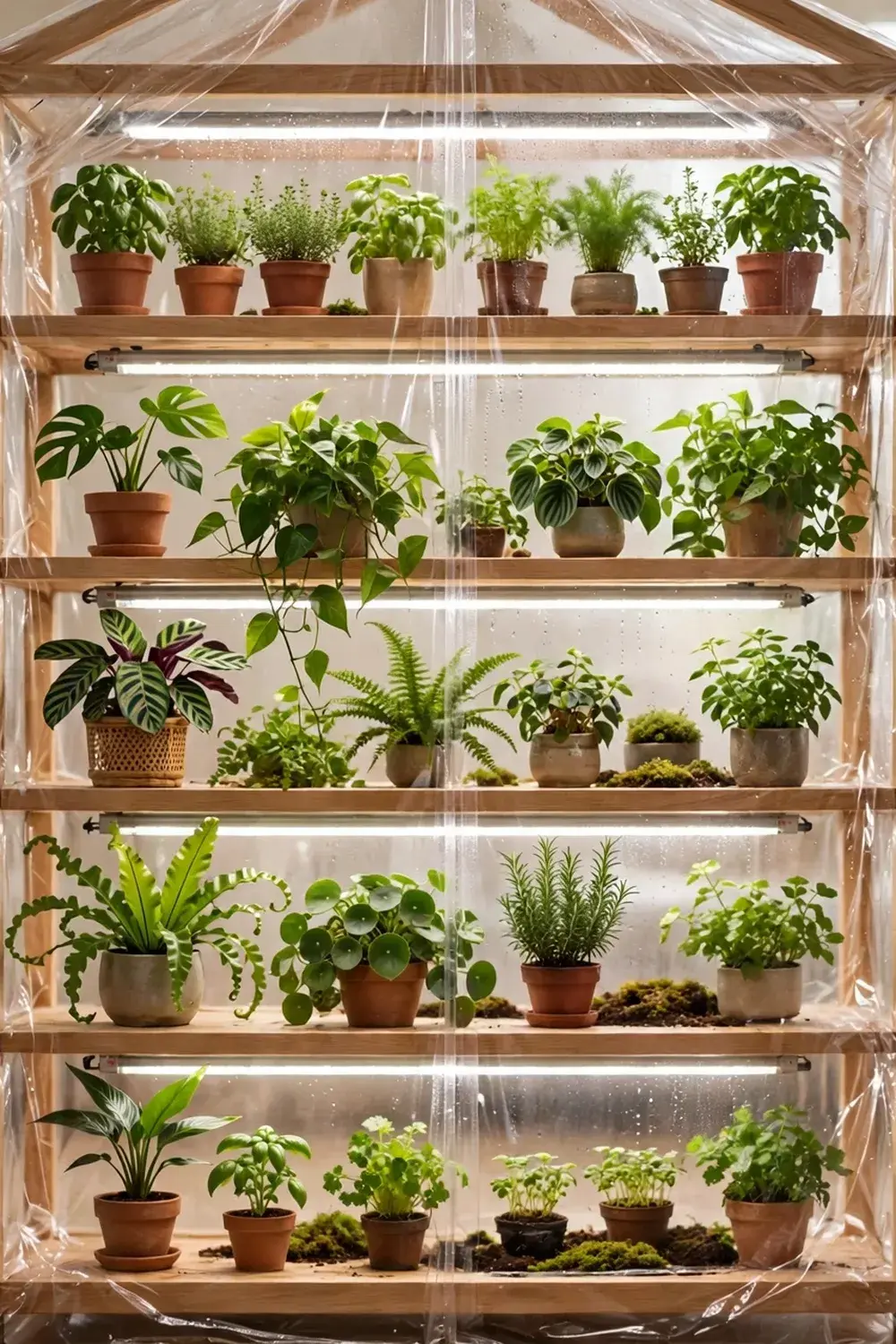
A bookshelf greenhouse is a bookshelf wrapped in clear vinyl, with a grow light on each shelf. It turns furniture you already own into a vertical garden, and it costs far less than a glass cabinet. Use clear vinyl sheeting, a few LED bars, and a small fan, and each shelf becomes its own warm, bright level.
Tropical plants, herbs, and starter trays all grow well on wrapped shelves. Start with plant shelf ideas if you already own the shelves, then add the vinyl and lights. I wrapped my old bookcase in one evening, and the monstera on the middle shelf doubled in a season. Leave the front loose so you can reach in daily.
9. Turn an Unused Closet Into a Greenhouse
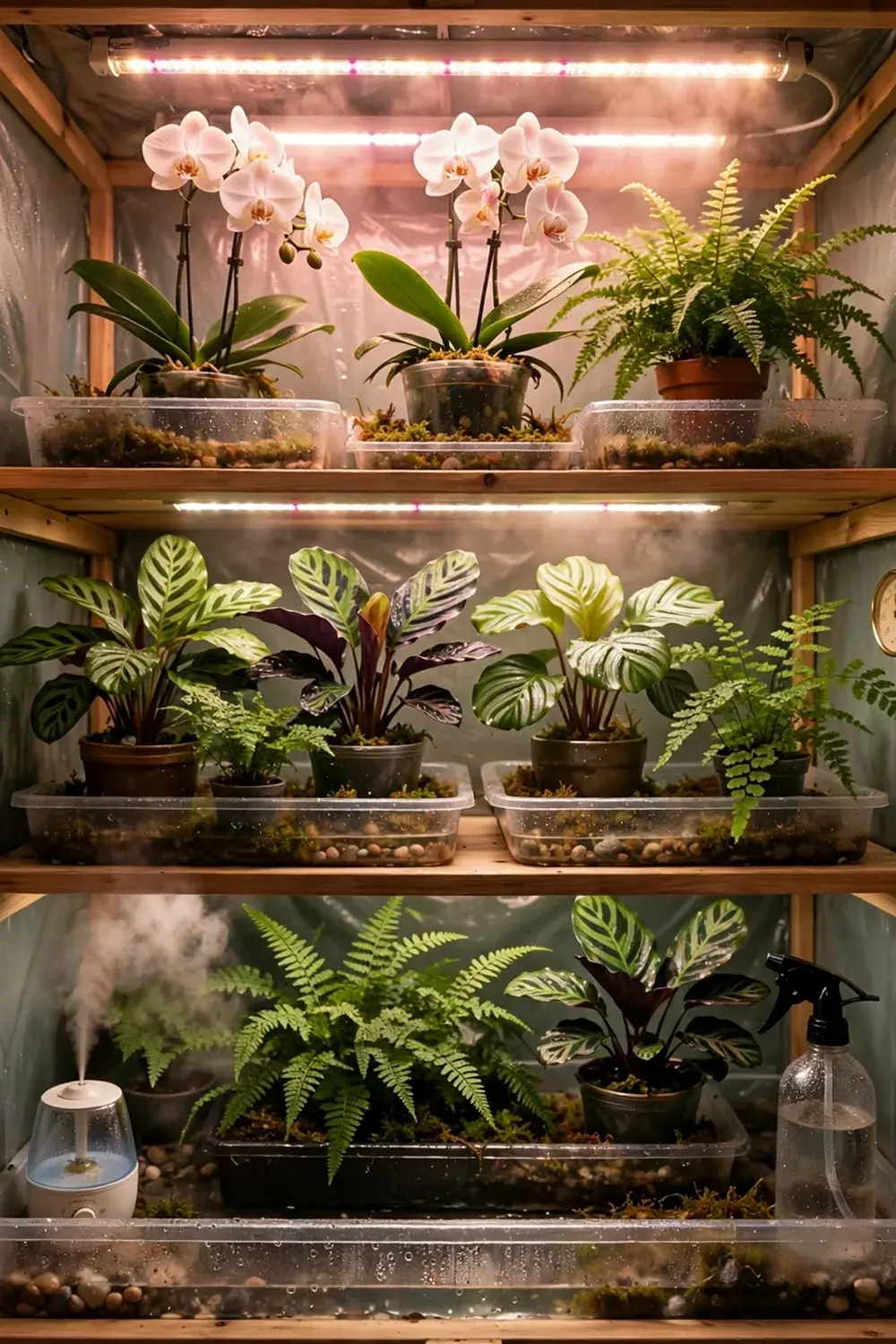
An unused closet is a ready-made greenhouse room. It already has walls, a door, and darkness you can control. Add grow lights, a small fan, and a humidifier, and the closet becomes a warm, bright box where tropical plants grow fast. Line the shelves with waterproof trays so water never reaches the wood.
Calatheas, ferns, and orchids thrive in a closet greenhouse, since the small space holds humidity well. I converted a hallway closet last winter, and my orchid bloomed twice in it. A closet with no light at all will not grow anything, even with a greenhouse. For those dead spots, artificial plants decoration ideas fill the gap with green that needs no light.
10. Grow Herbs in a Balcony Mini Greenhouse
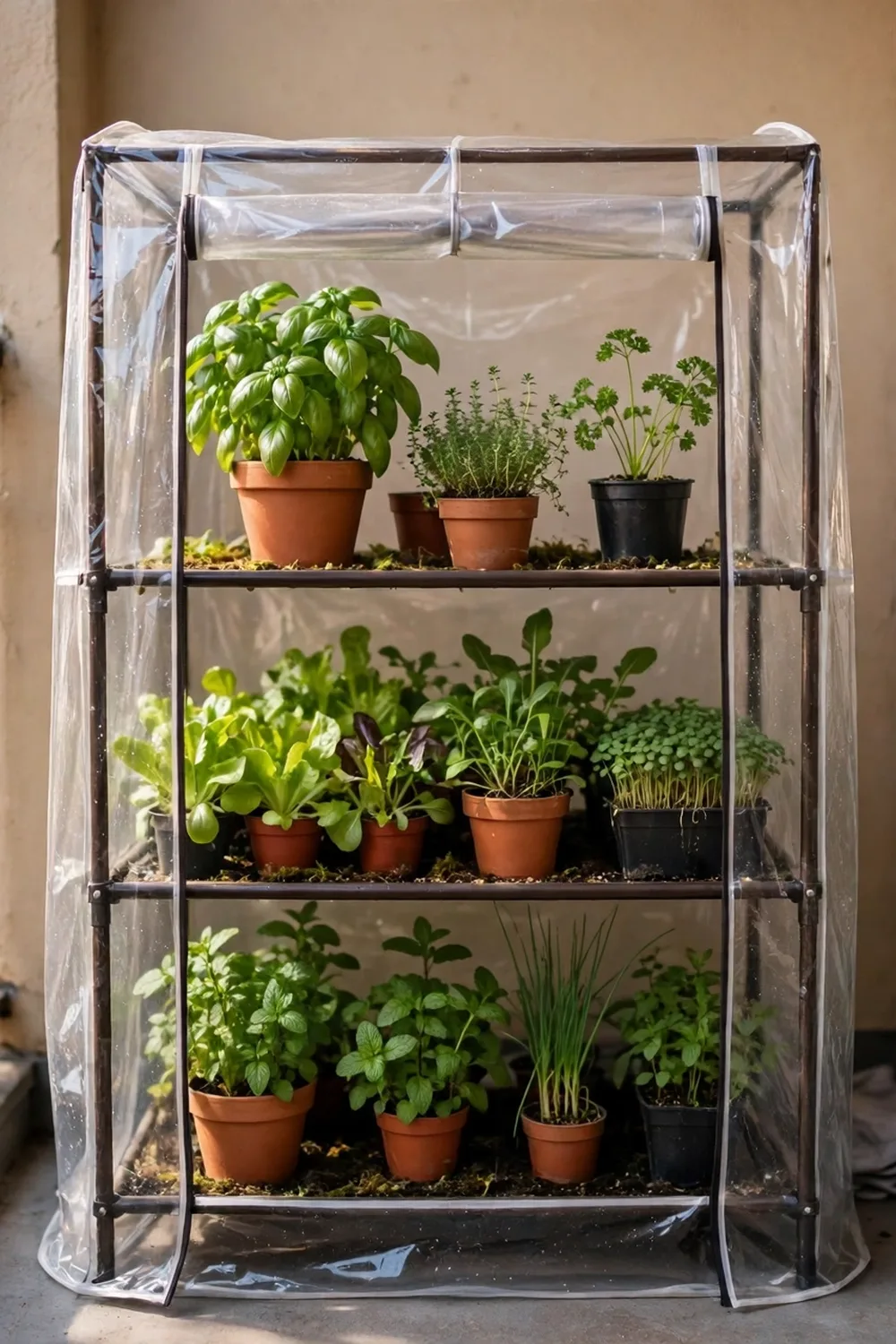
A balcony mini greenhouse is a small shelved unit with a clear cover, and it is the renter friendly way to grow food outside. It fits on even a narrow balcony, and the cover shields plants from wind and cold snaps. Roll it against the wall on stormy days, and roll it back into the sun after.
Herbs, lettuce, and leafy greens grow best in a balcony greenhouse. I grow basil, mint, and parsley in mine from spring to late fall, and the cover adds weeks on both ends of the season. Keep the cover vented on hot days, since a closed mini greenhouse can cook seedlings in strong sun. Water in the morning so leaves dry before night.
11. Start Everything in a Plastic Tote Greenhouse
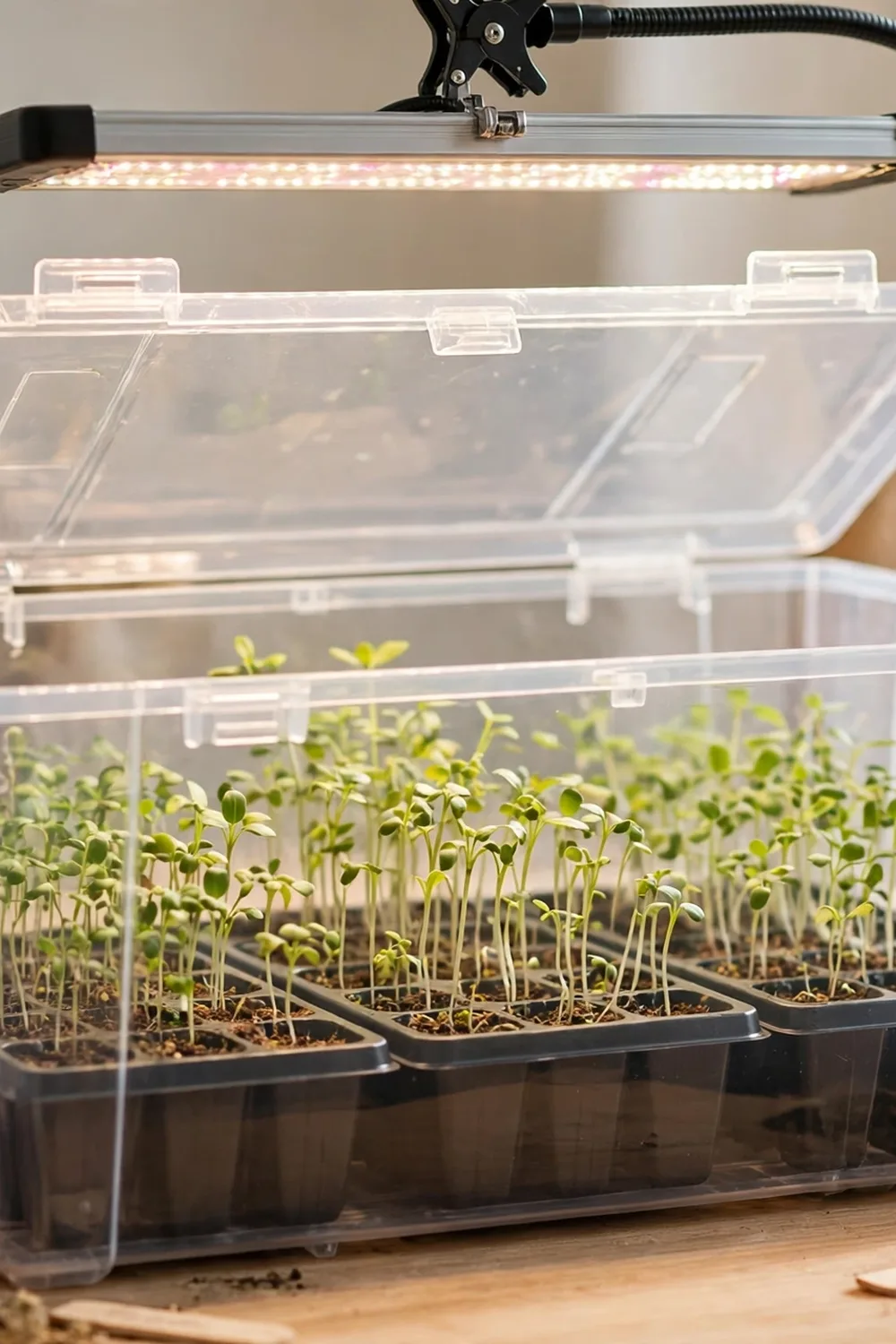
A plastic tote greenhouse is a clear storage bin turned into a seed starter. Drill a few ventilation holes in the lid, set trays inside, and add a grow light above. It costs almost nothing, holds dozens of seedlings, and stacks away when the season ends.
Seedlings, cuttings, and microgreens all start well in a tote. I start peppers and tomatoes in mine every March, and the warm, damp air gives them a head start of weeks. Keep the lid cracked once sprouts appear, and move seedlings to bigger pots before they crowd each other. One tote can start a whole summer garden.
12. Build a Tiered Shelf Greenhouse With Grow Lights
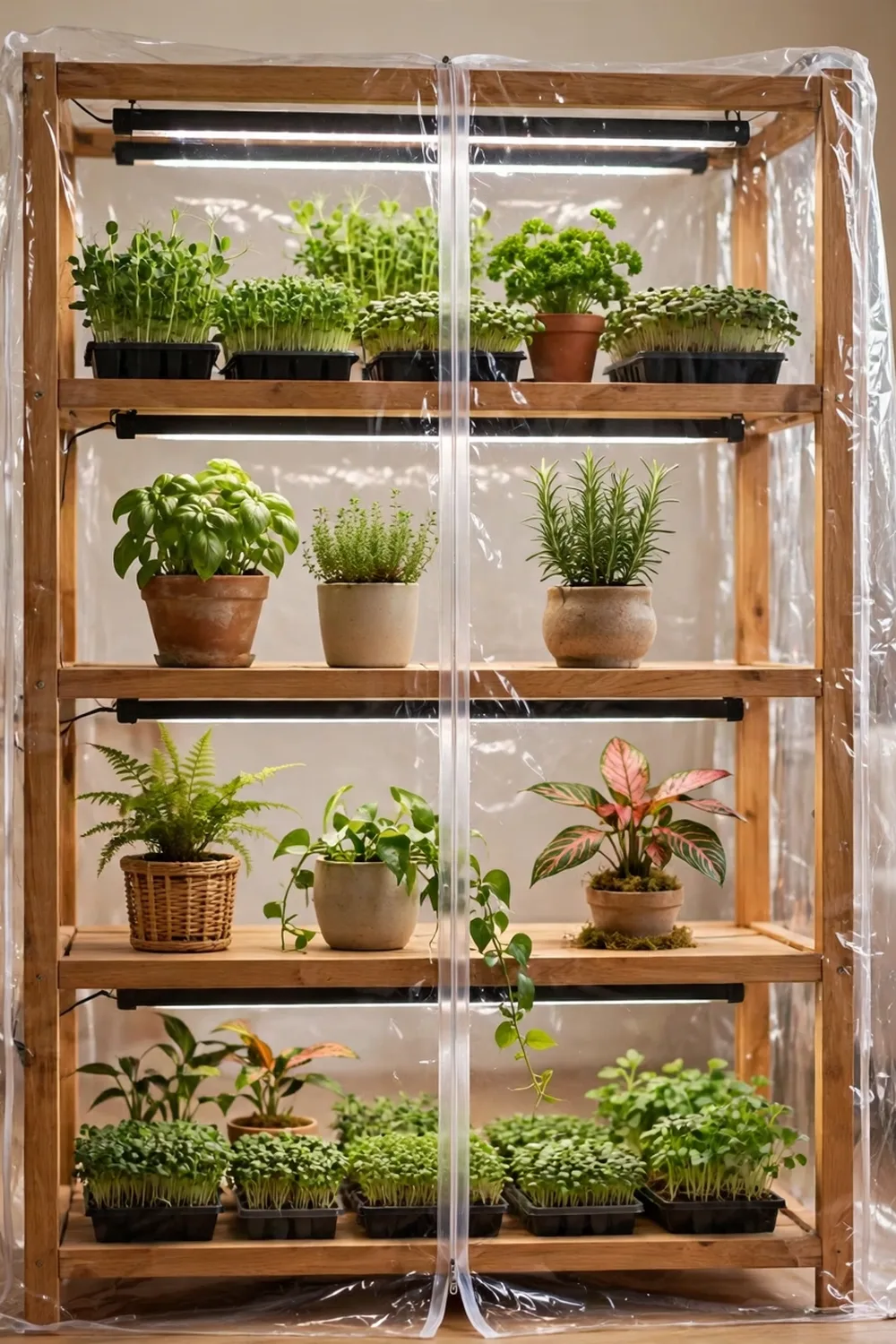
A tiered shelf greenhouse is a shelving unit with a grow light on every level and a clear cover over the whole frame. It grows the most plants per square foot of any idea on this list, since every level is a full growing shelf. Rolling shelves work best, since you can move the unit to chase the light.
Herbs, microgreens, starter plants, and small tropicals all grow on tiered shelves. I run three levels in my spare corner: herbs on top, seedlings in the middle, and tropicals at the bottom where it stays dampest. Keep the lights 6 to 12 inches above the leaves, and run them 12 to 16 hours a day. The setup pays for itself in one season of herbs.
13. Protect One Special Plant Under a Glass Cloche
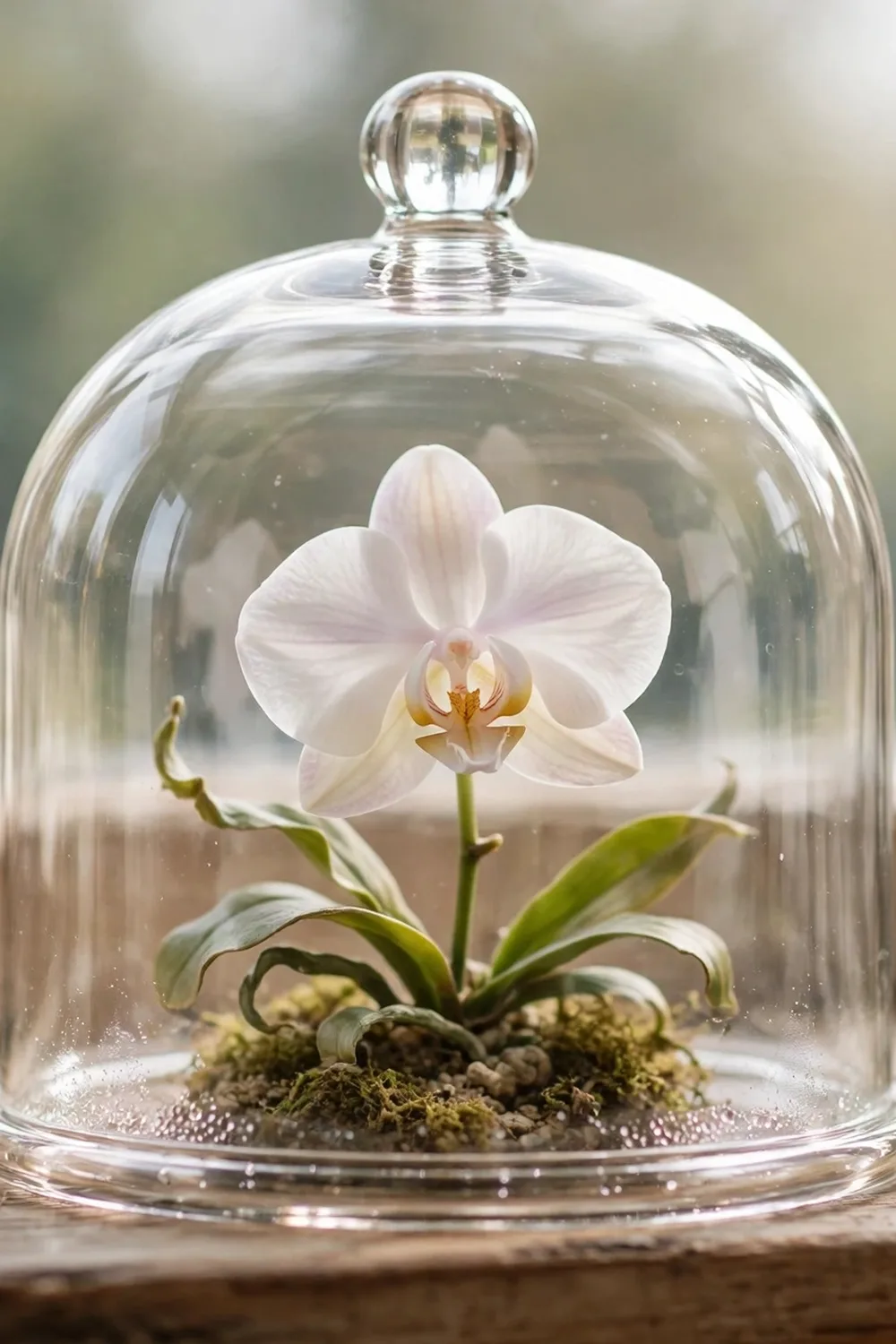
A glass cloche is a bell-shaped cover that turns one plant into its own tiny greenhouse. It suits the plant you love most: a rare orchid, a fussy calathea, or a cutting that keeps failing. The cloche holds humidity around that one plant while the rest of the room stays dry.
Orchids, rare philodendrons, and small ferns thrive under a cloche. I keep my most delicate orchid under one on the windowsill, and it blooms every year without fail. Lift the cloche daily for fresh air, and wipe the inside so condensation never drips on the leaves. One plant, one cloche, zero fuss.
14. Fill a Dead Corner With a Greenhouse Cabinet
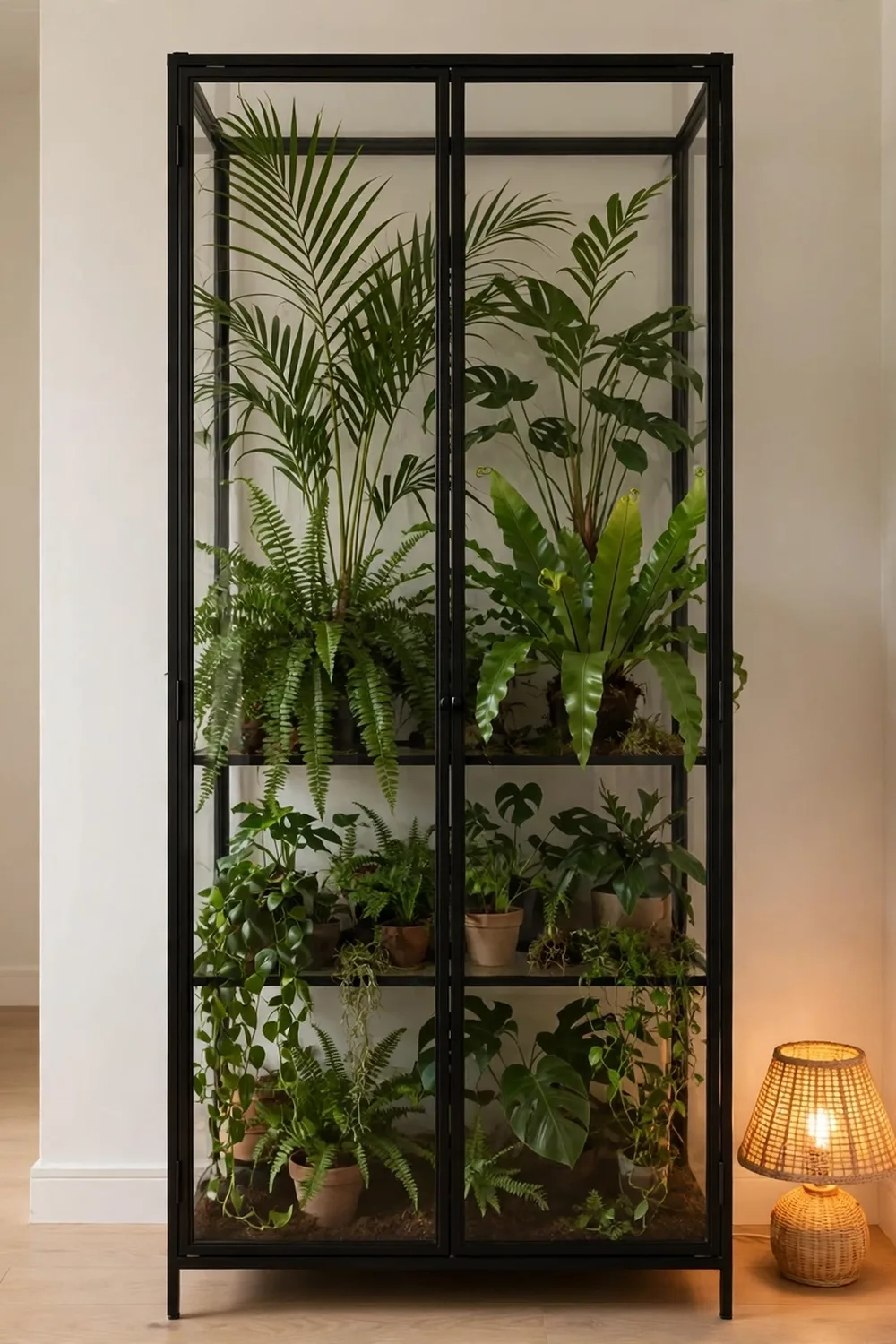
Every small apartment has a dead corner where nothing grows. A greenhouse cabinet fixes it. The glass box brings its own light and humidity, so the corner becomes the greenest spot in the room. Choose a cabinet that fits the corner exactly, and let the plants be the decor.
Tall tropicals, ferns, and climbing plants suit a corner cabinet best. The same logic runs through small apartment plant decor: one strong green moment per room, not plants in every corner. I filled my dead hallway corner with a narrow cabinet, and it is now the first thing guests notice. Add a small lamp beside it, and the corner glows at night.
15. Harden Seedlings in a Balcony Cold Frame
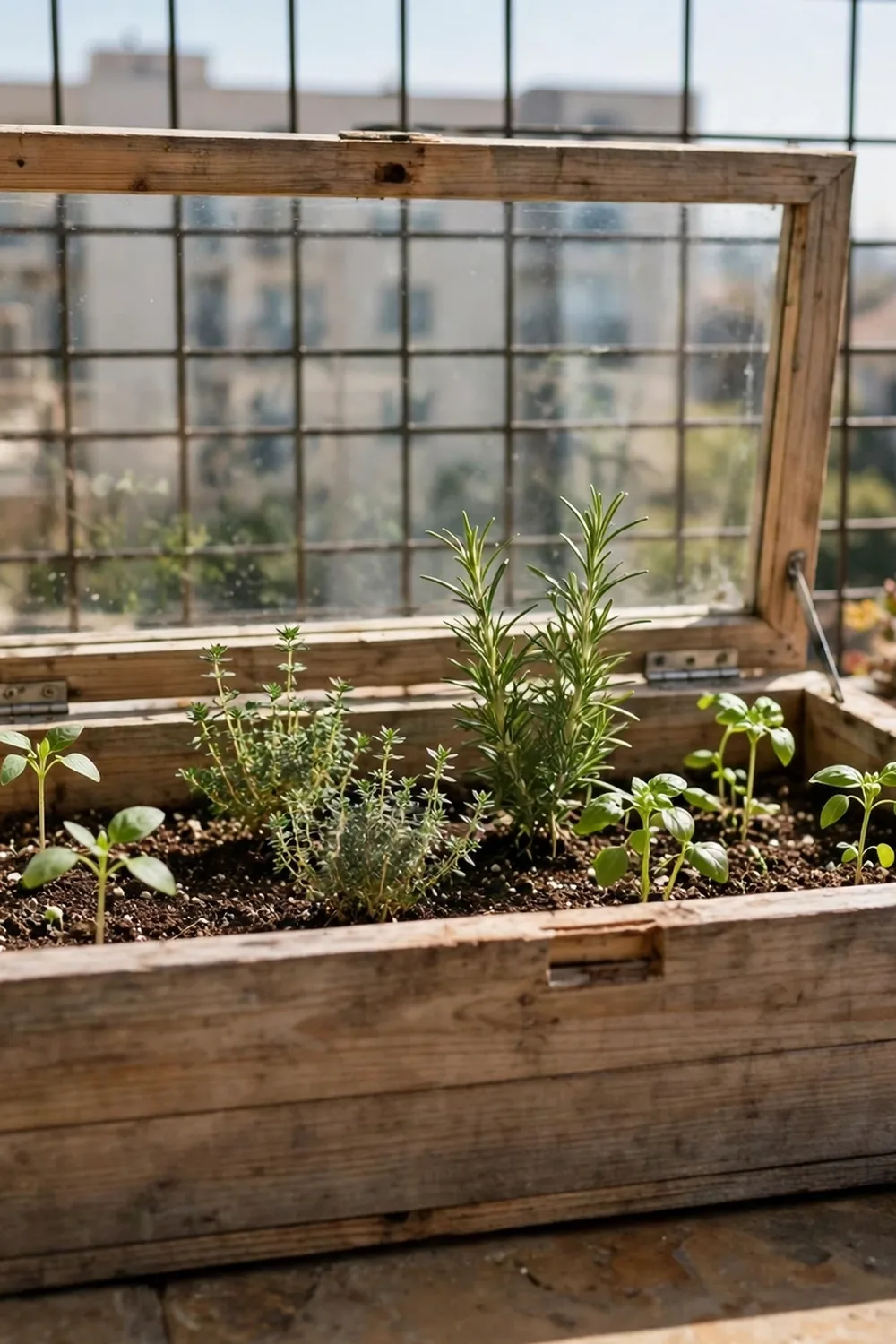
A cold frame is a low wooden box with a hinged glass lid, and it is the classic way to harden seedlings before they move outside. The slanted lid catches the sun, the box blocks the wind, and the seedlings grow tough without ever leaving the balcony. Build it about three feet wide and two feet deep, with the back a little taller than the front.
Seedlings, hardy herbs, and young vegetables all harden well in a cold frame. I move my tomato and pepper starts into mine two weeks before they go out, and they never wilt after transplanting. Open the lid on warm days and close it at night, and the plants adjust to real weather one step at a time.
16. Hang a Mini Greenhouse on the Wall
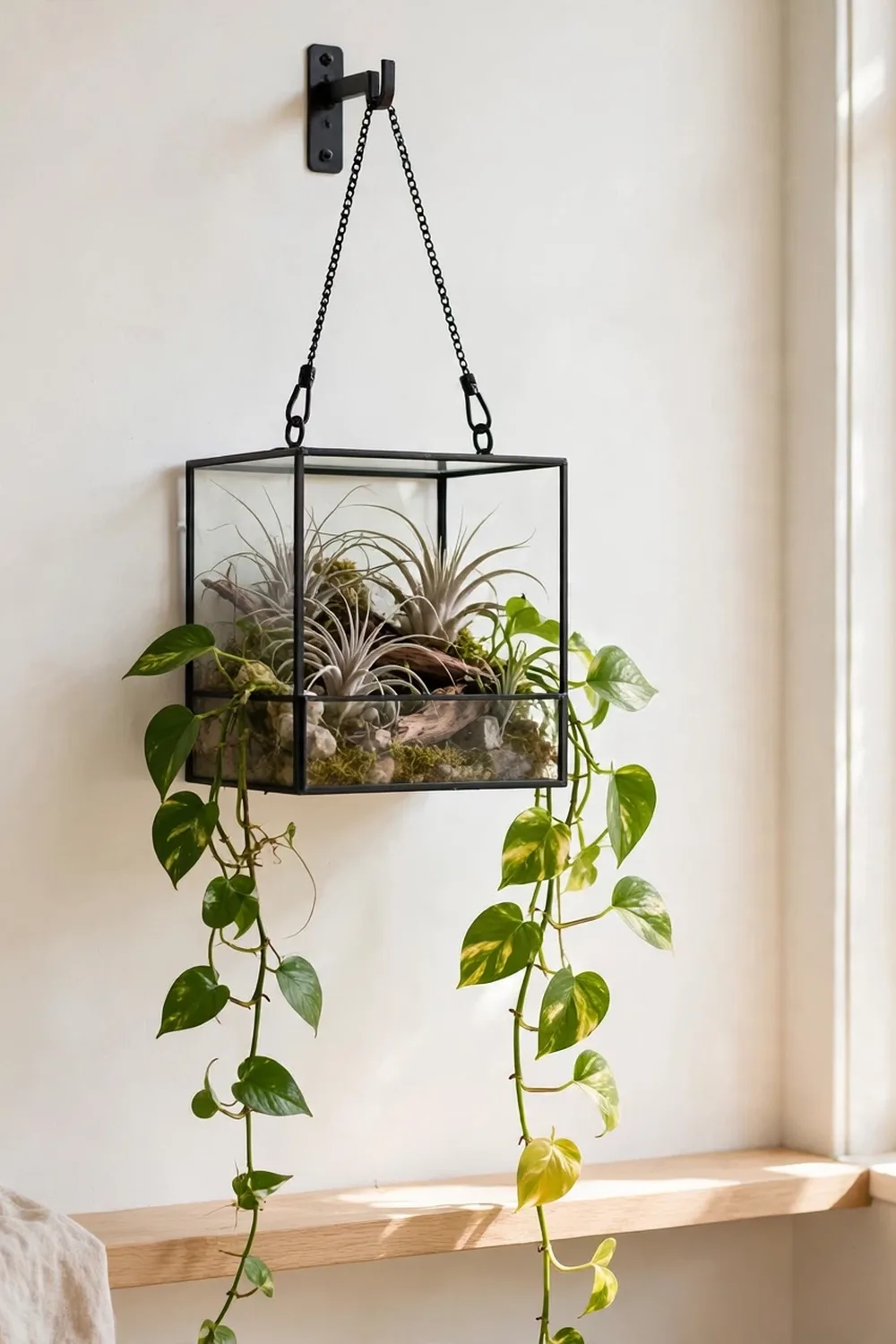
A hanging mini greenhouse is a small glass box or a wall-mounted shelf with a clear cover, and it grows plants where floor space does not exist. Hang it by a bright window, add a small grow light, and trailing plants will spill out of it within weeks. It suits tiny rooms, dorms, and hallways best.
Trailing pothos, string of pearls, and air plants all grow well in a hanging greenhouse. I hung one beside my desk window, and the pothos inside trails down past the sill now. Keep it light, since wall hooks hold less than floor shelves, and water with a spray bottle so nothing drips on the floor.
17. Build a Starter Greenhouse for Under 100 Dollars
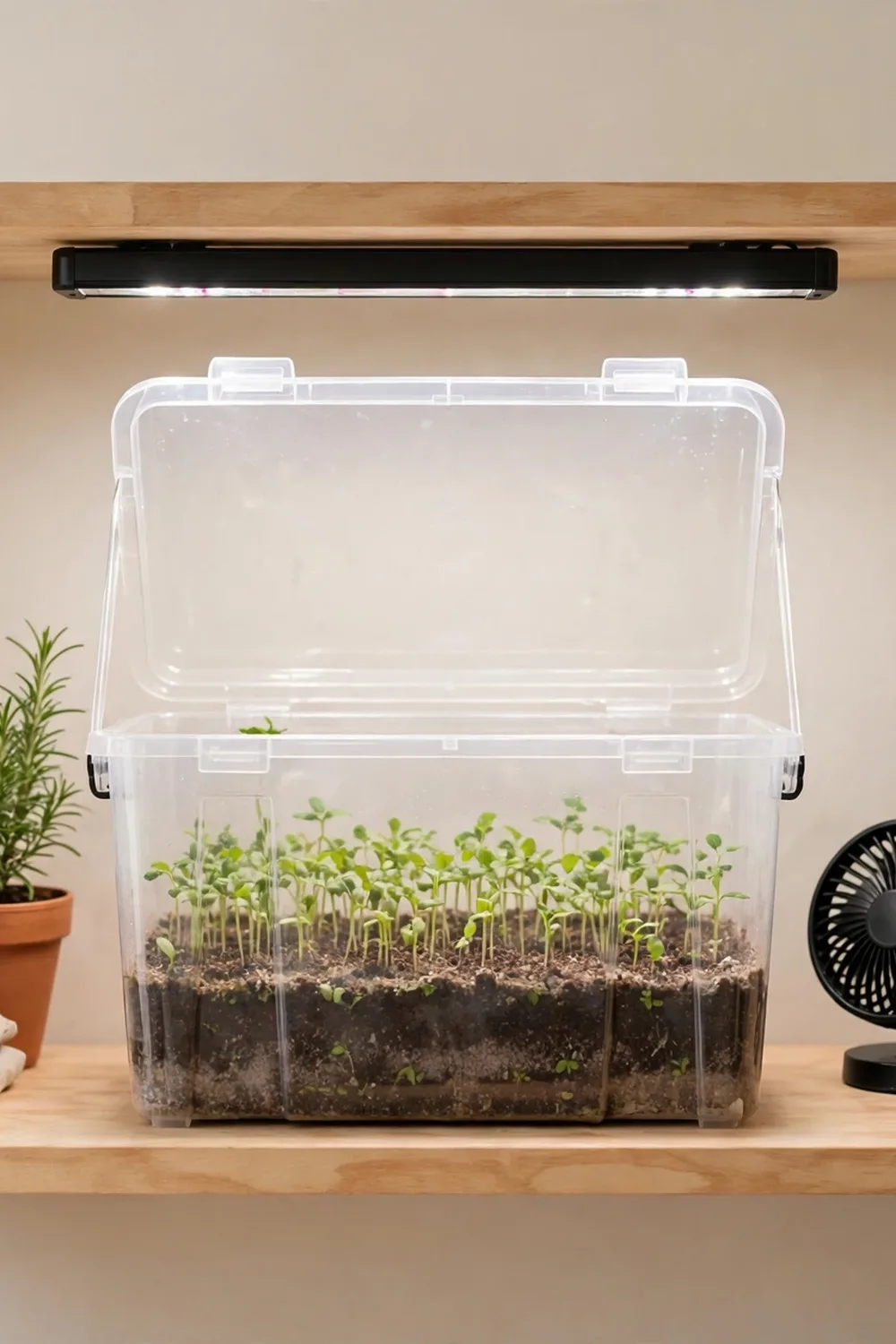
A starter greenhouse does not need a cabinet or a brand name. A clear tote, one LED grow light, a small fan, and a hygrometer cost under 100 dollars together, and they grow almost anything a beginner wants. Put the tote on a shelf, hang the light above it, and set the fan to run a few hours a day.
Start with herbs, microgreens, and one tropical plant you love. I built my first greenhouse this way, and the basil alone saved me the cost of the light in one summer. Spend the money you save on better soil and healthy starter plants. The setup is simple, but the results are real.
Conclusion
An indoor greenhouse is not a luxury. It is a small, warm box that lets tropical plants live in a home that would otherwise kill them. Start with one setup from this list, learn its five rules, and add a second one only when the first is full. Your plants will tell you when they are happy, and the green will spread from there.