
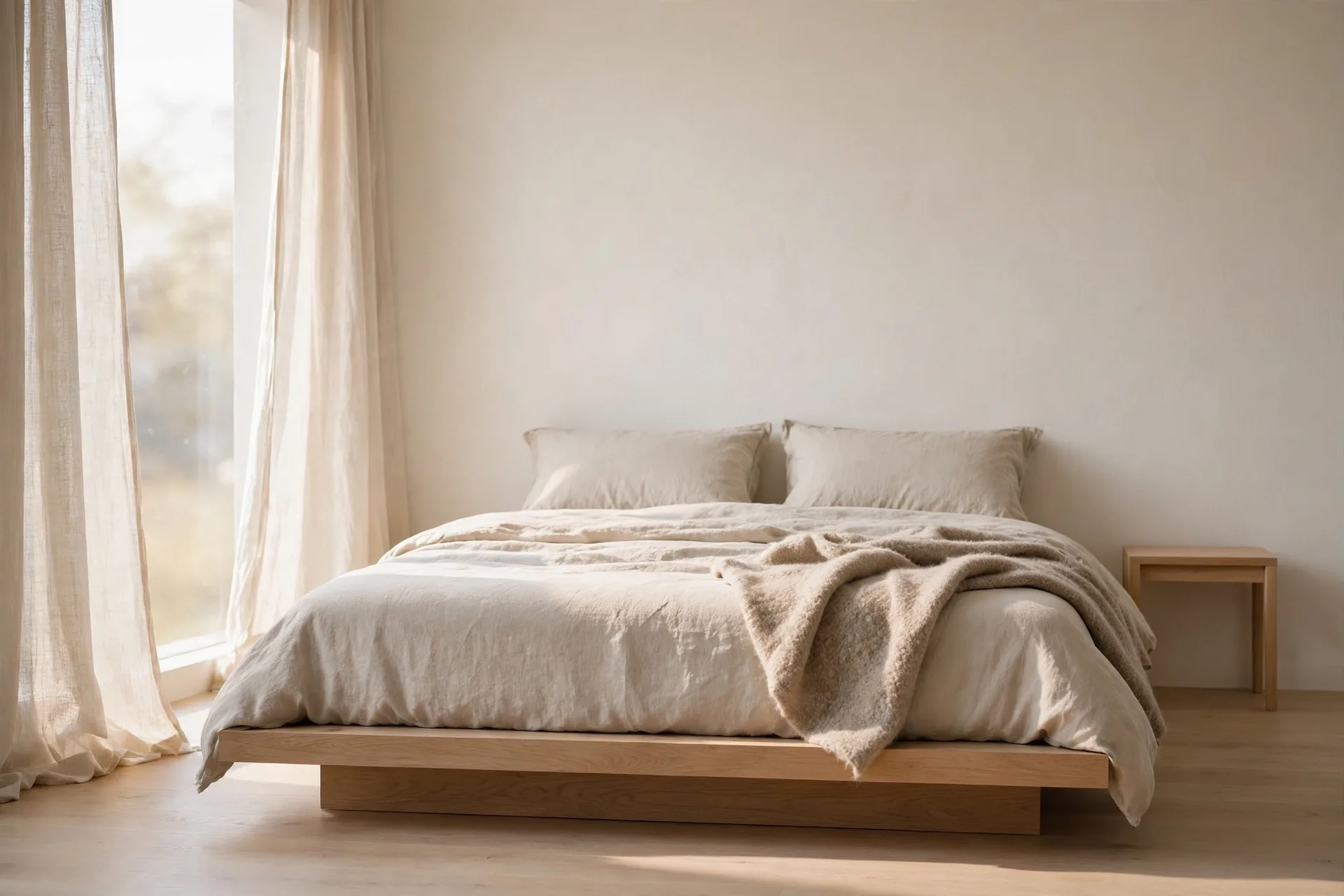
Minimalist bedroom ideas fail most often in one of two ways. The room ends up stark, white, and cold, like a gallery you are afraid to touch. Or it ends up as a declutter project that looks calm for one weekend and drifts back within a month. This guide avoids both, because it treats minimalism as a system, executed warm.
The system has 11 ideas in three groups. Four system rules decide the furniture, the palette, and where storage lives. Four warmth moves stop the room feeling cold. Three restraint moves decide what stays, including the one plant moment and a no-buy edit for small and rented rooms. It is a set of decisions you make once, in order, not a daily habits routine.
If minimalism is one of several styles being weighed, the wider bedroom decor ideas guide routes every style before you commit to one direction. If you already know you want fewer pieces, warmer light, and calmer surfaces, start with the system rules and work down.
The System Rules: Decide the Room Before You Style It
Minimalism is decided at furniture level, not at decor level. Get these four rules right and the room almost styles itself, because there is simply less in it to fight. Before you remove a single piece, set the bed position with the small bedroom layout hub, because minimalism exposes a bad layout instead of hiding it. Layout belongs to that guide. This one starts once the bed is in the right place.
Idea 1: A Furniture Count That Fits the Room
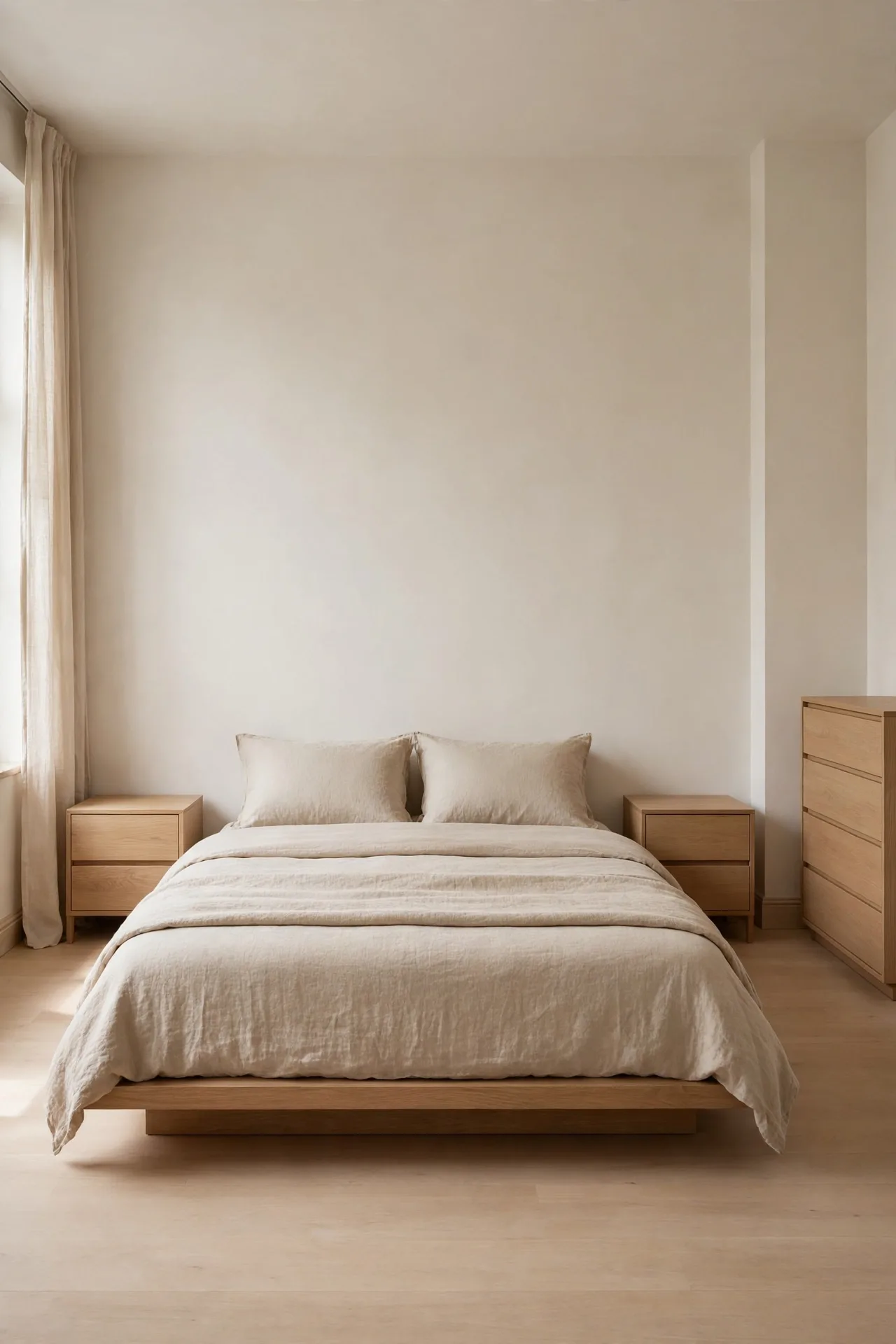
Count your furniture before you style anything. A working minimalist bedroom usually holds five pieces: the bed, one or two nightstands, one dresser or a wardrobe, and one optional extra, such as a small chair or bench, only if the floor still breathes. Every piece has to earn its floor space by doing a job you use daily. A piece that holds nothing, blocks a path, or exists because it came with a set does not earn its place.
Test each piece with one question: what would break if this left the room tonight? If the honest answer is nothing, it is a candidate for the edit in Idea 9. Do not buy your way to the right count. Removing one wrong piece changes a room more than adding any minimal-looking object, and it costs nothing.
Idea 2: Low-Profile Pieces That Keep Sight Lines Calm
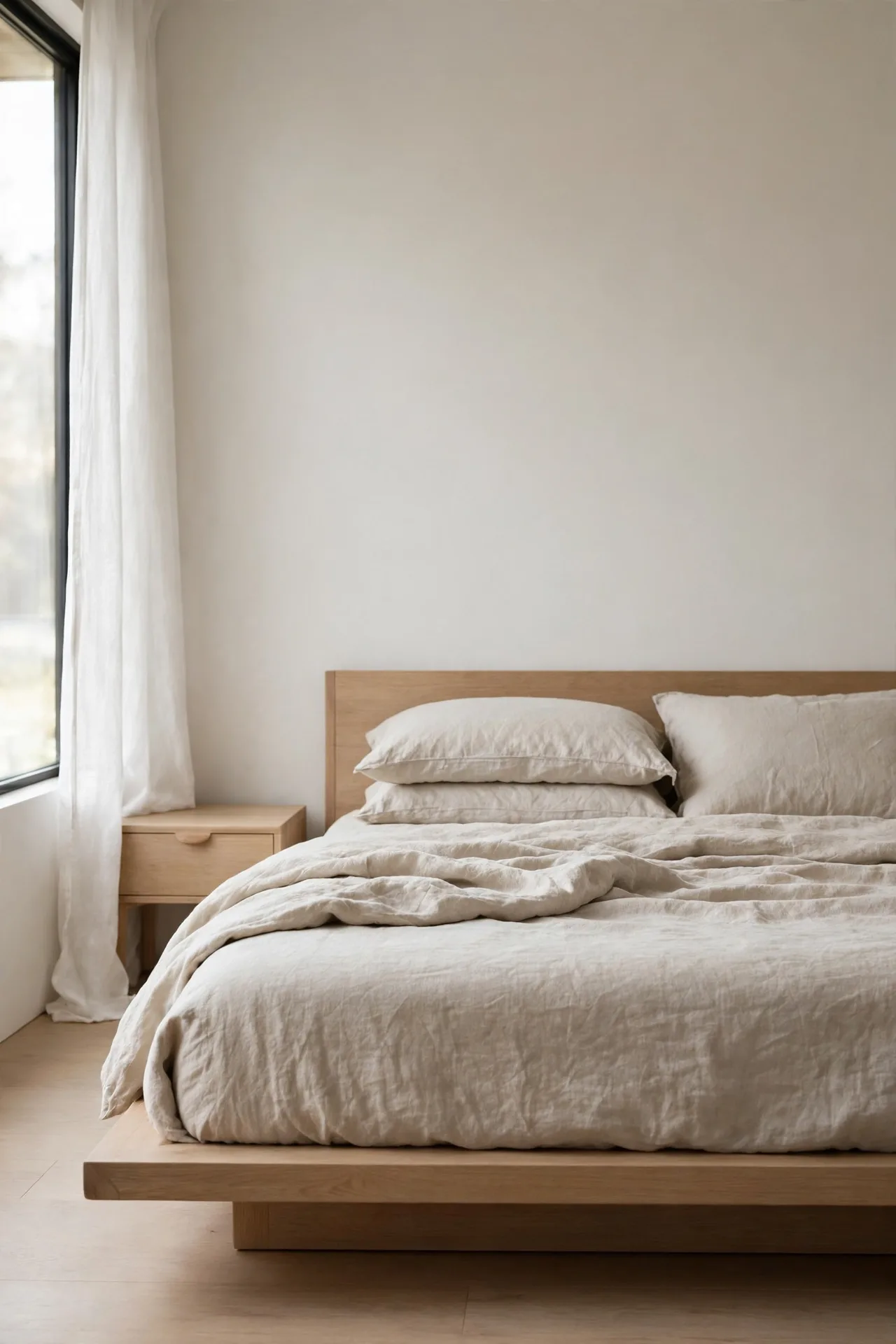
Choose low-profile furniture: a low bed frame, a low or simple headboard, and nightstands at or below mattress height. Low pieces leave more wall visible above them, and visible wall is what makes a small set of furniture feel calm instead of crowded. Tall, heavy pieces dominate every sight line in the room, and no palette can quieten them afterwards.
Keep the profile consistent. One low bed beside one tall armoire looks like an argument. If a tall piece must stay, usually the wardrobe, let it be the only tall piece, with a plain closed front, on the wall your eye reaches last. Everything else stays low, and the room reads horizontal and quiet.
Idea 3: A Warm Neutral Palette With Light Wood
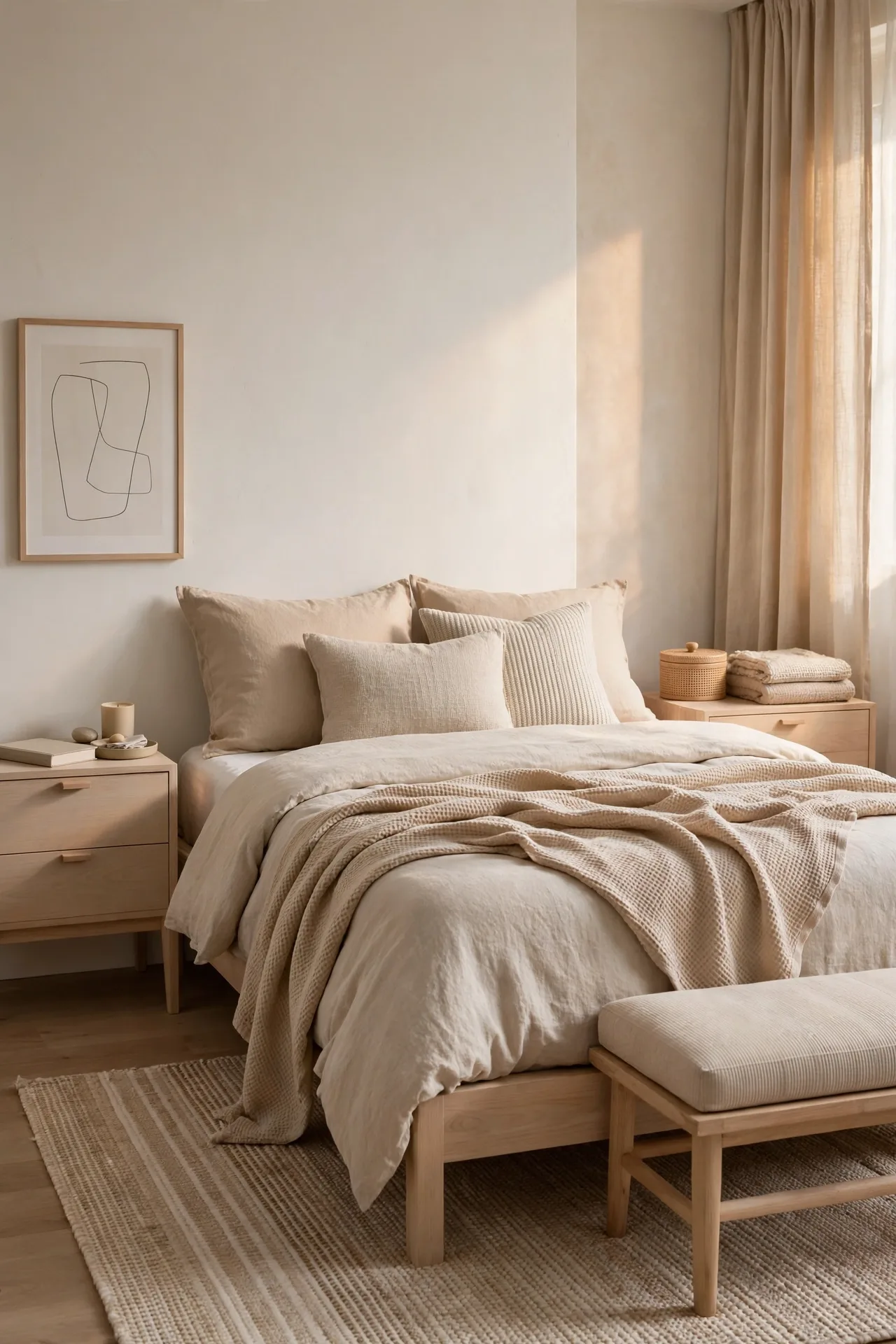
Build the palette from warm neutrals: warm white, beige, oatmeal, and muted gray, with light wood as the built-in warm accent. This is the decision that separates warm minimalism from the cold version. Stark blue-white walls, bright white bedding, and gray-only textiles are what make minimalist rooms feel clinical. The same room in warm white and oatmeal, with one wood tone repeated, feels like a place to sleep.
Split the palette simply: most of the room in your lightest neutral (walls and bedding), a second neutral for textiles and curtains, and light wood as the repeating accent. Change colour through bedding first if you are testing it. Keep to those tones everywhere, so nothing in the room shouts.
Idea 4: Storage Hidden Inside the Furniture Choices
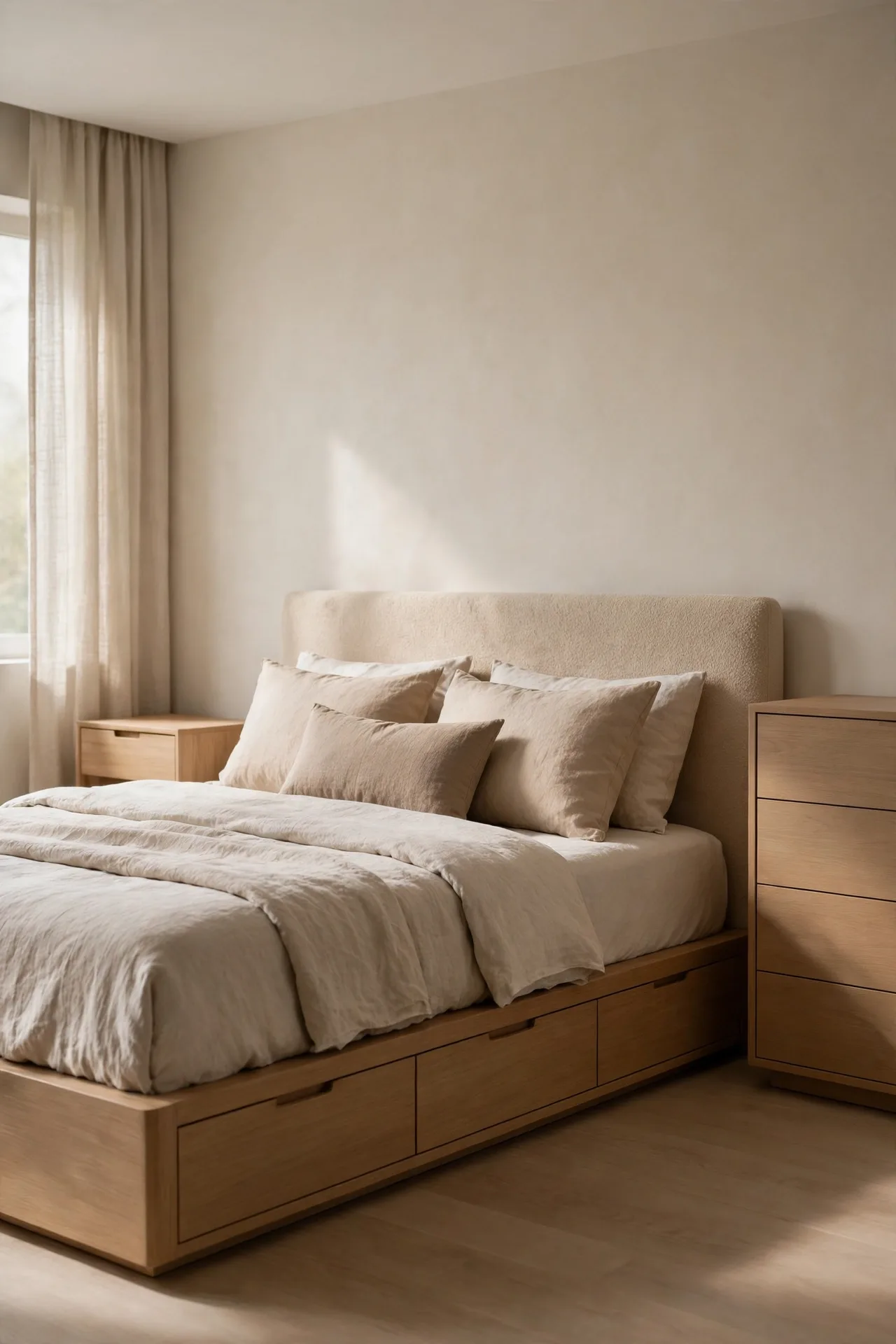
In a minimalist bedroom, storage is a furniture choice, not a separate system. Pick a nightstand with a closed drawer instead of an open shelf, so the things you keep at the bedside disappear at night. Pick a bed frame with under-bed drawers built in, so the largest hidden space in the room comes with the furniture itself. Pick a dresser with doors or full drawers rather than open cubbies, so the biggest storage piece in the room shows a plain front, not your belongings.
That is the whole rule: closed, built in, and chosen when you choose the piece. Open storage holds the same amount and still looks busy, because the eye reads every visible object as clutter. This post does not teach storage tactics. It only asks that furniture storage comes hidden inside the piece.
The Warmth Moves: How Minimal Stays Warm, Not Cold
Fewer objects does not have to mean less comfort. These four moves replace visual clutter with physical warmth: texture you can touch, wood you can see, low light, and one focal point. Work through them with what the room already has first.
Idea 5: Texture Instead of Objects
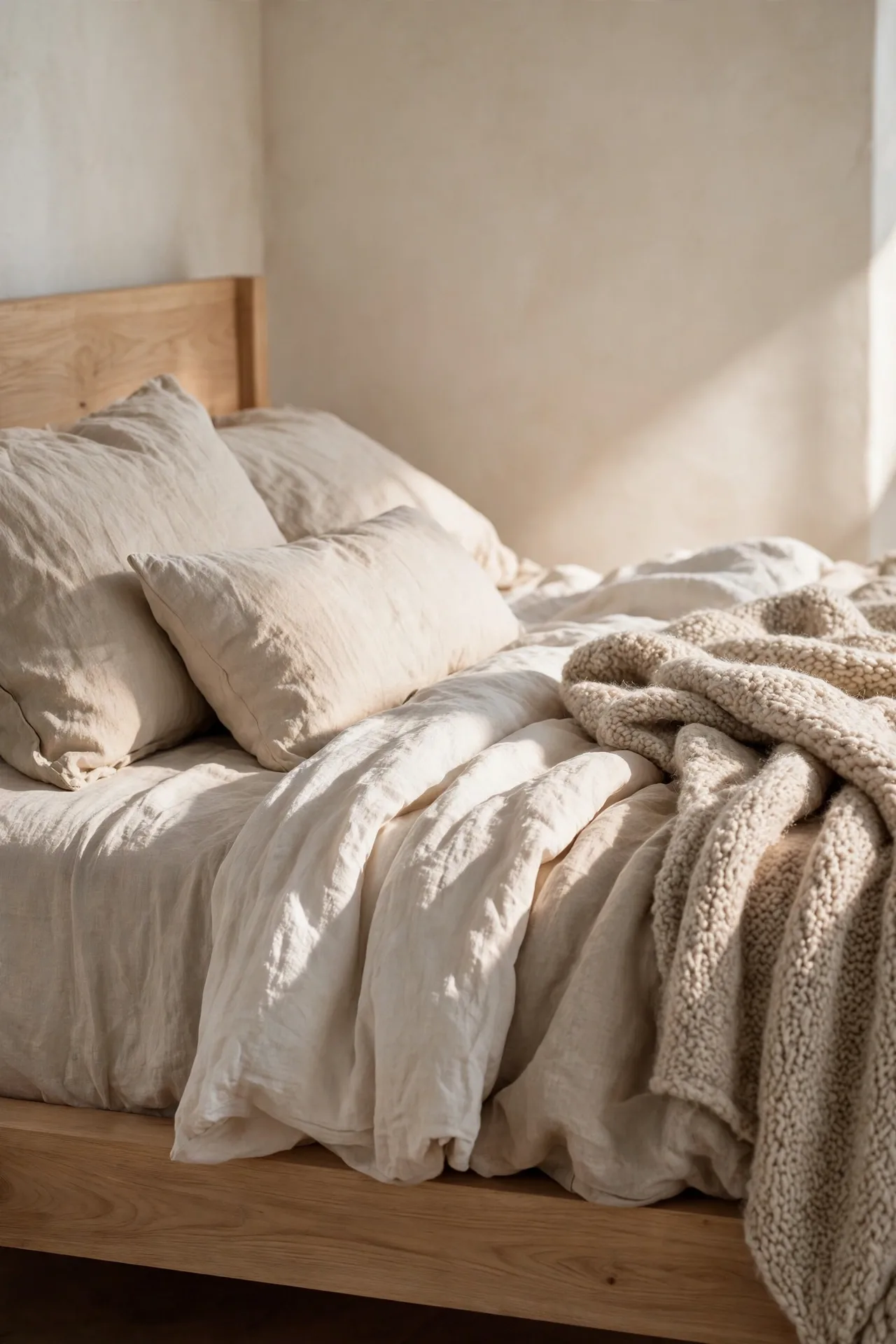
When objects leave, texture does their job. Layer the bed with linen or cotton bedding in your palette, one wool or knit throw at the foot, and one woven texture underfoot if the floor is hard. Three textures give the eye and the hand enough to read, so the room feels finished with almost nothing in it. A flat room in one smooth fabric is what reads cold, not the low object count.
Keep textures matte and in palette. Shiny finishes and patterns add visual noise, the thing minimalism is removing. If one textile has a pattern, let it be the only one, and keep it small: one cushion, not bedding, curtains, and rug competing.
Idea 6: Light Wood as the Warm Accent

Use light wood as the room’s one warm accent material. A light wood bed frame, nightstand tops, or one small stool warms the neutral palette without adding colour or objects. Wood carries warmth in its tone and its grain, so it does the work that decor objects do in other styles, while still being furniture you already need.
Keep to one wood family. Mixed wood tones, one pale, one orange, one dark, read as accidents, and the room loses its calm even with very few pieces. If your existing furniture mixes tones, group the closest family in the bedroom and move the odd piece to another room. One consistent wood tone, repeated two or three times, is enough warmth for the whole palette.
Idea 7: Low Warm Light, No Bulky Lamps

Move light off the surfaces. Wall sconces or a simple pendant give warm, low light without the bulky table lamps that eat nightstand space and add two more objects to the room. Two light points are enough for most minimalist bedrooms: one for reading in bed, one softer point across the room, plus daylight. Every lamp beyond that is decor pretending to be function.
Keep the light warm and low in feel, even at midday. Warm bulbs in those two points, shades that push light down or against the wall rather than into the room’s centre, and no exposed cold bulbs. Renters who cannot wire sconces can use plug-in sconces or a small plug-in pendant with a cord run neatly to the socket. The principle is the same: light comes from the wall or above, surfaces stay empty, and the glow stays warm.
Idea 8: One Focal Point, No Gallery Wall

Give the room exactly one focal point: the wall above the bed, carrying one piece, such as a single framed print, one textile hanging, or the headboard itself left as the statement. One focal point tells the eye where to land. A gallery wall does the opposite in a minimalist room. Six frames are six objects, six decisions, and six things to dust, all arguing at the same volume.
Let every other wall stay empty. Empty wall is not unfinished in this system, it is the background that makes the one focal piece and the low furniture read as deliberate. If a bare wall bothers you, check the texture and light first. Most walls that feel empty are actually under-lit or missing the warm palette, not missing objects.
The Restraint Moves: The Edit That Keeps It Minimal
Rules and warmth set the room up. These three moves keep it there. They are about choosing, not buying: what earns a place, the single living accent, and a no-buy edit designed for renters and small rooms.
Idea 9: The Accessories Edit, What Earns a Place
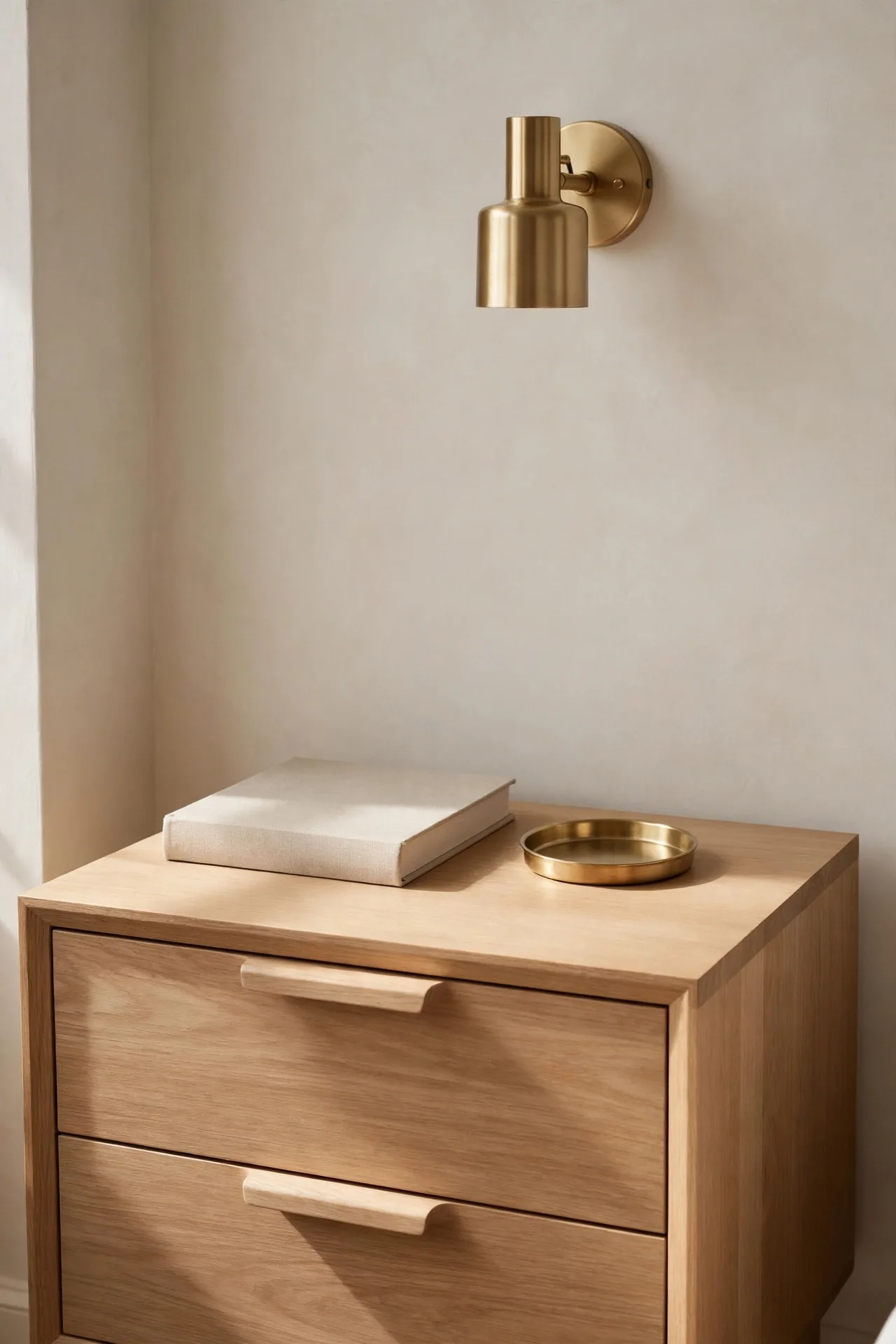
Run every accessory through three questions. Is it used daily? Is it the one focal piece or does it support it? Would the room lose warmth without it, the way it would without the throw or the wood stool? An item that passes one question stays. An item that passes none goes, no matter how small it is, because in a minimalist room every object is visible and every object counts.
Apply the edit hardest to the nightstand, the surface that drifts first. After the edit, a minimalist nightstand holds very little: the book you are reading, one small closed spot for the tiny things (a tray or the drawer from Idea 4), and nothing else, because the lamp moved to the wall in Idea 7. If an item has lived on the nightstand for a week without being touched, it has already failed the daily-use question.
Idea 10: The One Plant Moment, Picked by Light
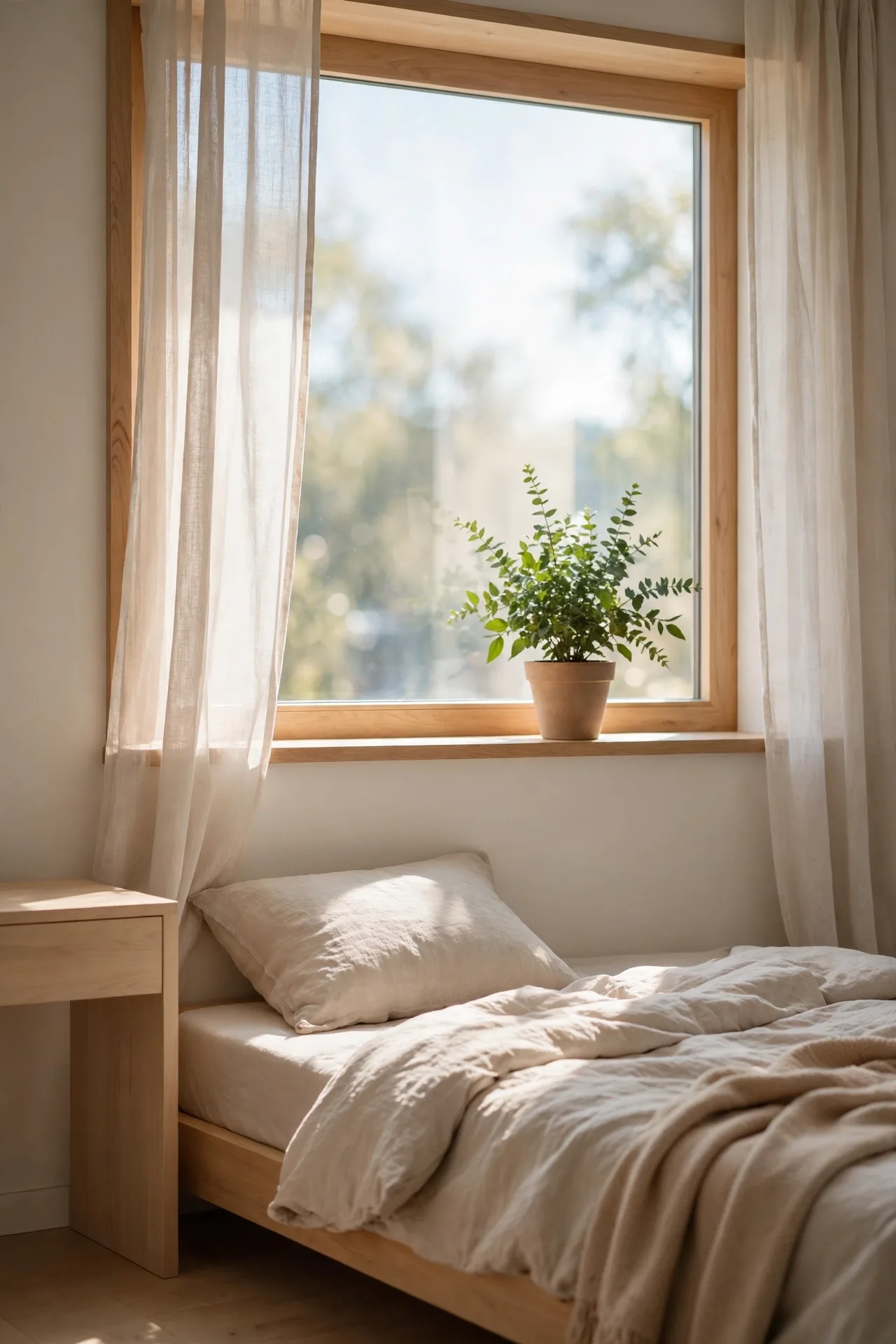
One plant is the exception to the edit, and it earns its place by being alive in a room of neutrals. Keep it to one: one plant, in the spot with the best natural light, in a plain pot that fits the palette and counts as texture. One plant reads as a moment. Three read as a collection starting, and collections are what this system is editing out.
The one plant moment still needs the right plant for your light, so pick it with the low-light bedroom plants guide before you place it in a dim corner. A plant matched to your light stays healthy with little attention, which matters here, because a struggling plant is the loudest object in a calm room. Choose the plant after the edit, not before, so it fills a real gap instead of adding to the count.
Idea 11: The No-Buy Renter and Small-Room Edit
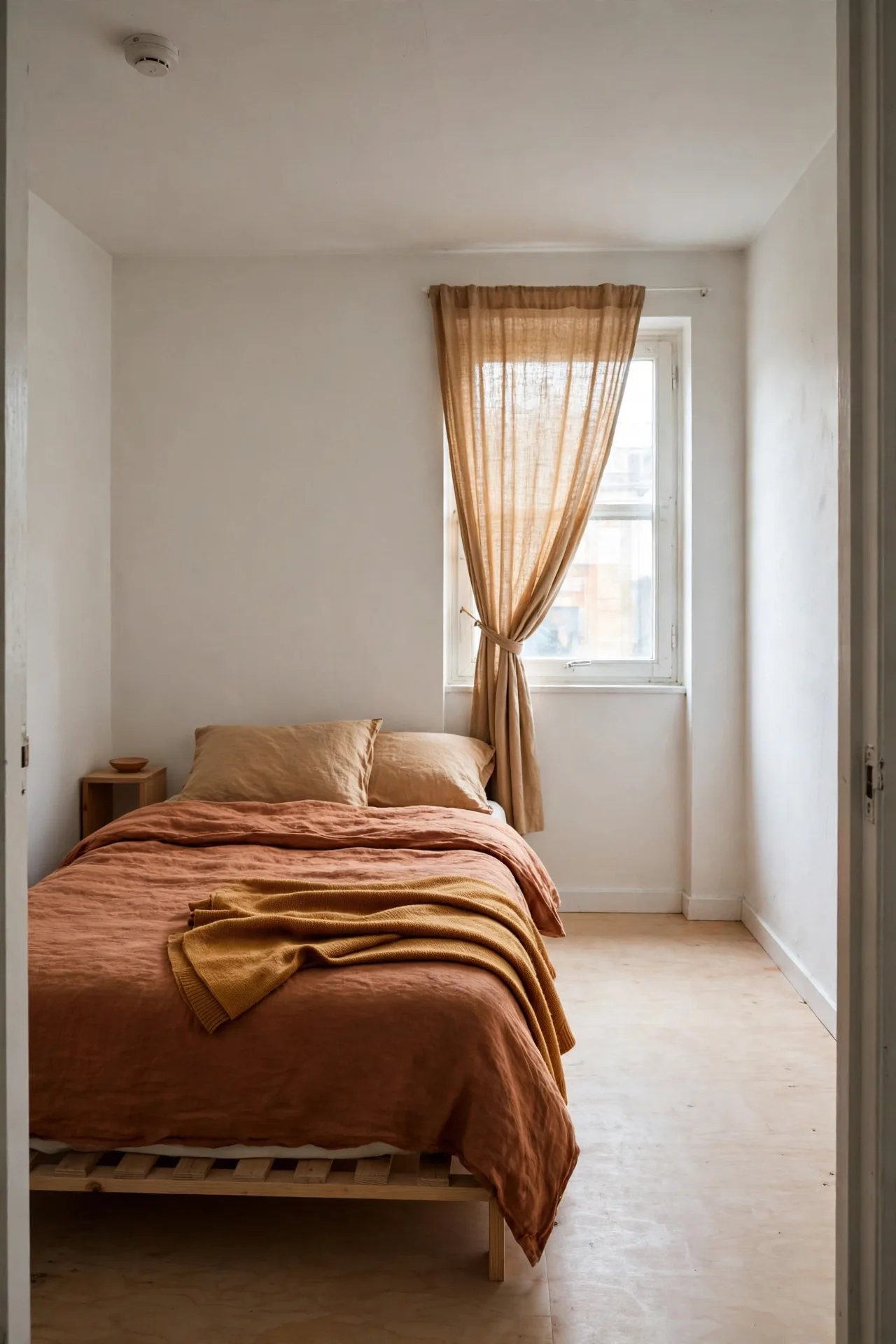
The final move buys nothing and changes nothing permanent. Remove first: take out the piece that failed the furniture count, the accessories that failed the edit, and the extra textiles that fight the palette. Then rearrange what is left once, for a clearer path and a calmer view from the door. In a small room this edit is the whole application of minimalism, because fewer pieces is what gives a small bedroom its floor and its path back.
Renters lose nothing in this system. The palette lives in bedding and textiles, the warmth lives in wood and light, and the edit is removal, not installation. If budget is the blocker after the edit, the free-first cozy bedroom upgrades give a costed order that pairs with this no-buy edit when you are ready to spend. Until then, the room is already more minimal than it was this morning, and it cost nothing.
After the Edit: Keeping It Minimal Is a Habit Job
This post deliberately does not teach upkeep routines, because keeping the room minimal after the edit is a habit job, and the five-minute bedroom reset covers the daily upkeep in full. The system’s job is to make that upkeep easy: fewer pieces to move, closed storage to hide the rest, and surfaces that start each day almost clear. Set the system once, then let the habit guide carry the days.
What to Skip
Skip the stark all-white version: blue-white walls, glossy finishes, and no wood or texture. That version feels cold, and it is a palette failure, not a minimalism failure. Skip buying a matching minimal set in one trip, because the count and profile rules work with pieces you already own if the palette holds them together. Skip removing every textile in the name of less, and skip hiding daily-use things in another room. The room has to work as your bedroom, not just photograph well once.
Minimalist Bedroom Ideas FAQs
How do I make a minimalist bedroom feel cozy, not cold?
Warm the inputs, not the object count. Use warm neutrals (warm white, beige, oatmeal), light wood as the accent, three textures on the bed (linen, wool, one woven piece), and low warm light from sconces or a pendant. Cold minimalist rooms are almost always a palette and light problem.
What colors work best in a minimalist bedroom?
Warm neutrals work best: warm white, beige, oatmeal, and muted gray, with light wood repeated as the warm accent. Keep to one light neutral for walls and bedding, a second for textiles, and wood for contrast. Avoid stark blue-white and gray-only schemes, which are the combinations that read clinical.
What should I keep on a minimalist nightstand?
Very little: the book you are reading and one small closed home for tiny items, such as a small tray or the nightstand drawer. Move the lamp to the wall as a sconce if you can, so the surface starts empty. Anything untouched for a week has failed the daily-use test and belongs elsewhere.
Can minimalism work in a small bedroom?
Yes, and small rooms gain the most, because the system is mostly removal. A furniture count that fits, low-profile pieces, and closed storage return floor space and a clear path. Set the bed position first, then run the no-buy edit, buying nothing and changing nothing permanent.
How should I layer minimalist bedding?
Layer by texture, not by piece count. Start with linen or cotton bedding in your lightest neutral, add one wool or knit throw at the foot of the bed, and stop there. Two layers in different textures read warmer than four layers in the same smooth fabric, and the bed stays quick to make.
Minimalist bedroom ideas work when minimalism is a warm system, not a stark look or a weekend purge. Four rules set the room, four moves warm it, three edits keep it honest. Start with the count and the no-buy edit today.

2 Comments
[…] stay calm and romantic instead of cave-like. If calm and uncluttered pulls you in, the minimalist bedroom ideas guide shows the warm system behind it: fewer pieces, warm neutrals, and texture instead of objects. For a […]
[…] wallpaper on one wall, a tapestry or large textile as the main art (see the bed section of our warm minimalist bedroom system for how one textile can carry a wall), or simply deep-cleaning and brightening the walls you have. […]