
20 Plant Shelf Ideas for Stylish, Space-Saving Houseplant Displays
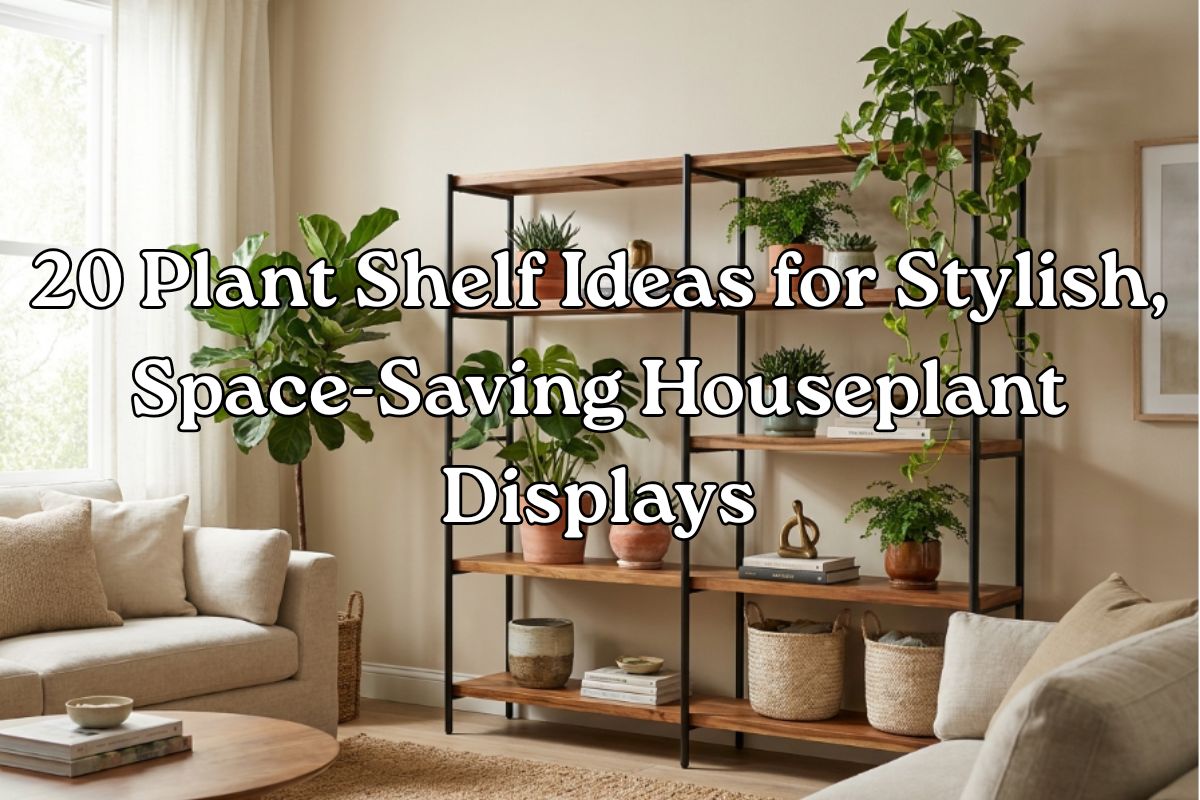
Plant shelves can do more than give your houseplants somewhere to sit. The right setup can turn an empty corner, unused wall, sunny window, or narrow strip of floor into a useful vertical plant display while making the room feel more finished.
The best plant shelf depends on more than appearance. Light, mature plant size, shelf depth, weight, watering access, moisture protection, and installation all matter. A shelf that looks beautiful in a photo can become frustrating if the plants are difficult to water or the structure cannot safely handle wet pots.
The ideas below are judged on four things: whether they solve a space problem, support healthy plants, hold up to everyday use, and look intentional. Some are primarily decorative, while others can function as genuine growing shelves.
Quick Picks: At a Glance
| Pick | Best For | Format | Key Trade-Off |
| Best Overall | Flexible home displays | Tiered/open shelving | Needs thoughtful spacing |
| Best Small Space | Apartments | Narrow vertical shelf | Limited pot depth |
| Best Corner | Dead corners | Corner/tiered shelf | Light can be uneven |
| Best Floor-Saving | Minimal footprint | Floating shelves | Requires secure mounting |
| Best Low Light | Dark rooms | Grow-light rack | Requires lighting and cable planning |
| Best DIY | Custom dimensions | Wood-and-bracket shelf | Requires tools and secure installation |
| Best Modern | Contemporary décor | Metal-and-wood shelf | Can feel less warm than all-wood designs |
| Best for Collections | Many plants | Multi-tier rack | Can become visually crowded |
| Best Renter Option | Flexible layouts | Cart or freestanding shelf | Uses some floor space |
[IMAGE: Quick-picks comparison graphic showing small-space, corner, floating, grow-light, DIY, modern, and collection setups]
20 Plant Shelf Ideas
1. Tiered Ladder Plant Shelf: Best for Large Collections
Best For: Plant collectors who need substantial vertical capacity without covering an entire wall.
Why It Works: A tiered ladder shelf creates several planting levels while keeping the footprint relatively compact. The staggered shelves also make it easier to create a mixed-height plant display than a conventional bookcase.
The strongest arrangements usually put larger or heavier plants toward the lower levels and reserve upper shelves for smaller pots and trailing houseplants. This keeps the visual weight grounded and reduces the temptation to create a top-heavy display.
Key Specs:
- Multiple staggered levels
- Vertical rather than wide footprint
- Open shelving for light and airflow
- Lower levels suited to heavier pots
- Upper levels suited to smaller or trailing plants
- Check the manufacturer’s stated load capacity before loading each shelf
Pros & Cons
Pros
- Excellent vertical plant capacity
- Naturally creates height variation
- Easy to combine plants with décor
- Open construction can improve light access
Cons
- Tall units can become top-heavy
- Upper plants may be harder to water
- Lower shelves can become shaded
- Stability depends heavily on construction and installation
Best Plants: Compact foliage plants, pothos, philodendrons, spider plants, peperomia, and other plants that tolerate the available light.
Quick Verdict: This is the strongest all-purpose choice for a growing collection because it combines vertical gardening with easy visual layering, provided the unit is stable and the plants are arranged according to their light and mature size.
2. Floating Plant Shelves: Best for Saving Floor Space
Best For: Apartments, small rooms, and anyone who wants a wall-mounted plant display without sacrificing floor area.
Why It Works: Floating shelves turn unused wall space into an indoor plant display while keeping the floor visually open. Several shelves can be staggered vertically or aligned into a more formal arrangement.
They are especially useful for trailing plants because vines can descend from the shelf without requiring another piece of furniture. The major limitation is structural rather than decorative. Wall-mounted shelving must be installed according to the wall material, mounting hardware, and manufacturer’s load instructions.
Key Specs:
- Wall-mounted or floating construction
- Appropriate wall anchors and fasteners
- Shelf depth matched to pot size
- Adequate spacing between levels
- Drip trays or saucers beneath pots
- Manufacturer-stated load capacity
Pros & Cons
Pros
- Minimal floor footprint
- Clean, contemporary appearance
- Excellent for trailing plants
- Easy to build into a larger wall display
Cons
- Requires secure installation
- Wall material affects mounting options
- Wet soil and ceramic pots add substantial weight
- Removal can leave mounting holes
Watch Out For: Never assume a floating shelf is safe simply because it appears sturdy when empty. Wet soil, ceramic pots, and repeated loading can substantially change the practical load.
Best Plants: Trailing pothos, heartleaf philodendron, compact peperomia, hoya, and small foliage plants suited to the available light.
Quick Verdict: Choose floating shelves when floor space is your biggest constraint, but treat mounting and load capacity as part of the design rather than an afterthought.
3. Corner Plant Shelf: Best for Awkward Corners
Best For: Empty corners that are difficult to furnish with conventional rectangular furniture.
Why It Works: Corner shelves use two walls instead of competing with the room’s main floor area. Triangular, quarter-round, or L-shaped shelves can turn an otherwise awkward space into a compact corner plant stand.
The challenge is access. A corner can look ideal in a floor plan but become awkward when plants are placed behind one another. Leave enough clearance to water and remove every plant.
Key Specs:
- Triangular, L-shaped, or corner-specific construction
- Compact footprint
- Sufficient shelf depth for the intended pots
- Accessible front edge
- Stable base or secure wall mounting
- Consider light from nearby windows
Pros & Cons
Pros
- Uses otherwise wasted space
- Works well in small rooms
- Creates a dedicated green corner
- Can accommodate several small plants
Cons
- Corners can receive uneven light
- Rear plants may be difficult to reach
- Deep arrangements can become cluttered
- Large pots can quickly consume usable space
Best Plants: Small foliage plants, compact tropicals, pothos, peperomia, and other plants whose light requirements match the corner.
Quick Verdict: A corner plant shelf is one of the best solutions for turning dead space into a deliberate feature, as long as you design around access and light rather than simply filling the corner.
4. Window Plant Shelf: Best for Bright-Light Plants
Best For: Rooms with a bright window and plants that benefit from being close to natural light.
Why It Works: A window-adjacent shelf puts plants where natural light is strongest, while stacking plants vertically can increase capacity without requiring a wide windowsill.
A useful distinction is between a true windowsill shelf and a freestanding shelf placed beside the window. The latter is often more flexible because it can be moved if direct sun, heat, or seasonal light becomes problematic.
Key Specs:
- Position relative to the window
- Shelf depth appropriate for pots
- Adequate clearance for opening windows
- Protection from water spills
- Plant selection based on actual light exposure
- Consider heat and intense direct sunlight
Pros & Cons
Pros
- Makes use of natural light
- Creates a strong focal point
- Ideal for compact light-loving plants
- Can reduce reliance on supplemental grow lighting
Cons
- Direct sun can be excessive for some plants
- Glass can increase heat exposure
- Plants may need seasonal repositioning
- Window access can become restricted
Best Plants: Light-tolerant plants such as many succulents and cacti, where conditions suit them, plus plants that prefer bright indirect sunlight.
Quick Verdict: A window shelf is the natural choice when you have usable daylight, but select plants according to the actual exposure rather than assuming every window provides the same growing conditions.
5. Narrow Vertical Shelf: Best for Tiny Apartments
Best For: Studio apartments, hallways, bedrooms, and other spaces where width and floor area are severely limited.
Why It Works: A narrow vertical shelf prioritizes height over width. This makes it useful when there is only a small strip of available floor space.
The trade-off is shelf depth. A narrow unit cannot comfortably accommodate every pot, so it works best with smaller plants and disciplined plant-pot arrangements.
Key Specs:
- Narrow width
- Limited but usable shelf depth
- Multiple vertical levels
- Stable base
- Appropriate pot diameter
- Anti-tip considerations for tall units
Pros & Cons
Pros
- Excellent apartment plant display
- Uses vertical space efficiently
- Fits beside furniture or in narrow gaps
- Can hold many small plants
Cons
- Limited room for large pots
- Tall units can be top-heavy
- Lower levels may receive less light
- Narrow shelves can restrict plant growth
Quick Verdict: For a small home, this is often more useful than a wider shelf because it increases capacity without consuming valuable floor area.
6. Grow-Light Plant Shelf: Best for Low-Light Rooms
Best For: Rooms where available natural light is insufficient for the plants you want to grow.
Why It Works: A grow-light shelf turns shelving into a functional growing station rather than simply a decorative display. Open metal racks are particularly adaptable because lights can be mounted beneath upper levels while plants remain accessible.
The important distinction is between decorative illumination and supplemental grow lighting. A light that makes a plant shelf look attractive is not automatically providing the intensity, coverage, or positioning plants require.
Key Specs:
- LED grow-light bars, puck lights, or clip lights
- Adjustable shelf spacing where possible
- Cable clips or sleeves
- Timers
- Adequate light coverage
- Plant spacing appropriate to the light
- Verify output, coverage, and recommended distance for the selected light
Pros & Cons
Pros
- Useful in dim rooms
- Provides more consistent lighting
- Works for propagation and collections
- Can be adapted as the collection changes
Cons
- Requires electrical planning
- Cables can become visually messy
- Light output varies considerably between products
- Heat and clearance may need consideration
Watch Out For: Do not treat “full-spectrum” as proof that a light is appropriate for every plant or shelf. Verify the actual specifications and manufacturer’s recommendations.
Best Plants: Plants selected according to the actual lighting provided, including many foliage plants and propagation projects.
Quick Verdict: If natural light is the limiting factor, a well-designed grow-light rack is more adaptable than trying to force a decorative shelf into a growing role.
7. DIY Wood-and-Bracket Shelf: Best for Custom Spaces
Best For: DIY beginners and homeowners who need a shelf with dimensions that do not match standard furniture.
Why It Works: A wood-and-bracket shelf can be customized around a window, narrow wall, alcove, desk, or existing furniture. Solid wood, plywood, or suitable reclaimed boards can create a warm backdrop for natural wood and greenery.
The important part is not simply cutting a board. The finished shelf needs suitable brackets, appropriate wall fasteners, water protection, and a load plan.
Key Specs:
- Solid wood, plywood, or suitable reclaimed board
- Appropriate brackets
- Wall anchors matched to the substrate
- Waterproof or moisture-resistant finish where appropriate
- Saucers or shelf liners
- Tools and construction method suited to the project
Pros & Cons
Pros
- Highly customizable
- Can fit unusual spaces
- Wide range of finishes
- Potentially economical when materials are available
Cons
- Requires tools and installation knowledge
- Load capacity depends on the complete assembly
- Untreated wood can suffer from repeated water exposure
- DIY errors can affect stability
Watch Out For: Project-specific board dimensions, bracket sizes, fasteners, and anchor types should be verified before construction. A DIY shelf should not be treated as a universal template.
Quick Verdict: This is the best option when standard shelving does not fit the room, but customization only helps if the structure is designed as carefully as the appearance.
8. Hanging Plant Shelf: Best for Vertical Décor
Best For: Creating a suspended plant display when floor space is limited or when you want a lighter visual effect.
Why It Works: Rope, macramé, leather straps, or other suspension systems can make a plant shelf feel more decorative than conventional furniture. It is especially effective with cascading plants that visually connect the shelf to the space below.
Because the shelf is suspended, the attachment point is part of the structural system. Pot weight, shelf weight, hardware, and the ceiling or wall substrate all need to be considered together.
Key Specs:
- Suitable suspension hardware
- Secure ceiling or wall attachment
- Appropriate shelf and pot load
- Adequate clearance from walkways
- Water-resistant surface or drip protection
- Accessible height for watering
Pros & Cons
Pros
- Strong vertical décor effect
- Saves floor space
- Excellent for trailing plants
- Can suit bohemian or relaxed interiors
Cons
- More difficult to install safely
- Can swing or shift
- Watering can be awkward
- Heavy pots increase structural demands
Watch Out For: Avoid placing heavy suspended shelves over beds, seating, or high-traffic areas unless the installation is specifically designed and verified for that application.
Best Plants: Trailing houseplants such as pothos, philodendrons, and other cascading plants suited to the available light.
Quick Verdict: A hanging shelf creates one of the most distinctive plant displays, but installation and access deserve as much attention as the styling.
9. Modern Metal-and-Wood Shelf: Best for Contemporary Rooms
Best For: Modern, industrial, Scandinavian, or minimalist interiors that need greenery without a traditional wooden-furniture look.
Why It Works: A metal frame gives the shelf visual structure while natural wood adds warmth. The combination also works well when the plants themselves are meant to provide most of the color and texture.
Open metal framing can be particularly useful for grow-light installations because cables and lights can often be routed around the structure.
Key Specs:
- Metal or steel frame
- Wood, bamboo, or comparable shelf surfaces
- Open construction
- Stable base
- Appropriate load capacity
- Rust or moisture considerations where relevant
Pros & Cons
Pros
- Contemporary appearance
- Visually lighter than bulky furniture
- Works well with open shelving
- Adaptable to grow-light configurations
Cons
- Metal finishes vary in corrosion resistance
- Can feel cold without natural materials
- Some designs provide limited pot depth
- Thin frames can appear unstable if overloaded
Quick Verdict: Choose metal and wood when the shelf needs to function as both plant furniture and a deliberate part of contemporary room design.
10. Minimalist Single-Shelf Display: Best for a Few Statement Plants
Best For: People who want greenery without turning the room into a dense plant collection.
Why It Works: A single shelf can create a strong visual moment when the plants have enough negative space around them. Instead of filling every inch, use one statement plant with one or two supporting plants and cohesive pots.
Uniform or coordinated pots can make a small display look intentional without requiring elaborate styling.
Key Specs:
- One or two shelves
- Coordinated pots
- Adequate negative space
- One clear focal plant
- Shelf positioned at a visually useful height
Pros & Cons
Pros
- Easy to maintain
- Low visual clutter
- Works in minimalist rooms
- Simple to style
Cons
- Limited plant capacity
- Less useful for collectors
- Requires restraint in plant selection
Quick Verdict: If your goal is a polished room rather than maximum plant capacity, fewer plants arranged deliberately can outperform a crowded multi-tier shelf.
11. Living-Wall-Style Shelf Arrangement: Best for a Feature Wall
Best For: Large blank walls where you want a dramatic indoor plant display without installing a conventional living-wall system.
Why It Works: Several plant-filled shelves can be arranged closely enough to create the visual impression of a living wall. Repeating shelf lines, foliage shapes, and pot materials helps the separate shelves read as one composition.
The drawback is maintenance. More plants mean more watering, pruning, cleaning, pest inspection, and potential water exposure.
Key Specs:
- Multiple coordinated shelves
- Repeated spacing or visual rhythm
- Mixed foliage textures
- Accessible plant positions
- Consistent pot or container treatment
- Adequate wall structure and mounting
Pros & Cons
Pros
- Dramatic feature-wall effect
- High visual impact
- Large capacity
- Strong opportunity for plant-and-decor styling
Cons
- Higher maintenance
- More mounting points
- Easier to create visual clutter
- Lower shelves may receive different light
Quick Verdict: This is the most dramatic approach, but it should be treated as a collection system rather than a simple décor installation.
12. Bookshelf Turned Plant Shelf: Best for Repurposing Furniture
Best For: Budget-conscious plant owners who already have an open bookcase or shelving unit.
Why It Works: A conventional bookshelf can become highly effective plant furniture with little structural modification. Its existing levels provide natural vertical organization, while the wider shelves can accommodate plants, books, ceramics, and artwork.
Put heavier pots lower on the unit and consider adding grow lights if the bookshelf sits away from usable natural light.
Key Specs:
- Open or appropriately ventilated bookcase
- Shelf spacing suited to plant height
- Heavy pots placed lower
- Drip trays or shelf liners
- Moisture protection
- Optional grow-light retrofit
Pros & Cons
Pros
- Reuses existing furniture
- Often inexpensive
- Combines plants and books naturally
- Easy to rearrange
Cons
- Some shelves are not designed for repeated water exposure
- Deep shelves can reduce light access
- Solid backs can restrict airflow
- Older furniture may have uncertain load capacity
Quick Verdict: Before buying a dedicated plant shelf, look around your home. An existing bookcase can provide more capacity and flexibility than a purpose-built plant display.
13. Rolling Plant Cart: Best for Flexible Layouts
Best For: Renters, seasonal plant repositioning, and collections that need to move toward available light.
Why It Works: A rolling plant cart lets you reposition plants for cleaning, seasonal light changes, or room rearrangement. It is also useful when a permanent wall-mounted display is impractical.
Mobility becomes less useful when the cart is overloaded or the wheels perform poorly on carpet. A low center of gravity and lockable wheels can make a major difference.
Key Specs:
- Lockable or stable casters
- Strong frame
- Lower center of gravity
- Waterproof or easy-clean shelves
- Appropriate total load
- Floor surface compatibility
Pros & Cons
Pros
- Easy to reposition
- Useful for renters
- Simplifies cleaning
- Can follow seasonal light
Cons
- Uses floor space
- Can become unstable when overloaded
- Wheels may perform poorly on some carpets
- Moving heavy wet pots is still difficult
Quick Verdict: A rolling shelf is the most flexible choice when your plants need to move, but mobility should never come at the expense of stability.
14. Hexagon/Honeycomb Shelves: Best for Small Decorative Plants
Best For: Small plants and decorative displays where geometric wall design matters as much as plant capacity.
Why It Works: Hexagon and honeycomb shelves turn plant display into wall art. Multiple units can be arranged as a geometric composition, while individual shelves provide small pockets for compact greenery.
Their shallow, decorative nature makes them better suited to lighter plants than heavy ceramic pots or large mature specimens.
Key Specs:
- Geometric shelf shape
- Shallow planting area
- Secure wall mounting
- Lightweight pots
- Coordinated arrangement
- Adequate spacing between units
Pros & Cons
Pros
- Strong decorative impact
- Works in small spaces
- Good for compact plants
- Easy to combine with modern décor
Cons
- Limited shelf depth
- Limited weight capacity may apply
- Difficult to accommodate large plants
- Geometric arrangements can look cluttered quickly
Best Plants: Small succulents, compact foliage plants, and other lightweight specimens suited to the available light.
Quick Verdict: Use honeycomb shelving as decorative architecture for small plants, not as a substitute for a high-capacity collection rack.
15. Trailing-Plant Shelf: Best for Cascading Greenery
Best For: Pothos, philodendrons, hoyas, string plants, and other plants whose growth habit becomes part of the display.
Why It Works: Trailing plants add movement to an otherwise horizontal shelf. Place them high enough for vines to fall naturally without immediately blocking lower plants.
The trick is to design for the plant’s eventual growth rather than its current size. A short vine can become a long curtain that changes the light and accessibility of everything below it.
Key Specs:
- Elevated shelf position
- Sufficient space below for vines
- Light appropriate to the plant
- Easy access for pruning
- Pot stability
- Room for mature growth
Pros & Cons
Pros
- Adds vertical movement
- Makes simple shelves look more layered
- Excellent for small spaces
- Can soften hard architectural lines
Cons
- Vines need regular pruning
- Can shade lower plants
- Growth can become tangled
- Heavy mature vines add weight
Best Plants: Pothos, heartleaf philodendron, hoya, string plants, and other trailing houseplants appropriate to the available conditions.
Quick Verdict: A trailing plant can be the design element that makes an ordinary shelf feel intentional, provided you leave room for the plant to grow.
16. Plant-and-Book Décor Shelf: Best for a Curated Look
Best For: Readers who want their plant shelf to function as part of the room’s overall décor.
Why It Works: Combining plants with books, ceramics, artwork, and other small objects creates a more layered display than a row of identical pots. Plants supply organic texture while books and accessories introduce color, shape, and visual structure.
The key is restraint. A shelf containing plants, books, frames, ceramics, candles, and dozens of unrelated objects can quickly become a cluttered display.
Key Specs:
- Mixed plant heights
- Coordinated pot colors or materials
- One or two decorative objects per grouping
- Negative space
- Repetition of colors, textures, or shapes
- Accessible plants
Pros & Cons
Pros
- Integrates greenery into existing décor
- Flexible and easy to refresh
- Creates visual depth
- Works with many interior styles
Cons
- Easy to overcrowd
- Décor can reduce usable plant space
- Watering becomes more complicated around books and objects
Quick Verdict: Treat the shelf as a composition, not storage. Plants should remain the dominant living element, while décor supports the arrangement.
17. Propagation Shelf: Best for Plant Collectors
Best For: Houseplant enthusiasts who regularly grow cuttings, seedlings, or young plants.
Why It Works: A propagation shelf turns a plant display into a functional workspace. Small jars, nursery pots, labels, cuttings, and young plants can be kept together where they are easy to inspect.
This is particularly useful when a collection has moved beyond decoration and into active propagation.
Key Specs:
- Small containers and propagation jars
- Easy-to-clean surface
- Suitable lighting
- Labels
- Drip protection
- Easy access for inspection
Pros & Cons
Pros
- Purpose-built for propagation
- Keeps cuttings organized
- Easy to monitor
- Can integrate supplemental lighting
Cons
- More functional than decorative
- Water containers increase spill risk
- Can require frequent cleaning
- Young plants may have different light needs
Quick Verdict: A propagation shelf earns its space when you actively grow new plants rather than simply displaying mature specimens.
18. Pegboard/Modular Plant Display: Best for Evolving Collections
Best For: Plant owners whose collections and display needs change frequently.
Why It Works: Pegboard and modular systems let you adjust shelf positions, hooks, containers, and accessories as plants grow. That makes them more adaptable than fixed shelving.
The modularity is particularly useful for collectors with plants of different sizes or for anyone who wants to add supplemental lighting later.
Key Specs:
- Adjustable shelves
- Hooks or modular attachments
- Secure wall mounting
- Expandable components
- Compatible containers
- Adequate load capacity
Pros & Cons
Pros
- Highly configurable
- Easy to adapt
- Good for changing collections
- Can combine storage and plant display
Cons
- Requires careful mounting
- Modular components can become visually busy
- Load limits vary by system
- May require more planning than conventional shelving
Quick Verdict: Choose modular shelving when your collection is a moving target and you would rather adapt the architecture than replace the entire shelf.
19. Plant Shelf Around an Architectural Feature: Best for Awkward Spaces
Best For: Staircases, alcoves, unused wall sections, doorway-adjacent areas, and other spaces where conventional shelving does not fit.
Why It Works: Customizing shelving around an architectural feature can make an awkward space look intentional. A staircase wall, for example, can support staggered shelves that follow the room’s geometry.
These installations require more planning because the shelf cannot interfere with doors, stairs, vents, radiators, walkways, or access panels.
Key Specs:
- Exact site measurements
- Clearance around doors and walkways
- Appropriate wall mounting
- Ventilation around heat sources
- Plant access
- Custom shelf dimensions where necessary
Pros & Cons
Pros
- Makes difficult spaces useful
- Highly distinctive
- Can integrate plants with architecture
- Excellent opportunity for custom design
Cons
- More difficult to plan
- Installation can be complex
- Access may be awkward
- Heat and ventilation issues may arise
Watch Out For: Do not casually place shelves or plants over radiators, heaters, vents, or other heat-producing or airflow-dependent equipment. Verify required clearances for the specific installation.
Quick Verdict: This is the most architectural option, and it works best when the shelf is designed around the room’s constraints rather than forced into an unsuitable space.
20. Outdoor/Indoor-Outdoor Tiered Shelf: Best for Balconies and Patios
Best For: Balconies, patios, porches, and other sheltered outdoor areas where vertical plant capacity is limited.
Why It Works: A tiered outdoor shelf can turn a small balcony into a compact vertical garden. Weather-resistant materials, drainage, sunlight exposure, and rust resistance become more important than they are indoors.
Do not assume that an indoor shelf is suitable outdoors. Moisture, UV exposure, wind, and temperature changes can quickly damage unsuitable materials.
Key Specs:
- Outdoor-rated or appropriately weather-resistant materials
- Drainage
- Rust-resistant hardware where applicable
- Stable base
- Wind exposure considerations
- Plant selection matched to outdoor conditions
Pros & Cons
Pros
- Excellent use of balcony height
- Adds substantial planting capacity
- Works well for containers and herbs
- Can create a green privacy screen
Cons
- Weather exposure accelerates wear
- Wind can affect stability
- Drainage needs planning
- Indoor-rated materials may deteriorate outdoors
Quick Verdict: Use a purpose-suitable outdoor tiered shelf when balcony space is limited, but select materials and plants for the actual exposure rather than treating an indoor plant stand as outdoor furniture.
How to Choose the Right Plant Shelf
The best plant shelf is the one that matches the room first, then the plants. Start with the physical constraints, evaluate the available light, and only then decide which shelf style fits.
Start With the Space
Measure more than the shelf’s width.
Check:
- Available width
- Available depth
- Ceiling height
- Distance from windows
- Corner dimensions
- Walkway clearance
- Door and cabinet clearance
- Whether floor space can be sacrificed
- Whether wall mounting is allowed
- Whether the shelf needs to move
A narrow vertical shelf may outperform a wide bookcase in an apartment even if the bookcase holds more plants overall. Conversely, a large collection may justify a wider tiered rack rather than several tiny wall shelves.
Match the Shelf to Light
Light should influence shelf selection before styling.
| Light Situation | Preferred Setup |
| Bright window | Window or low-profile shelf |
| Medium indirect light | Open tiered shelf |
| Dim room | Shelf with supplemental grow lighting |
| Dark room | Do not rely on “low-light” labeling alone; evaluate usable light |
| Seasonal light changes | Rolling or movable shelf |
Low-light houseplants still need usable light. If a room is genuinely dim, changing the shelf style will not solve the underlying problem. Supplemental grow lighting may be the more practical solution.
For grow-light setups, verify the actual output, coverage area, recommended distance, timer functions, heat, and power requirements of the selected light.
Check Shelf Depth and Plant Size
A plant’s pot size today is not necessarily its space requirement tomorrow.
Consider:
- Mature plant width
- Mature height
- Leaf spread
- Trailing length
- Root and pot size
- Clearance between plants
- Access for pruning
This matters particularly with narrow shelves. A compact plant can fit comfortably on a shelf when purchased but become unsuitable after a season of growth.
Check Weight and Stability
Plant shelves have to handle more than dry furniture.
Wet soil, ceramic pots, glass containers, water reservoirs, and mature plants all contribute weight.
For freestanding shelves:
- Put heavier plants lower.
- Avoid creating a top-heavy arrangement.
- Check the entire unit’s stability.
- Consider anti-tip provisions for tall units.
- Avoid overloading individual levels.
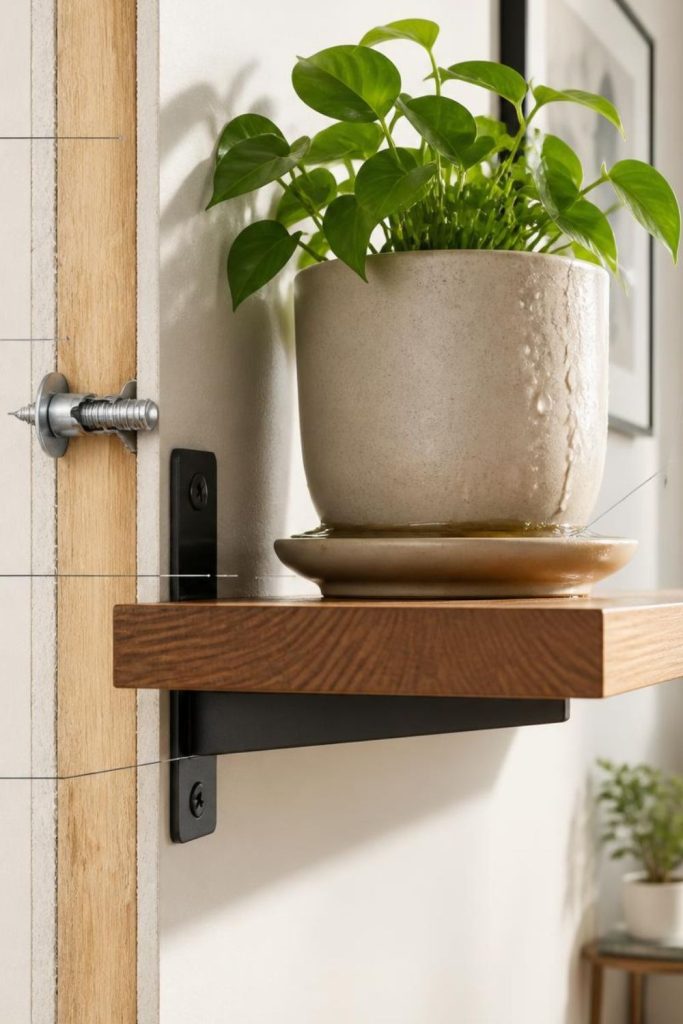
For floating shelves:
- Identify the wall substrate.
- Use appropriate wall anchors or fasteners.
- Follow the manufacturer’s load instructions.
- Confirm whether the load rating applies to the individual shelf or entire unit.
- Remember that repeated watering adds practical demands.
Important: Never turn a manufacturer’s load rating into a universal safety guarantee. The actual installation, wall material, hardware, shelf construction, and loading method all matter.
Plan for Water
Water is one of the most common reasons a beautiful plant shelf becomes damaged furniture.
Use:
- Drainage holes
- Plant saucers
- Drip trays
- Waterproof shelf liners
- Suitable cachepots
- Moisture-resistant shelving where appropriate
- A cloth or towel for immediate spills
Wood deserves particular attention. Repeated water exposure can stain, swell, warp, or otherwise damage unsuitable finishes and materials.
Do not assume that a decorative waterproof-looking surface is automatically suitable for constant moisture.
Make the Display Easy to Maintain
A shelf is poorly designed if the plants look beautiful but cannot be cared for comfortably.
You should be able to:
- Water each plant
- Remove a plant
- Rotate pots where necessary
- Prune trailing growth
- Inspect leaves for pests
- Repot plants
- Clean the shelf
- Wipe up spills
This is especially important with living-wall arrangements, deep bookcases, and densely packed collections.
Plant Shelf Styling Tips That Keep the Display From Looking Cluttered
A successful plant shelf is a composition. The goal is not to fill every available inch.
Vary Plant Heights
Combine tall, medium, and compact plants to create visual rhythm.
A tall plant can anchor one side, medium plants can occupy the middle, and smaller plants can fill gaps without creating a flat row of identical pots.
Put Trailing Plants High
Trailing houseplants are natural vertical design tools.
Place them where their vines can cascade without blocking windows, lower plants, artwork, or walkways. Leave room for future growth.
Repeat Pot Colors or Materials
You do not need identical pots.
Repeating one or two materials, such as terracotta, ceramic, natural wood, or neutral-colored containers, creates cohesion while allowing the plants themselves to remain varied.
Leave Negative Space
Negative space is part of plant shelf styling.
If every shelf is packed with pots, books, baskets, and decorative objects, individual plants lose their visual impact. Empty space also makes watering and maintenance easier.
Mix Plants With One or Two Decorative Objects
Books, ceramics, artwork, and small sculptural objects can complement plants.
Use them selectively. Plant-and-decor styling works best when the objects support the composition rather than compete with the greenery.
Style for Mature Growth
Design around where the plants are going, not just where they are today.
Leave space for leaves to spread, vines to trail, and pots to become larger as plants mature. A display that looks perfect on installation day may become overcrowded several months later.
[IMAGE: Good versus overcrowded plant shelf, with balanced heights, cohesive pots, negative space, and a visibly crowded comparison]
Plant Shelf Mistakes to Avoid
- Choosing a shelf before checking available light. A beautiful shelf cannot compensate for unsuitable growing conditions.
- Overloading floating shelves. Check the actual load rating and mounting method rather than estimating from appearance.
- Putting heavy pots on upper tiers. Keep the center of gravity low on tall freestanding units.
- Using untreated wood without water protection. Repeated spills can damage wood and wood-based materials.
- Crowding plants together. Dense arrangements can restrict access and airflow while making pest inspection harder.
- Ignoring mature plant size. Plan for future growth rather than the plant’s current nursery-pot dimensions.
- Blocking vents or heat sources. Shelves and plants should not interfere with heating, cooling, or ventilation equipment.
- Treating decorative lighting as grow lighting. Attractive illumination is not automatically sufficient for plant growth.
- Creating inaccessible watering zones. If you cannot comfortably reach a plant, the arrangement is not practical.
- Making a narrow shelf too top-heavy. Tall, narrow furniture needs particular attention to stability and anti-tip measures.
Frequently Asked Questions About Plant Shelf Ideas
What are the best plant shelf ideas for small spaces?
For small spaces, the most practical options are narrow vertical shelves, corner shelves, floating shelves, window shelves, hanging shelves, and rolling carts. They increase plant capacity while using relatively little additional floor space.
How do you style a plant shelf?
Style a plant shelf by varying plant heights, placing trailing plants where they can cascade, repeating pot colors or materials, mixing plants with a small amount of décor, and leaving enough negative space to keep the arrangement balanced.
How do you arrange plants on a shelf?
Start with the tallest or most visually dominant plant, then add medium and compact plants around it. Put trailing plants higher when their growth habit allows it, and avoid filling every gap. Arrange plants according to their light requirements as well as appearance.
What plants look best on shelves?
Plants with compact, upright, trailing, or naturally layered growth habits work particularly well. Pothos, philodendrons, peperomia, spider plants, hoyas, compact succulents, and other suitable houseplants can work well when their light requirements match the shelf location.
Are floating shelves strong enough for plants?
Some floating shelves are designed to carry plants, but there is no universal answer. Safety depends on shelf construction, mounting hardware, wall substrate, installation, shelf depth, and the total weight of the plants and pots. Follow the manufacturer’s load and mounting instructions.
What is the best plant shelf for a low-light room?
A freestanding rack paired with appropriately positioned supplemental grow lighting is generally more adaptable than a shelf that depends entirely on distant natural light. Choose plants and lighting according to the actual conditions rather than relying only on “low-light” labels.
Do plants need grow lights on a shelf?
Plants need sufficient usable light, but not every shelf requires supplemental lighting. A shelf near an appropriate bright window may receive enough natural light, while a dim room may require a suitable grow light.
How do you add grow lights to a plant shelf?
LED grow-light bars, clip lights, or other plant-specific fixtures can be positioned above or alongside plants depending on the design. Keep cables organized with clips or sleeves and use a suitable timer when appropriate. Verify the light’s recommended distance and coverage before installation.
What material is best for a plant shelf?
There is no single best material. Solid wood offers warmth and flexibility, metal can provide a strong open frame, wire or mesh can allow light and airflow through the structure, and acrylic or glass can create a lighter visual effect. Water exposure, load, maintenance, and style should determine the choice.
How do you protect a wooden shelf from water?
Use suitable finishes or moisture protection where appropriate, place plants in saucers or drip trays, consider waterproof shelf liners, and wipe spills promptly. Do not assume every wood-based material is suitable for repeated water exposure.
How much weight can a plant shelf hold?
The safe load varies by shelf construction, material, mounting method, wall substrate, hardware, and manufacturer rating. Check the stated maximum load for the specific shelf and installation. Remember that wet soil and ceramic pots can be substantially heavier than they appear.
Can a bookshelf be used as a plant shelf?
Yes. An open bookshelf can work well as a plant shelf if its shelves can support the intended load, the spacing suits the plants, and the material can tolerate the expected moisture. Put heavier plants lower and consider supplemental lighting if the unit is far from a suitable window.
What plants are best for narrow shelves?
Choose plants whose mature width and pot size remain compatible with the shelf. Compact foliage plants and appropriately sized trailing plants often work better than plants that develop a broad canopy or require large containers.
How do you keep a plant shelf from looking cluttered?
Use mixed heights, coordinated pots, one or two decorative objects, and deliberate negative space. Avoid filling every shelf completely. The plants should have enough visual breathing room to remain individual elements within the overall composition.
What should you avoid when putting plants on shelves?
Avoid overloading shelves, ignoring light requirements, placing heavy pots high on unstable furniture, allowing water to sit on unsuitable materials, blocking vents or heat sources, and creating arrangements that make watering or plant inspection difficult.
