
You do not need to redecorate your entire living room for fall. A few strategic changes to textiles, lighting, foliage, color, and small focal points can make an existing room feel warmer and more seasonal.
The best fall living room decor works with what you already own. Whether your sofa is gray, brown, black, or blue, you can build an autumn palette around it. You can also choose a subtle neutral look, a traditional pumpkin-filled room, a moody palette, or something more colorful.
Here are 24 decorating ideas, organized by what you want to change, the furniture you already have, and the style you want to create.
Quick Picks: The Best Fall Living Room Decor Ideas at a Glance
| Pick | Best for | What to change |
| Best quick refresh | Renters and busy decorators | Pillows, throw, and foliage |
| Best budget idea | Low-cost decorating | Tray, small pumpkins, and existing accessories |
| Best for small rooms | Apartments | Vertical shelf and wall styling |
| Best for a gray couch | Cool-neutral rooms | Rust, olive, cream, and warm wood |
| Best for a blue couch | Blue upholstery | Burnt orange, cognac, and cream |
| Best minimalist look | Clutter-conscious rooms | One palette and tactile textures |
| Best modern look | Contemporary rooms | Sculptural ceramics and restrained foliage |
| Best cozy upgrade | Comfort-focused rooms | Throw, rug, and warm lighting |
| Best no-orange idea | Nontraditional fall decorating | Olive, burgundy, and cream |
| Best seasonal investment | Repeat decorators | Reusable textiles and natural-material accents |
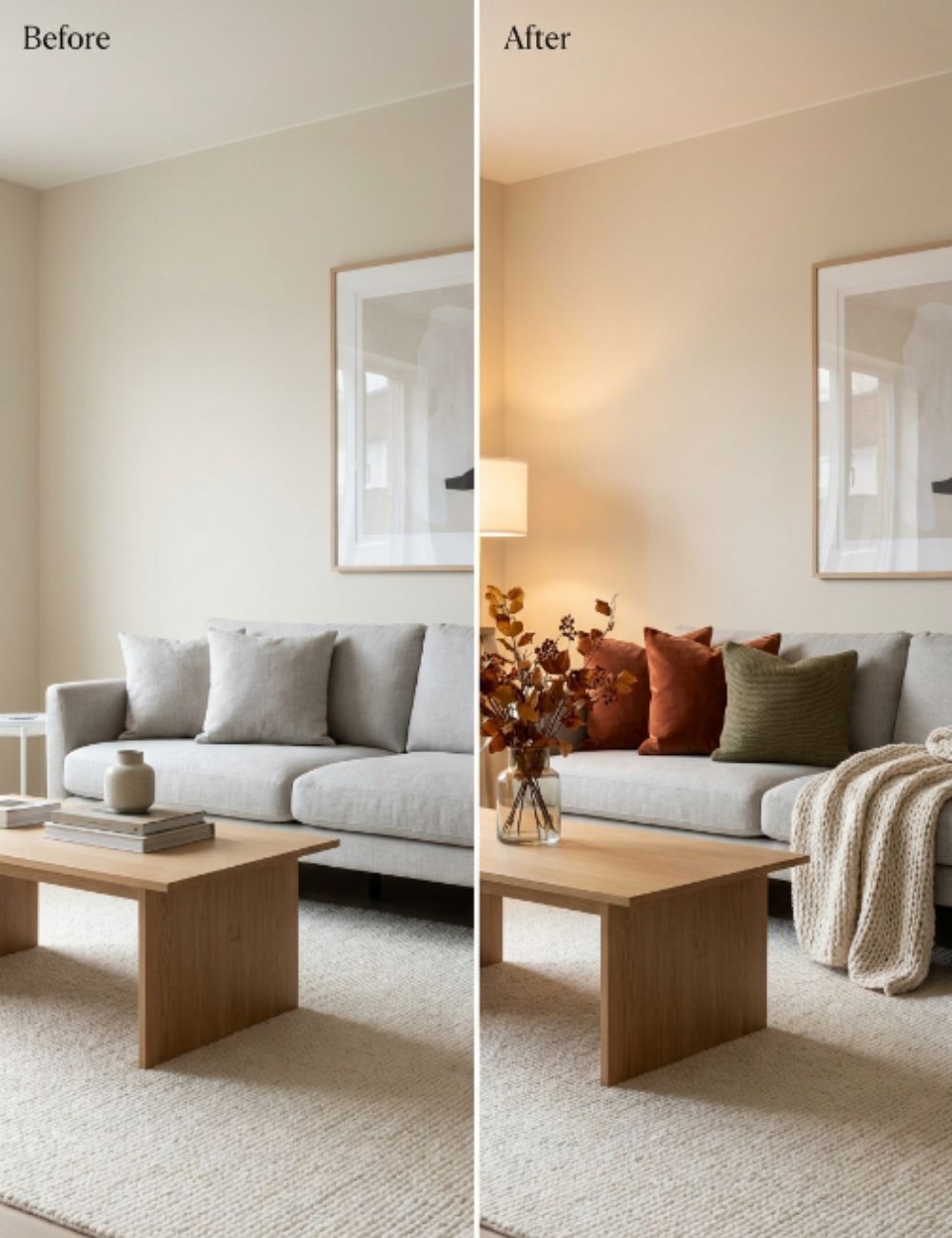
Easy Fall Living Room Decor Ideas
1. Layer Fall Throw Pillows
Best For: The fastest visible seasonal change
Changing pillow covers is one of the simplest ways to turn an everyday sofa into part of an autumn palette. Rust, ochre, olive, warm cream, burgundy, and muted brown work particularly well.
Mix solid colors with one plaid, botanical, or textured pattern. Velvet, linen, bouclé, and woven fabrics can add depth without requiring a large number of decorative objects.
Key Specs
- Palette: Rust, ochre, olive, cream, burgundy, brown
- Materials: Velvet, linen, bouclé, woven fabric
- Pattern strategy: Mostly solids with one seasonal pattern
- Space required: None beyond existing seating
- Seasonal commitment: Low
Pros
- Quick visual transformation
- Easy to store between seasons
- Works with almost any sofa
- Pillow covers can be reused individually
Cons
- Too many patterns can make the sofa look busy
- Seasonal colors may not work with every existing rug or artwork
Quick Verdict: Start here if you want noticeable fall living room decor without changing furniture. A small group of coordinated pillows can establish the color palette for the rest of the room.
2. Add a Chunky Knit or Textured Throw
Best For: Instant coziness
A throw adds the tactile quality that makes a living room feel ready for cooler weather. Chunky knit, chenille, wool-like, bouclé, and other substantial textures work especially well.
Drape one casually over the arm or back of a sofa rather than folding several blankets into a display. The goal is relaxed comfort, not visual bulk.
Key Specs
- Materials: Knit, chenille, wool, bouclé, faux-fur
- Best colors: Cream, camel, rust, brown, olive
- Placement: Sofa arm, back, reading chair
- Space required: Minimal
- Seasonal commitment: Low
Pros
- Adds warmth without adding many objects
- Useful beyond fall
- Works in modern and traditional rooms
- Easy to move around the room
Cons
- Thick fabrics can look bulky in small rooms
- Some textured materials require more careful cleaning
Quick Verdict: If the room already has enough decorative objects, add texture rather than more accessories. One well-placed throw can make a larger difference than several small seasonal decorations.
3. Bring in Fall Foliage
Best For: A natural-looking autumn update
Foliage introduces seasonal color without requiring pumpkin-themed decor. Use branches, eucalyptus, dried grasses, wheat, berries, faux leaves, or seasonal flowers in a vase or large vessel.
Dried botanicals and natural materials are particularly useful because they can work with rustic, modern, boho, vintage, and neutral interiors.
Key Specs
- Elements: Branches, eucalyptus, dried grasses, wheat, berries, leaves
- Containers: Ceramic vase, stoneware vessel, glass vase, woven basket
- Placement: Console, shelf, mantel, coffee table
- Color options: Brown, olive, muted gold, rust, cream
- Space required: Low to moderate
Pros
- Adds color without heavy theming
- Works well with neutral rooms
- Can create height on shelves and consoles
- Pairs naturally with wood and ceramics
Cons
- Faux foliage can look artificial if the materials are overly glossy
- Dried botanicals can shed
- Tall arrangements can overwhelm a small surface
Quick Verdict: Foliage is one of the most versatile ways to bring autumn home decor into a living room. It creates a seasonal cue while keeping the overall look natural.
4. Create a Small Pumpkin Vignette
Best For: Traditional fall decorating without pumpkin overload
You do not need pumpkins on every surface. Instead, group a few pieces in different sizes and materials on a tray, shelf, mantel, or console.
Ceramic pumpkins, wood pumpkins, velvet pumpkins, woven pumpkins, and neutral-colored designs can make the display feel more collected than themed. Orange pumpkins still work beautifully when balanced with cream, brown, green, or natural wood.
Key Specs
- Materials: Ceramic, wood, velvet, glass, woven materials
- Colors: Orange, cream, white, brown, muted green
- Placement: Tray, mantel, shelf, console
- Scale: Mix small and medium pieces
- Space required: Low
Pros
- Immediately communicates fall
- Easy to contain in one vignette
- Many materials can suit different decorating styles
- Small pieces are easy to store
Cons
- Too many pumpkins can make the room look themed
- Fragile materials require careful placement
- Small decorative pieces may not be practical around young children or pets
Quick Verdict: Use pumpkins as punctuation rather than wallpaper. A small grouping gives you the unmistakable feeling of fall while leaving room for other textures and colors.
5. Style a Fall Coffee-Table Tray
Best For: Small spaces and contained seasonal styling
A tray creates a defined area for seasonal decor and prevents a coffee table from becoming cluttered.
A simple formula is:
Tray + book + candle or lantern + foliage + one small seasonal object
Use an existing tray and books whenever possible. The arrangement can change throughout the season without requiring a new collection of accessories.
Key Specs
- Base: Wood, metal, ceramic, or woven tray
- Supporting pieces: Books, vase, candle, foliage
- Seasonal accent: Small pumpkin, pinecone, ceramic object
- Placement: Center or slightly off-center on coffee table
- Space required: Low
Pros
- Easy to rearrange
- Keeps small objects contained
- Excellent for apartments
- Makes an existing table feel seasonal
Cons
- Takes up usable tabletop space
- Candles require careful placement
- Too many small objects can become visual clutter
Quick Verdict: This is one of the highest-impact fall decor ideas for a living room with limited space. It concentrates the seasonal effect instead of spreading small decorations throughout the room.
6. Warm Up the Lighting
Best For: Cozy atmosphere without adding clutter
Lighting can make a room feel more autumnal without introducing another decorative collection. Use table lamps, floor lamps, lanterns, and appropriate candlelight to create softer pools of light.
Warm-toned lighting works particularly well with brown, rust, cream, burgundy, olive, and wood tones.
Key Specs
- Sources: Table lamps, floor lamps, lanterns, candles
- Placement: Beside seating, on consoles, shelves, or side tables
- Effect: Warm ambient light
- Best pairing: Earthy colors and tactile materials
- Space required: Low to moderate
Pros
- Creates coziness without visual clutter
- Useful throughout the year
- Works especially well in minimalist rooms
- Enhances textures and warm colors
Cons
- Less visibly seasonal than pumpkins or foliage
- Candles require responsible placement
- Additional lamps can consume valuable side-table space
Quick Verdict: If you want cozy fall decor without filling the room with seasonal objects, lighting should be near the top of your list.
7. Add Plaid in One Controlled Layer
Best For: Traditional, rustic, and farmhouse rooms
Plaid is a classic fall pattern, but repeating it across pillows, blankets, curtains, and rugs can make a room feel overly themed.
Choose one dominant plaid layer, such as a throw or accent pillow, then support it with solid rust, cream, olive, or brown textiles.
Key Specs
- Pattern: Plaid, tartan, check
- Best materials: Wool-like fabric, cotton, woven textiles
- Best colors: Rust, brown, cream, olive, burgundy
- Placement: Sofa, accent chair, ottoman
- Space required: Minimal
Pros
- Strong seasonal association
- Easy to add and remove
- Works especially well with wood
- Suitable for farmhouse and rustic rooms
Cons
- Can look repetitive if used too heavily
- Some patterns can clash with existing rugs
- Less versatile than a solid neutral textile
Quick Verdict: One plaid layer usually has more impact than several. Treat the pattern as an accent instead of making it the room’s entire visual language.
8. Add Natural Wood and Woven Texture
Best For: Rustic, boho, organic, and neutral rooms
Natural materials bring warmth without requiring traditional fall motifs. Try a wood bowl, woven basket, rattan accessory, wicker container, natural-fiber accent, or wood-framed artwork.
Combine these with textiles and foliage for a layered autumn look.
Key Specs
- Materials: Wood, jute, rattan, wicker, natural fibers
- Best pairings: Linen, wool, knit, ceramics, dried botanicals
- Colors: Natural wood, tan, beige, brown, muted rust
- Styles: Rustic, farmhouse, boho, organic
- Space required: Low to moderate
Pros
- Works beyond the fall season
- Adds organic texture
- Pairs with many color palettes
- Helps neutral rooms feel warmer
Cons
- Large baskets can consume floor space
- Natural materials can vary in color and texture
- Too many woven pieces can make a room feel visually repetitive
Quick Verdict: Natural materials are a strong alternative to overtly seasonal decorations. They create the warmth associated with fall while remaining useful throughout the year.
Fall Decor by Living Room Surface
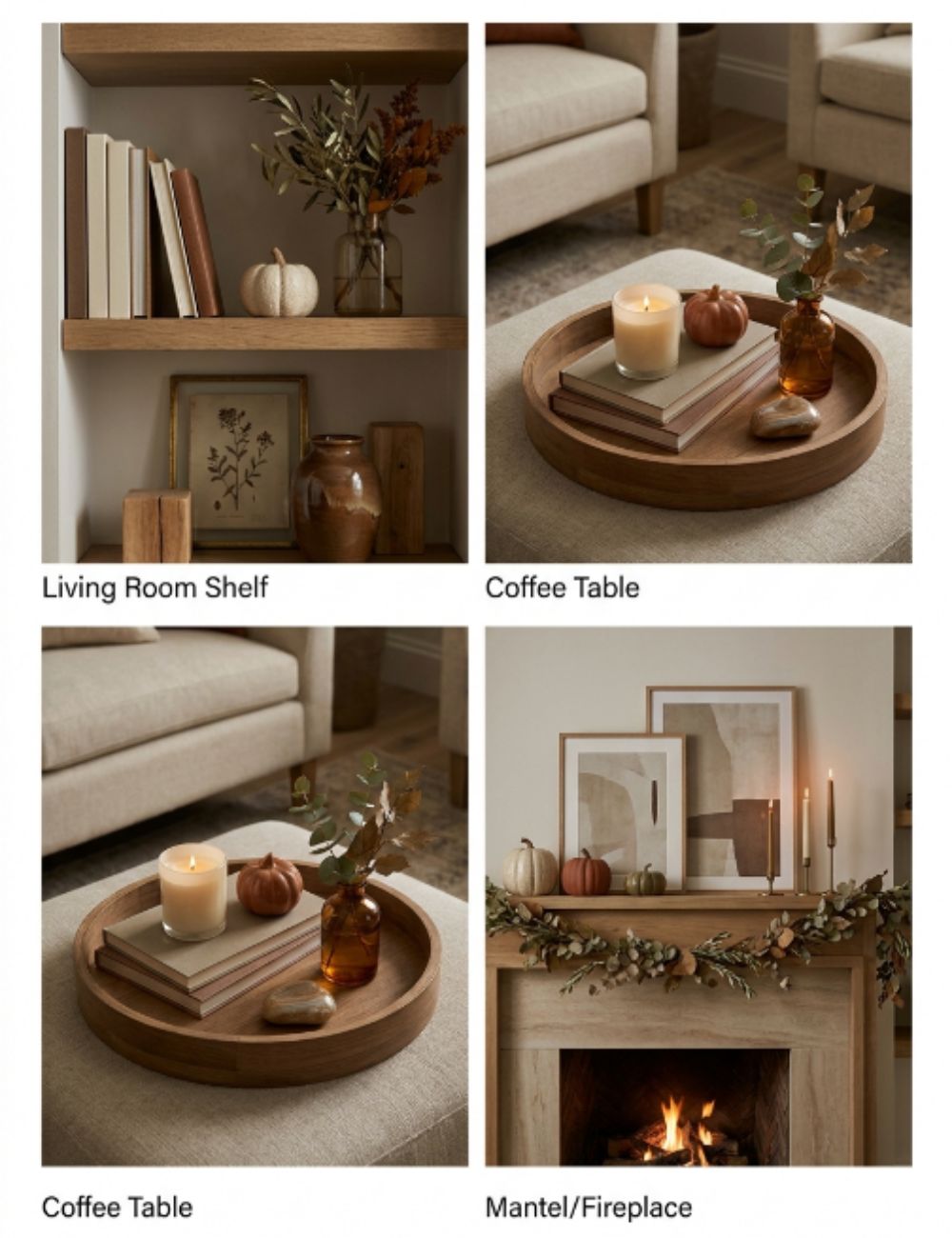
9. Decorate Living Room Shelves
Best For: Apartments, small living rooms, and vertical decorating
Shelves give small rooms an advantage because they let you add seasonal character without using valuable floor space.
Layer books, framed art, ceramics, foliage, small pumpkins, and sculptural objects. Vary height and leave some open space so the arrangement can breathe.
Key Specs
- Objects: Books, ceramics, foliage, framed art, pumpkins
- Arrangement: Mix heights and shapes
- Materials: Wood, ceramic, glass, brass
- Best for: Vertical storage and display
- Space required: Existing shelf space
Pros
- Uses vertical space
- Excellent for small rooms
- Easy to restyle
- Can accommodate subtle seasonal details
Cons
- Small objects can create clutter quickly
- Heavy items require appropriate shelf support
- Fragile objects may not suit homes with active children or pets
Quick Verdict: Shelf styling is one of the smartest small-space fall decor strategies. It creates a seasonal layer without adding another piece of furniture.
10. Style the TV Stand or Console
Best For: Living rooms without a fireplace or mantel
A TV stand or console can become the room’s seasonal focal point when there is no fireplace. Keep the arrangement low enough that it does not interfere with the screen.
Try a low vase of foliage, a small garland, framed art, books, a ceramic object, or a few small pumpkins.
Key Specs
- Decor: Low foliage, framed art, books, ceramics
- Height: Keep sightlines clear
- Palette: Coordinate with the sofa and rug
- Materials: Wood, ceramic, glass, brass
- Space required: Existing console surface
Pros
- Gives a fireplace-free room a focal point
- Uses furniture you already own
- Easy to change seasonally
- Works with modern and traditional rooms
Cons
- Can become cluttered around electronics
- Cords can interrupt the visual arrangement
- Tall decor may compete with the television
Quick Verdict: Treat the TV stand as a supporting focal point, not a display shelf. A few low, coordinated elements will look more intentional than a crowded arrangement.
11. Create a Fall Mantel or Fireplace Focal Point
Best For: Rooms with a fireplace
A mantel provides a natural place to establish the fall palette. Combine foliage, garland, candles, artwork, pumpkins, and natural materials rather than filling every inch of the mantel.
Repeat one or two of the same colors elsewhere in the room so the focal point feels connected to the sofa and textiles.
Key Specs
- Elements: Garland, foliage, pumpkins, artwork, candleholders
- Best palettes: Rust, cream, olive, burgundy, brown
- Style options: Traditional, rustic, modern, vintage
- Primary role: Focal point
- Space required: Existing mantel
Pros
- Creates an immediate seasonal centerpiece
- Works with traditional and modern styling
- Easy to photograph and update
- Can anchor the room’s color palette
Cons
- Mantels can become overcrowded
- Heat sources require appropriate safety precautions
- Heavy or unstable objects should not be placed where they can fall
Quick Verdict: A restrained fireplace arrangement can carry much of the room’s seasonal identity. Start with the focal point, then echo its colors and textures elsewhere.
12. Refresh a Living Room Wall
Best For: Rooms that need seasonal character without more tabletop objects
Swap everyday artwork for botanical prints, autumn photography, landscapes, seasonal artwork, or warm-toned abstract pieces.
Renters can use removable display solutions or simply rest framed artwork on shelves, consoles, or other suitable surfaces instead of making permanent changes.
Key Specs
- Art types: Botanical prints, landscapes, photography, seasonal artwork
- Palette: Warm neutrals, brown, rust, olive, burgundy
- Rental option: Removable or freestanding display
- Best placement: Existing gallery wall, shelf, console
- Space required: Existing wall or display surface
Pros
- Adds seasonal color without floor clutter
- Can transform a large visual area
- Suitable for minimalist rooms
- Artwork can be reused or rotated
Cons
- Wall changes can require more effort
- Permanent mounting may not suit renters
- Strong seasonal artwork has less year-round flexibility
Quick Verdict: Wall decor is useful when the room already has enough pillows and accessories. One carefully chosen artwork change can shift the atmosphere without adding physical clutter.
Fall Living Room Decor by Couch Color
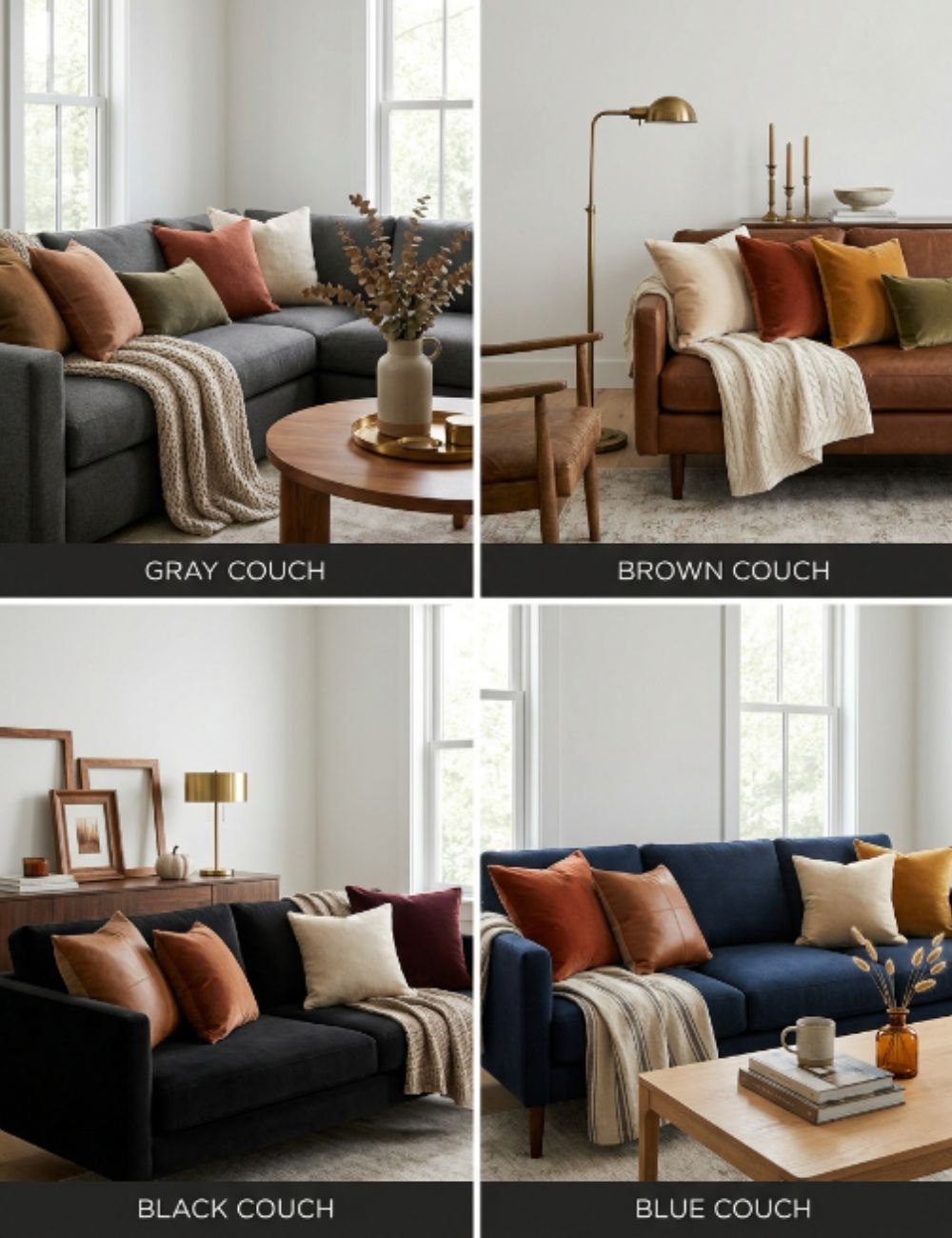
13. Fall Decor for a Gray Couch
Best For: Gray sofas and cool-neutral rooms
Gray upholstery can provide an excellent neutral base for warm fall accents. Rust, terracotta, olive, cream, and warm wood add contrast without requiring a sofa change.
Use cream to soften the palette and wood or woven textures to prevent the room from becoming a collection of unrelated accent colors.
Key Specs
- Primary accents: Rust, terracotta, olive
- Supporting neutrals: Cream, beige, warm gray
- Materials: Wood, wool, linen, woven textiles
- Best pattern: One plaid or botanical accent
- Style compatibility: Modern, rustic, minimalist, transitional
Pros
- Warm colors contrast well with cool gray
- Easy to build from existing neutral furniture
- Works with modern and traditional rooms
- Many accent pieces remain useful year-round
Cons
- Too much orange can feel disconnected
- Cool blue-gray sofas may need warmer supporting materials
- Multiple accent colors can make the room feel fragmented
Quick Verdict: For a gray couch, think warm rather than simply orange. Rust, olive, cream, and wood create a balanced fall palette that feels intentional.
14. Fall Decor for a Brown Couch
Best For: Brown and cognac leather or upholstered sofas
Brown furniture already provides a warm foundation, so the goal is usually to add contrast rather than more brown.
Cream, rust, ochre, sage or olive, brass, and natural textures can make the room feel autumnal without becoming visually heavy.
Key Specs
- Primary accents: Cream, rust, ochre
- Secondary color: Sage or olive
- Metal: Brass or aged metal
- Materials: Linen, wool, wood, ceramic
- Best approach: Contrast warm upholstery with lighter textiles
Pros
- Naturally suited to fall palettes
- Works beautifully with wood
- Easy to make cozy
- Strong compatibility with rustic and vintage styles
Cons
- Too many dark warm tones can make the room heavy
- Bright orange may compete with brown leather
- Dark textiles can reduce visual contrast
Quick Verdict: Let the brown sofa be the warm anchor and use lighter cream textiles to create breathing room. Rust and olive can then supply the seasonal color.
15. Fall Decor for a Black Couch
Best For: Dramatic, modern, and moody living rooms
A black sofa can support a sophisticated autumn palette. Cognac, rust, cream, burgundy, and brass create warmth and contrast.
Keep some lighter elements in the room, particularly if the walls, rug, or other furniture are also dark.
Key Specs
- Primary accents: Cognac, rust, cream
- Secondary accent: Burgundy
- Metal: Brass or aged brass
- Best textures: Velvet, wool, knit, ceramic
- Style compatibility: Modern, vintage, moody
Pros
- Strong contrast with warm fall colors
- Supports sophisticated palettes
- Works especially well with brass
- Excellent foundation for moody fall decor
Cons
- Too much black and burgundy can make the room feel heavy
- Dark textiles may visually shrink a small room
- Bright orange may create a harsher contrast
Quick Verdict: Use the black sofa as the dramatic anchor, then introduce cream and cognac to keep the room balanced. Burgundy and brass can add depth without overwhelming it.
16. Fall Decor for a Blue Couch
Best For: Blue or navy sofas
Blue upholstery does not need to be hidden or replaced for autumn. Its cool undertone creates a useful contrast with burnt orange, cognac, ochre, cream, and warm wood.
The strongest combinations usually use one warm accent color rather than several competing ones.
Key Specs
- Primary accents: Burnt orange, cognac
- Supporting colors: Cream, ochre, warm brown
- Materials: Wood, leather, wool, linen
- Best style: Traditional, transitional, modern
- Contrast level: Medium to high
Pros
- Warm and cool colors create clear contrast
- Works with navy and lighter blue upholstery
- Creates a distinctive fall palette
- Does not require replacing cool-colored furniture
Cons
- Too much orange can become visually loud
- Strong blue and strong burgundy can compete
- Cool white can make the room feel less warm
Quick Verdict: Blue and burnt orange are a natural high-contrast combination. Add cream and cognac to soften the transition between the two.
17. Blue-and-White or Blue-and-Orange Fall Decor
Best For: Readers who want fall decor without abandoning a blue-and-white room
There are two useful approaches.
Blue + white + muted brown creates a restrained, traditional or coastal-inspired look. Blue + burnt orange + cream produces a stronger autumn contrast.
Use the first combination for subtle seasonal decorating and the second when you want fall to be more obvious.
Key Specs
- Subtle palette: Blue, white, muted brown
- High-contrast palette: Blue, burnt orange, cream
- Supporting materials: Wood, linen, ceramic
- Best seasonal accent: Foliage or one textile
- Style compatibility: Coastal, traditional, transitional, modern
Pros
- Lets existing blue furniture remain central
- Offers subtle and bold options
- Easy to adapt with textiles
- Works without an all-orange palette
Cons
- Pure white can feel cooler than cream
- Too much orange can dominate the room
- Multiple blues can complicate the palette
Quick Verdict: Blue does not fight fall. It simply needs the right warm companion. Choose muted brown for restraint or burnt orange for stronger seasonal contrast.
Choose Your Fall Living Room Aesthetic
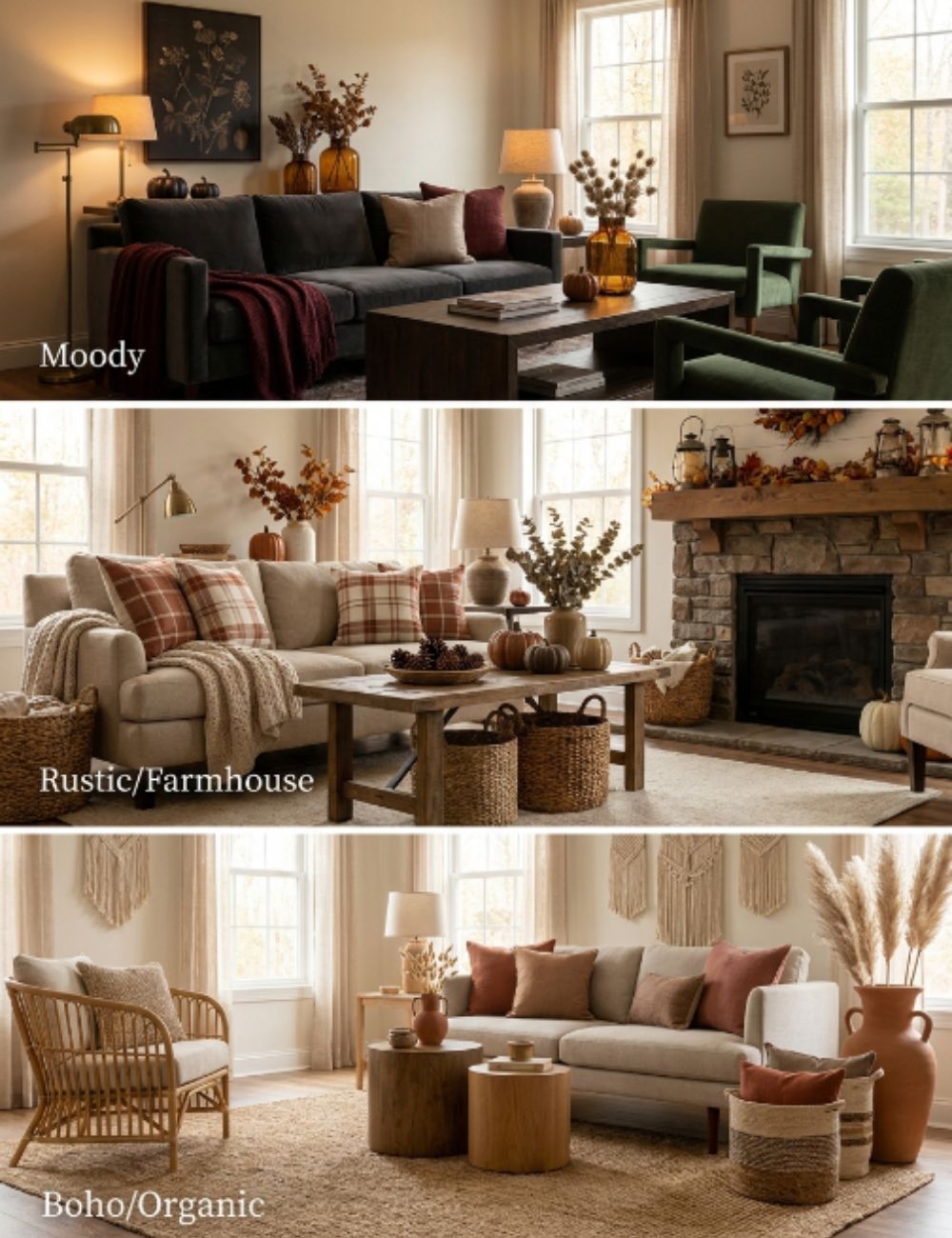
18. Modern Fall Living Room
Best For: Contemporary rooms with clean-lined furniture
Modern fall decor works best when seasonal accents are selective. Choose sculptural ceramics, restrained foliage, clean-lined lamps, tactile textiles, and a controlled earthy palette.
Instead of filling shelves with themed objects, let material and color create the seasonal effect.
Key Specs
- Colors: Rust, taupe, olive, cream, brown
- Objects: Sculptural ceramics, simple vases, restrained foliage
- Materials: Stoneware, ceramic, wood, linen
- Furniture: Clean-lined and uncluttered
- Decoration level: Low to moderate
Pros
- Sophisticated seasonal effect
- Low visual clutter
- Works well in contemporary spaces
- Easy to transition beyond fall
Cons
- Less obviously seasonal
- Requires restraint
- Decorative objects need to complement existing furniture
Quick Verdict: Modern fall decor is about editing rather than adding. A few strong materials and warm colors can create the atmosphere without turning a contemporary room into a themed display.
19. Minimalist / Neutral Fall Living Room
Best For: Clutter-conscious decorators
A neutral fall living room can feel seasonal through texture rather than quantity. Use cream, taupe, beige, warm brown, subtle foliage, linen, knit, wool, and natural wood.
One small seasonal object can be enough when the rest of the room already has strong texture.
Key Specs
- Palette: Cream, beige, taupe, warm brown
- Materials: Linen, wool, knit, wood, ceramic
- Seasonal accents: Subtle foliage or one small pumpkin
- Decoration level: Minimal
- Best strategy: Texture before quantity
Pros
- Calm and uncluttered
- Highly reusable
- Works in small rooms
- Easy to transition between seasons
Cons
- Can feel insufficiently seasonal if too restrained
- Similar neutral tones need texture to avoid looking flat
- Requires careful editing
Quick Verdict: If you dislike traditional fall clutter, keep the palette quiet and let tactile materials do the work. This is one of the most flexible approaches for a minimalist living room.
20. Moody Fall Living Room
Best For: Dark, sophisticated interiors
A moody autumn palette can combine charcoal, espresso, burgundy, forest green, deep brown, and brass. Use lighter cream or warm neutral elements to prevent the room from becoming visually dense.
Texture becomes especially important in a dark palette because velvet, wool, ceramic, wood, and aged metal catch light differently.
Key Specs
- Palette: Charcoal, espresso, burgundy, forest green
- Accent: Brass or aged metal
- Lightener: Cream or warm beige
- Materials: Velvet, wool, wood, ceramic
- Best lighting: Layered ambient lighting
Pros
- Rich and sophisticated
- Excellent for evening atmosphere
- Strong compatibility with vintage and modern styles
- Makes warm lighting especially effective
Cons
- Can make small rooms feel visually heavier
- Requires adequate lighting
- Dark colors can overwhelm if used on every surface
Quick Verdict: Moody fall decor succeeds when darkness is balanced with texture and light. Keep some cream or warm neutral elements in the room rather than making every surface deep-toned.
21. Rustic / Farmhouse Fall Living Room
Best For: Traditional country-inspired interiors
Rustic fall styling works naturally with wood, plaid, baskets, pinecones, dried foliage, ceramic pumpkins, vintage-inspired objects, and warm textiles.
Keep the arrangement functional rather than filling every surface. A wood bowl, woven basket, plaid throw, and foliage arrangement can establish the look with relatively few pieces.
Key Specs
- Materials: Wood, wicker, ceramic, wool, cotton
- Patterns: Plaid, checks, botanical motifs
- Accents: Pinecones, pumpkins, dried botanicals
- Colors: Rust, cream, brown, olive
- Style: Rustic, farmhouse, traditional
Pros
- Naturally compatible with autumn
- Easy to create with existing materials
- Strong texture and warmth
- Works well with brown furniture
Cons
- Can become overly themed
- Plaid and rustic accessories can dominate quickly
- Large baskets can consume floor space
Quick Verdict: Rustic fall decorating works best when natural materials lead and themed accents support them. Wood, textiles, and foliage should do most of the visual work.
22. Boho / Organic Fall Living Room
Best For: Rooms built around natural textures and relaxed styling
Boho fall decor combines rattan, woven baskets, natural wood, linen, dried grasses, terracotta, and muted rust. The look works particularly well when the room already contains organic textures.
Keep the palette grounded in warm neutrals rather than adding a large number of seasonal colors.
Key Specs
- Materials: Rattan, wicker, wood, linen, jute
- Botanicals: Dried grasses, wheat, branches
- Colors: Terracotta, muted rust, beige, cream
- Accessories: Woven baskets, ceramic vessels
- Decoration level: Moderate
Pros
- Strong organic texture
- Easy to combine with existing neutral furniture
- Many pieces work year-round
- Suitable for relaxed interiors
Cons
- Too many woven materials can feel repetitive
- Dried grasses can shed
- Large floor baskets may crowd small rooms
Quick Verdict: Use organic texture as the foundation and let fall color remain subtle. This gives you a boho fall decor look without relying on traditional seasonal symbols.
23. Vintage Fall Living Room
Best For: Traditional rooms and collectors of character-rich accessories
Vintage fall decorating can use aged brass, old books, botanical prints, amber glass, vintage-looking ceramics, antique-inspired objects, and warm wood.
The goal is not to make every item look old. Mix a few character pieces with contemporary furniture so the room feels collected rather than staged.
Key Specs
- Materials: Brass, glass, ceramic, wood
- Accents: Old books, botanical prints, amber glass
- Colors: Brown, amber, burgundy, cream, olive
- Best furniture pairing: Wood and leather
- Style: Vintage, traditional, transitional
Pros
- Adds character without seasonal theming
- Works beyond fall
- Pairs naturally with warm colors
- Strong visual depth
Cons
- Genuine vintage pieces can require more care
- Too many aged finishes can make the room feel heavy
- Fragile glass and ceramics require careful placement
Quick Verdict: Vintage styling is an excellent way to make fall decor feel established rather than temporary. Amber glass, old books, brass, and botanical artwork can carry the look with very few seasonal objects.
24. Colorful / Nontraditional Fall Living Room
Best For: Decorators who want fall without default orange
Fall does not have to be limited to orange and brown. Pink, burgundy, green, navy, blue, cream, and even more colorful combinations can create a seasonal room when supported by autumnal materials and textures.
Try dusty pink with burgundy and warm neutrals, or green with brown and cream. For a stronger look, combine blue with burnt orange.
Key Specs
- Color options: Pink, burgundy, green, navy, blue, cream
- Supporting tones: Brown, cognac, warm beige
- Materials: Velvet, ceramic, wood, linen
- Seasonal cues: Foliage, texture, warm lighting
- Style: Maximalist, modern, eclectic, transitional
Pros
- More personal than traditional fall palettes
- Works with existing colorful furniture
- Broadens the definition of autumn decor
- Allows strong use of existing accessories
Cons
- More colors require tighter coordination
- Seasonal impact may be less obvious
- Maximalist rooms can become visually crowded
Quick Verdict: Use color relationships, texture, and natural materials to create the autumn feeling instead of relying on pumpkins and orange alone.
How to Choose Fall Living Room Decor
Start With the Room’s Existing Color
Look at the sofa, rug, curtains, flooring, and major artwork before choosing seasonal accents.
The existing room should determine the fall palette. A gray sofa may need warm rust and olive, while a brown sofa may benefit more from cream and green.
Choose One Primary Fall Color
Choose one dominant seasonal accent such as:
- Rust
- Olive
- Burgundy
- Ochre
- Cognac
Then use cream, beige, warm brown, or another neutral to support it.
This creates color layering without requiring every accessory to match.
Layer Texture Before Adding More Objects
If the room feels flat, start with:
Throw → pillow → rug → basket → foliage
Texture often creates more visual depth than another small decorative object.
Velvet, bouclé, knit, wool, linen, jute, rattan, wicker, wood, ceramic, and stoneware all offer different tactile qualities.
Decide How Seasonal You Want to Be
Choose the level that matches your taste and storage space.
Subtle: Color + texture
Moderate: Color + texture + foliage or pumpkins
Full seasonal: Pumpkins + garland + themed accessories + autumn artwork
There is no requirement to decorate every surface.
Consider Storage and Reusability
Seasonal pieces take up space for much of the year, so prioritize items that can move between seasons.
Good year-round candidates include:
- Neutral pillows
- Textured throws
- Baskets
- Lamps
- Vases
- Wood accessories
- Brass accessories
- Ceramic vessels
- Neutral artwork
A neutral pillow cover can support fall colors in September and become part of a winter or spring arrangement later.
Account for Room Size
Small living rooms should emphasize vertical and compact decorating.
Prioritize:
- Shelf styling
- Wall art
- Pillows
- Throws
- Small coffee-table vignettes
- Narrow console arrangements
Avoid adding multiple large floor baskets, oversized decorations, or bulky seasonal furniture.
Consider Children and Pets
Keep fragile ceramics, glass, candles, small detachable decorations, loose foliage, cords, and unstable objects in locations appropriate for your household.
Do not place decorative items where they can easily be pulled down or knocked over.
Fall Living Room Decor Ideas on a Budget
The most affordable approach is to change what is visually prominent rather than buying a complete seasonal collection.
Start with pillow covers instead of replacing entire pillows. Add one textured throw, then use foliage, existing books, trays, bowls, and vases to build the rest of the room.
Other useful low-cost strategies include:
- Reuse existing accessories. Move books, trays, baskets, and vases into new arrangements.
- Use pillow covers. They take up less storage space than additional inserts and can change the sofa quickly.
- Shop your home first. Brown ceramics, wood bowls, woven baskets, amber glass, and brass pieces may already support a fall palette.
- Use one seasonal centerpiece. A small pumpkin or foliage arrangement can create a stronger focal point than several scattered decorations.
- Try thrifted vessels. Older ceramic, glass, wood, or brass pieces can add character without requiring a matched collection.
- Use existing lighting. A strategically placed lamp can create more atmosphere than another decorative object.
- Add one textile. If the sofa already has enough pillows, a single throw may be all you need.
Avoid relying on fixed dollar thresholds because seasonal prices vary by retailer, material, size, and availability.
Fall-to-Halloween Decorating Without Starting Over
Build the room in layers so the fall foundation can remain after Halloween.
Start with:
Fall base → darker accents → one or two Halloween pieces
The fall base can include rust, olive, cream, brown, dried foliage, wood, ceramics, warm lighting, and textured textiles.
When Halloween approaches, add a small number of black, gothic, or Halloween-specific accents. You might change a few pillows, add darker candles or objects, or replace a small centerpiece.
After Halloween, remove those pieces and leave the broader autumn palette in place for Thanksgiving and late fall.
This approach reduces both spending and storage because the same neutral pumpkins, amber glass, dried foliage, textiles, brass, wood, and ceramics can work across several seasonal stages.
Frequently Asked Questions About Fall Living Room Decor
How do I decorate my living room for fall?
Start with removable, high-impact changes such as fall-colored throw pillows, a textured blanket, seasonal foliage, warm lighting, and a small tabletop or mantel vignette. Repeat one or two autumn colors around the room instead of decorating every surface.
What are the best fall living room decor ideas?
The strongest starting points are layered fall pillows, textured throws, foliage, a contained coffee-table vignette, warm lighting, shelf styling, restrained pumpkins, and natural materials. The right combination depends on your room size, sofa color, budget, and preferred style.
What colors are best for a fall living room?
Warm neutrals, rust, terracotta, ochre, olive, burgundy, cognac, and deep brown are versatile starting points. Blue, pink, and green can also work when paired with complementary warm neutrals and autumnal textures.
How can I make my living room cozy for fall without clutter?
Add texture and lighting before adding more objects. A throw, a few tactile pillows, warm ambient lighting, and one foliage arrangement can create a cozy effect without covering every surface.
How do I decorate a small living room for fall?
Prioritize pillows, throws, shelves, wall decor, and compact tabletop vignettes. Use vertical surfaces rather than adding multiple floor decorations.
How do I decorate a gray couch for fall?
Use warm rust, terracotta, olive, cream, and wood accents. These warmer tones balance the cool neutrality of gray upholstery.
What fall decor works with a blue couch?
Burnt orange, cognac, cream, and ochre create warm contrast with blue upholstery. Use one primary warm accent rather than several competing colors.
Can I decorate for fall without pumpkins?
Yes. Use foliage, warm colors, textiles, wood, lighting, plaid, ceramics, botanical artwork, dried grasses, and natural materials. Pumpkins are only one way to communicate the season.
How do I decorate shelves for fall?
Layer books, framed art, ceramics, foliage, and a few small seasonal objects at varying heights. Leave some open space so the display does not become crowded.
How do I make fall decor look modern?
Reduce themed objects, limit the number of colors, and emphasize materials, texture, sculptural forms, and clean lines. One strong foliage arrangement can look more contemporary than a shelf filled with seasonal figurines.
How can I transition fall decor into Halloween?
Keep the fall foundation and add a small number of black, gothic, or Halloween-specific accents. You do not need to replace the entire room.